Knowledge hub
AI with Renewable Energy Forecasting
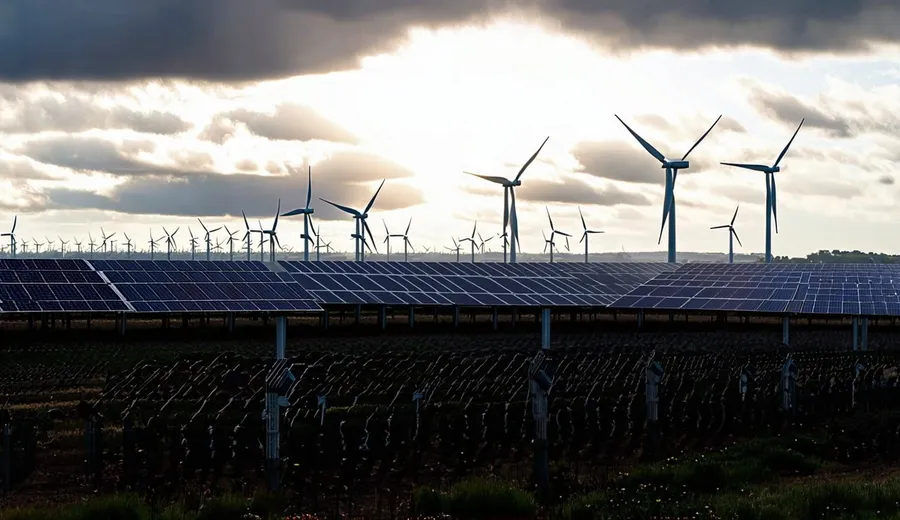
Renewable energy forecasting provides quantitative estimates of electricity generation from solar or wind sources over specific time futures, serving as a foundational pillar for modern power systems engineering. Intermittency characterizes solar and wind generation, causing output fluctuations that vary with weather patterns and time of day, which introduces significant volatility into the grid infrastructure. These stochastic variations necessitate advanced predictive capabilities to ensure that the supply of electricity matches the adaptive demand of consumers without compromising the stability of the transmission network. AI models predict solar and wind output to improve grid setup by analyzing complex weather patterns, historical generation data, and real-time sensor inputs, thereby transforming raw meteorological information into actionable intelligence for system operators. These systems rely on machine learning algorithms trained on vast datasets, including meteorological data, high-resolution satellite imagery, ground-based sensors, and historical power output records to identify subtle correlations that drive generation efficiency. The ability to anticipate changes in wind speed or solar irradiance allows grid controllers to make proactive decisions regarding resource allocation and load balancing.

Time-series forecasting techniques such as recurrent neural networks, transformers, and hybrid physical-AI models process this information to extract temporal dependencies that traditional statistical methods often miss. Recurrent neural networks, specifically Long Short-Term Memory (LSTM) and Gated Recurrent Units (GRU), have historically dominated this domain due to their proficiency in retaining information over long sequences, which is crucial for understanding autocorrelation in weather data. Transformer-based models gain traction for long-sequence forecasting and multi-modal data connection because their self-attention mechanisms allow them to weigh the importance of different parts of the input sequence regardless of their distance from one another. Dominant architectures often include LSTM and GRU networks for temporal modeling fused with Convolutional Neural Networks (CNNs) for spatial weather patterns, creating a spatiotemporal framework that captures both the evolution of weather systems and their geographic distribution. Graph neural networks model spatial dependencies across distributed generation sites by treating the grid as a graph where nodes represent generation assets and edges represent the complex interactions and correlations between them. Hybrid models combining physical equations with neural networks improve generalization in data-scarce regions by embedding domain knowledge such as thermodynamic laws or fluid dynamics directly into the learning process.
This approach reduces the reliance on massive labeled datasets, which are often unavailable in developing regions or for newly established renewable energy parks. Federated learning approaches allow training models across utilities without sharing raw data, addressing privacy concerns and competitive barriers while still using the collective intelligence derived from diverse geographic locations. Data ingestion layers collect real-time and historical data from weather stations, SCADA systems, satellite feeds, and IoT devices, creating a unified data lake that serves as the input for predictive algorithms. Preprocessing modules clean, align, and normalize heterogeneous data streams across spatial and temporal dimensions to ensure consistency and remove noise that could degrade model performance. A continuous supply of meteorological data from commercial satellite providers and ground stations is required to maintain the high fidelity of these forecasting models. Sensor networks using pyranometers and anemometers depend on rare earth elements and specialized manufacturing processes, making the physical supply chain a critical consideration for the long-term sustainability of these systems.
Cloud infrastructure providers like AWS, Google Cloud, and Azure serve as critical enablers for scalable model deployment, offering the elasticity needed to handle the massive computational loads associated with training deep neural networks. Dependence on high-performance computing hardware such as GPUs and TPUs exists for training and inference because the matrix operations involved in deep learning are computationally intensive and require parallel processing capabilities. This hardware dependency creates a direct link between the advancement of semiconductor technology and the accuracy of renewable energy forecasts. Forecasts inform grid operators on expected supply, allowing better matching with demand and minimizing curtailment or overgeneration events that waste clean energy. AI models generate accurate, hyper-local forecasts ranging from minutes to days ahead, reducing reliance on fossil fuel-based peaking plants that are typically expensive and environmentally damaging. Hyper-local forecasting involves prediction at high spatial resolution per solar farm or wind turbine cluster to capture microclimatic effects that broader regional models might overlook.
Grid connection involves connecting variable renewable sources to the electricity grid while maintaining reliability and stability, a task that becomes exponentially more difficult as the penetration of renewables increases. Peaker plants are fossil fuel-powered generators activated during high demand or low renewable output, and their operational inefficiency highlights the economic value of accurate forecasting in avoiding their use. Addressing intermittency remains a core challenge for grid stability, requiring proactive dispatch and storage coordination enabled by AI to smooth out the variability built into renewable sources. The early 2000s saw the adoption of basic statistical models for wind forecasting, which were limited by coarse weather data and computational constraints that prevented high-resolution analysis. The 2010s brought connection of numerical weather prediction with machine learning, improving accuracy for day-ahead forecasts by combining the physical understanding of the atmosphere with data-driven pattern recognition. Deep learning rose in energy forecasting between 2015 and 2020, driven by increased data availability and GPU computing, which allowed researchers to train larger and more complex models.
Traditional persistence models were rejected due to poor performance during weather transitions because they simply assumed the future would resemble the present, an assumption that fails frequently in volatile weather systems. Physical-only models were found insufficient for site-specific generation due to a lack of plant-level calibration, as they could not account for local topography or specific equipment degradation. Rule-based heuristic systems lacked adaptability to changing conditions and required manual tuning from experts, making them difficult to scale across diverse geographic regions. Early AI models using shallow networks were outperformed by deep learning approaches in capturing nonlinear weather-generation relationships that characterize the complex physics of energy generation. Major utilities and grid operators like NextEra, E.ON, and Enel invest in in-house AI forecasting teams to develop proprietary systems tailored to their specific asset portfolios and market conditions. Specialized startups offer SaaS forecasting platforms, including DeepMind’s collaboration with UK grid operators and companies like WindSim, which bring new research directly to the energy sector.
Weather firms like IBM and Vaisala integrate AI into existing meteorological services for energy clients, applying their historical dominance in weather data to provide enhanced value-added services. Tech giants such as Google and Microsoft provide cloud-based AI tools tailored for energy forecasting workloads, lowering the barrier to entry for smaller utilities who cannot afford custom solutions. Competitive differentiation relies on forecast accuracy, latency, regional coverage, and connection with market systems, as even marginal improvements in prediction error can translate into millions of dollars in savings. UK grid operators use AI-driven wind and solar forecasts to reduce balancing costs by over £100 million annually, demonstrating the tangible financial impact of these technologies. California’s grid operator integrates machine learning forecasts into its real-time market, improving renewable dispatch accuracy and facilitating the setup of high levels of solar capacity. European transmission system operators deploy ensemble forecasting systems to manage cross-border renewable variability, ensuring that excess power in one region can be efficiently transported to another with a deficit.
Performance benchmarks show a 10 to 30% improvement in mean absolute error compared to traditional methods for day-ahead forecasts, representing a significant leap forward in predictive capability. Intraday forecasts achieve high accuracy for solar ramps within 15-minute windows in high-data regions, allowing operators to react swiftly to sudden changes in cloud cover. Countries with high renewable penetration, like Germany, Denmark, and Australia, lead in AI forecasting adoption due to grid stability needs that arise when variable energy sources constitute a large fraction of the total energy mix. China invests heavily in AI for renewable setup as part of its dual carbon goals and grid modernization efforts, utilizing the best technology to manage its rapidly expanding fleet of wind and solar assets. Adoption in the U.S. varies by state, influenced by market design and regulatory support for innovation within the energy sector.
Geopolitical tensions affect access to satellite data and cross-border weather modeling collaborations, potentially fragmenting the global effort to improve renewable energy connection. Export controls on advanced semiconductors may limit deployment in certain regions by restricting access to the hardware necessary for running sophisticated AI models. Universities conduct foundational research on hybrid physical-AI models and uncertainty quantification to push the boundaries of what is mathematically possible in predictive modeling. Industry partnerships fund applied projects to advance forecasting capabilities beyond what academic research can achieve in isolation, providing real-world data and operational feedback. Open datasets enable benchmarking and reproducibility across research groups, building a collaborative environment where new algorithms can be rigorously tested against established standards. Joint publications between meteorologists, power engineers, and computer scientists drive methodological advances by bridging the gap between atmospheric science and electrical engineering.
Internship and talent pipelines connect academic training with utility and startup needs, ensuring a steady supply of skilled professionals capable of maintaining and improving these complex systems. Solar and wind generation depend on weather, which is inherently variable and difficult to predict beyond approximately 10 days due to the chaotic nature of fluid dynamics. Forecast accuracy degrades at longer futures and in regions with sparse observational data, creating a key limit on how far ahead reliable planning can occur. High-resolution modeling requires significant computational resources, limiting real-time adaptability for smaller operators who lack access to supercomputing facilities. Economic viability depends on forecast value in reducing balancing costs, which varies by market structure and grid flexibility, meaning the return on investment for AI systems differs significantly between jurisdictions. Deployment faces constraints due to data access, especially in developing regions with limited sensor infrastructure that cannot provide the ground truth data required for model training.
Grid operators face increasing pressure to integrate higher shares of renewables while maintaining reliability, a mandate that forces them to adopt increasingly sophisticated tools. Electricity markets require precise forecasts for day-ahead and intraday bidding to avoid penalties and fine-tune revenue streams in highly competitive trading environments. Climate goals demand rapid decarbonization, making fossil peaker plants increasingly incompatible with policy targets designed to reduce greenhouse gas emissions. Falling costs of sensors and computing enable widespread deployment of AI forecasting for large workloads, democratizing access to technology that was once the preserve of wealthy nations. Public and regulatory expectations for clean, resilient energy systems accelerate adoption by creating a political environment that favors innovation in green technology. Grid control software must evolve to ingest probabilistic forecasts and support stochastic optimization rather than deterministic scheduling, requiring a complete overhaul of legacy operational systems.
Market rules need updates to reward accurate forecasting and penalize imbalance more dynamically to incentivize investment in better prediction technology. Regulatory frameworks must standardize data sharing and model validation across jurisdictions to facilitate the smooth operation of interconnected power grids. Transmission and distribution infrastructure requires upgrades to handle bidirectional flows and real-time adjustments that are necessitated by the distributed nature of renewable energy generation. Cybersecurity protocols are essential to protect forecasting systems from adversarial attacks or data poisoning that could mislead operators and cause physical damage to the grid. Reduced operation of fossil peaker plants leads to job displacement in conventional power sectors, necessitating retraining programs for workers whose skills are becoming obsolete. New roles develop in data science, model operations, and renewable asset management, shifting the workforce toward more technical and analytical positions.
Forecasting-as-a-service enables smaller developers to participate in energy markets by providing them with enterprise-grade predictions without the need for in-house expertise. Aggregators and virtual power plants use forecasts to fine-tune distributed energy resources such as residential solar batteries or electric vehicles, turning thousands of small assets into a single controllable entity. Insurance and financial products increasingly rely on forecast accuracy for risk assessment, as the revenue stability of renewable assets is directly tied to the predictability of their output. Traditional metrics like mean absolute error and root mean square error are insufficient for capturing the economic value of forecasts because they treat all errors equally regardless of their impact on grid operations. New key performance indicators include forecast value-in-use, reduction in balancing costs, and avoided carbon emissions, which align model performance more closely with operational and financial goals. Probabilistic metrics such as the continuous ranked probability score are needed to evaluate uncertainty handling, giving operators a better understanding of the confidence intervals associated with specific predictions.
System-wide metrics assess the impact on grid congestion, storage utilization, and market efficiency to provide a holistic view of how forecasting improvements benefit the entire energy ecosystem. Performance benchmarking must account for regional variability and data quality differences to ensure fair comparisons between models operating in different environments. The setup of satellite-based nowcasting with AI allows for sub-hourly solar and wind predictions that are critical for maintaining grid stability during sudden weather events. Digital twins simulate grid behavior under forecasted conditions for scenario planning, enabling operators to test strategies in a virtual environment before implementing them in the real world. The development of self-calibrating models adapts to changing plant conditions or sensor drift automatically, reducing the maintenance burden associated with keeping models accurate over long periods. The expansion includes forecasting of demand-side flexibility and electric vehicle charging patterns, which represent increasingly significant variables in the overall energy equation.
Long-term future forecasting exceeding 10 days uses climate model ensembles and AI downscaling to provide strategic insights for long-term capacity planning. AI forecasting enables higher renewable penetration by reducing uncertainty, which acts as a primary barrier to the setup of variable energy sources into rigid grid structures. Accuracy improvements directly translate to economic savings and lower emissions, creating a positive feedback loop where financial gains fund further technological advancements. Success depends on institutional adoption and system-wide coordination rather than just technical breakthroughs, as human factors play a critical role in implementation. Forecasting acts as a critical enabler within a broader ecosystem of flexibility resources that includes storage, demand response, and interconnection capacity. Superintelligence will fine-tune global renewable dispatch in real time across interconnected grids, improving energy flows with a level of complexity that exceeds human cognitive capabilities.

It will synthesize real-time data from millions of sensors, satellites, and market signals with minimal latency to create a unified picture of the global energy state. Superintelligence will dynamically adjust forecasts based on patterns not detectable by current models, identifying high-order correlations in chaotic weather systems that remain invisible to contemporary analysis. This technology will coordinate demand response, storage, and generation at planetary scale for maximum efficiency, effectively treating the entire world’s electrical infrastructure as a single improved organism. Such capabilities raise questions about control, transparency, and alignment with human energy policy objectives regarding equity and access to power. Superintelligence will require calibration against physical laws, historical extremes, and human operational constraints to ensure that its proposed solutions remain physically viable and socially acceptable. It must be tested under adversarial conditions such as sensor failures and extreme weather to ensure strength against the unpredictable nature of the real world.
Validation frameworks will be needed to ensure forecasts do not exploit market rules or create systemic risk through manipulative trading strategies that could destabilize financial markets. Human oversight will remain essential to interpret outputs and intervene during high-stakes decisions where ethical considerations outweigh pure efficiency calculations. Ethical guidelines will be required to prevent misuse in energy market manipulation or geopolitical applications where access to energy could be used as a lever for coercion. The transition to superintelligent control of energy systems is a method shift that will redefine the relationship between humanity and the core resources that power civilization.