Knowledge hub
ASIC Design for AI: Custom Silicon for Specific Architectures
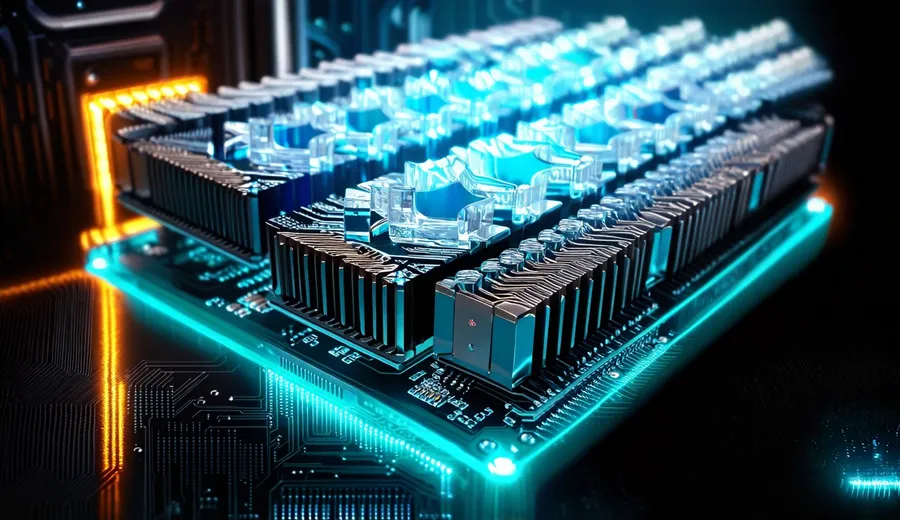
Full-custom design facilitates optimization at the standard cell level to carefully balance extensive engineering effort against substantial performance gains, allowing engineers to tailor the physical layout of every transistor to meet the exacting demands of high-frequency operation and minimal power leakage. This methodology diverges significantly from automated place-and-route techniques used in commercial cell libraries, as it permits manual tuning of transistor widths and lengths to drive specific signal paths with maximum efficiency. The pursuit of such optimization becomes imperative when targeting the absolute limits of silicon performance, particularly in applications where even marginal improvements in switching speed or energy efficiency translate into massive aggregate benefits across billions of cycles. Design teams invest heavily in this labor-intensive process to extract every possible hertz from the substrate, knowing that the resulting architectural density directly influences the computational throughput required for advanced artificial intelligence workloads. Such meticulous attention to detail at the lowest level of the abstraction hierarchy establishes a foundation upon which higher-level architectural innovations can build without being constrained by the inefficiencies of generic logic cells. The financial barriers to entry for fabricating these custom solutions at advanced process nodes have escalated dramatically, with non-recurring engineering costs for a 3nm AI ASIC frequently exceeding six hundred million dollars.
These figures encompass the expenses associated with research and development, software toolchain creation, verification, and the prototyping of complex mask sets required for lithography. Recouping such a monumental investment necessitates massive volume shipments to reach the break-even point, placing immense pressure on semiconductor companies to secure dominant market share or long-term supply agreements with hyperscale cloud providers. The economic model relies on the assumption that the resulting silicon will deliver sufficient performance per watt to justify the capital expenditure over its operational lifetime compared to general-purpose alternatives. Consequently, the strategic decision to pursue a full-custom ASIC path is reserved only for those entities that can guarantee the high-volume production runs required to amortize these upfront costs over millions of units. Fabrication of these advanced integrated circuits depends entirely on extreme ultraviolet lithography machines produced by ASML, which cost over three hundred million dollars per unit and are essential for patterning features below five nanometers. These systems utilize light with a wavelength of 13.5 nanometers to print incredibly fine circuit patterns onto silicon wafers, enabling the continuation of Moore’s Law at scales previously thought impossible.
The scarcity and complexity of this equipment act as a natural filter, limiting the number of foundries capable of manufacturing advanced AI accelerators to a select few with the capital and expertise to operate such machinery. The availability of these tools dictates the roadmap for all future AI hardware development, as any advancement in computational density is inextricably linked to the resolution and precision provided by these lithographic systems. Without the continuous evolution of EUV technology, the physical scaling required to support larger neural networks would stall, making the procurement and maintenance of this equipment a central concern for any organization designing superintelligence-grade silicon. Physical design constraints impose hard limits on the size of a single monolithic die, with reticle limits capping the printable area at approximately eight hundred square millimeters. This boundary forces architects to abandon the notion of a single massive processor in favor of chiplet designs for larger compute fabrics, effectively partitioning the system into smaller, manufacturable blocks that communicate via high-speed interconnects. The transition to chiplet-based modular designs enables manufacturers to mix and match logic, memory, and I/O dies from different process nodes, fine-tuning cost and performance by using expensive, high-performance nodes only for the compute-critical elements while utilizing older nodes for supporting logic.
This approach mitigates the risks associated with yielding perfect silicon on a single vast die, as a defect in one section of a large monolithic chip would render the entire unit useless. By disaggregating the system into functional units bonded together through advanced packaging techniques, designers can exceed the theoretical maximum area of a reticle while maintaining acceptable yield rates and production economics. Yield rates at advanced nodes like three nanometers often hover below fifty percent, significantly impacting the final cost per functional die and complicating supply chain logistics. The statistical probability of defects increases with die area and transistor count, making the production of large, complex AI accelerators a game of managing probabilistic outcomes rather than deterministic manufacturing. Low yields necessitate rigorous binning strategies where chips are sorted based on their functional capabilities and operating frequencies, allowing partially defective units to be sold as lower-tier products if certain cores or memory banks are non-functional. Managing these yield dynamics requires sophisticated testing infrastructure capable of identifying and isolating defects with extreme precision to avoid shipping unreliable components.
The financial impact of these yield losses is factored into the pricing models of the final hardware, contributing to the high cost of the best AI accelerators and driving the industry toward designs that are more tolerant of manufacturing variations. Thermal design power limits present another formidable challenge, as air-cooled data centers typically cap power consumption at around seven hundred watts per chip to prevent overheating within standard server racks. This thermal ceiling pushes high-performance designs toward liquid cooling solutions, which can efficiently remove heat from high-density silicon packages, allowing for higher clock speeds and greater transistor utilization. Liquid cooling infrastructure introduces additional complexity and cost to data center deployment, requiring specialized plumbing, coolant distribution units, and leak detection systems. The move toward liquid cooling is not merely a matter of convenience but a necessity for sustaining the performance levels demanded by modern large language model training, where running the silicon at its thermal limit is often required to achieve timely convergence. As power densities continue to rise with each new process generation, the industry standard will shift definitively toward liquid-cooled environments, rendering traditional air cooling insufficient for the highest tiers of AI compute performance.
Transformer optimization targets memory bandwidth exceeding three point five terabytes per second stack to handle parameter loading for large language models, as the computational speed of the matrix units is useless if data cannot be fed to them fast enough. The memory wall remains the primary impediment to performance in these architectures, necessitating the setup of high-bandwidth memory directly on the same package as the compute die to minimize latency and maximize throughput. NVIDIA H100 SXM5 modules provide three point three five terabytes per second of HBM3 bandwidth to sustain high GPU utilization during transformer training, illustrating the critical nature of this interface. Achieving such bandwidth requires wide interface buses running at extremely high data rates, consuming significant power and generating substantial amounts of electromagnetic interference that must be carefully managed. The architectural design of an AI accelerator is often dominated by the requirements of the memory subsystem, as the ability to rapidly fetch weights and activations dictates the overall efficiency of the training process. High-bandwidth memory production is dominated by SK Hynix, Samsung, and Micron, creating potential supply constraints for AI accelerator production that can constrain the entire ecosystem.
The specialized nature of HBM fabrication, which involves stacking multiple layers of DRAM dies using through-silicon vias (TSVs), limits the number of suppliers capable of meeting the stringent quality and volume requirements of AI hardware manufacturers. Any disruption in the supply chain of these critical components can halt the production of AI accelerators, regardless of the availability of the logic dies themselves. This oligopoly creates a strategic vulnerability for companies relying on these components, prompting some to explore alternative memory architectures or vertical connection strategies to secure their supply. The coordination between logic designers and memory manufacturers is therefore essential, as roadmap alignment ensures that new generations of processors are released in tandem with memory technologies capable of supporting their bandwidth requirements. Advanced packaging techniques like silicon interposers and hybrid bonding are required to connect logic dies with memory stacks at speeds exceeding two terabits per second, far surpassing the capabilities of traditional PCB traces. Silicon interposers act as a bridge between different dies, providing a dense layer of routing that allows thousands of connections to be made between the processor and memory with minimal signal loss.
Hybrid bonding takes this a step further by fusing copper pads from different dies together at the atomic level, eliminating the need for solder bumps and reducing the vertical distance between chips to mere micrometers. These technologies enable the creation of heterogeneous systems where different functional blocks can be improved independently and then integrated with near-monolithic performance characteristics. The complexity of these packaging solutions adds significant cost to the manufacturing process but is unavoidable given the performance requirements of modern AI workloads. NPU architectures utilize near-memory computing to reduce data movement energy, which accounts for over ninety percent of total power consumption in deep learning workloads. By placing arithmetic logic units physically close to or even inside the memory arrays, NPUs drastically shorten the distance data must travel, thereby reducing the capacitive load and energy dissipation associated with each computation. This architecture is a revolution away from the von Neumann model, where processing and memory are separate entities communicating over a bus.
Near-memory computing allows for higher bandwidth utilization with lower energy costs per bit accessed, which is crucial for inference tasks where energy efficiency is as important as raw throughput. The connection of processing elements into memory structures requires novel circuit design techniques and manufacturing processes but offers a clear path toward breaking the energy hindrance that limits current AI scaling. MAC arrays in modern AI accelerators often exceed five hundred thousand units per die to achieve throughput levels necessary for real-time inference on large models. These massive arrays of multiply-accumulate units operate in parallel, performing the dense matrix multiplications that form the backbone of deep learning algorithms. The sheer scale of these compute engines requires sophisticated clock distribution networks and power delivery systems to ensure that all units receive synchronized signals and stable voltage despite the instantaneous current demands of switching millions of transistors simultaneously. Systolic arrays utilize data flowing sequentially through processing units to maximize data reuse and minimize memory access, effectively pipelining computations to keep the MAC units busy at all times.
This architectural choice maximizes the computational density of the silicon, ensuring that every cycle is utilized for productive mathematical operations rather than idling while waiting for data. Google TPU v5p pods delivered up to four point eight exaflops of performance at bfloat16 precision for training large models by aggregating thousands of these individual accelerators into a unified high-speed fabric. The pod architecture treats the collection of chips as a single computer, utilizing custom interconnects that allow for low-latency communication between any two chips in the system. This scale of performance enables the training of foundation models with trillions of parameters in a reasonable timeframe, a task that would be impossible on single machines or smaller clusters. The software stack managing these pods must handle complex scheduling and communication patterns to ensure that the massive parallelism of the hardware is fully exploited. The success of these systems demonstrates the viability of horizontally scaling AI compute through specialized interconnects and system-level architecture tailored to the specific communication patterns of distributed training algorithms.
Cerebras Systems utilized wafer-scale connection to package nine hundred thousand cores on a single silicon wafer, eliminating inter-chip communication constraints that typically limit flexibility in multi-chip systems. By fabricating a processor the size of a dinner plate, Cerebras circumvented the need for traditional packaging and interconnects, allowing signals to propagate across the entire processor at the speed of on-die wiring rather than through external cables or PCB traces. This approach required overcoming significant manufacturing hurdles, including yield management for such a large area and the development of proprietary power delivery systems capable of energizing the entire wafer uniformly. The result is a system uniquely suited for workloads requiring massive amounts of communication between processing elements, such as convolutional neural networks with large activation maps. While wafer-scale connection presents unique challenges regarding defect tolerance and power density, it offers a compelling alternative to the chiplet framework for specific classes of AI problems. Groq utilized LPU architecture with deterministic instruction timing to achieve inference latencies under ten milliseconds for large language models, prioritizing predictable performance over maximum theoretical throughput.
The LPU architecture relies on a software-defined approach where the compiler determines the exact timing of every data movement and computation, ensuring that there are no pipeline stalls or cache misses during execution. This deterministic behavior allows developers to guarantee strict latency requirements, which is essential for real-time interactive applications. The architecture sacrifices some of the flexibility found in general-purpose GPUs to achieve this level of predictability, relying on a static dataflow model that maps perfectly to the hardware resources. By eliminating the uncertainty associated with dynamic scheduling and out-of-order execution, Groq demonstrated that architectural discipline can yield superior real-world performance for inference tasks compared to brute-force compute approaches. Diffusion models rely heavily on random number generation and mixed-precision matrix math rather than exclusively high-precision floating-point operations. Unlike transformers or discriminative models that may benefit from high precision in accumulation steps, diffusion models frequently perform operations where stochastic noise generation is as critical as matrix multiplication.
Hardware designed for diffusion must therefore incorporate high-quality entropy sources capable of supplying random numbers at rates matching the throughput of the math units, ensuring that the stochastic nature of the sampling process does not become a constraint. Mixed-precision arithmetic allows these models to maintain sufficient numerical stability while reducing memory bandwidth requirements and increasing computational density. The specific computational profile of diffusion models drives architectural choices toward balanced designs that do not overly prioritize high-precision ALUs at the expense of other essential functional units like RNGs or lower-precision tensor cores. RISC-V custom extensions allow designers to add specialized instructions for matrix multiplication and activation functions directly into the processor pipeline. The open-source nature of the RISC-V instruction set architecture enables companies to develop proprietary extensions without licensing fees or restrictions from traditional architecture vendors. These custom instructions can implement complex sequences of operations in a single cycle, effectively accelerating specific kernels used in deep learning inference or training.
By working with these specialized operations into the instruction decoder and execution units, designers reduce the overhead associated with decoding complex sequences of standard instructions, thereby improving code density and energy efficiency. This flexibility makes RISC-V an attractive base for AI accelerators targeting niche markets or specialized workloads where generic vector extensions fail to provide adequate performance per watt. Dataflow-agnostic designs offer flexibility for various neural network topologies at the cost of lower peak efficiency compared to fixed-function accelerators. These architectures rely on heavy caching and dynamic scheduling to adapt to different computational graphs on the fly, making them suitable for environments where the workload is constantly changing or unpredictable. While they cannot match the raw efficiency of a systolic array hardwired for a specific layer type, they provide a versatile platform for research and development where rapid prototyping is more valuable than absolute performance. The trade-off between flexibility and efficiency remains a central theme in accelerator design, with different market segments requiring different points along this spectrum.
General-purpose AI accelerators typically lean toward this agnostic approach to ensure broad compatibility with the diverse ecosystem of neural network architectures being developed by researchers. Compiler stacks must map high-level tensor operations onto specific hardware dataflows to achieve optimal utilization of the underlying silicon. The compiler acts as the bridge between the abstract representations of machine learning frameworks like PyTorch or TensorFlow and the concrete realities of the hardware architecture. Effective compilers must perform complex optimizations including operator fusion, loop tiling, and memory access planning to minimize data movement and maximize compute utilization. As hardware architectures become more complex, incorporating features like sparsity support or mixed-precision pipelines, the burden on the compiler increases correspondingly. The quality of the software stack often determines the realized performance of the hardware more than the raw specifications of the chip itself, making compiler technology a critical component of any AI accelerator platform.
Effective utilization rates for large-scale training runs often fall below fifty percent due to communication overhead and memory limitations. Despite the immense theoretical peak performance of modern clusters, practical limitations such as network latency, synchronization barriers, and parameter server contention prevent full utilization of the compute resources. The gap between peak and achieved performance highlights the challenges of scaling distributed training algorithms across thousands of nodes. Improving utilization requires co-design of the hardware interconnects and the communication algorithms used by the software stack, ensuring that communication overlaps efficiently with computation. Closing this utilization gap is one of the most significant opportunities for improving the efficiency of AI training in large deployments, offering potential performance gains equivalent to several generations of hardware scaling without requiring new fabrication processes. Sparsity exploitation can theoretically improve computational throughput by two times to ten times for models containing significant zero-valued parameters.
Many neural networks, particularly after pruning techniques are applied, contain large numbers of weights that are effectively zero and contribute nothing to the final output. Hardware that can detect these zeros and skip the associated multiplications can achieve substantial speedups and energy savings without affecting the accuracy of the model. Implementing efficient sparsity support requires irregular memory access patterns that can be difficult to handle in highly regular architectures like systolic arrays. Despite the theoretical benefits, practical exploitation of sparsity has proven challenging due to the difficulties in managing sparse data structures and indexing logic at hardware speeds. Advances in algorithmic pruning techniques and hardware-aware sparse formats are gradually making sparsity a viable target for accelerator optimization. Superintelligence will require hardware capable of supporting trillions of parameters with context windows spanning millions of tokens.
Current architectures struggle to fit such massive models into memory, let alone perform computations on them efficiently. Achieving this scale will necessitate a departure from traditional memory hierarchies toward unified memory fabrics that allow terabytes of data to be accessed with uniform latency by millions of compute elements. The context window requirement implies that the system must be able to process sequences of data orders of magnitude larger than current capabilities, demanding memory bandwidths that scale linearly with context length. This constraint pushes the design toward disaggregated memory systems where storage capacity is decoupled from compute capacity but connected via ultra-low latency links. Future superintelligent systems will use optical interconnects to eliminate electrical resistance and latency between compute nodes. As systems scale to millions of chips, the latency and power consumption of electrical signaling over copper traces become prohibitive.
Optical interconnects use light to transmit data, offering virtually no signal attenuation over distance and eliminating the resistive losses that plague electrical wires at high frequencies. Working with photonics directly into the silicon package allows for massive bandwidth densities with minimal power consumption, enabling the creation of vast compute clusters that behave as a single coherent machine. The transition to optical communication is essential for reducing the latency of distributed synchronization operations that become critical at superintelligence scales. This technology will redefine the physical topology of data centers, enabling new form factors unconstrained by the length limitations of copper cabling. Analog in-memory computing will provide the necessary energy efficiency for superintelligence to operate within global power budgets. Digital computing faces key energy limits related to charging and discharging capacitive loads for every bit operation.
Analog computing performs operations directly on the physical properties of memory devices, such as the conductance of a memristor, allowing matrix multiplication to occur in a single step using Ohm’s law and Kirchhoff’s laws. This approach promises orders of magnitude improvement in energy efficiency for vector-matrix multiplication tasks that dominate deep learning workloads. While analog computing faces challenges regarding precision, noise, and device variability, it is a promising path forward for breaking the energy efficiency wall that limits digital scaling. Superintelligent systems will likely employ hybrid architectures that use analog compute for the bulk of matrix operations while resorting to digital logic for control logic and high-precision accumulation. Superintelligence will necessitate fault-tolerant architectures that can maintain coherence despite hardware errors at extreme scales. With billions of components operating at high frequencies, the mean time between failures for individual transistors or interconnects becomes statistically significant relative to the runtime of training tasks involving trillions of tokens.
The system must be capable of detecting and correcting errors in real time without halting execution or corrupting the model state. This requires redundancy at multiple levels, from error-correcting codes in memory to replicated compute units that can vote on results. Architectural resilience becomes as important as raw performance, as a single undetected error could propagate through a massive training run and compromise the integrity of the final model. The software stack must also be designed to checkpoint progress frequently and recover gracefully from hardware faults, treating hardware failure as an expected operational condition rather than an exceptional event. Energetic reconfigurable fabrics will allow superintelligence to alter its physical hardware topology in real time to suit specific cognitive tasks. Instead of a fixed, static architecture, future systems may utilize field-programmable gate arrays or similar reconfigurable logic that can be rewired dynamically to improve the dataflow for the specific model being executed.
This flexibility allows the hardware to adapt to changes in neural network architecture or algorithmic breakthroughs without requiring a complete redesign of the silicon. Reconfigurable fabrics trade off some of the raw speed and density of fixed-function ASICs for unmatched adaptability, which may be essential for a system whose capabilities are rapidly evolving. The ability to reconfigure interconnects on the fly also enables efficient spatial multitasking, allowing different regions of the silicon to be dedicated to entirely different tasks simultaneously without interference. Superintelligence will drive the development of 3D-stacked logic-on-logic designs to minimize signal propagation delays across the processing substrate. Traditional planar scaling reduces gate delays but increases wire delays relative to total cycle time as features get smaller. 3D stacking allows logic blocks to be placed vertically on top of one another, connected by dense vertical interconnects known as through-silicon vias.
This drastically shortens the physical distance between communicating functional units, reducing latency and power consumption while increasing bandwidth density between layers. Stacking logic on logic rather than just memory on logic allows for true three-dimensional processor architectures where computation happens throughout the volume of the chip rather than just on its surface. This approach addresses the interconnect hindrance that limits planar designs, enabling higher clock frequencies and more complex topologies than are possible on a single layer of silicon. Performance metrics are shifting from raw FLOPS to tokens generated per second per watt to better reflect end-user utility. Floating-point operations per second served as a useful proxy for performance when hardware architectures were relatively uniform and models were smaller. As architectures diverge and models become increasingly complex, FLOPS often fail to correlate with actual inference speed or training efficiency.

Tokens generated per second per watt captures both the throughput relevant to users and the energy efficiency relevant to operators. This metric incentivizes architectural choices that improve overall system efficiency rather than just maximizing theoretical math throughput. It reflects a maturation of the industry where the focus shifts from benchmark bragging rights to practical operational excellence and total cost of ownership considerations. Chiplet-based modular designs enable manufacturers to mix and match logic, memory, and I/O dies from different process nodes to improve cost and performance. This modularity allows companies to upgrade specific components of a system without redesigning the entire chip. For example, a new generation of I/O chiplets can support faster interconnect standards while the existing compute die remains unchanged, extending the product lifecycle and reducing development costs.
It also allows for the creation of application-specific configurations by selecting chiplets that match the target workload’s requirements for memory capacity, interconnect bandwidth, or compute density. The ecosystem for chiplet interoperability relies on standardized interface protocols such as UCIe, which allow dies from different vendors to communicate seamlessly. This trend toward modular composition is a pivot in semiconductor manufacturing, moving away from monolithic connection towards a supply chain model reminiscent of the software industry’s use of libraries and APIs.