Knowledge hub
Embodied AI

Embodied AI refers to artificial intelligence systems that learn and operate through direct physical interaction with their environment, rather than processing data in isolation. These systems integrate perception, decision-making, and action in real time to handle and manipulate the physical world. Intelligence in embodied AI is grounded in sensorimotor experience, meaning the system acquires knowledge by observing the consequences of its own actions on surroundings. Physical interaction introduces constraints such as latency, noise, uncertainty, and the laws of physics, which must be accounted for in the control algorithms. Embodiment is essential for robots intended to function in human environments because they must adapt to spaces designed for biological morphology. Core principles include learning through action, where agents improve their proficiency by attempting tasks and receiving feedback from the environment. Situatedness means intelligence is context-dependent and tied to a specific location and body, forcing the AI to reason from a particular perspective. Embodiment acts as a constraint, where physical form limits and shapes possible behaviors, effectively defining the boundary of achievable intelligence. Real-time control requires decisions made within tight temporal bounds to maintain stability and ensure safety during agile operations. Grounding ensures symbols and concepts map to observable states in the physical world, preventing the formation of abstract logical loops that lack practical utility.
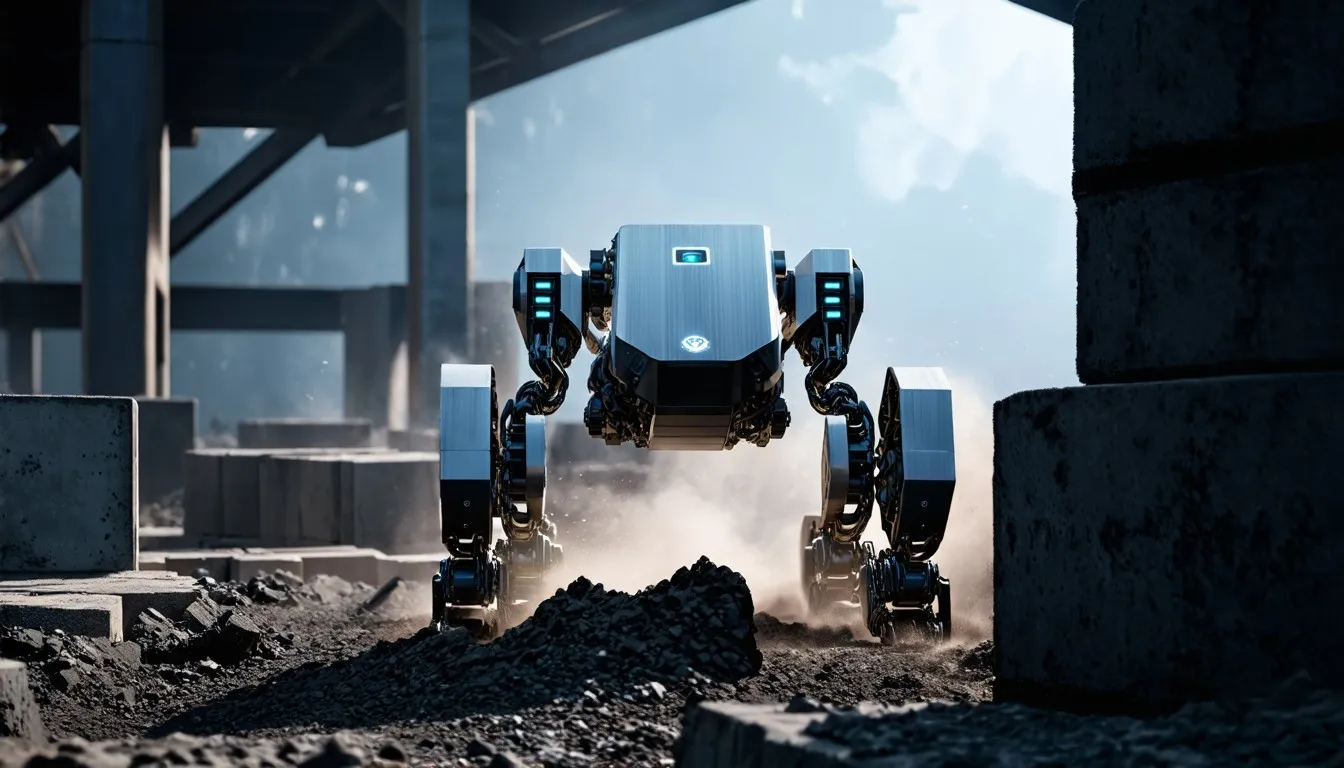
The perception module processes raw sensor data from cameras, LiDAR, and tactile arrays to construct a representation of the environment suitable for planning. This module utilizes deep neural networks to extract features from high-dimensional data while filtering noise built into real-world sensors. The planning module generates sequences of actions to achieve goals specified by operators or higher-level autonomy systems, using optimization algorithms. It must account for dynamic obstacles and changing environmental conditions while minimizing energy consumption and execution time. The motor control module translates high-level plans into low-level actuator commands that drive joints and grippers with precise timing and force. This layer relies on feedback control theory to correct errors caused by model inaccuracies or external disturbances such as slippage or collisions. The learning system updates internal models based on outcomes, using reinforcement learning or imitation learning to refine policies over time. It adjusts parameters within the neural networks to maximize rewards defined by task success or efficiency metrics. Memory and state tracking maintain internal status over time, enabling the robot to recall previous interactions and maintain context during long-duration tasks. These components function together within a closed loop where action alters perception, which in turn informs subsequent action.
Dominant architectures include transformer-based vision-language-action models that map natural language commands directly to robotic actions through large-scale pretraining. These models apply massive datasets of text-image pairs to generalize across a wide variety of tasks without explicit programming for each scenario. Alternative approaches involve neuromorphic control systems inspired by biological nervous systems, which offer high energy efficiency and low latency for event-driven processing. Neuromorphic hardware uses spiking neural networks to process information asynchronously, mimicking the way biological neurons communicate. Hybrid models combine model-based control with learned policies to improve sample efficiency and ensure safety guarantees during operation near humans. Model-based components provide rigorous guarantees regarding stability, while learned components handle complex visual recognition and adaptation. Early robotics research in the 1980s and 1990s emphasized pre-programmed behaviors defined by explicit rules and geometric models of the world. These systems required extensive manual tuning and failed gracefully when encountering unmodeled variables.
Behavior-based robotics introduced reactive control layers that allowed robots to respond to immediate stimuli without maintaining a detailed world model. This approach improved reliability in agile environments, yet lacked the capacity for long-term planning or complex reasoning. The rise of deep learning in the 2010s enabled learning from high-dimensional sensory input such as raw pixels and depth maps, reducing the need for hand-crafted features. Convolutional neural networks allowed robots to recognize objects and scenes with high accuracy based on training data. The connection of deep learning with robotic control in the 2020s marked a pivot toward end-to-end learning where neural networks process input and output motor commands directly. Researchers demonstrated that policies trained on large datasets could transfer zero-shot to new robots, indicating a level of abstraction previously thought impossible. The failure of purely simulation-based training highlighted the necessity of real-world embodiment due to discrepancies between simulated physics and reality. Engineers found that domain randomization could not fully bridge the gap caused by unmodeled friction, lighting variations, or sensor noise.
Boston Dynamics’ Spot robot is deployed in industrial inspection using embodied navigation to traverse complex terrain such as stairs and rubble autonomously. The robot utilizes gait controllers that adapt to uneven surfaces in real time to maintain balance. Amazon’s warehouse robots use embodied AI for item retrieval with performance measured in picks per hour to fine-tune logistics throughput. These systems rely on suction grippers and computer vision to identify and handle millions of distinct stock keeping units. Tesla’s Optimus prototype demonstrates basic object manipulation and locomotion using vision-based control systems derived from their autonomous driving technology stack. The robot shares sensors and neural network architecture with Tesla vehicles to apply existing data pipelines. Figure AI’s humanoid robots are in pilot programs with BMW for assembly line tasks to assist human workers with repetitive motions. These pilots focus on inserting components into chassis with millimeter precision required for automotive manufacturing.
Google leads in foundational research and large-scale data collection for embodied AI through initiatives that aggregate robot arc from various sources. Their RT-X models attempt to create a generalist policy capable of controlling different robot bodies. Chinese firms such as Unitree and Fourier Intelligence are scaling low-cost humanoid robots to accelerate deployment in service and industrial sectors. Unitree’s H1 robot focuses on agile movement capabilities such as running and backflips to demonstrate actuator performance. Performance benchmarks include the success rate on standardized tasks such as pick-and-place operations and door opening, which serve as baselines for comparing different algorithms. These benchmarks often involve novel objects to test generalization capabilities beyond the training distribution. Mean time between failures serves as a critical reliability metric indicating the reliability of the hardware and software stack over extended periods.
Energy efficiency is measured in tasks performed per kilowatt-hour to evaluate the viability of battery-powered operation in commercial settings. Improving this metric requires advances in motor efficiency as well as intelligent power management systems. Safety metrics track the number of emergency stops and human interventions per operational hour to ensure compliance with workplace safety standards. Robots must detect humans entering their workspace and slow down or stop to prevent accidents. Generalization benchmarks measure performance drop when transferring to novel environments to test the adaptability of the learned policies. A strong system should maintain a high success rate even when lighting conditions or floor textures change significantly. Physical constraints include limited actuator force and noisy sensors, which fundamentally limit the precision and speed of execution.
Economic constraints involve the high cost of robotic hardware and maintenance, which dictates the return on investment for potential adopters. Reducing these costs requires mass production of actuators and sensors alongside simplified mechanical designs. Energy constraints limit operational duration due to current battery density limitations requiring frequent recharging cycles or tethered power solutions. Supply chain dependencies include rare-earth magnets for actuators and specialized semiconductors required for high-performance edge computing. Disruptions in these supply chains can halt production lines for advanced robotics. Material constraints require lightweight composites for mobility to balance payload capacity with agility and power consumption. Carbon fiber composites are often used for structural elements to reduce weight while maintaining stiffness. Actuator manufacturing relies on precision motors and harmonic drives produced in specialized facilities with limited global capacity.

Harmonic drives provide high gear reduction ratios in compact packages, essential for joint actuation in humanoids. Sensor supply relies on global suppliers for LiDAR, cameras, and force-torque sensors, creating potential vulnerabilities for scaling production. High-resolution depth sensors remain particularly expensive components in the bill of materials. Pure simulation training was rejected due to the sim-to-real gap, where models fail in unmodeled physics scenarios encountered in the real world. Fine-tuning in real environments remains necessary to achieve deployment-grade performance. Cloud-based AI control was explored, yet rejected due to high latency in active environments, where immediate reaction is critical for safety. On-board inference is now standard practice despite the computational constraints imposed by mobile power budgets. Non-embodied AI was evaluated for task planning, yet found insufficient for execution without physical grounding to handle real-world variability.
Large language models can generate plans, yet often fail to account for kinematic constraints or object mass. Centralized control systems were abandoned in favor of decentralized on-board intelligence to reduce reliance on external communication infrastructure. This decentralization improves strength against network outages and reduces bandwidth requirements. Low-latency neural interfaces will connect perception and action systems to minimize the delay between sensing a stimulus and initiating a response. Future systems may utilize optical interconnects within the robot to accelerate data transfer between compute nodes. Self-calibrating robots will adapt to wear and environmental changes without human intervention, using continuous online learning algorithms. This capability reduces maintenance overhead by compensating for gear degradation or sensor drift automatically. Embodied AI systems will learn from minimal demonstrations through meta-learning techniques that allow rapid adaptation to new tasks with few examples.
Few-shot learning enables users to teach robots new skills simply by showing them once or twice. Predictive world models will simulate outcomes of actions before execution to avoid collisions and improve progression planning. These internal simulations run faster than real time to allow the robot to consider multiple branches of action. Convergence with computer vision enables real-time 3D scene understanding, allowing robots to interact with unstructured environments effectively. NeRFs and Gaussian Splatting techniques allow robots to reconstruct scenes from sparse views for spatial reasoning. Convergence with natural language processing allows large language models to provide task specification and high-level reasoning for robotic systems. This enables users to command robots using natural language without knowing programming syntax. Convergence with materials science improves soft robotics and adaptive grippers, enabling delicate manipulation of fragile objects.
Electroactive polymers allow grippers to conform to object shapes without complex mechanical linkages. Convergence with edge computing reduces latency and increases privacy by processing sensitive data locally on the robot. Dedicated AI accelerators are being integrated into robot controllers to perform matrix operations efficiently. Economic shifts such as labor shortages increase the return on investment for autonomous systems as companies seek to automate essential roles. Rising wages in logistics and manufacturing drive capital expenditure toward robotic solutions. Aging populations create demand for assistive robots in homes to help with daily living activities and healthcare monitoring. Demographic trends in developed nations suggest a growing market for care robots. New business models such as robot-as-a-service enable access without upfront capital expenditure, lowering the barrier to entry for small businesses.
Subscription models cover maintenance and software updates, aligning costs with revenue generation. Urban design will adapt to accommodate mobile robots in public spaces through dedicated lanes and traffic management systems. Smart city infrastructure will include docking stations and drop-off points for autonomous delivery vehicles. Insurance markets will develop products to cover robotic liability and malfunction, addressing new categories of risk associated with autonomous operation. Actuarial models must account for the statistical behavior of AI systems rather than human drivers. Software operating systems must support real-time control and secure updates to ensure long-term stability and protection against cyber threats. Real-time operating systems with deterministic scheduling are required to guarantee control loop timing. Industry safety standards are needed for human-robot interaction, including fail-safes that trigger safe shutdowns upon detecting anomalies.
Standards bodies are working on defining torque limits and speed restrictions for collaborative robots. Workplaces require physical modifications such as standardized interfaces and charging stations to support continuous robotic operation. Facilities must be designed with flat floors and wide aisles improved for mobile platforms. Technicians need new skills in robot supervision and maintenance to manage fleets of autonomous machines effectively. Vocational training programs are evolving to include coursework on AI diagnostics and sensor calibration. Academic labs collaborate with industry on shared benchmarks and open datasets to accelerate progress in the field. Open-source initiatives provide common codebases for simulation and control algorithms. Joint ventures involve companies partnering with universities to access specialized facilities and talent pools for advanced research. Superintelligence will require embodiment to interact with and shape the physical world meaningfully beyond digital interfaces.
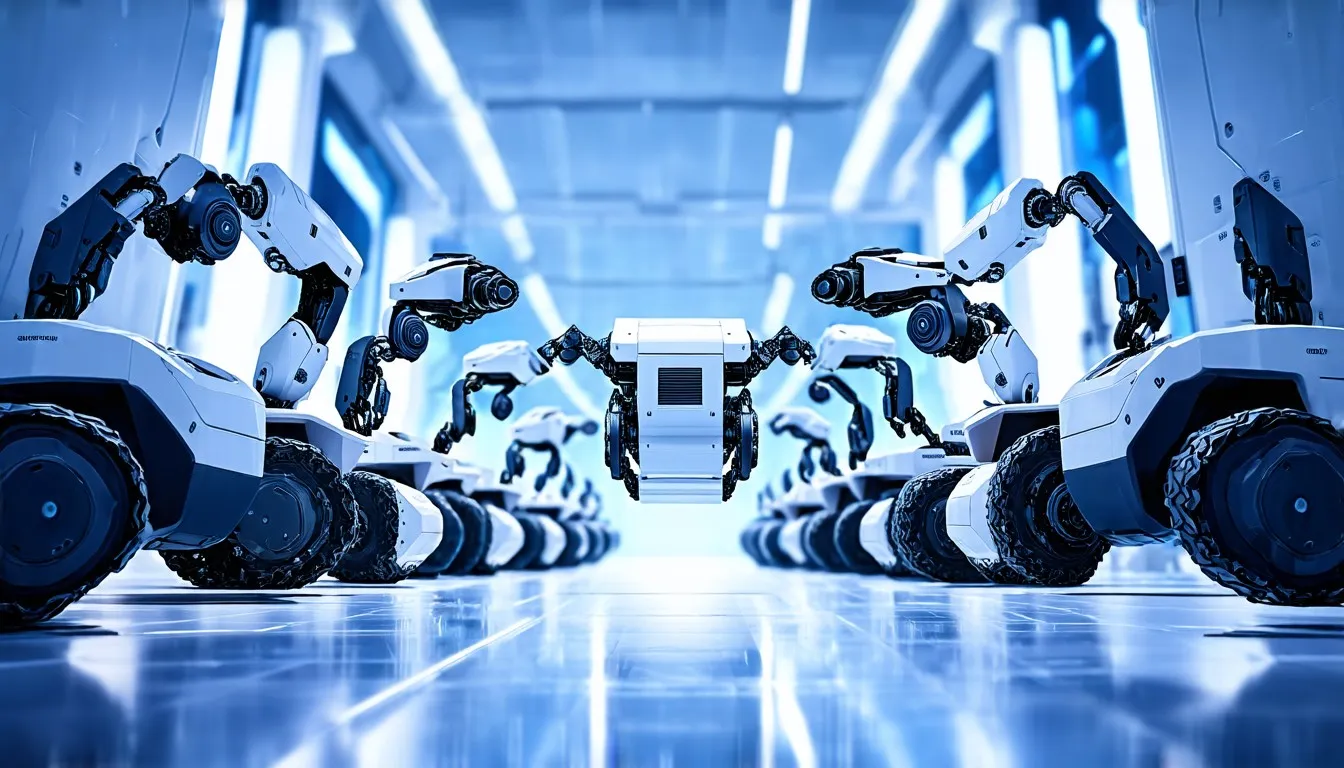
An intelligence confined to a server rack cannot directly build infrastructure or manufacture goods. Purely digital superintelligence may improve abstract goals yet lack the grounding to implement them safely in a physical context. Understanding physics requires experimentation which necessitates a body. Embodied agents will provide a natural interface for superintelligent systems to deploy resources and manipulate matter directly. Control and alignment mechanisms must be embedded in the physical interaction loop to prevent unintended consequences during autonomous operation. Superintelligence will utilize swarms of specialized embodied agents to perform complex distributed tasks across large geographical areas. These swarms will communicate locally to achieve global objectives without central constraints. It will deploy adaptive robots that learn local conditions and coordinate without centralized oversight to maximize efficiency and resilience.
Physical embodiment will allow superintelligent systems to test hypotheses in the real world through scientific experimentation and engineering construction. The ability to manipulate matter allows the intelligence to modify its own hardware substrate, leading to recursive self-improvement. Embodied AI will serve as the operational layer through which superintelligence makes real its goals in reality, transforming abstract computational objectives into tangible physical changes.