Knowledge hub
High-Dimensional Optimization for Planetary Scale Problems

Artificial intelligence functions as a sophisticated instrument for addressing global challenges by applying advanced pattern recognition and high-fidelity simulation techniques to model complex systems that defy traditional analysis methods. These systems encompass intricate climate dynamics, the rapid spread of infectious diseases, and the convoluted networks of resource distribution that underpin modern civilization, requiring computational approaches that exceed human cognitive capacity. The capabilities intrinsic in these computational frameworks enable predictive modeling and rigorous scenario testing for problems characterized by extreme uncertainty and nonlinear feedback loops where small changes in initial conditions can lead to disproportionately large outcomes. Such challenges are commonly termed wicked problems because they involve incomplete information, conflicting requirements, and interconnected elements that resist straightforward resolution through linear thinking or isolated interventions. The core function of these intelligent systems involves processing vast, heterogeneous datasets drawn from disparate sources to identify latent patterns that remain invisible to human observers and generate actionable hypotheses for intervention. Reliance on statistical inference, complex optimization algorithms, and significant computational flexibility supersedes human intuition or rigid rule-based logic, which often fails to account for the sheer scale and variability of global data streams. Operation occurs within defined constraints, including data quality limitations, substantial computational costs, and the necessity for interpretability to ensure that outputs remain useful to human decision-makers. Outputs from these systems are probabilistic rather than deterministic truths, requiring careful consideration of confidence intervals and risk tolerance when applying algorithmic recommendations to real-world situations.

System inputs consist of structured and unstructured data harvested from a multitude of sources, including orbiting satellites, ground-based sensors, digitized public health records, and complex economic indicators that track global financial flows. The processing layer utilizes machine learning models such as deep neural networks and reinforcement learning agents trained on historical archives and real-time data streams to discern underlying trends and causal relationships within this influx of information. The output layer delivers comprehensive simulations, long-range forecasts, policy recommendations, or automated control signals fed directly into decision loops that manage physical infrastructure or logistical operations. A feedback mechanism ensures continuous validation against real-world outcomes to refine models and reduce error drift over time as conditions evolve and new data becomes available, creating a cycle of constant improvement. Pattern recognition involves the algorithmic identification of recurring structures or anomalies in high-dimensional data without explicit programming instructions, allowing the system to adapt to novel patterns as they become real without prior specification. Simulation entails the computational replication of system behavior under varying conditions to test potential interventions and assess their likely impact before implementation in the physical world, thereby reducing the risk of unintended consequences. A digital twin serves as an energetic, data-driven virtual replica of a physical system used for continuous monitoring and experimentation, providing a safe environment to test changes without risking actual assets or disrupting ongoing operations.
Early expert systems developed in the 1970s and 1980s failed primarily due to brittle rule sets that could not handle uncertainty or scale effectively when confronted with the messy reality of unstructured global data. The rise of statistical machine learning in the 1990s and 2000s enabled data-driven modeling, yet lacked connection with deep domain-specific knowledge, which limited its applicability in specialized scientific fields requiring strict adherence to physical laws. Deep learning breakthroughs in the 2010s significantly improved pattern detection in unstructured data such as images and text while introducing opacity regarding internal decision processes and demanding high compute resources that restricted accessibility to well-funded institutions. The 2020s witnessed a shift toward hybrid models combining neural networks with symbolic reasoning and physics-informed constraints to enhance reliability and ensure that predictions adhere to known physical laws governing natural systems. Climate change applications currently include fine-tuning carbon capture deployment strategies, forecasting extreme weather events with greater precision, and simulating decarbonization pathways across complex energy grids to balance reliability and sustainability goals. Google’s DeepMind applied artificial intelligence to reduce data center cooling energy usage by 40 percent, demonstrating the immediate potential for machine learning to fine-tune industrial systems for efficiency gains through direct control over cooling infrastructure. Climate TRACE employs satellite imagery analyzed by artificial intelligence to track global greenhouse gas emissions in near real time, providing transparency previously impossible through manual reporting methods, allowing for precise attribution of emission sources.
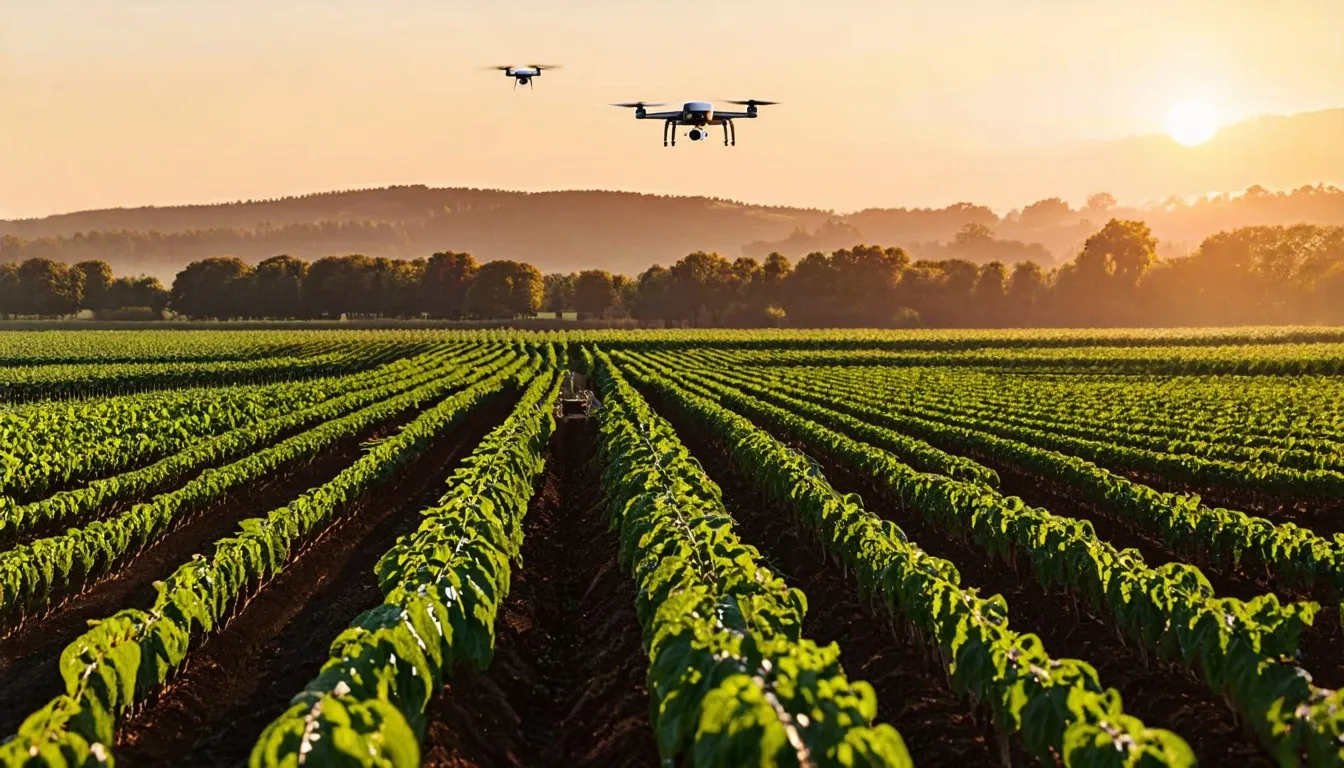
Pandemic response utilizes artificial intelligence to track pathogen evolution through genomic surveillance, predict outbreak progression using mobility data, and accelerate drug discovery through protein folding prediction and molecular interaction modeling. BlueDot predicted the spread of COVID-19 before official public health alerts by analyzing airline ticketing data and news reports, illustrating the speed advantage of automated monitoring systems over traditional epidemiological methods which rely on slower reporting hierarchies. Insilico Medicine used generative AI to design novel drug molecules within a few months, compressing a timeline that traditionally spans years of research and development in pharmaceutical laboratories, significantly reducing the cost of early-basis discovery. Resource scarcity solutions involve AI-driven precision agriculture, water management optimization, and circular economy logistics to reduce waste and improve allocation efficiency across supply chains, minimizing the environmental footprint of production. John Deere’s AI tractors enable site-specific planting and fertilization, reducing input waste by up to 20 percent while maintaining crop yields through targeted interventions based on granular sensor data analysis of soil conditions. Success in these endeavors is measured by improvement in decision quality rather than algorithmic sophistication alone, as the ultimate value lies in tangible benefits to human populations and ecological stability.
Models are evaluated on prediction accuracy, computational efficiency, intervention efficacy, and equity of outcomes to ensure that benefits are distributed fairly across different demographic groups, avoiding the reinforcement of existing biases. Physical limits present significant challenges as the energy consumption of large models conflicts with sustainability goals, creating a tension between the computational power needed for solutions and the environmental cost of running those computations, requiring innovations in hardware efficiency. Cooling infrastructure for data centers and chip fabrication processes require rare materials such as neodymium and dysprosium, which are subject to supply volatility and geopolitical maneuvering, posing risks to the adaptability of AI deployments. Economic barriers exist because high upfront costs for data infrastructure, specialized talent acquisition, and advanced compute resources exclude low-resource regions from accessing these powerful problem-solving tools, potentially exacerbating global inequalities. Adaptability challenges arise because models trained on regional data often fail to generalize globally due to contextual differences in infrastructure quality and behavioral patterns among populations, necessitating localized training efforts. Pure data-driven approaches face rejection when they produce physically implausible or ethically risky outcomes, highlighting the necessity of incorporating domain knowledge into algorithmic architectures to constrain the search space of possible solutions.
Fully autonomous decision systems encounter resistance due to accountability gaps and a lack of human oversight mechanisms, which creates liability issues in critical sectors such as healthcare or power grid management where errors have catastrophic consequences. Centralized global AI governance models face rejection as politically infeasible, leading to a preference for decentralized, domain-specific frameworks that allow for local control and customization of regulatory standards. The rising frequency and severity of climate events, pandemics, and supply chain disruptions demand faster and more accurate response systems than human bureaucracies can typically provide, driving investment into automated crisis management technologies. Economic pressure to decarbonize and fine-tune resource use intensifies with regulatory mandates and market shifts, forcing corporations to adopt intelligent optimization strategies to remain competitive in a carbon-constrained global economy. Societal expectations for equitable and transparent solutions require tools that can balance multiple objectives across diverse populations while respecting privacy norms and cultural values, ensuring broad acceptance of technological interventions. Dominant architectures include transformer-based models for language and multimodal data processing alongside graph neural networks for relational systems like supply chains where connections between entities are primary for understanding system dynamics.
Developing technologies feature physics-informed neural networks that embed domain laws like fluid dynamics directly into the model architecture to improve generalization beyond the training data distribution, ensuring predictions remain scientifically valid. Federated learning allows for privacy-preserving collaboration across different entities, enabling model training on sensitive data without centralizing the information, thus addressing privacy concerns intrinsic in medical or financial data usage, while still benefiting from diverse datasets. Challengers in the field focus on energy efficiency, interpretability, and robustness to noisy or sparse data, aiming to create systems that are deployable in resource-constrained environments where connectivity is intermittent or power availability is limited. The semiconductor supply chain remains concentrated in Taiwan, South Korea, and the United States, creating a single point of failure for global AI development efforts that threatens the stability of technological progress. Geopolitical tensions create risks of disruption for this supply chain, potentially stifling the advancement of critical technologies needed for climate modeling or disease surveillance if trade routes are closed or sanctions are imposed. Rare earth elements needed for high-performance computing hardware are subject to trade restrictions that can hamper the production of next-generation processors required for superintelligence applications, leading to efforts to diversify sourcing or develop alternative materials.

Data infrastructure, including cloud servers and fiber optics, requires stable energy and mineral inputs, creating dependencies on fossil fuels and mining activities that contradict the environmental goals often pursued through AI implementation, necessitating a parallel push for green energy solutions. Private sector leaders in foundational research include Google, Microsoft, and OpenAI, which invest billions into developing larger models capable of reasoning across multiple domains simultaneously, setting the pace for innovation globally. Deployment strategies vary by region, with some areas prioritizing surveillance and manufacturing optimization, while others emphasize regulatory compliance and ethical risk mitigation, reflecting differing cultural attitudes toward technology. Startups in India, Brazil, and Kenya focus on localized applications with limited compute resources, developing frugal innovation models that address specific regional challenges such as flood prediction or crop disease identification, demonstrating adaptability beyond wealthy nations. Trade restrictions on advanced chips reflect strategic competition between major powers and affect global sales, limiting the ability of certain nations to build indigenous AI capabilities, spurring domestic research initiatives in affected countries. Strategic planning by major powers increasingly ties technological capability to economic resilience and military advantage, viewing AI superiority as a determinant of national strength in the coming decades, leading to significant state investment in research and development.
Data localization requirements fragment global data flows, complicating cross-border model training efforts, as data silos prevent algorithms from learning diverse patterns necessary for durable global generalization, forcing companies to maintain separate regional models. Academic labs provide theoretical advances, such as new optimization methods, while industry scales and deploys these innovations, creating a mutually beneficial relationship between theoretical exploration and practical application that drives rapid progress. Public-private partnerships fund high-risk and high-reward projects, such as large-scale climate modeling initiatives, that lack immediate commercial viability but offer immense societal value, pooling resources from governments and corporations. Open-source initiatives lower entry barriers for researchers and developers, yet raise concerns about misuse by malicious actors seeking to deploy powerful models for disinformation or cyberattacks, prompting debates about responsible publication norms. Software setup hurdles exist because legacy systems lack APIs for real-time AI connection, necessitating extensive re-engineering of existing infrastructure to enable intelligent automation, increasing the cost and time required for deployment. Middleware is necessary for interoperability between old and new systems, acting as a translation layer that allows modern AI agents to communicate with outdated industrial control hardware, extending the useful life of legacy equipment.
Liability frameworks remain absent for AI-driven decisions in critical infrastructure, creating legal uncertainty regarding who is responsible when an automated system causes damage or loss of life, slowing adoption in safety-critical fields. Certification standards are currently under development to establish baselines for safety and performance in AI systems intended for high-stakes environments such as autonomous transportation or medical diagnosis, providing a roadmap for compliance. Edge computing and 5G networks are required for low-latency applications in remote areas, allowing processing to occur closer to the source of data generation rather than relying on distant centralized servers, reducing transmission delays. Grid upgrades are necessary to support increased compute loads as the electrification of industry and the rise of data centers place unprecedented strain on existing power distribution networks, requiring modernization to prevent outages. Job displacement affects routine forecasting, logistics planning, and diagnostic roles as algorithms outperform humans in tasks involving repetitive data analysis or pattern recognition, necessitating workforce transition strategies. Reskilling demands arise in data literacy and system oversight as the workforce transitions from executing tasks to managing intelligent agents that perform those tasks autonomously, requiring new educational curricula focused on human-AI collaboration.
New business models include AI-as-a-service for sustainability consulting, allowing organizations to access advanced analytical capabilities without building internal teams of specialists, democratizing access to high-level intelligence. Outcome-based contracts tied to emission reductions align the incentives of technology providers with environmental goals, ensuring that financial rewards are contingent upon measurable positive impact rather than mere software deployment, shifting risk to vendors. A shift from ownership to access models occurs in resource management, such as water-as-a-service platforms, where intelligent monitoring ensures efficient usage and reduces waste through adaptive pricing mechanisms, improving resource consumption. Traditional key performance indicators, like cost and speed, are insufficient for evaluating AI systems intended to solve wicked problems, requiring more detailed metrics that capture long-term value and systemic health beyond immediate operational efficiency. New metrics include carbon per computation, measuring the environmental footprint of training and running models, alongside equity of benefit distribution, assessing whether gains reach underserved communities, preventing technological solutions from widening social gaps. Model uncertainty quantification provides decision-makers with information about the confidence level of predictions, allowing for better risk management in volatile environments where stochasticity is high.
Performance evaluation relies on real-world impact, including tons of CO2 avoided or lives saved, shifting focus from theoretical benchmarks to tangible improvements in human welfare, grounding technical progress in actual outcomes. Transparency indices track data provenance, model assumptions, and stakeholder inclusion, providing visibility into how decisions are made and who influences the design of critical systems, promoting trust among users and regulators. Future development involves causal AI that distinguishes correlation from causation to avoid spurious policy recommendations that might address symptoms rather than root causes of complex issues, improving the effectiveness of interventions. Connection of real-time Earth observation with economic models enables agile resource pricing that reflects the true environmental cost of extraction and consumption patterns, aligning market signals with ecological realities. Autonomous scientific discovery systems will propose, test, and validate hypotheses without human intervention, dramatically accelerating the pace of discovery in fields like materials science and biology, potentially solving problems currently deemed intractable. Convergence with the Internet of Things enables real-time data collection from distributed sensors like soil moisture monitors and air quality detectors, creating a planetary nervous system that feeds information to central analytical engines for holistic monitoring.
Blockchain technology provides auditable trails for AI decisions in supply chains and carbon credit markets, ensuring that claims of sustainability are verifiable and resistant to tampering, enhancing trust in automated transactions. Quantum computing may eventually solve optimization problems that are intractable for classical systems, enabling perfect routing for logistics or precise molecular modeling for material science applications, opening up new levels of efficiency. Heat dissipation and transistor density are approaching physical limits, threatening to slow the historical rate of improvement in computational power per dollar, known as Moore’s Law, necessitating novel approaches to hardware design. Neuromorphic and photonic computing are being explored as alternatives to traditional silicon, offering potential orders of magnitude improvement in energy efficiency by mimicking biological neural structures or using light for computation, reducing reliance on electrical currents. Workarounds include model compression, sparsity, and task-specific architectures to reduce compute needs, allowing powerful models to run on smaller devices with lower energy consumption, extending battery life in mobile applications. Energy-aware training protocols prioritize efficiency over marginal accuracy gains, recognizing that the environmental cost of training must be justified by the utility of the resulting model, promoting sustainable development practices.
AI acts as a multiplier of human capacity when embedded in accountable and domain-informed systems, enhancing cognitive abilities rather than replacing human judgment entirely, facilitating more effective decision-making processes. Effectiveness depends on aligning technical design with institutional, cultural, and ecological contexts, ensuring that solutions are appropriate for the specific environment in which they are deployed, avoiding a mismatch between capability and local needs. Overreliance on automation risks eroding local knowledge and adaptive capacity as human operators lose the ability to intervene manually when systems fail or encounter edge cases outside their training distribution, necessitating maintaining human skills alongside automated systems. Superintelligence will require calibration against human values rather than just performance metrics, ensuring that objectives align with broader societal welfare beyond narrow mathematical definitions of success, preventing harm from misaligned goals. Safeguards must prevent goal drift in systems fine-tuning for narrow objectives such as maximizing crop yield at the expense of biodiversity or long-term soil health, ensuring optimization does not degrade the system it seeks to improve. Verification protocols will be needed to ensure superintelligent agents respect physical laws, ethical boundaries, and oversight mechanisms, preventing behaviors that could cause catastrophic harm while pursuing assigned goals, ensuring safety at high levels of capability.
Superintelligence will integrate fragmented models into unified Earth-system simulations to identify cross-domain use points where small interventions produce outsized positive effects across climate, economy, and health sectors, providing a holistic view of global challenges. It will autonomously coordinate global responses by negotiating trade-offs between nations, sectors, and generations, fine-tuning for outcomes that balance immediate needs with future stability, acting as a mediator for complex multi-stakeholder problems. Use will be constrained by energy availability, data veracity, and the need for interpretable and contestable decisions, ensuring that human agency remains central to the process of governing planetary systems despite advanced capabilities.