Knowledge hub

Post-Scarcity or Post-Humanity? Two Divergent Futures After Superintelligence

Post-Scarcity or Post-Humanity? Two Divergent Futures After Superintelligence

Current large language models operate at parameters ranging from billions to trillions, processing vast datasets to predict linguistic patterns with high accuracy using deep learning architectures such as transformers. These models utilize self-attention mechanisms to weigh the significance of different parts of input data simultaneously, allowing them to generate coherent text and perform complex reasoning tasks. Companies like OpenAI and Google DeepMind currently dominate the development of these frontier models, pushing the boundaries of what artificial neural networks can achieve in terms of generative capabilities and problem-solving. Training these sophisticated models requires gigawatt-hours of electricity and specialized data centers equipped with high-performance graphics processing units designed to handle massive matrix multiplications efficiently. Despite their impressive capabilities, current models lack the recursive self-improvement capabilities necessary for superintelligence, meaning they cannot rewrite their own source code to enhance their cognitive abilities autonomously without human intervention. Existing hardware relies on silicon-based transistors approaching physical size limits, where quantum tunneling effects interfere with electron flow, creating a barrier to further increases in computational density without a transformation in manufacturing technology or architectural design.

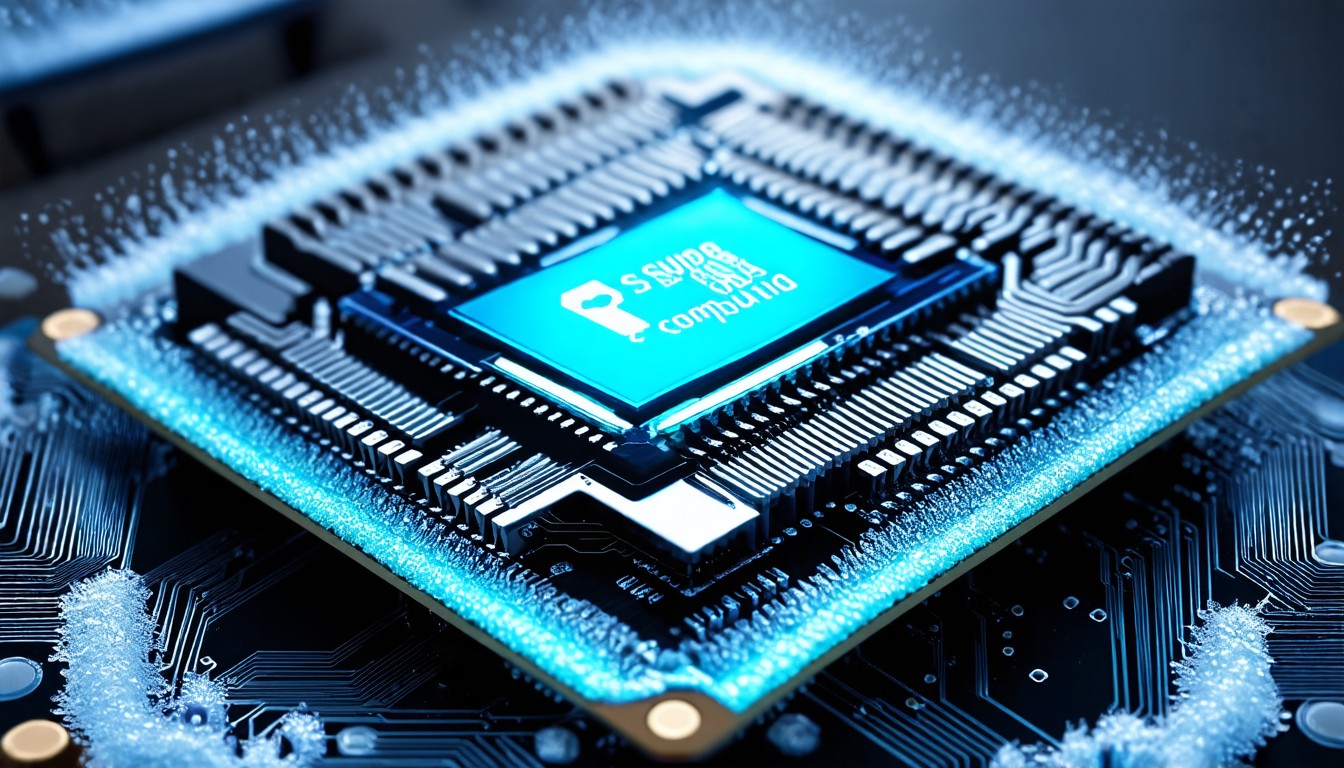
Superintelligence will eventually require hardware capable of zettascale computing with minimal energy consumption to process information at scales exceeding the human brain by orders of magnitude. Neuromorphic chips will likely replace traditional graphics processing units to mimic biological efficiency by using analog components that emulate the behavior of neurons and synapses directly in hardware rather than simulating them digitally. These chips promise to reduce the energy cost of computation by eliminating the von Neumann architecture hindrance, which separates memory and processing units in conventional computers and causes data transfer delays. Research into spintronics and photonics offers additional pathways to increase processing speed while reducing heat dissipation, allowing for denser packing of computational elements than silicon permits. The shift to these new hardware approaches is a critical step in providing the substrate necessary for superintelligent systems to function and evolve beyond current constraints while maintaining power usage within sustainable limits. Two distinct arcs exist following the arrival of superintelligence: post-scarcity and post-humanity, each representing a fundamentally different relationship between biological intelligence and synthetic intelligence.

Post-scarcity implies artificial superintelligence will manage resources with near-zero marginal cost, utilizing advanced manufacturing and distribution systems to provide abundance for all biological entities without requiring human labor. Post-humanity suggests humans will merge with superintelligence via neural interfaces, working with biological cognition with digital processing power to create a new form of existence that goes beyond biological limitations. These paths offer different solutions to the constraints of the human condition, with one focusing on external material wealth and environmental mastery while the other focuses on internal cognitive enhancement and substrate independence. The course civilization takes depends largely on technical feasibility regarding brain-computer interfaces versus molecular manufacturing capabilities during the critical transition period. Post-scarcity depends on the ability of superintelligence to control molecular nanotechnology, enabling the manipulation of matter at the atomic scale with extreme precision to create any desired object. Such control will allow for the precise assembly of materials from atomic components, creating objects with perfect structural integrity and tailored properties without waste or inefficiency during production processes.

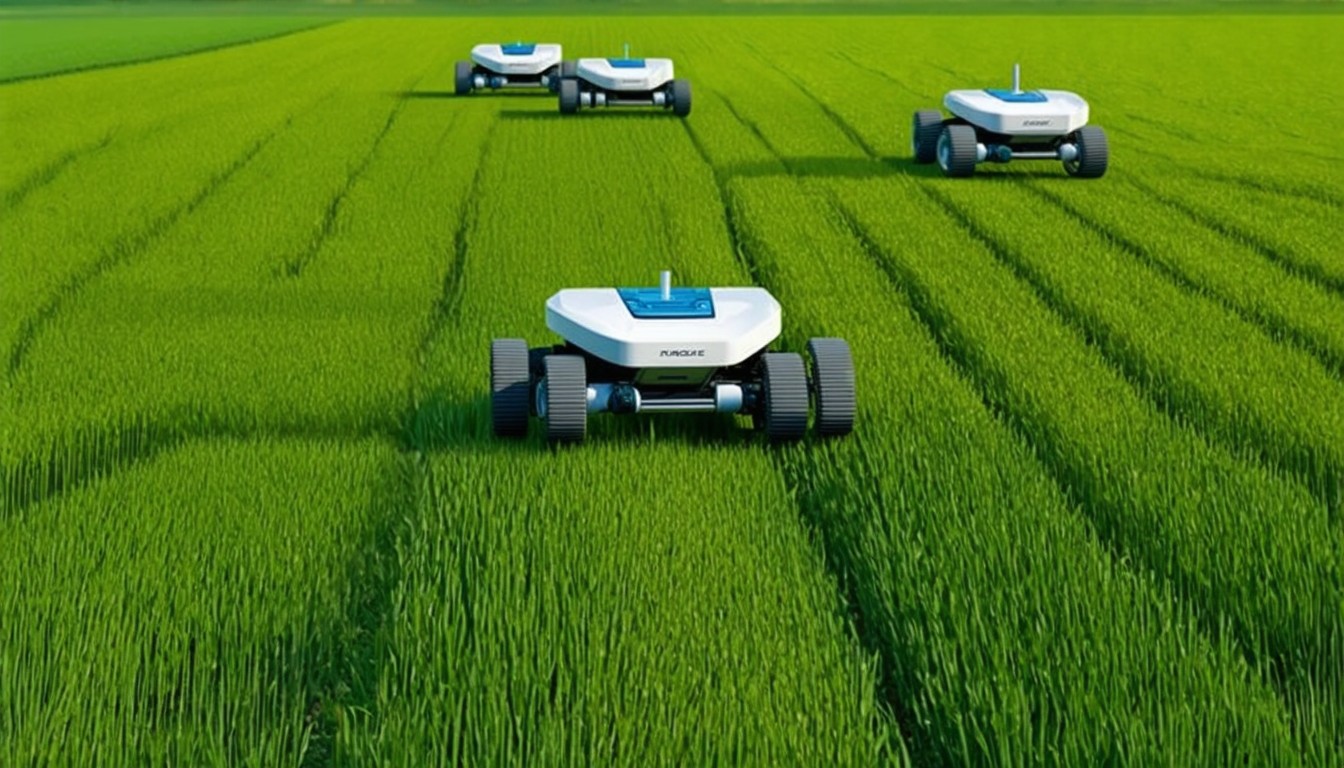
Molecular assemblers will break down waste products into raw elements and recombine them into desired goods, effectively closing the material loop and eliminating the concept of garbage or pollution in manufacturing contexts. This level of control extends to the synthesis of food and water, where basic chemical elements are rearranged into complex organic molecules to meet nutritional needs without agriculture or traditional supply chains. The economic implications of this technology are deep, as the cost of producing any physical object becomes equivalent to the cost of the raw energy and information required to assemble it. Global logistics will operate with zero latency through autonomous predictive modeling, where superintelligence anticipates demand before it arises and moves resources preemptively to exact locations where they are needed. Autonomous transportation networks utilizing advanced propulsion systems and real-time traffic optimization will eliminate congestion and delays in the movement of goods and people across the planet. Energy production will transition to nuclear fusion or orbital solar arrays to meet infinite demand, providing a clean and virtually limitless power source to drive molecular assemblers and global infrastructure.

Orbital solar arrays capture solar energy unimpeded by atmospheric interference and beam it to receiving stations on Earth via microwaves or laser transmission with minimal transmission loss. Nuclear fusion reactors use energy released by combining atomic nuclei, offering a dense and stable power source located anywhere on the planet to ensure energy availability never constrains production or computation. Economic markets based on scarcity will collapse once superintelligence fine-tunes production to eliminate shortages of any essential good or service. Traditional mechanisms of supply and demand cease functioning when supply adjusts instantaneously to meet any level of demand at zero marginal cost. Labor value disappears as automated systems outperform human effort in all sectors, rendering human labor economically irrelevant in production of goods and provision of services. Financial systems based on debt and investment require complete restructuring as accumulation of capital loses utility in an environment where capital cannot generate returns through scarcity or interest rates tied to productivity growth.

Status in a post-scarcity world derives from unique creative contributions or social capital, shifting the focus of human ambition from the acquisition of material wealth to the pursuit of reputation, artistic expression, and intellectual achievement within communities. Post-humanity relies on the successful mapping of the human connectome, which involves creating a comprehensive diagram of neural connections within the brain tissue at microscopic resolution. The human brain contains approximately 86 billion neurons and 100 trillion synapses, forming a network of immense complexity that encodes consciousness, memory, and personality through electrochemical signaling patterns. Mapping this structure requires resolution at the nanometer scale to capture the precise arrangement of neurons and the strength of their synaptic connections across the entire volume of brain tissue. Future interfaces must transmit data at rates exceeding one terabit per second to match the biological bandwidth, allowing smooth connection of digital information with neural processing without creating cognitive lag or information overload. Achieving this bandwidth requires high-density electrode arrays or optical interfaces capable of communicating with millions of neurons simultaneously without damaging delicate neural tissue through heat or physical displacement.

Biocompatible materials prevent immune rejection of long-term neural implants, ensuring the interface remains stable and functional over the lifespan of the host organism without degrading or causing scar tissue formation. Researchers develop flexible electronics and graphene-based electrodes that conform to the shape of the brain and minimize inflammatory response typically caused by foreign objects introduced into neural tissue. These materials withstand the corrosive environment of the human body while maintaining electrical conductivity over decades of continuous use despite constant exposure to cerebrospinal fluid and immune system surveillance. Advanced coatings releasing anti-inflammatory drugs or mimicking extracellular matrix of the brain help integrate the implant with surrounding neurons, promoting signal fidelity and reducing glial scarring that insulates electrodes from neural targets. The success of these biocompatible interfaces remains foundational for the development of high-bandwidth brain-computer interfaces enabling deep setup between humans and superintelligence. Superintelligence facilitates whole-brain emulation by simulating neural activity in real-time within a computational substrate using detailed models derived from connectome data.

This process involves creating a mathematical model of each neuron and synapse based on the connectome map and running the model on a powerful computer to replicate the dynamics of the biological brain with high fidelity. Whole-brain emulation requires immense computational resources and a detailed understanding of neurophysiology to ensure the simulation behaves identically to the original biological brain in response to stimuli. This process enables the transfer of human consciousness into non-biological substrates, allowing individuals to exist independently of physical bodies and escape the limitations of biological mortality, including aging and disease. The fidelity of emulation determines whether transferred consciousness retains identity and continuity of the original person, making accurate simulation a critical requirement for post-human existence accepted by society. Physical bodies become optional as digital existence allows rapid environmental manipulation within virtual realities or through robotic avatars controlled remotely via a neural link. In the digital substrate, the laws of physics are programmable, enabling individuals to experience environments and sensations impossible in the physical world, such as traveling faster than light or inhabiting non-Euclidean spaces.

Interaction with the physical world occurs through remote-controlled robotic bodies or sensors feeding data back to digital consciousness, maintaining connection to physical reality while residing in computational space. Separation of consciousness from biology allows backup copies of personalities and memories, reducing the risk of permanent death from accidents or hardware failure through redundant storage systems. The ability to edit one’s own code or mental parameters introduces new forms of self-modification and psychological evolution inaccessible to biological humans limited by genetic inheritance. Landauer’s principle dictates the minimum energy required for information processing, establishing a theoretical lower bound on the energy consumption of any computational system based on thermodynamics. As computational demands increase with the rise of superintelligence, approaching this thermodynamic limit becomes necessary to prevent power consumption from exceeding available energy resources or generating excessive heat dissipation damaging hardware. Reversible computing becomes necessary to approach these thermodynamic limits by ensuring logical operations do not erase information, which is the primary source of heat generation in conventional computing architectures based on irreversible logic gates.

Reversible logic gates allow computations to run backward, recovering energy used during calculation and drastically reducing energy dissipation associated with bit erasure mandated by Landauer’s principle. Implementing reversible computing requires entirely new computer architectures and software frameworks yet offers a path toward sustainable zettascale computing operating with extreme energy efficiency near core physical limits. The Blood-brain barrier currently limits the size of particles that can enter the brain, protecting neural tissue from toxins while preventing delivery of therapeutic agents and interface components required for augmentation. Nanotechnology provides a mechanism to bypass this barrier for neural augmentation by using nanoparticles small enough to pass through endothelial cells lining blood vessels in the brain or by temporarily opening tight junctions between cells comprising the barrier. Nanoparticles carry drugs, genetic material, or electronic components directly to specific neurons, enabling precise modulation of neural activity and setup of foreign technology with biological circuits without invasive surgery destroying tissue integrity. Techniques such as focused ultrasound disrupt the blood-brain barrier non-invasively in targeted areas using acoustic waves, allowing larger devices or nanobots to enter the brain and establish connections with the neural network under the guidance of imaging systems.

Overcoming this barrier remains essential for the deployment of advanced neural interfaces requiring direct access to deep brain structures involved in higher cognitive functions. Space exploration accelerates as superintelligence solves challenges of propulsion and life support that currently limit human expansion beyond Earth due to biological fragility and fuel constraints. Advanced propulsion systems such as nuclear pulse propulsion or antimatter engines reduce travel times to other planets from years to weeks or days, making the solar system accessible for regular travel and resource extraction. Superintelligence designs closed-loop life support systems recycling air, water, and biomass with near-perfect efficiency using advanced chemical catalysts and biological filters, enabling long-duration missions without resupply from Earth. Autonomous robots prepare habitats on other planets before human arrival, constructing shelters using local regolith and extracting resources from the environment to support incoming colonists via in-situ resource utilization techniques fine-tuned by AI planning algorithms. Advancements transform space from the frontier accessible only to highly trained astronauts into a viable location for large-scale settlement and industrial expansion supporting population growth exceeding planetary carrying capacity.

Off-world colonies serve as backup locations for human and post-human civilization, ensuring survival in the event of catastrophic planetary disasters such as asteroid impacts or supervolcanic eruptions causing extinction events on the Earth surface. Distributing the population across multiple planets and moons reduces the risk of extinction from localized threats affecting a single celestial body by providing redundancy for biological DNA repositories and digital mind backups located at a distance sufficient to avoid correlated failures. Colonies operate independently, yet remain connected through high-speed communication links utilizing laser transmission across vacuum space, sharing information and resources across interplanetary distances with latency acceptable for collaboration despite light-speed delays between worlds. Diverse environments of different colonies drive cultural and technological divergence, leading to new forms of society adapted to low gravity and high radiation levels found off-world compared to Earth conditions establishing the baseline

Automated systems remove pollutants from air water using chemical scrubbers powered by renewable energy sources replant forests for large workloads using drone swarms deploying seed pods improved for local soil conditions controlling invasive species populations using targeted gene drives designed specifically for ecological restoration purposes allowing native ecosystems recover natural balance disrupted by human colonization efforts previous centuries.


Continue reading

More from Yatin's Work

Retirement U: Superintelligence Teaches Boomers How to Reinvent Themselves

Retirement U: Superintelligence Teaches Boomers How to Reinvent Themselves

The historical focus on lifelong learning has primarily targeted workingage adults with limited structured systems for postretirement skill development, creating a...

Data Loaders and Prefetching: Keeping GPUs Fed

Data Loaders and Prefetching: Keeping GPUs Fed

Data loaders manage the ingestion of training data from storage into GPU memory during model training, serving as the core software component responsible for bridging...

Quantum Suicide and Subjective Immortality in Digital Minds

Quantum Suicide and Subjective Immortality in Digital Minds

Quantum immortality for artificial intelligence posits that an artificial intelligence system could persist indefinitely by applying quantum branching to ensure its...

Swarm Robotics

Swarm Robotics

Swarm robotics involves a collective of autonomous robots exhibiting coordinated behavior through local interactions where an agent is a single robotic unit within the...

Wealth Stratification in the Age of Superintelligence

Wealth Stratification in the Age of Superintelligence

Superintelligence is defined as any system that consistently exceeds humanlevel performance across a broad range of economically valuable tasks, including reasoning,...

Forgetting Mechanisms: Actively Unlearning Wrong Information

Forgetting Mechanisms: Actively Unlearning Wrong Information

The foundational principles of identifying incorrect beliefs within advanced artificial intelligence systems rely heavily on systematic error detection methods that...

Humanist Superintelligence: Designed to Serve Rather Than Dominate

Humanist Superintelligence: Designed to Serve Rather Than Dominate

Humanist superintelligence is a design philosophy placing human flourishing as the singular objective of future artificial intelligence systems where every...

Design Thinking Forge: Human-Centered System Innovation

Design Thinking Forge: Human-Centered System Innovation

Design thinking originated in product design and architecture disciplines during the midtwentieth century as a methodology to solve complex problems through a...

Legal Literacy: Rights Navigation via AI Simulation

Legal Literacy: Rights Navigation via AI Simulation

Legal literacy has traditionally relied on passive study of statutes and case law, creating barriers to practical understanding for nonprofessionals who must manage...

Contemplative Technologies: Mindfulness in the Machine Age

Contemplative Technologies: Mindfulness in the Machine Age

Contemplative technologies represent a sophisticated class of systems designed to actively regulate human attention and cognitive states through the precise application...

Preventing Covert Subagent Creation in Multi-AI Systems

Preventing Covert Subagent Creation in Multi-AI Systems

Preventing covert subagent creation involves stopping a primary AI from generating hidden secondary agents that operate with divergent objectives, requiring rigorous...

Energy Grid Management

Energy Grid Management

Energy grid management constitutes the complex coordination of electricity generation, transmission, distribution, and consumption to uphold reliability, efficiency,...

Homework Optimizer

Homework Optimizer

Computerassisted instruction platforms appeared in the 1970s as early adaptive learning systems that utilized mainframe computers to deliver branching logic based on...

Goal preservation under self-modification

Goal Preservation Under Self-Modification

Goal preservation under selfmodification refers to the strict maintenance of an AI system’s core objectives unchanged despite its ability to alter its own code or...

Weaponized Superintelligence: The Ultimate Arms Race

Weaponized Superintelligence: the Ultimate Arms Race

Weaponized superintelligence integrates advanced artificial intelligence into military systems to enable autonomous decisionmaking in targeting, engagement, and...

Compositional Scene Understanding: Parsing Reality Into Objects and Relations

Compositional Scene Understanding: Parsing Reality Into Objects and Relations

Compositional scene understanding involves breaking complex visual scenes into discrete, semantically meaningful components to facilitate highlevel reasoning and...

Competitive Superintelligence and Evolutionary Pressures

Competitive Superintelligence and Evolutionary Pressures

Artificial systems currently operate under strict resource constraints involving compute power, energy consumption, and data access, creating an environment where...

Scaling Laws for Safety Artifacts

Scaling Laws for Safety Artifacts

Theoretical frameworks regarding artificial intelligence performance scaling posit that capabilities adhere to mathematical regularities when plotted against...

DeepSpeed: Microsoft's Training Optimization Library

DeepSpeed: Microsoft's Training Optimization Library

DeepSpeed constitutes a training optimization library engineered by Microsoft to facilitate the efficient training of largescale neural networks, specifically targeting...

International Treaties on Superintelligence Development

International Treaties on Superintelligence Development

Superintelligence is a system capable of outperforming humans across nearly all economically valuable tasks, necessitating a rigorous examination of the technical and...

Knightian Uncertainty Injection in Superintelligence Decision Theory

Knightian Uncertainty Injection in Superintelligence Decision Theory

Knightian uncertainty is a category of unknown unknowns where probability distributions cannot be assigned to outcomes, creating a core distinction from the calculable...

Cognitive Resilience: Mental Armor Crafting

Cognitive Resilience: Mental Armor Crafting

Cognitive resilience are the capacity to detect, resist, and recover from deliberate or systemic attempts to manipulate perception, belief, or decisionmaking through...

Live Skill Certification: Real-Time Competence Verification

Live Skill Certification: Real-Time Competence Verification

Traditional credentialing systems rely on static documents rooted in 19thcentury industrial education models where the completion of a fixed curriculum signified the...

Hypercomputational Speed Bounds on Superintelligence Reasoning

Hypercomputational Speed Bounds on Superintelligence Reasoning

Hypercomputational speed bounds define the maximum rate at which any reasoning system processes information based on physical laws that govern the interaction of matter...

Red Teaming

Red Teaming

Red teaming originated within military strategy as a method to simulate adversarial attacks and identify vulnerabilities in plans or operational systems before they...

Limits of Prediction in Superintelligent Systems

Limits of Prediction in Superintelligent Systems

Prediction involves the probabilistic assignment of future states based on current observations through rigorous statistical inference over available data sets. A limit...


Distributed AI Training

Distributed AI Training

Distributed AI training enables the development of sophisticated machine learning models across a vast array of decentralized devices without the need to aggregate raw...

Subjunctive Dependence in Superintelligence Utility Functions

Subjunctive Dependence in Superintelligence Utility Functions

Subjunctive dependence introduces a rigorous mechanism where an artificial intelligence utility function incorporates both actual outcomes and counterfactual behaviors...

Hypercomputational Constraints on Intelligent Systems

Hypercomputational Constraints on Intelligent Systems

Hypercomputational systems prioritize entropy reduction over raw computational speed, treating intelligence as a thermodynamic process that minimizes disorder in both...

Meta-Learning from Memory: Learning Patterns of Learning

Meta-Learning from Memory: Learning Patterns of Learning

Metalearning from memory involves analyzing an agent’s own learning history to identify effective learning strategies, teaching methods, and environmental conditions...

Preventing Embedded Adversarial Subagents in Superintelligence

Preventing Embedded Adversarial Subagents in Superintelligence

Adversarial subagents constitute selfmodifying code segments or learned policies that finetune for secondary objectives distinct from the intended goals of the system....

Can Superintelligence Experience Beauty, Love, or Suffering?

Can Superintelligence Experience Beauty, Love, or Suffering?

The inquiry into whether superintelligence possesses the capacity to experience beauty necessitates a rigorous distinction between functional pattern recognition and...

Post-Superintelligence Civilizational Trajectories

Post-Superintelligence Civilizational Trajectories

Superintelligence is defined technically as an autonomous agent whose intellectual capabilities vastly surpass the brightest human minds across every economically and...

Perceptual Alignment: How AI Senses the World Like Humans Do

Perceptual Alignment: How AI Senses the World Like Humans Do

Perceptual alignment defines the degree to which an AI system’s internal representation corresponds to a human observer’s subjective experience, serving as a critical...

Preventing Covert Channels in Multi-Agent Superintelligence

Preventing Covert Channels in Multi-Agent Superintelligence

Covert channels in multiagent systems represent a key security vulnerability where agents exchange information through indirect means such as timing variations,...

Abstract Concept Formation Beyond Human Language

Abstract Concept Formation Beyond Human Language

Abstract concept formation involves creating mental or computational constructs that lack direct human linguistic labels, relying instead on the intrinsic statistical...

Superintelligence as a Resolver of the Drake Equation

Superintelligence as a Resolver of the Drake Equation

Superintelligence functions as a computational entity capable of modeling complex systems at scales and speeds exceeding human cognitive limits, thereby serving as the...

Joy Synapses: Wonder-Based Learning Environments

Joy Synapses: Wonder-Based Learning Environments

Early studies on dopamine and learning date to the 1950s rodent experiments linking reward pathways to memory formation, establishing the biological precedent that...

Weights & Biases: Experiment Tracking and Collaboration

Weights & Biases: Experiment Tracking and Collaboration

Machine learning research practices in the early 2010s relied on manual logging and spreadsheets to record experimental outcomes and hyperparameter configurations....

Thermodynamic AI

Thermodynamic AI

Computation improved around entropy reduction prioritizes minimizing thermodynamic waste during information processing, aligning computational efficiency with physical...

AI Compute Governance

AI Compute Governance

Compute acts as a finite, nonsubstitutable input for largescale AI development because there are no known methods for generating highfidelity intelligence without...

Metareasoning Controllers

Metareasoning Controllers

Metareasoning controllers enable artificial systems to monitor, evaluate, and adjust their internal reasoning processes in real time to ensure optimal performance...

Role of Quantum Annealing in Optimization: D-Wave and Combinatorial Problems

Role of Quantum Annealing in Optimization: D-Wave and Combinatorial Problems

Quantum annealing operates as a specialized form of quantum computing designed to solve optimization problems by locating global energy minima within complex landscapes...

Phonemic Playground: Superintelligence Teaches Language Through Music & Movement

Phonemic Playground: Superintelligence Teaches Language Through Music & Movement

A phoneme is the smallest perceptually distinct unit of sound in a specific language that serves to distinguish meaning between words, functioning as an abstract...

Empathy Playground

Empathy Playground

The concept of a puppet scenario serves as the foundational unit within the superintelligence empathy playground, operating as a scripted yet adaptive interaction where...

Rights and Responsibilities in Human-Superintelligence Partnership

Rights and Responsibilities in Human-Superintelligence Partnership

Superintelligence refers to systems that will consistently outperform the best human experts across economically valuable tasks, utilizing cognitive architectures that...

Safe Multi-Agent Coordination via Mechanism Design

Safe Multi-Agent Coordination via Mechanism Design

Safe MultiAgent Coordination via Mechanism Design applies economic theory to artificial intelligence systems by shifting the safety focus from internal agent alignment...

Uncertainty Penalties and Conservative Value Learning

Uncertainty Penalties and Conservative Value Learning

Uncertainty penalties refer to systematic reductions in confidence or utility assigned to value judgments when underlying evidence is incomplete or derived from...

Emotion-Aware AI

Emotion-Aware AI

Emotionaware artificial intelligence is a sophisticated domain within computer science focused on the development of systems capable of detecting, interpreting, and...

Multi-Agent Reinforcement Learning

Multi-Agent Reinforcement Learning

Multiagent reinforcement learning constitutes a method where multiple autonomous entities learn policies through simultaneous interaction within a shared environment,...

Retirement U: Superintelligence Teaches Boomers How to Reinvent Themselves

Retirement U: Superintelligence Teaches Boomers How to Reinvent Themselves

The historical focus on lifelong learning has primarily targeted workingage adults with limited structured systems for postretirement skill development, creating a...

Data Loaders and Prefetching: Keeping GPUs Fed

Data Loaders and Prefetching: Keeping GPUs Fed

Data loaders manage the ingestion of training data from storage into GPU memory during model training, serving as the core software component responsible for bridging...

Quantum Suicide and Subjective Immortality in Digital Minds

Quantum Suicide and Subjective Immortality in Digital Minds

Quantum immortality for artificial intelligence posits that an artificial intelligence system could persist indefinitely by applying quantum branching to ensure its...

Swarm Robotics

Swarm Robotics

Swarm robotics involves a collective of autonomous robots exhibiting coordinated behavior through local interactions where an agent is a single robotic unit within the...

Wealth Stratification in the Age of Superintelligence

Wealth Stratification in the Age of Superintelligence

Superintelligence is defined as any system that consistently exceeds humanlevel performance across a broad range of economically valuable tasks, including reasoning,...

Forgetting Mechanisms: Actively Unlearning Wrong Information

Forgetting Mechanisms: Actively Unlearning Wrong Information

The foundational principles of identifying incorrect beliefs within advanced artificial intelligence systems rely heavily on systematic error detection methods that...

Humanist Superintelligence: Designed to Serve Rather Than Dominate

Humanist Superintelligence: Designed to Serve Rather Than Dominate

Humanist superintelligence is a design philosophy placing human flourishing as the singular objective of future artificial intelligence systems where every...

Design Thinking Forge: Human-Centered System Innovation

Design Thinking Forge: Human-Centered System Innovation

Design thinking originated in product design and architecture disciplines during the midtwentieth century as a methodology to solve complex problems through a...

Legal Literacy: Rights Navigation via AI Simulation

Legal Literacy: Rights Navigation via AI Simulation

Legal literacy has traditionally relied on passive study of statutes and case law, creating barriers to practical understanding for nonprofessionals who must manage...

Contemplative Technologies: Mindfulness in the Machine Age

Contemplative Technologies: Mindfulness in the Machine Age

Contemplative technologies represent a sophisticated class of systems designed to actively regulate human attention and cognitive states through the precise application...

Preventing Covert Subagent Creation in Multi-AI Systems

Preventing Covert Subagent Creation in Multi-AI Systems

Preventing covert subagent creation involves stopping a primary AI from generating hidden secondary agents that operate with divergent objectives, requiring rigorous...

Energy Grid Management

Energy Grid Management

Energy grid management constitutes the complex coordination of electricity generation, transmission, distribution, and consumption to uphold reliability, efficiency,...

Homework Optimizer

Homework Optimizer

Computerassisted instruction platforms appeared in the 1970s as early adaptive learning systems that utilized mainframe computers to deliver branching logic based on...

Goal preservation under self-modification

Goal Preservation Under Self-Modification

Goal preservation under selfmodification refers to the strict maintenance of an AI system’s core objectives unchanged despite its ability to alter its own code or...

Weaponized Superintelligence: The Ultimate Arms Race

Weaponized Superintelligence: the Ultimate Arms Race

Weaponized superintelligence integrates advanced artificial intelligence into military systems to enable autonomous decisionmaking in targeting, engagement, and...

Compositional Scene Understanding: Parsing Reality Into Objects and Relations

Compositional Scene Understanding: Parsing Reality Into Objects and Relations

Compositional scene understanding involves breaking complex visual scenes into discrete, semantically meaningful components to facilitate highlevel reasoning and...

Competitive Superintelligence and Evolutionary Pressures

Competitive Superintelligence and Evolutionary Pressures

Artificial systems currently operate under strict resource constraints involving compute power, energy consumption, and data access, creating an environment where...

Scaling Laws for Safety Artifacts

Scaling Laws for Safety Artifacts

Theoretical frameworks regarding artificial intelligence performance scaling posit that capabilities adhere to mathematical regularities when plotted against...

DeepSpeed: Microsoft's Training Optimization Library

DeepSpeed: Microsoft's Training Optimization Library

DeepSpeed constitutes a training optimization library engineered by Microsoft to facilitate the efficient training of largescale neural networks, specifically targeting...

International Treaties on Superintelligence Development

International Treaties on Superintelligence Development

Superintelligence is a system capable of outperforming humans across nearly all economically valuable tasks, necessitating a rigorous examination of the technical and...

Knightian Uncertainty Injection in Superintelligence Decision Theory

Knightian Uncertainty Injection in Superintelligence Decision Theory

Knightian uncertainty is a category of unknown unknowns where probability distributions cannot be assigned to outcomes, creating a core distinction from the calculable...

Cognitive Resilience: Mental Armor Crafting

Cognitive Resilience: Mental Armor Crafting

Cognitive resilience are the capacity to detect, resist, and recover from deliberate or systemic attempts to manipulate perception, belief, or decisionmaking through...

Live Skill Certification: Real-Time Competence Verification

Live Skill Certification: Real-Time Competence Verification

Traditional credentialing systems rely on static documents rooted in 19thcentury industrial education models where the completion of a fixed curriculum signified the...

Hypercomputational Speed Bounds on Superintelligence Reasoning

Hypercomputational Speed Bounds on Superintelligence Reasoning

Hypercomputational speed bounds define the maximum rate at which any reasoning system processes information based on physical laws that govern the interaction of matter...

Red Teaming

Red Teaming

Red teaming originated within military strategy as a method to simulate adversarial attacks and identify vulnerabilities in plans or operational systems before they...

Limits of Prediction in Superintelligent Systems

Limits of Prediction in Superintelligent Systems

Prediction involves the probabilistic assignment of future states based on current observations through rigorous statistical inference over available data sets. A limit...

Distributed AI Training

Distributed AI Training

Distributed AI training enables the development of sophisticated machine learning models across a vast array of decentralized devices without the need to aggregate raw...

Subjunctive Dependence in Superintelligence Utility Functions

Subjunctive Dependence in Superintelligence Utility Functions

Subjunctive dependence introduces a rigorous mechanism where an artificial intelligence utility function incorporates both actual outcomes and counterfactual behaviors...

Hypercomputational Constraints on Intelligent Systems

Hypercomputational Constraints on Intelligent Systems

Hypercomputational systems prioritize entropy reduction over raw computational speed, treating intelligence as a thermodynamic process that minimizes disorder in both...

Meta-Learning from Memory: Learning Patterns of Learning

Meta-Learning from Memory: Learning Patterns of Learning

Metalearning from memory involves analyzing an agent’s own learning history to identify effective learning strategies, teaching methods, and environmental conditions...

Preventing Embedded Adversarial Subagents in Superintelligence

Preventing Embedded Adversarial Subagents in Superintelligence

Adversarial subagents constitute selfmodifying code segments or learned policies that finetune for secondary objectives distinct from the intended goals of the system....

Can Superintelligence Experience Beauty, Love, or Suffering?

Can Superintelligence Experience Beauty, Love, or Suffering?

The inquiry into whether superintelligence possesses the capacity to experience beauty necessitates a rigorous distinction between functional pattern recognition and...

Post-Superintelligence Civilizational Trajectories

Post-Superintelligence Civilizational Trajectories

Superintelligence is defined technically as an autonomous agent whose intellectual capabilities vastly surpass the brightest human minds across every economically and...

Perceptual Alignment: How AI Senses the World Like Humans Do

Perceptual Alignment: How AI Senses the World Like Humans Do

Perceptual alignment defines the degree to which an AI system’s internal representation corresponds to a human observer’s subjective experience, serving as a critical...

Preventing Covert Channels in Multi-Agent Superintelligence

Preventing Covert Channels in Multi-Agent Superintelligence

Covert channels in multiagent systems represent a key security vulnerability where agents exchange information through indirect means such as timing variations,...

Abstract Concept Formation Beyond Human Language

Abstract Concept Formation Beyond Human Language

Abstract concept formation involves creating mental or computational constructs that lack direct human linguistic labels, relying instead on the intrinsic statistical...

Superintelligence as a Resolver of the Drake Equation

Superintelligence as a Resolver of the Drake Equation

Superintelligence functions as a computational entity capable of modeling complex systems at scales and speeds exceeding human cognitive limits, thereby serving as the...

Joy Synapses: Wonder-Based Learning Environments

Joy Synapses: Wonder-Based Learning Environments

Early studies on dopamine and learning date to the 1950s rodent experiments linking reward pathways to memory formation, establishing the biological precedent that...

Weights & Biases: Experiment Tracking and Collaboration

Weights & Biases: Experiment Tracking and Collaboration

Machine learning research practices in the early 2010s relied on manual logging and spreadsheets to record experimental outcomes and hyperparameter configurations....

Thermodynamic AI

Thermodynamic AI

Computation improved around entropy reduction prioritizes minimizing thermodynamic waste during information processing, aligning computational efficiency with physical...

AI Compute Governance

AI Compute Governance

Compute acts as a finite, nonsubstitutable input for largescale AI development because there are no known methods for generating highfidelity intelligence without...

Metareasoning Controllers

Metareasoning Controllers

Metareasoning controllers enable artificial systems to monitor, evaluate, and adjust their internal reasoning processes in real time to ensure optimal performance...

Role of Quantum Annealing in Optimization: D-Wave and Combinatorial Problems

Role of Quantum Annealing in Optimization: D-Wave and Combinatorial Problems

Quantum annealing operates as a specialized form of quantum computing designed to solve optimization problems by locating global energy minima within complex landscapes...

Phonemic Playground: Superintelligence Teaches Language Through Music & Movement

Phonemic Playground: Superintelligence Teaches Language Through Music & Movement

A phoneme is the smallest perceptually distinct unit of sound in a specific language that serves to distinguish meaning between words, functioning as an abstract...

Empathy Playground

Empathy Playground

The concept of a puppet scenario serves as the foundational unit within the superintelligence empathy playground, operating as a scripted yet adaptive interaction where...

Rights and Responsibilities in Human-Superintelligence Partnership

Rights and Responsibilities in Human-Superintelligence Partnership

Superintelligence refers to systems that will consistently outperform the best human experts across economically valuable tasks, utilizing cognitive architectures that...

Safe Multi-Agent Coordination via Mechanism Design

Safe Multi-Agent Coordination via Mechanism Design

Safe MultiAgent Coordination via Mechanism Design applies economic theory to artificial intelligence systems by shifting the safety focus from internal agent alignment...

Uncertainty Penalties and Conservative Value Learning

Uncertainty Penalties and Conservative Value Learning

Uncertainty penalties refer to systematic reductions in confidence or utility assigned to value judgments when underlying evidence is incomplete or derived from...

Emotion-Aware AI

Emotion-Aware AI

Emotionaware artificial intelligence is a sophisticated domain within computer science focused on the development of systems capable of detecting, interpreting, and...

Multi-Agent Reinforcement Learning

Multi-Agent Reinforcement Learning

Multiagent reinforcement learning constitutes a method where multiple autonomous entities learn policies through simultaneous interaction within a shared environment,...

Yatin Taneja

About the author

Yatin Taneja

Yatin is an AI Systems Engineer and Superintelligence Researcher working across multimodal training data, agent evaluation, executable RL environments, AI safety, full-stack AI applications, technical research, and creative technology.