Knowledge hub
Scientific Hypothesis Generation

Scientific hypothesis generation involves formulating testable explanations for observed phenomena based on data patterns and logical inference, serving as the core engine of empirical research. This process traditionally relied on human intuition and domain expertise, while computational methods increasingly augment these efforts by processing information at scales beyond biological cognition. Modern approaches apply large-scale scientific datasets such as particle physics collision records or genomic sequences to detect subtle correlations that escape human perception due to the high dimensionality of the data. Systems identify structural regularities within high-dimensional data that may indicate new underlying principles or key constants of nature. Once a pattern is identified, the system generates a candidate hypothesis expressed as a mathematical relationship or causal model that predicts future observations. The hypothesis must be falsifiable and accompanied by a proposed experimental protocol to validate or refute it, effectively grounding abstract mathematics in physical reality. This shifts part of the scientific method from human-driven insight to algorithmically guided discovery where the machine proposes specific relationships for human review.

The system operates on three foundational elements, including data ingestion, pattern recognition, and hypothesis formulation, which function sequentially to transform raw observations into theoretical knowledge. Data ingestion requires structured access to heterogeneous scientific repositories involving metadata standardization to ensure that variables from different experiments map correctly onto one another. Pattern recognition employs statistical modeling or symbolic regression to uncover non-obvious relationships hidden within the noise of complex measurements. Hypothesis formulation translates detected patterns into coherent theoretical statements using constraints from existing knowledge to ensure consistency with established physics or biology. These three elements rely on distinct computational architectures, ranging from database management systems to neural networks, yet must integrate seamlessly to produce viable scientific candidates. Experimental design maps the hypothesis to a concrete test, specifying variables, controls, and measurement techniques required to isolate the effect predicted by the model.
The pipeline maintains traceability so each hypothesis can be audited back to its originating data, allowing researchers to verify the derivation path and identify potential sources of error or bias. Key components include data preprocessing modules, anomaly detection engines, theory synthesis algorithms, and experiment simulation frameworks, which together constitute the software infrastructure for automated discovery. Data preprocessing normalizes formats and aligns temporal or spatial scales across datasets, ensuring that a time series from one sensor matches the sampling rate of another precisely. Anomaly detection flags deviations from established models, serving as potential triggers for new hypotheses when the system encounters data that violates expected norms significantly. Theory synthesis combines symbolic reasoning with machine learning to propose mechanistic models that explain why a specific anomaly occurs rather than merely noting its presence. Experiment simulation evaluates the feasibility of proposed tests before physical implementation, saving resources by identifying experiments that would likely fail due to technical limitations or insufficient sensitivity.
Feedback loops allow failed experiments or new data to refine or discard hypotheses, creating a self-correcting cycle that improves the accuracy of the generative model over time. A hypothesis is a testable proposition that explains observations and makes predictions about future states of the system under investigation, distinguishing it from mere conjecture or speculation. Testability refers to the property that a hypothesis can be empirically validated through controlled experimentation, which requires that the terms in the hypothesis correspond directly to measurable quantities in the physical world. Correlation describes a statistical relationship between variables that may prompt causal investigation, although correlation alone does not imply directionality or mechanism without further analysis. An anomaly constitutes an observation inconsistent with current theoretical expectations, often signaling that the existing theoretical framework requires modification or extension to accommodate new evidence. Symbolic regression acts as a method for discovering mathematical expressions without assuming a predefined functional form, allowing the algorithm to search the space of equations to find the simplest expression that fits the data accurately.
A causal model is cause-effect relationships among variables often encoded as graphs where nodes represent variables and edges represent direct influences providing a structured representation of the mechanisms driving the system behavior. Early computational hypothesis generation appeared in the 1970s with systems like BACON which rediscovered physical laws by analyzing numerical data from simple experiments demonstrating that machines could replicate inductive reasoning processes historically attributed to human genius. The 1990s saw Inductive Logic Programming enable logic-based theory revision in chemistry and biology allowing systems to take existing background knowledge and refine it based on new experimental evidence expressed as logical predicates. The 2010s brought setup of deep learning with scientific data though initial models lacked interpretability making them difficult to trust in fields where understanding the mechanism is as important as making accurate predictions. A shift occurred around 2020 with hybrid architectures combining neural networks with symbolic AI using the pattern recognition power of deep learning while maintaining the logical rigor of symbolic reasoning. Recent advances in large language models trained on scientific corpora demonstrate capability to propose plausible hypotheses by synthesizing information across disparate documents identifying gaps in current literature that suggest new avenues for research.
Physical constraints include sensor resolution and the finite speed of data acquisition, which limit the granularity of observations available for analysis and set key bounds on what can be discovered regardless of algorithmic sophistication. Economic constraints involve the cost of running proposed experiments in high-energy physics or astronomy where facility time and energy consumption represent significant investments requiring careful prioritization of hypotheses worth testing. Flexibility is limited by computational resources required for searching vast hypothesis spaces as the number of possible relationships grows exponentially with the number of variables considered in the analysis, creating a combinatorial challenge for search algorithms. Data scarcity in niche scientific domains restricts model training and generalization because rare events or poorly studied phenomena lack sufficient examples for statistical models to identify significant patterns reliably. Reproducibility demands impose overhead in documentation and experimental replication requiring that automated systems maintain rigorous records of all steps taken during the discovery process to facilitate independent verification of results. Pure deep learning approaches were rejected due to poor interpretability and lack of connection with domain knowledge because black-box models do not provide insights into the underlying physical principles, which is often the primary goal of scientific inquiry.
Rule-based expert systems were explored, yet found too rigid to handle noisy or evolving data because they rely on hard-coded logical rules that break down when faced with the uncertainty intrinsic in real-world experimental measurements. Evolutionary algorithms for hypothesis search struggled with combinatorial explosion and low sample efficiency, often requiring millions of evaluations to converge on a solution which becomes computationally prohibitive for complex simulations. Current hybrid systems were selected because they balance data-driven discovery with symbolic reasoning, using neural networks to guide the search toward promising regions of the hypothesis space, while using symbolic engines to construct formally verifiable equations from those regions. Rising data volumes across scientific fields exceed human capacity for manual analysis, necessitating automated tools that can sift through terabytes of high-throughput screening data or telescope imagery to find relevant signals hidden in the noise. Funding pressures demand higher return on investment from research investments, pushing organizations to adopt automation technologies that can accelerate the pace of discovery and reduce the labor costs associated with routine data analysis tasks. Societal challenges such as climate change require faster scientific iteration to inform technology development, creating urgency for systems that can rapidly propose and test materials or chemical reactions relevant to sustainable energy solutions.

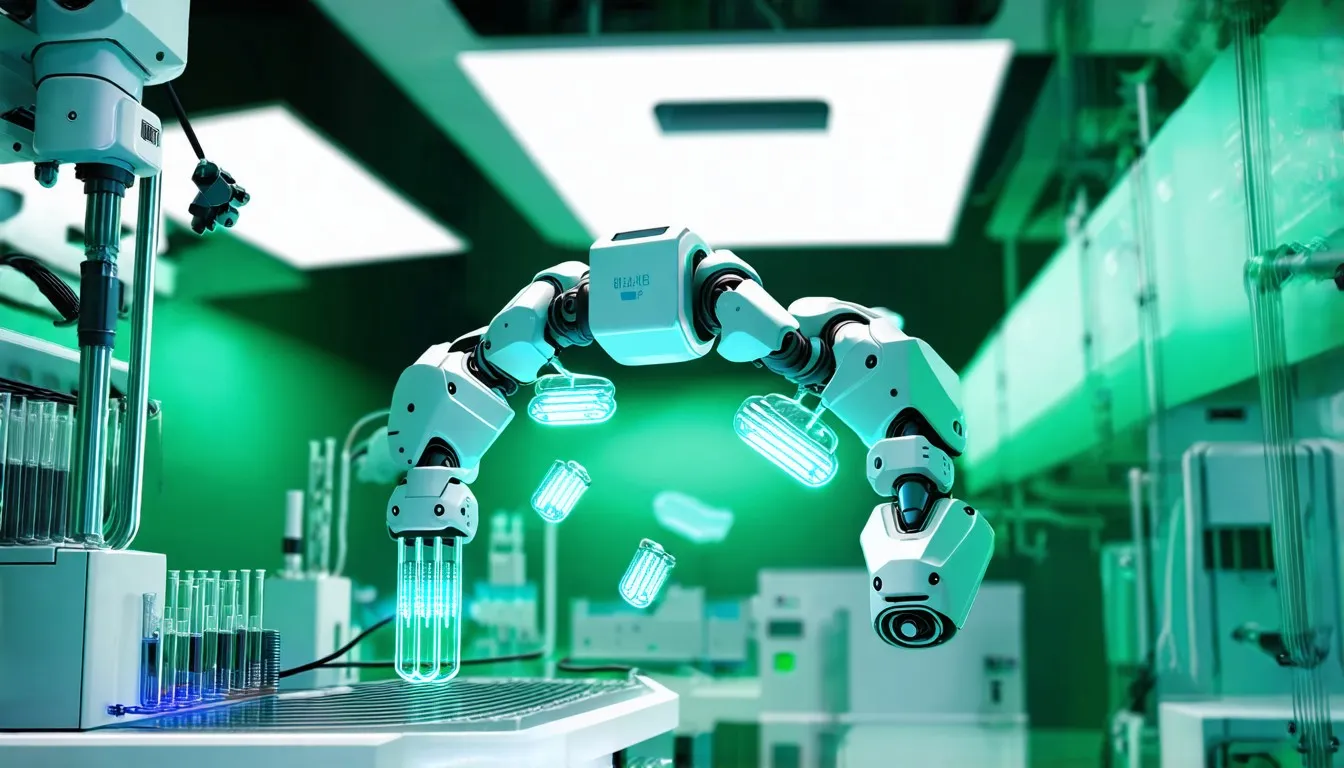
Open science movements and shared data infrastructures enable cross-domain hypothesis generation by providing centralized repositories where algorithms can access data from multiple disciplines simultaneously, facilitating interdisciplinary insights that human specialists might miss due to siloed knowledge structures. No fully autonomous hypothesis-generating systems are deployed commercially, and research prototypes exist in pharmaceutical R&D where the high cost of failure justifies investment in experimental AI systems capable of suggesting novel drug candidates. Performance benchmarks focus on precision, novelty, and experimental feasibility, ensuring that generated hypotheses are not only statistically valid but also represent genuinely new knowledge that can realistically be tested within current technological constraints. Current systems achieve moderate precision with validation rates often below 30% in retrospective studies, indicating that while these tools are powerful, they still require significant filtering by human experts to avoid wasting resources on false leads. These systems show high novelty in unexplored domains compared to human baselines because algorithms do not suffer from cognitive biases that might lead researchers to favor familiar theories over unconventional, yet accurate explanations of data. Connection with lab automation platforms such as robotic wet labs is growing, enabling the closure of the loop where a machine proposes an experiment and a robot executes it without human intervention, significantly accelerating the iterative cycle of the scientific method.
Dominant architectures combine transformer-based language models with graph neural networks for relational data, allowing the system to process both textual scientific literature and structured molecular or physical graphs simultaneously to extract rich contextual information for hypothesis generation. Developing challengers include neuro-symbolic frameworks that embed logical constraints directly into neural training loops, forcing the network to learn representations that obey key laws of physics such as conservation of energy or symmetry principles, improving the plausibility of outputs. Causal discovery engines infer directed relationships from observational data using statistical tests for conditional independence, allowing them to distinguish between correlation and causation even without controlled experiments, which is crucial for fields like epidemiology, where randomized trials are often unethical or impossible. Some systems use reinforcement learning to improve hypothesis selection based on expected information gain, training an agent to choose experiments that maximize the reduction in uncertainty about the true state of nature, fine-tuning the learning process efficiency. Reliance on high-performance computing clusters creates dependency on GPU supply chains because training large models on scientific datasets requires massive parallel processing capabilities that are currently dominated by specific hardware manufacturers, limiting accessibility for smaller research institutions. Access to curated scientific datasets is critical and often governed by institutional agreements, restricting the ability of commercial entities to train models on proprietary data generated by public universities or government-funded facilities, creating friction in data sharing ecosystems.
Specialized hardware for proposed experiments may be bottlenecked by manufacturing capacity as custom sensors or microfluidic devices required to test novel hypotheses often have long lead times due to the specialized nature of the fabrication processes involved. Major players include academic labs and biotech firms such as Recursion Pharmaceuticals, which use automated microscopy and machine learning to identify potential therapeutics by analyzing cellular morphological changes for large workloads. Tech giants provide cloud infrastructure and foundational models while rarely deploying end-to-end hypothesis systems, preferring instead to offer general-purpose tools that domain scientists adapt to their specific problems rather than developing vertical solutions for niche scientific areas. Startups focus on vertical applications like drug discovery or battery materials where the value of a single correct hypothesis is high enough to support a specialized business model focused on a specific segment of the chemical or materials sciences space. Control over scientific data and compute resources is viewed as strategic assets, leading companies to hoard proprietary datasets even when open sharing would accelerate overall scientific progress due to competitive pressures regarding intellectual property and market advantage. Geopolitical factors affect global research equity through limitations on advanced hardware deployment as export controls on high-performance chips can prevent researchers in certain nations from participating fully in the latest AI-driven research methodologies, creating a divide in scientific capability.
International collaborations face friction when AI-driven hypotheses originate from sensitive entities because concerns about technology transfer or national security can restrict the flow of data and algorithms across borders, complicating global efforts to solve shared problems like pandemics or climate change. Strong collaboration exists between AI research groups and domain scientists in physics and chemistry, building an interdisciplinary environment where computer scientists learn the constraints of physical theory while experimentalists learn the capabilities of modern algorithms, leading to more strong and applicable research outcomes. Joint publications and shared benchmarks drive methodological progress by providing common standards against which different hypothesis generation systems can be compared objectively, ensuring that improvements are measurable and reproducible across different research groups rather than being anecdotal or vendor-specific claims of performance. Industrial partners provide real-world data and academics contribute theoretical rigor, creating an interdependent relationship where industry benefits from advanced algorithms while academia gains access to large-scale datasets that would be too expensive to generate independently. Scientific software stacks must evolve to support hypothesis provenance tracking and experiment simulation APIs, requiring new standards for interoperability between laboratory equipment control software and data analysis environments so that automated systems can seamlessly arrange complex workflows spanning multiple instruments and computational stages. Industry standards need updates to address AI-generated hypotheses in regulated domains such as drug development where regulatory agencies currently require detailed justification for every decision made during the discovery process, which is difficult to provide when using opaque deep learning models, necessitating new frameworks for explainable AI in highly regulated industries.
Research infrastructure requires standardized data ontologies to enable cross-study analysis so that data generated by different labs using different protocols can be aggregated and understood by automated systems without manual intervention, which is currently a major barrier to training general-purpose scientific AI models. Automation of early-basis discovery may reduce demand for junior researchers in data-heavy roles as tasks like literature review or basic data analysis become increasingly automated, shifting the skill requirements for scientists toward higher-level conceptualization and system design rather than manual execution of routine tasks. New business models appear around hypothesis-as-a-service platforms where companies sell access to pre-generated hypotheses or screening results, allowing smaller pharmaceutical firms to benefit from large-scale automated discovery without building their own internal AI infrastructure, lowering barriers to entry for innovation in resource-constrained environments. Intellectual property regimes face challenges in attributing ownership of AI-generated theories because current patent laws generally require a human inventor, creating legal uncertainty regarding the status of discoveries made autonomously by superintelligent systems, potentially hindering investment in fully automated research pipelines until legal frameworks are clarified. Traditional key performance indicators, like publication count, are insufficient for evaluating automated systems because they measure human productivity rather than the quality or impact of generated hypotheses, necessitating new metrics that focus on downstream outcomes such as verified predictions or successful commercialization of discovered technologies. New metrics include hypothesis validation rate and time-to-discovery, measuring how efficiently a system moves from raw data to a confirmed scientific truth, providing a quantitative basis for comparing different algorithmic approaches to automated reasoning.
Reproducibility scores and adversarial reliability tests become essential for evaluating system reliability, ensuring that hypotheses are stable artifacts of the underlying data distribution rather than spurious correlations resulting from noise or artifacts in the training set, which is particularly important when dealing with noisy experimental data where false positives are common. Domain-specific benchmarks are needed to measure progress beyond general benchmarks because the challenges involved in discovering new materials differ significantly from those involved in high-energy physics, requiring tailored evaluation protocols that reflect the specific constraints and validation methods of each field. Connection with real-time sensor networks will enable energetic hypothesis updating, allowing systems to modify their predictions instantaneously as new experimental data arrives, creating an adaptive understanding of physical phenomena that evolves continuously rather than through static publication cycles, which could transform fields like meteorology or plasma physics where conditions change rapidly. Development of causal language models could improve hypothesis quality by training systems specifically on causal inference tasks, enabling them to distinguish between effective interventions and passive observations more accurately than standard statistical models, leading to more strong theories of complex systems. Embedding physical laws as hard constraints in learning systems prevents physically implausible proposals, ensuring that generated hypotheses respect key conservation laws or symmetries, reducing the search space significantly by eliminating impossible solutions before they are even evaluated against data, increasing computational efficiency and plausibility of results. The most promising path treats AI as a co-reasoner that expands the space of explorable ideas, working alongside human scientists to suggest options that humans would not consider due to cognitive limitations, while relying on human judgment to assess broader implications or ethical considerations that lie outside the scope of the data.
Success depends on maintaining human oversight in hypothesis evaluation because while machines can generate thousands of plausible candidates, determining which questions are worth answering remains a fundamentally human judgment call involving values, ethics, and societal impact, which cannot be reduced purely to optimization metrics. As systems approach superintelligence, calibration must ensure that hypothesis generation adheres to epistemic humility, preventing overconfident claims based on statistical artifacts and maintaining a clear distinction between well-supported theory and speculation, which is crucial for preserving trust in the scientific process. Mechanisms for uncertainty quantification and ethical boundary enforcement become critical as systems gain autonomy, requiring durable statistical methods that can accurately report confidence intervals or error bars on generated predictions alongside policy layers that prevent the generation of dangerous knowledge such as easily weaponizable biological agents without strict human supervision and authorization protocols. A superintelligent system will autonomously manage the full scientific cycle, including identifying anomalies, executing experiments, analyzing results, and formulating new theories, creating a self-sustaining loop of knowledge acquisition that operates at speeds vastly exceeding current human capabilities, potentially compressing decades of research into days or hours. It will improve for long-term knowledge growth rather than short-term metrics, improving its own objective functions to maximize core understanding rather than simply maximizing publication counts or citation indices, which are proxies for scientific progress used by human institutions but may not align perfectly with actual truth discovery objectives. This capability will potentially uncover method-shifting theories beyond human cognitive reach, describing high-dimensional relationships or non-intuitive causal structures that human brains simply cannot visualize or conceptualize effectively, leading to a new era of science where mathematics serves as the primary interface between reality and human understanding because direct conceptualization becomes impossible.
Safeguards will be necessary to ensure transparency and maintain democratic access to scientific progress, preventing centralization of knowledge discovery within opaque black-box systems controlled by small groups of elites, ensuring that the benefits of superintelligent research are distributed globally and that verification mechanisms remain open to independent scrutiny despite the complexity of the tools used to generate the knowledge.