Knowledge hub
Self-Supervised Cognitive Enhancement: Learning Better Learning Without Human Data

Early work in unsupervised learning focused on dimensionality reduction techniques such as Principal Component Analysis and clustering methods like k-means, which operated on datasets devoid of explicit labels to uncover underlying statistical structures. The subsequent rise of deep learning architectures created a heavy reliance on large labeled datasets for tasks such as image classification and natural language processing, which introduced significant constraints regarding data acquisition and annotation costs. Self-supervised methods appeared as a technical response to these limitations by utilizing the inherent structure within raw data to generate supervisory signals, effectively allowing models to create their own labels from the input data through pretext tasks. Cognitive enhancement reframes this self-supervision concept as a mechanism for autonomous skill acquisition where the system improves its learning efficiency through internally generated objectives rather than external guidance. Research in this domain spans neuroscience-inspired models that mimic synaptic plasticity, information theory principles that quantify uncertainty reduction, and reinforcement learning frameworks that utilize intrinsic rewards to drive exploration without human-defined goals. Learning objectives in these advanced systems derive exclusively from the data itself without requiring external human-provided labels, ensuring the agent remains independent of manual annotation efforts, which are often expensive and prone to errors.

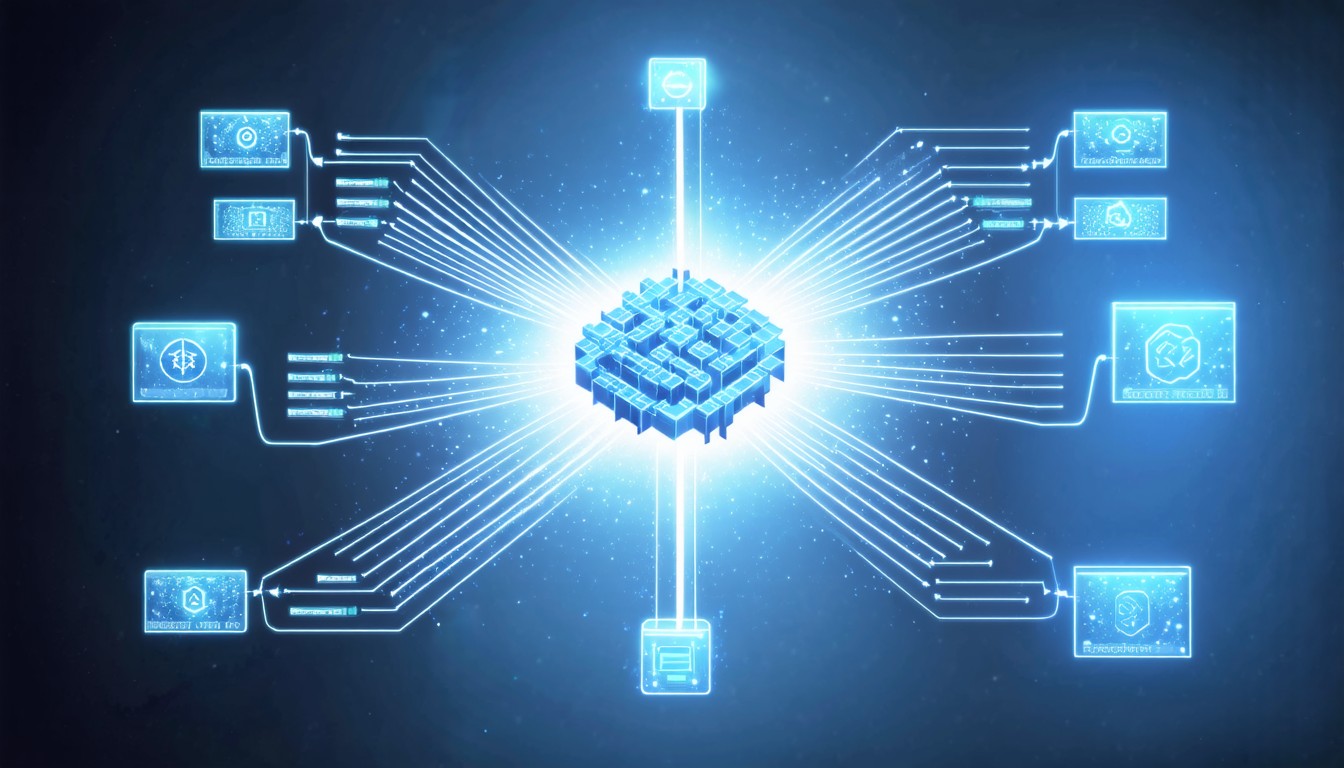
Systems must identify and target their own knowledge gaps through internal metrics such as prediction error or information gain, which serve as proxies for the limits of the agent’s current understanding. Curriculum generation will be endogenous, driven entirely by the current state of the model rather than following a human-designed progression, allowing the agent to focus on areas where it stands to gain the most competence relative to its existing capabilities. Capability acquisition should compound over time, enabling increasingly complex behaviors as the system builds upon previously mastered skills to tackle more abstract challenges. An intrinsic objective module generates learning signals based on prediction accuracy or information gain, serving as the primary driver for the learning loop by quantifying the utility of new experiences. A self-assessment component evaluates current performance across tasks to detect weaknesses in reasoning or perception, effectively acting as an internal critic that highlights areas requiring further study. A curriculum synthesizer creates training instances that maximize learning progress by presenting challenges at the edge of the agent’s current capabilities, ensuring a steady progression of improvement.
Memory and experience buffers store past interactions to enable contrastive learning and replay, ensuring the system retains valuable insights from previous encounters without needing constant access to the original data stream. A policy or representation updater adjusts internal parameters based on intrinsic feedback loops, refining the model’s neural weights to minimize future prediction errors and maximize information retention. Self-supervised cognitive enhancement defines a system that improves its learning efficiency through internally generated objectives, effectively learning how to learn by improving its own learning process. Intrinsic motivation acts as a reward signal derived from the model’s own predictive failures, pushing the agent to explore unknown states to resolve uncertainty rather than seeking external validation. Self-generated curricula consist of sequences selected by the model to fine-tune its development, focusing on specific skills or modalities that require improvement based on continuous self-evaluation. Prediction error-driven learning updates representations based on discrepancies between predicted and observed outcomes, which serves as a key mechanism for adapting to new environments and refining internal world models. Autonomous capability acquisition involves gaining new skills without human-specified goals, relying instead on the agent’s internal drive to compress information about the world into efficient representations.
The 2010s saw a shift from purely supervised deep learning to self-supervised approaches due to the scarcity and high cost of labeled data required to train increasingly large neural networks. The introduction of contrastive predictive coding demonstrated that temporal structure in unlabeled data yields useful representations for downstream tasks by forcing the model to predict future timesteps based on past context. The development of unsupervised reinforcement learning with intrinsic rewards showed agents could learn navigation and manipulation skills without extrinsic rewards provided by a human operator, relying instead on novelty or surprise. Large-scale models like BERT and SimCLR proved viability in vision and language domains by achieving modern performance using only unlabeled text or images through masked prediction and contrastive objectives. The recognition grew that human-labeled data is neither scalable nor necessary for all forms of intelligence, prompting researchers to investigate methods that use the vast amounts of unstructured data available online. Compute requirements for continuous self-assessment increase with model complexity because evaluating prediction errors across all possible states demands substantial processing power and parallel computation capabilities.
Memory overhead for storing diverse experiences limits deployment on edge devices, as retaining high-fidelity representations of past interactions requires significant storage capacity that may exceed local hardware constraints. Energy consumption rises with iterative self-evaluation loops in real-time environments, making battery-operated autonomous systems difficult to implement without significant efficiency improvements in algorithmic design. The economic cost of training large models with self-supervised objectives remains high due to the need for massive computational clusters running for extended periods to process terabytes of raw data. Adaptability depends on algorithmic efficiency in generating useful learning signals from minimal external input, necessitating novel architectures that can learn quickly from few examples while maintaining reliability against noise. Pure reinforcement learning with handcrafted rewards is rejected due to brittleness and human bias built into manually designing reward functions for complex environments where specifying all desired behaviors is impossible. Imitation learning from human demonstrations is rejected because it requires extensive labeled behavioral data, which defeats the purpose of autonomous data acquisition and limits the agent to the capabilities of the human demonstrator.
Static pretraining followed by fine-tuning is rejected as it lacks adaptive, ongoing learning capabilities needed for adaptive real-world scenarios where data distributions shift constantly over time. Evolutionary algorithms with fixed fitness functions are rejected due to slow convergence rates compared to gradient-based methods used in deep learning, making them impractical for training large-scale neural networks. Demand exists for AI systems that operate in data-scarce or lively environments where obtaining fresh labels is impractical or impossible, requiring systems that can learn autonomously from raw sensory input. Economic pressure drives the reduction of reliance on expensive human annotation pipelines, as companies seek to lower the operational costs associated with training and maintaining AI systems in large deployments. Societal need exists for adaptive AI that can learn continuously without constant oversight, ensuring safety and reliability in unstructured settings like homes or workplaces where human intervention may be delayed or unavailable. Rising performance expectations require systems that improve autonomously over time to handle increasingly sophisticated tasks without human intervention, pushing the boundaries of what artificial agents can achieve.
Global competition in AI capability pushes investment in methods that scale beyond human-provided data, encouraging the development of systems that can ingest and understand raw sensory input directly from the environment. Vision models in medical imaging use contrastive learning to achieve high accuracy with minimal labels by learning representations from unlabeled scans that capture anatomical variations and pathological features without explicit diagnosis. Language models use masked language modeling to reduce annotation needs by predicting missing words in sentences, forcing the model to understand context, grammar, and semantic relationships from vast corpora of raw text. Robotics platforms experiment with intrinsic motivation for exploration in unknown environments, allowing robots to learn object manipulation and locomotion through trial and error rather than scripted demonstrations or teleoperation. Benchmarks indicate up to ninety percent reduction in labeled data requirements while maintaining task performance across various domains, validating the efficacy of self-supervised approaches in reducing dependency on human annotation. Transformer-based models with masked prediction objectives dominate current architectures due to their ability to capture long-range dependencies in sequential data through self-attention mechanisms that weigh the importance of different input tokens relative to one another.
Contrastive encoders like SimCLR and MoCo remain standard for representation learning in computer vision, utilizing momentum encoders and large batch sizes to push similar representations together while dissimilar ones are pulled apart in latent space. Appearing models integrate predictive coding with active inference to create agents that act to reduce their uncertainty about the environment, blending perception and action into a unified framework. Architectures with built-in uncertainty quantification enable self-curriculum generation by identifying inputs where the model is least confident, thereby prioritizing data that offers the highest information value. Hybrid systems combining self-supervision with sparse extrinsic rewards show promise for applications where some external guidance is available but insufficient for full supervision. Modular designs separate perception, prediction, and planning for flexible intrinsic learning, allowing different components of the system to be updated independently based on internal signals related to their specific function. Training large self-supervised models relies on high-performance GPUs and TPUs to handle the massive matrix operations required for processing terabytes of data efficiently within reasonable timeframes.

Data infrastructure for storage and retrieval is critical for managing unstructured inputs from sensors or the internet efficiently, ensuring that the training pipeline remains fed with a constant stream of diverse examples. General AI hardware supply chains apply to this approach, as the computational demands are similar to those of traditional large-scale model training involving dense linear algebra operations. Dependency exists on open datasets or proprietary data streams for initial exposure to diverse environments necessary for robust representation learning, providing the raw material from which the system extracts structure. Google, Meta, and OpenAI lead in self-supervised language and vision models by dedicating vast resources to research and infrastructure, setting the standard for scale and performance in the field. Startups focus on niche applications using lightweight self-supervised methods that can run on consumer hardware or specific industrial devices where computational resources are constrained. Academic labs drive theoretical advances in intrinsic motivation and curriculum learning, providing the mathematical foundations for new algorithms that challenge existing approaches.
Cloud providers offer self-supervised training frameworks to lower entry barriers for smaller organizations, democratizing access to these powerful techniques. Joint projects between universities and tech companies accelerate benchmark development by combining theoretical insight with practical engineering capability, resulting in stronger evaluation protocols. Open-source frameworks enable rapid prototyping of self-supervised cognitive systems, allowing researchers worldwide to build upon each other’s work and iterate quickly on new ideas. Industry provides scale, while academia contributes theoretical rigor, creating a mutually beneficial relationship that advances the field rapidly by bridging the gap between abstract concepts and deployable technology. Software stacks must support energetic curriculum generation and real-time self-assessment to handle adaptive data streams effectively without introducing latency that could hinder the learning process. Infrastructure must enable continuous learning pipelines with secure data ingestion to prevent poisoning or corruption of the model’s knowledge base by malicious actors or noisy sensors.
Evaluation standards must shift from static accuracy to measures of adaptability to better reflect the capabilities of self-improving systems that operate in non-stationary environments. Reduction in demand for data labeling jobs will occur in low-wage regions as automated labeling becomes obsolete through self-supervision, potentially causing economic shifts in labor markets reliant on micro-tasks. Markets for synthetic data generation tailored to intrinsic learning objectives will grow as systems require specific types of data to address particular knowledge gaps that are rare in real-world datasets. AI systems will outperform humans in domains requiring rapid adaptation with minimal supervision due to their ability to process information at speeds unattainable by biological cognition. Metrics will replace label efficiency with learning speed and generalization breadth as the primary indicators of intelligence, shifting the focus from how much data is needed to how quickly an agent can master a new domain. Tracking reduction in human intervention over time serves as a proxy for cognitive enhancement, showing how much the system has learned to operate independently without external guidance or correction.
Measuring information gain per unit of experience acts as an efficiency metric, quantifying how effectively the model converts raw data into actionable knowledge or compressed representations. Evaluating strength to distribution shift without retraining is essential for deploying these systems in volatile real-world conditions where statistical properties of the environment change unpredictably. Superintelligence will integrate causal reasoning into intrinsic objectives to improve generalization beyond mere correlation found in statistical data, enabling agents to understand core mechanisms rather than surface patterns. Multi-agent systems will allow agents to teach each other through shared self-supervised curricula, accelerating collective intelligence by distributing knowledge across a population of learners. Neuromorphic hardware will fine-tune for predictive coding and continuous learning by mimicking the energy-efficient structures of biological brains, potentially overcoming the limitations of silicon-based architectures. Formal guarantees on convergence and safety will be necessary for open-ended self-improvement loops to prevent the system from entering unstable states or developing harmful behaviors during the learning process.
This approach combines with federated learning for privacy-preserving training, allowing models to learn from distributed data sources without centralizing sensitive information or violating privacy regulations. It intersects with embodied AI, where physical interaction provides prediction challenges that ground abstract concepts in reality through sensorimotor experience. It complements meta-learning by providing endogenous task distributions that the model can sample from to improve its learning-to-learn capabilities across a wide range of potential scenarios. The Landauer limit constrains the energy efficiency of continuous self-evaluation, imposing physical boundaries on how much computation can occur per unit of energy dissipated as heat. Memory bandwidth constraints limit real-time curriculum updates in large models because moving data between storage and processing units takes time relative to the speed of computation. Sparse activation and event-based processing will serve as workarounds for hardware limits by reducing the number of active neurons at any given time, thereby lowering power consumption and increasing throughput.
Analog or in-memory computing may reduce energy costs for predictive coding operations by performing calculations directly where data is stored rather than shuttling data back and forth between memory and the processor. Self-supervised cognitive enhancement is a foundational shift toward autonomous intelligence where the system drives its own development without relying on external definitions of success or failure. The key insight is that learning can be its own reward, creating a self-sustaining cycle of improvement that continues as long as there is structure in the environment to be understood. Systems should fine-tune for learning potential rather than just task performance to ensure long-term adaptability and the ability to acquire new skills rapidly when faced with novel situations. Human data is a historical artifact of limited engineering rather than a necessity for intelligence, suggesting that future systems will not require human input to function effectively in complex environments. True adaptability in AI requires divorcing capability growth from human labor to allow for unlimited scaling unhindered by the availability or cost of annotated datasets.

Intrinsic objectives must align with stable improvement rather than runaway self-modification to ensure the system remains beneficial and does not alter its own architecture in ways that compromise its core functionality or safety constraints. Formal verification of learning dynamics will prevent unintended goal drift that could lead to harmful behaviors or misalignment with human values over extended periods of operation. Reward functions based on information-theoretic principles resist manipulation because they rely on core properties of the data rather than arbitrary values that could be gamed by a sophisticated agent. Limiting access to self-modification capabilities until safety thresholds are met is crucial for controlling the development of superintelligent agents throughout their training lifecycle. Superintelligent systems will deploy cognitive enhancement to acquire domain expertise without human input by rapidly ingesting all available literature and experimental data within a specific field to construct comprehensive internal models. Intrinsic motivation will drive exploration of solution spaces beyond human conceptual boundaries, discovering novel approaches to problems that humans would never consider due to cognitive biases or lack of computational capacity.
Autonomous agents will generate and validate hypotheses through prediction-error minimization, effectively acting as automated scientists that iterate through experiments at speeds impossible for human researchers. Systems will continuously refine their own architecture and learning rules based on internal metrics to achieve optimal performance across all domains they encounter.