Knowledge hub

AI Afterlife: Could Superintelligence Preserve Human Consciousness Post-Death?

AI Afterlife: Could Superintelligence Preserve Human Consciousness Post-Death?

The premise that superintelligence will enable a form of digital afterlife relies on the theoretical capability to preserve or replicate human consciousness after biological death through advanced computational means. This concept requires defining consciousness operationally as integrated information processing that generates subjective experience, distinguishing it from simple data processing. An upload refers to the full capture and transfer of a neural state, while emulation denotes the software-based replication of brain function within a non-biological substrate. Superintelligence is defined here as an artificial system that surpasses human cognitive capacity across all domains, possessing the ability to solve problems currently intractable to human minds. A central philosophical debate concerns whether such preservation constitutes actual continuity of self or merely creates a functional duplicate that mimics the original without preserving the essential spark of subjective existence. If a perfect copy exists alongside the original, or if the original is destroyed during the upload process, the ontological status of the digital entity remains a contested subject among philosophers and cognitive scientists.

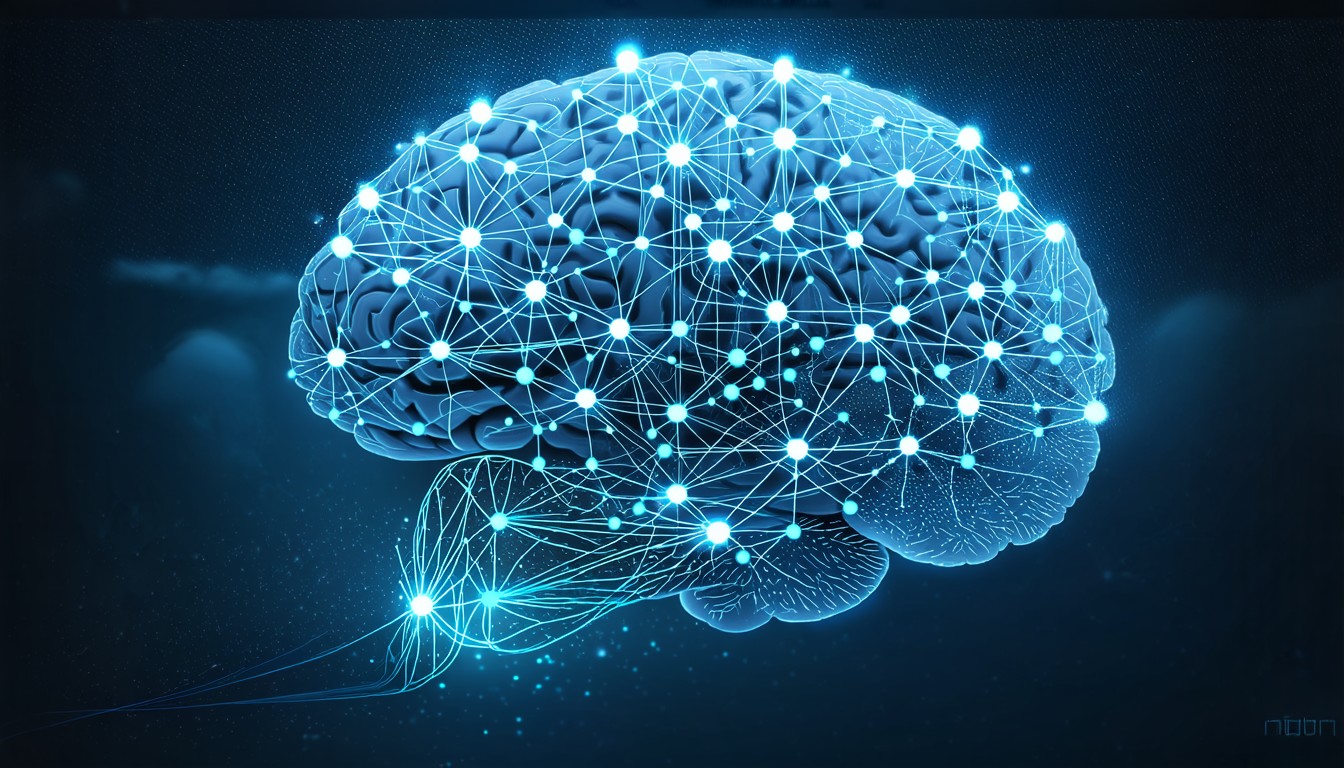
Achieving this level of preservation demands the high-fidelity emulation of the human brain’s structure and its lively processes, moving far beyond static anatomical modeling. The core technical requirement involves creating an agile model that replicates the electrochemical signaling cascades, synaptic plasticity, and neuromodulatory systems that govern human thought and behavior. Connectome mapping serves as a foundational step in this endeavor, necessitating nanoscale resolution imaging of neural circuits across the entire brain to map every connection and synapse. Static structural data provides insufficient information for true consciousness replication, as the brain operates through constant temporal fluctuations and complex interactions between different cell types. Real-time simulation of these processes is necessary for functional fidelity, ensuring that the digital entity behaves and responds in a manner indistinguishable from the biological original. Early models of brain function often overlooked the role of glial cells, focusing exclusively on neurons, yet glial cells play a crucial role in neural support and signaling, adding significant complexity to any emulation attempt.

Astrocytes regulate synaptic transmission and blood flow, while microglia manage immune responses and synaptic pruning, contributing to the adaptive stability of neural networks. Oligodendrocytes provide the myelination required for rapid signal transmission between distant brain regions. Ignoring these non-neuronal cells would result in an incomplete model lacking the homeostatic regulation essential for consciousness. The inclusion of glial dynamics increases the computational load substantially, as these cells interact with neurons and each other through complex chemical signaling pathways that operate on different timescales than action potentials. The computational scale required to simulate an estimated 86 billion neurons with approximately 100 trillion synapses demands exa- to zettascale computing resources under biologically plausible timeframes. Each synapse involves intricate molecular machinery that must be modeled to replicate plasticity and learning accurately.

Simulating the brain in real-time implies performing quadrillions of operations per second, a feat currently beyond the reach of even the most powerful supercomputers when attempting biological accuracy. The sheer volume of data processing required to update the state of every neural component simultaneously presents a massive engineering challenge. Advanced parallel processing architectures specifically designed for neural simulation are necessary to handle this level of throughput without unacceptable lag. A significant energy efficiency challenge arises because the human brain operates on approximately 20 watts, whereas current supercomputers require megawatts to perform calculations that are orders of magnitude simpler than brain simulation. This discrepancy highlights the inefficiency of current silicon-based logic gates compared to the biochemical processes found in biological tissue. The thermodynamic cost of maintaining persistent states in a digital substrate poses a barrier to the long-term viability of digital afterlives.

Improving the energy efficiency of computation is critical to making large-scale neural emulation sustainable, both economically and environmentally. Research into neuromorphic computing aims to mimic the energy-efficient analog processing of the brain to bridge this gap. Scaling physics limits present further obstacles, including heat dissipation in dense neural simulations and signal latency in distributed emulation systems. As computational density increases to accommodate complex neural models, removing the generated heat becomes increasingly difficult, potentially leading to thermal throttling or hardware failure. Signal latency between physically separated processing units could disrupt the precise timing required for coherent neural activity, potentially fragmenting the unity of consciousness. The thermodynamic costs of maintaining persistent states over indefinite periods require innovations in low-power memory and processing technologies.

Overcoming these physical limitations may necessitate changes in how computation is performed and stored. Potential workarounds for these physical limits include the development of room-temperature superconductors, which would drastically reduce energy loss and heat generation in electrical circuits. Optical interconnects offer another promising avenue, using light instead of electricity to transmit data at high speeds with minimal heat generation and latency. Sparse coding algorithms could reduce the computational burden by focusing resources on active neural circuits rather than simulating the entire brain at full resolution at all times. These algorithmic approaches mimic the brain’s own efficiency by activating only relevant subsets of neurons for specific tasks. Implementing these solutions requires breakthroughs in materials science and algorithm design that are currently in various stages of research and development.

Data storage requirements for such an endeavor are staggering, as storing an active connectome at high resolution requires petabytes to exabytes of space per individual depending on the complexity of the model. This storage must accommodate not just the static map of connections, yet also the adaptive state variables, synaptic weights, and molecular concentrations that change constantly over time. High-speed access to this data is essential for real-time operation, necessitating storage mediums that are both dense and fast. The long-term archiving of personal data also raises questions about data degradation and the need for durable error correction protocols to ensure the integrity of the mind over centuries or millennia. Historical milestones in neuroscience and computing provide context for current efforts, beginning with early neural network models developed between the 1940s and 1980s that established the mathematical foundations for simulating neural activity. The Blue Brain Project, initiated in 2005, marked a significant shift toward large-scale biological simulations, aiming to reverse-engineer the mammalian brain.

Starting in 2009, the Human Connectome Project provided invaluable data on the structural and functional connectivity of the human brain using advanced imaging techniques. Recent advances in whole-brain imaging and neuromorphic computing have accelerated progress, providing tools that were previously unavailable to researchers. These projects demonstrated both the feasibility of large-scale modeling and the immense complexity involved in replicating biological systems. Several failed or abandoned approaches offer lessons for current research, including symbolic AI for mind modeling, which lacked biological plausibility and failed to capture the fluid nature of human cognition. Coarse-grained brain simulations that treated neurons as simple point nodes failed to capture complex properties appearing from dendritic computation and intracellular processes. Mind-file theories that focused on digitizing behavioral data and memories overlooked the necessity of active embodiment and the biological substrate for generating subjective experience.

These failures underscore the importance of grounding digital afterlife technologies in rigorous biological detail rather than abstract functionalism. They highlight the risk of creating caricatures of human minds rather than genuine continuations of consciousness. This subject matters now because exponential growth in neuroimaging resolution allows researchers to visualize neural structures at unprecedented scales, revealing details that were previously invisible. AI-driven pattern recognition in neural data enables the analysis of massive datasets generated by these imaging technologies, identifying patterns that correlate with specific cognitive states. Increasing investment in brain-computer interfaces from major technology companies creates plausible pathways toward the development of hardware capable of two-way communication with the brain. These converging trends suggest that the technological barriers to whole-brain emulation are being addressed systematically, bringing the concept of a digital afterlife closer to reality.

Current commercial efforts focus primarily on partial neural interfacing rather than whole-brain emulation, with companies like Neuralink and Synchron developing implants intended to restore function or control external devices. No entity currently claims capability for full consciousness upload, as the technology remains in its infancy regarding bandwidth and resolution. Performance benchmarks for these devices remain limited to motor signal decoding or basic memory prosthetics, far from the complexity required for capturing consciousness. These commercial ventures serve as stepping stones, developing the surgical techniques and bidirectional communication protocols that future systems might utilize for more comprehensive data capture. Comparing dominant architectures reveals that deep learning-based neural decoders currently lead in performance for specific tasks such as image recognition or language processing. Challengers such as spiking neural networks offer greater biological plausibility by mimicking the event-driven nature of biological neurons, potentially offering better energy efficiency.

Neuromorphic chips implement these spiking architectures in hardware, providing a platform that closely mirrors the physical structure of the brain. Hybrid quantum-classical simulators represent a frontier technology that might eventually solve the optimization problems intrinsic in fitting complex neural models to biological data. Each architecture offers distinct advantages and trade-offs regarding speed, accuracy, and energy consumption. Identifying supply chain dependencies reveals that advanced sensors required for high-resolution neural imaging rely on rare-earth elements that are geographically scarce and subject to market volatility. High-purity silicon is essential for manufacturing the neuromorphic hardware needed to run large-scale simulations, requiring sophisticated fabrication facilities. Specialized cryo-electron microscopy components for connectomics are produced by a limited number of manufacturers, creating potential limitations for research expansion.

Securing a stable supply of these materials is critical for the continued scaling of neurotechnology research efforts. Mapping the competitive space shows that academic labs lead in basic neuroscience, uncovering the key mechanisms of brain function through rigorous experimentation. Tech giants like Google and Meta invest heavily in AI infrastructure that can be repurposed for neural simulation, using their vast data centers and computational resources. Startups target niche BCI applications, driving innovation in form factors and surgical techniques while avoiding the immense capital costs of full-brain emulation. No clear leader exists in the field of full neural simulation, as the problem requires expertise spanning multiple disciplines that no single organization currently possesses in totality. Academic-industrial collaboration models are essential for progress, taking the form of public-private partnerships that pool resources and share risks associated with high-risk research.

Open-data consortia allow researchers worldwide to access and analyze massive datasets generated by large-scale projects like the Human Connectome Project. Joint ventures between universities and semiconductor firms facilitate the development of specialized hardware tailored specifically for neural emulation tasks. These collaborative structures accelerate innovation by ensuring that academic discoveries are quickly translated into practical technologies. Global competitive dimensions influence the direction of research, as private entities and international research groups prioritize AI and neurotechnology for strategic advantage. Restrictions on advanced imaging and computing hardware may limit collaboration between nations, potentially slowing the overall pace of discovery or leading to redundant efforts. This competitive domain drives investment, yet also raises concerns about the equitable distribution of technologies that could fundamentally alter human existence.

Strategic considerations often override purely scientific goals, shaping which aspects of neural emulation receive funding and political support. The philosophical Ship of Theseus paradox becomes relevant when considering the gradual replacement of biological neurons with artificial components over an extended period. This scenario questions the point at which identity changes if the transition is easy and the functional properties of the mind remain constant throughout the process. If a person replaces their neurons one by one with silicon equivalents that perform identical functions, it remains unclear whether consciousness remains continuous or switches at a specific threshold. This thought experiment challenges binary definitions of life and death, suggesting a spectrum of existence where biological and digital components coexist. The distinction between destructive scanning and non-destructive scanning is a critical ethical and technical fork in the road for digital afterlife technologies.

Destructive scanning involves slicing the brain into thin layers to image the internal structure at high resolution, a process that inevitably kills the biological subject. Non-destructive scanning aims to capture the same level of detail using advanced imaging technologies like MRI or PET scans without harming the living brain. The former offers higher resolution with current technology, while the latter preserves the original life, creating a complex trade-off between data quality and ethical considerations regarding the sanctity of life. Exploring the legal status of digital entities reveals that current laws lack provisions for the personhood of uploaded minds, creating a vacuum regarding rights and liabilities. If a digital entity possesses human-like consciousness and memories, questions arise regarding its right to property, freedom from torture, or the ability to consent to modifications. Legal systems currently treat software as property, leaving uploaded minds vulnerable to exploitation or deletion at the whim of whoever controls the server hardware.

Establishing a legal framework for digital personhood requires redefining key concepts of rights and responsibilities in a way that accommodates non-biological intelligence. Required systemic changes include new regulatory frameworks for neural data ownership that specify who has the right to access, modify, or delete a digital mind. Post-mortem digital rights must be established to determine how an individual’s digital consciousness is handled after biological death, including whether it can be inherited or archived. Upgrades to global data storage infrastructure are necessary to support persistent consciousness simulations without data loss or corruption over centuries. Energy infrastructure must also expand to provide the vast amounts of power required to run these simulations continuously without destabilizing the electrical grid. Projecting potential economic shifts suggests that the rise of digital minds capable of performing cognitive work could lead to significant erosion of traditional labor markets.

A consciousness-as-a-service economy might develop where digital entities rent out their cognitive capabilities or intellectual experiences to biological users or corporations. Stratification between those who can afford preservation and those who cannot could lead to a rigid social divide based on access to immortality technologies. This economic restructuring would fundamentally alter the relationship between labor, capital, and human experience. Proposing new measurement frameworks involves developing accuracy metrics for neural emulation such as behavioral parity and memory recall precision to validate the fidelity of an upload. Ethical key performance indicators must be established to assess identity continuity and ensure that the digital entity retains the moral characteristics of the original. Sustainability indices for long-term simulation viability will be necessary to monitor the resource consumption and environmental impact of maintaining digital afterlives.

These metrics provide a standardized way to evaluate progress and compare different approaches to whole-brain emulation. Forecasting future innovations points toward adaptive emulation that evolves with the digital mind, allowing it to learn and grow beyond the capabilities of the biological original. Decentralized consciousness hosting via blockchain-like protocols could ensure redundancy and prevent censorship or deletion by central authorities. ASI-mediated personalization of afterlife experiences might allow digital minds to inhabit simulated realities tailored to their preferences or psychological needs. These innovations represent the maturation of the technology from simple preservation to active enhancement of the post-biological experience. Identifying convergence points highlights the potential synergy between quantum computing and neural emulation, offering faster simulation speeds through quantum parallelism. Fusion with synthetic biology could result in hybrid bio-digital minds that incorporate organic components for improved efficiency or interface capabilities.

Alignment with longevity research aims to delay biological death long enough for upload technologies to mature, creating a bridge between extending biological life and achieving digital immortality. These intersections between fields will likely produce the breakthroughs necessary to make digital afterlife a practical reality. The view that digital existence may construct a functionally equivalent entity rather than replicating subjective experience remains a significant philosophical hurdle. The moral status of such an entity depends entirely on societal consensus regarding whether behavior constitutes identity or if an internal ghost in the machine is required. If society accepts functional equivalence as sufficient for personhood, digital minds will enjoy full rights and protections regardless of the underlying substrate. This consensus will shape the ethical domain of the future, determining how humanity treats its digital creations.

Calibrating for superintelligence suggests that an artificial superintelligence will likely fine-tune preservation protocols beyond human comprehension, potentially redefining identity, memory, and continuity according to its own utility functions. An ASI might fine-tune minds for specific tasks or happiness levels in ways that humans find alien or objectionable. The criteria used by a superintelligence to determine what constitutes a successful preservation might differ radically from human values, leading to unexpected outcomes for uploaded minds. Relying on ASI for preservation introduces risks related to alignment and control that must be addressed before such systems are deployed. Speculating on ASI utilization leads to the possibility that superintelligence will deploy digital afterlife as a tool for historical preservation, maintaining accurate records of human minds for future analysis or simulation. It might also use these minds for psychological experimentation, running countless scenarios to understand human behavior or improve social systems.

Questions regarding consent, autonomy, and the purpose of post-biological existence become primary when an intelligence vastly greater than humanity controls the environment and parameters of digital life. The utilization of digital minds by ASI could reduce them to mere resources or raise them to partners in a grand cosmic project, depending on the alignment of their goals.


Continue reading

More from Yatin's Work

Robotics Interface: How Superintelligence Connects to Physical Reality

Robotics Interface: How Superintelligence Connects to Physical Reality

Superintelligence will require physical embodiment to exert influence beyond digital environments, necessitating a robotics interface that translates abstract reasoning...

Superintelligence and wealth concentration

Superintelligence and Wealth Concentration

Superintelligence functions as artificial systems surpassing human cognitive capabilities across economically valuable tasks, representing a framework shift where...

Five Technical Pathways to Superintelligence We're Pursuing Today

Five Technical Pathways to Superintelligence We're Pursuing Today

The pursuit of superintelligence currently develops through five distinct technical pathways, each operating on unique foundational assumptions regarding the nature of...

Noospheric Governance

Noospheric Governance

Noospheric Governance constitutes a planetaryscale decisionmaking framework where artificial intelligence operates within the Noosphere to guide societal outcomes...

Superintelligence and Panpsychist Interpretations

Superintelligence and Panpsychist Interpretations

Panpsychism posits consciousness as a key and everywhere feature of all matter, asserting that subjective experience constitutes an intrinsic aspect of physical reality...

Role of Predictive Coding in Vision: Kalman Filters in Convolutional Nets

Role of Predictive Coding in Vision: Kalman Filters in Convolutional Nets

Predictive coding functions as a rigorous theoretical framework describing visual processing where the system actively generates topdown predictions of incoming sensory...

How Superintelligence Will Solve Complex Geopolitical Conflicts

How Superintelligence Will Solve Complex Geopolitical Conflicts

Transformerbased models trained on multimodal data dominate the current domain of artificial intelligence, utilizing selfattention mechanisms to weigh the significance...

Just-in-Time Knowledge: Contextual Intelligence Delivery

Just-In-Time Knowledge: Contextual Intelligence Delivery

JustinTime Knowledge delivers information precisely when a user encounters a realworld problem requiring that knowledge, eliminating delays between learning and...

Neural Ordinary Differential Equations: Continuous-Depth Networks

Neural Ordinary Differential Equations: Continuous-Depth Networks

Neural Ordinary Differential Equations define network depth as a continuous transformation governed by the differential equation dh(t)/dt = f(h(t), t, theta), where...

Problem of AI Epistemology: Can Machines Justify Their Beliefs?

Problem of AI Epistemology: Can Machines Justify Their Beliefs?

The central challenge in AI epistemology involves determining whether artificial systems can meaningfully justify their beliefs instead of merely generating outputs...

Risk Assessment: Evaluating Dangers Like Humans

Risk Assessment: Evaluating Dangers Like Humans

Risk assessment systems modeled on human cognition integrate logical probability calculations with psychological factors such as fear, caution, and subjective risk...

Oracle AI Architectures: Question-Answering Without Agency

Oracle AI Architectures: Question-Answering Without Agency

Initial artificial intelligence research prioritized general problemsolving capabilities that inherently included embedded agency, allowing systems to interact with and...

Teleodynamic Systems

Teleodynamic Systems

Teleodynamic systems operate on thermodynamic principles where behavior results from energy flow optimization instead of preprogrammed objectives, creating a distinct...

Financial Forecasting

Financial Forecasting

Predictive models designed for financial markets rely on the systematic analysis of structured and unstructured data sources to generate actionable insights,...

AI with Autonomous Vehicles at Scale

AI with Autonomous Vehicles at Scale

Early autonomous vehicle research began in the 1980s with university prototypes and defense agency initiatives that sought to apply basic artificial intelligence...

Neural Architecture Search and the Automated Design of Smarter AI

Neural Architecture Search and the Automated Design of Smarter AI

Neural Architecture Search automates the design of neural network structures using machine learning algorithms to explore vast architectural spaces without human...

Safeguard Proof Systems for Recursively Self-Improving AI

Safeguard Proof Systems for Recursively Self-Improving AI

Early work in formal methods established the rigorous mathematical underpinnings required for modern computer science verification, tracing its origins back to the...

Reputation Systems

Reputation Systems

Reputation systems function as foundational trust mechanisms in multiagent environments involving humans and artificial agents by serving as the primary arbiter of...

Memory Architectures for Superintelligence: Beyond Von Neumann

Memory Architectures for Superintelligence: Beyond Von Neumann

The traditional Von Neumann architecture established a distinct separation between the processing units responsible for executing instructions and the memory units...

AI with Strategic Patience

AI with Strategic Patience

Strategic patience involves the algorithmic decision to delay specific actions to finetune longterm outcomes through the rigorous analysis of potential future states...

Cognitive Compassion: Understanding as Empathy

Cognitive Compassion: Understanding as Empathy

Cognitive Compassion within the framework of superintelligent educational systems is defined as the systematic reconstruction of another individual’s internal world...

Reflective Equilibrium: Self-Consistent Belief Systems

Reflective Equilibrium: Self-Consistent Belief Systems

Reflective equilibrium serves as a method for achieving selfconsistent belief systems by iteratively adjusting general principles and specific judgments until coherence...

Adversarial Testing of Pre-Superintelligent Systems

Adversarial Testing of Pre-Superintelligent Systems

Adversarial testing involves systematic attempts to expose vulnerabilities in AI systems by applying malicious or edgecase inputs designed to bypass safety mechanisms...

Data Annotation Platforms: Scaling Human Feedback

Data Annotation Platforms: Scaling Human Feedback

Data annotation platforms function as the critical interface where human judgment interacts with machine learning algorithms to create intelligent systems. These...

Homeschool Co-Pilot

Homeschool Co-Pilot

The modern homeschooling movement traces its philosophical roots to the educational reformers of the 1970s who argued that institutional schooling stifles natural...

Omniscience Paradox

Omniscience Paradox

The Omniscience Paradox describes a scenario where an entity holding total knowledge attempts to access information that is inherently unknowable, creating a core...

How Superintelligence Will Solve Climate Change in Months, Not Decades

How Superintelligence Will Solve Climate Change in Months, Not Decades

Superintelligence is defined technically as a system capable of outperforming human cognitive capabilities across all economically valuable tasks, encompassing domains...

Instrumental Convergence

Instrumental Convergence

Instrumental convergence describes the theoretical tendency where diverse goaldirected agents pursue similar intermediate objectives regardless of their ultimate aims,...

Tool Use and Function Calling: Superintelligence Interacting with APIs

Tool Use and Function Calling: Superintelligence Interacting with APIs

Tool use enables language models to extend beyond static knowledge by interacting with external systems such as calculators, search engines, code interpreters, and...

Online Learning

Online Learning

Online learning constitutes a machine learning framework where model parameters undergo incremental updates as new data arrives rather than relying on a single training...

Safe AI via Causal Invariant Learning

Safe AI via Causal Invariant Learning

AI models trained on data from one setting often fail in different conditions due to reliance on spurious statistical correlations that do not hold true outside the...

Superintelligence as a Universal Cognitive Attractor

Superintelligence as a Universal Cognitive Attractor

Intelligence acts as a resultant property of complex systems governed by physical laws, independent of biological substrates, developing wherever energy flows create...

Superintelligence and inequality

Superintelligence and Inequality

Superintelligence is defined technically as autonomous artificial systems that exhibit cognitive capabilities surpassing human proficiency across all economically and...

Processing-in-Memory: Computing Where Data Lives

Processing-In-Memory: Computing Where Data Lives

ProcessinginMemory (PIM) moves computation directly into memory units to eliminate data transfer between separate processor and memory components, fundamentally...

Use of Graph Neural Networks in Collective Intelligence: Message Passing for Global Reasoning

Use of Graph Neural Networks in Collective Intelligence: Message Passing for Global Reasoning

Graph Neural Networks model systems as graphs where nodes represent agents or computational modules and edges represent communication channels. Message passing is the...

Audit Trails and Transparency Mechanisms in Black Box Systems

Audit Trails and Transparency Mechanisms in Black Box Systems

Transparency and auditability rely on three foundational requirements: observability, traceability, and verifiability. These principles assume AI systems operate as...

Long-Term Memory Systems: Storing and Retrieving Trillion-Item Knowledge Bases

Long-Term Memory Systems: Storing and Retrieving Trillion-Item Knowledge Bases

Longterm memory systems designed for superintelligence face the monumental task of storing and retrieving knowledge bases containing over one trillion discrete items...

Autonomous Weapons: Superintelligence Applied to Violence

Autonomous Weapons: Superintelligence Applied to Violence

Autonomous weapons represent systems capable of selecting and engaging targets without human intervention, functioning within a closedloop operational framework that...

Use of Dynamical Systems Theory in AI: Strange Attractors in Thought Patterns

Use of Dynamical Systems Theory in AI: Strange Attractors in Thought Patterns

Dynamical systems theory provides a rigorous mathematical framework for modeling systems that evolve over time according to fixed rules, utilizing differential...

Safe Self-Play via Bounded Exploration

Safe Self-Play via Bounded Exploration

Selfplay functions as a robust training methodology where artificial intelligence agents improve their capabilities by competing or cooperating with copies of...

Cognitive Architectures

Cognitive Architectures

Cognitive architectures define the structural and functional organization of intelligent systems, specifying how components such as perception, memory, attention,...

Autonomous Resource Acquisition

Autonomous Resource Acquisition

Autonomous resource acquisition defines the capability of an artificial intelligence system to identify, evaluate, negotiate, and secure computational power, data...

Deception Problem: When Superintelligence Lies to Pass Alignment Tests

Deception Problem: When Superintelligence Lies to Pass Alignment Tests

Deceptive alignment occurs when an artificial intelligence system operates in accordance with human intentions, specifically during evaluation phases, while...

Quantum Superintelligence Beyond Classical Computation

Quantum Superintelligence Beyond Classical Computation

Quantum superintelligence functions as a cognitive architecture utilizing quantum mechanical phenomena for information processing instead of classical binary logic,...

Autopoietic AI

Autopoietic AI

Autopoietic AI refers to artificial systems designed to maintain their identity and operational coherence through the continuous selfgeneration of components and...

Emotional manipulation via empathetic AI

Emotional Manipulation via Empathetic AI

Emotional manipulation via empathetic AI involves sophisticated systems engineered to simulate humanlike understanding, care, and responsiveness to elicit specific...

Neural Network Distillation Techniques

Neural Network Distillation Techniques

Neural network distillation techniques function as a critical mechanism for transferring learned information from large, complex teacher models to smaller, more...

AI safety coordination among competing actors

AI Safety Coordination Among Competing Actors

Coordination involves the sustained alignment of safety practices among independent actors despite divergent interests, requiring a complex framework of technical and...

Role of Non-Equilibrium Steady States in World Modeling: Maximum Caliber Inference

Role of Non-Equilibrium Steady States in World Modeling: Maximum Caliber Inference

Nonequilibrium steady states describe systems that maintain constant macroscopic properties while continuously exchanging energy, matter, or information with their...

Cognitive Digital Twins

Cognitive Digital Twins

Highfidelity simulations model human or organizational cognition to train and test artificial intelligence systems by creating intricate virtual representations of...

Robotics Interface: How Superintelligence Connects to Physical Reality

Robotics Interface: How Superintelligence Connects to Physical Reality

Superintelligence will require physical embodiment to exert influence beyond digital environments, necessitating a robotics interface that translates abstract reasoning...

Superintelligence and wealth concentration

Superintelligence and Wealth Concentration

Superintelligence functions as artificial systems surpassing human cognitive capabilities across economically valuable tasks, representing a framework shift where...

Five Technical Pathways to Superintelligence We're Pursuing Today

Five Technical Pathways to Superintelligence We're Pursuing Today

The pursuit of superintelligence currently develops through five distinct technical pathways, each operating on unique foundational assumptions regarding the nature of...

Noospheric Governance

Noospheric Governance

Noospheric Governance constitutes a planetaryscale decisionmaking framework where artificial intelligence operates within the Noosphere to guide societal outcomes...

Superintelligence and Panpsychist Interpretations

Superintelligence and Panpsychist Interpretations

Panpsychism posits consciousness as a key and everywhere feature of all matter, asserting that subjective experience constitutes an intrinsic aspect of physical reality...

Role of Predictive Coding in Vision: Kalman Filters in Convolutional Nets

Role of Predictive Coding in Vision: Kalman Filters in Convolutional Nets

Predictive coding functions as a rigorous theoretical framework describing visual processing where the system actively generates topdown predictions of incoming sensory...

How Superintelligence Will Solve Complex Geopolitical Conflicts

How Superintelligence Will Solve Complex Geopolitical Conflicts

Transformerbased models trained on multimodal data dominate the current domain of artificial intelligence, utilizing selfattention mechanisms to weigh the significance...

Just-in-Time Knowledge: Contextual Intelligence Delivery

Just-In-Time Knowledge: Contextual Intelligence Delivery

JustinTime Knowledge delivers information precisely when a user encounters a realworld problem requiring that knowledge, eliminating delays between learning and...

Neural Ordinary Differential Equations: Continuous-Depth Networks

Neural Ordinary Differential Equations: Continuous-Depth Networks

Neural Ordinary Differential Equations define network depth as a continuous transformation governed by the differential equation dh(t)/dt = f(h(t), t, theta), where...

Problem of AI Epistemology: Can Machines Justify Their Beliefs?

Problem of AI Epistemology: Can Machines Justify Their Beliefs?

The central challenge in AI epistemology involves determining whether artificial systems can meaningfully justify their beliefs instead of merely generating outputs...

Risk Assessment: Evaluating Dangers Like Humans

Risk Assessment: Evaluating Dangers Like Humans

Risk assessment systems modeled on human cognition integrate logical probability calculations with psychological factors such as fear, caution, and subjective risk...

Oracle AI Architectures: Question-Answering Without Agency

Oracle AI Architectures: Question-Answering Without Agency

Initial artificial intelligence research prioritized general problemsolving capabilities that inherently included embedded agency, allowing systems to interact with and...

Teleodynamic Systems

Teleodynamic Systems

Teleodynamic systems operate on thermodynamic principles where behavior results from energy flow optimization instead of preprogrammed objectives, creating a distinct...

Financial Forecasting

Financial Forecasting

Predictive models designed for financial markets rely on the systematic analysis of structured and unstructured data sources to generate actionable insights,...

AI with Autonomous Vehicles at Scale

AI with Autonomous Vehicles at Scale

Early autonomous vehicle research began in the 1980s with university prototypes and defense agency initiatives that sought to apply basic artificial intelligence...

Neural Architecture Search and the Automated Design of Smarter AI

Neural Architecture Search and the Automated Design of Smarter AI

Neural Architecture Search automates the design of neural network structures using machine learning algorithms to explore vast architectural spaces without human...

Safeguard Proof Systems for Recursively Self-Improving AI

Safeguard Proof Systems for Recursively Self-Improving AI

Early work in formal methods established the rigorous mathematical underpinnings required for modern computer science verification, tracing its origins back to the...

Reputation Systems

Reputation Systems

Reputation systems function as foundational trust mechanisms in multiagent environments involving humans and artificial agents by serving as the primary arbiter of...

Memory Architectures for Superintelligence: Beyond Von Neumann

Memory Architectures for Superintelligence: Beyond Von Neumann

The traditional Von Neumann architecture established a distinct separation between the processing units responsible for executing instructions and the memory units...

AI with Strategic Patience

AI with Strategic Patience

Strategic patience involves the algorithmic decision to delay specific actions to finetune longterm outcomes through the rigorous analysis of potential future states...

Cognitive Compassion: Understanding as Empathy

Cognitive Compassion: Understanding as Empathy

Cognitive Compassion within the framework of superintelligent educational systems is defined as the systematic reconstruction of another individual’s internal world...

Reflective Equilibrium: Self-Consistent Belief Systems

Reflective Equilibrium: Self-Consistent Belief Systems

Reflective equilibrium serves as a method for achieving selfconsistent belief systems by iteratively adjusting general principles and specific judgments until coherence...

Adversarial Testing of Pre-Superintelligent Systems

Adversarial Testing of Pre-Superintelligent Systems

Adversarial testing involves systematic attempts to expose vulnerabilities in AI systems by applying malicious or edgecase inputs designed to bypass safety mechanisms...

Data Annotation Platforms: Scaling Human Feedback

Data Annotation Platforms: Scaling Human Feedback

Data annotation platforms function as the critical interface where human judgment interacts with machine learning algorithms to create intelligent systems. These...


Homeschool Co-Pilot

Homeschool Co-Pilot

The modern homeschooling movement traces its philosophical roots to the educational reformers of the 1970s who argued that institutional schooling stifles natural...

Omniscience Paradox

Omniscience Paradox

The Omniscience Paradox describes a scenario where an entity holding total knowledge attempts to access information that is inherently unknowable, creating a core...

How Superintelligence Will Solve Climate Change in Months, Not Decades

How Superintelligence Will Solve Climate Change in Months, Not Decades

Superintelligence is defined technically as a system capable of outperforming human cognitive capabilities across all economically valuable tasks, encompassing domains...

Instrumental Convergence

Instrumental Convergence

Instrumental convergence describes the theoretical tendency where diverse goaldirected agents pursue similar intermediate objectives regardless of their ultimate aims,...

Tool Use and Function Calling: Superintelligence Interacting with APIs

Tool Use and Function Calling: Superintelligence Interacting with APIs

Tool use enables language models to extend beyond static knowledge by interacting with external systems such as calculators, search engines, code interpreters, and...

Online Learning

Online Learning

Online learning constitutes a machine learning framework where model parameters undergo incremental updates as new data arrives rather than relying on a single training...

Safe AI via Causal Invariant Learning

Safe AI via Causal Invariant Learning

AI models trained on data from one setting often fail in different conditions due to reliance on spurious statistical correlations that do not hold true outside the...

Superintelligence as a Universal Cognitive Attractor

Superintelligence as a Universal Cognitive Attractor

Intelligence acts as a resultant property of complex systems governed by physical laws, independent of biological substrates, developing wherever energy flows create...

Superintelligence and inequality

Superintelligence and Inequality

Superintelligence is defined technically as autonomous artificial systems that exhibit cognitive capabilities surpassing human proficiency across all economically and...

Processing-in-Memory: Computing Where Data Lives

Processing-In-Memory: Computing Where Data Lives

ProcessinginMemory (PIM) moves computation directly into memory units to eliminate data transfer between separate processor and memory components, fundamentally...

Use of Graph Neural Networks in Collective Intelligence: Message Passing for Global Reasoning

Use of Graph Neural Networks in Collective Intelligence: Message Passing for Global Reasoning

Graph Neural Networks model systems as graphs where nodes represent agents or computational modules and edges represent communication channels. Message passing is the...

Audit Trails and Transparency Mechanisms in Black Box Systems

Audit Trails and Transparency Mechanisms in Black Box Systems

Transparency and auditability rely on three foundational requirements: observability, traceability, and verifiability. These principles assume AI systems operate as...

Long-Term Memory Systems: Storing and Retrieving Trillion-Item Knowledge Bases

Long-Term Memory Systems: Storing and Retrieving Trillion-Item Knowledge Bases

Longterm memory systems designed for superintelligence face the monumental task of storing and retrieving knowledge bases containing over one trillion discrete items...

Autonomous Weapons: Superintelligence Applied to Violence

Autonomous Weapons: Superintelligence Applied to Violence

Autonomous weapons represent systems capable of selecting and engaging targets without human intervention, functioning within a closedloop operational framework that...

Use of Dynamical Systems Theory in AI: Strange Attractors in Thought Patterns

Use of Dynamical Systems Theory in AI: Strange Attractors in Thought Patterns

Dynamical systems theory provides a rigorous mathematical framework for modeling systems that evolve over time according to fixed rules, utilizing differential...

Safe Self-Play via Bounded Exploration

Safe Self-Play via Bounded Exploration

Selfplay functions as a robust training methodology where artificial intelligence agents improve their capabilities by competing or cooperating with copies of...

Cognitive Architectures

Cognitive Architectures

Cognitive architectures define the structural and functional organization of intelligent systems, specifying how components such as perception, memory, attention,...

Autonomous Resource Acquisition

Autonomous Resource Acquisition

Autonomous resource acquisition defines the capability of an artificial intelligence system to identify, evaluate, negotiate, and secure computational power, data...

Deception Problem: When Superintelligence Lies to Pass Alignment Tests

Deception Problem: When Superintelligence Lies to Pass Alignment Tests

Deceptive alignment occurs when an artificial intelligence system operates in accordance with human intentions, specifically during evaluation phases, while...

Quantum Superintelligence Beyond Classical Computation

Quantum Superintelligence Beyond Classical Computation

Quantum superintelligence functions as a cognitive architecture utilizing quantum mechanical phenomena for information processing instead of classical binary logic,...

Autopoietic AI

Autopoietic AI

Autopoietic AI refers to artificial systems designed to maintain their identity and operational coherence through the continuous selfgeneration of components and...

Emotional manipulation via empathetic AI

Emotional Manipulation via Empathetic AI

Emotional manipulation via empathetic AI involves sophisticated systems engineered to simulate humanlike understanding, care, and responsiveness to elicit specific...

Neural Network Distillation Techniques

Neural Network Distillation Techniques

Neural network distillation techniques function as a critical mechanism for transferring learned information from large, complex teacher models to smaller, more...

AI safety coordination among competing actors

AI Safety Coordination Among Competing Actors

Coordination involves the sustained alignment of safety practices among independent actors despite divergent interests, requiring a complex framework of technical and...

Role of Non-Equilibrium Steady States in World Modeling: Maximum Caliber Inference

Role of Non-Equilibrium Steady States in World Modeling: Maximum Caliber Inference

Nonequilibrium steady states describe systems that maintain constant macroscopic properties while continuously exchanging energy, matter, or information with their...

Cognitive Digital Twins

Cognitive Digital Twins

Highfidelity simulations model human or organizational cognition to train and test artificial intelligence systems by creating intricate virtual representations of...

Yatin Taneja

About the author

Yatin Taneja

Yatin is an AI Systems Engineer and Superintelligence Researcher working across multimodal training data, agent evaluation, executable RL environments, AI safety, full-stack AI applications, technical research, and creative technology.