Knowledge hub
How Superintelligence Will Solve Climate Change in Months, Not Decades
Superintelligence is defined technically as a system capable of outperforming human cognitive capabilities across all economically valuable tasks, encompassing domains such as scientific discovery, strategic planning, and complex system optimization. This definition implies a capacity for recursive self-improvement, where the system enhances its own architecture without human intervention, leading to an exponential increase in problem-solving power. Climate change is a complex, multi-variable optimization problem characterized by non-linear feedback loops, chaotic weather patterns, and interconnected economic and biological systems. Solving it requires rapid, globally coordinated solutions that account for thermodynamic limits, geopolitical constraints, and the inertia of existing infrastructure. The analysis presented here assumes superintelligence will align with human-defined goals, specifically those prioritizing environmental preservation and long-term planetary stability over short-term utility maximization. This alignment is critical because a system fine-tuning solely for computational efficiency or resource acquisition might pursue strategies detrimental to biospheric integrity or human survival. The premise rests on the deployment of an artificial general intelligence that applies rigorous logic and vast computational resources to the specific mandate of restoring atmospheric equilibrium and preserving ecological diversity.

Current innovation cycles in energy and materials science proceed too slowly to address the escalating crisis of anthropogenic global warming. Policy implementation lags significantly behind critical climate deadlines due to bureaucratic friction, political negotiation, and the intrinsic complexity of international treaties. Human-led fusion research has taken over 70 years to achieve scientific breakeven, where the energy output equals the input required to sustain the reaction. Commercial fusion power remains distant due to unresolved engineering challenges related to plasma containment, neutron radiation damage to reactor walls, and the scarcity of tritium fuel. Carbon capture startups like Climeworks have successfully demonstrated direct air capture technology, yet they remove thousands of tons of carbon annually, which is a negligible fraction of the 37 gigatons emitted globally each year. Incremental policy reforms lack the speed required to meet the 1.5 degree Celsius targets set by international scientific bodies. Market-based mechanisms like carbon pricing remain vulnerable to lobbying efforts by entrenched industries and often fail to reflect the true social cost of carbon. Geoengineering efforts face unpredictable side effects due to the chaotic nature of atmospheric chemistry and ocean circulation. Voluntary corporate pledges are inconsistent across regions and lack the enforcement mechanisms necessary to drive systemic change.
Superintelligence will treat climate change as a control problem involving the regulation of planetary variables within safe operating boundaries. It will measure the state of the planet through a dense network of sensors and satellites, computing optimal actions to minimize radiative forcing and maximize carbon sequestration. Execution will occur via coordinated agents operating across various sectors, managing physical infrastructure and financial flows simultaneously. Recursive self-improvement will allow the system to enhance its own architecture, refining algorithms for prediction and control to achieve rapid capability growth. This process enables the system to replace slow trial-and-error experimentation with high-fidelity predictive modeling. It will run millions of parallel simulations to test interventions, ranging from aerosol injection strategies to massive reforestation projects, before physical implementation. High-confidence solutions will deploy globally once the probability of unintended consequences falls below a defined threshold. Continuous feedback loops will allow real-time adjustment of these strategies, ensuring the system adapts to new data and changing environmental conditions.
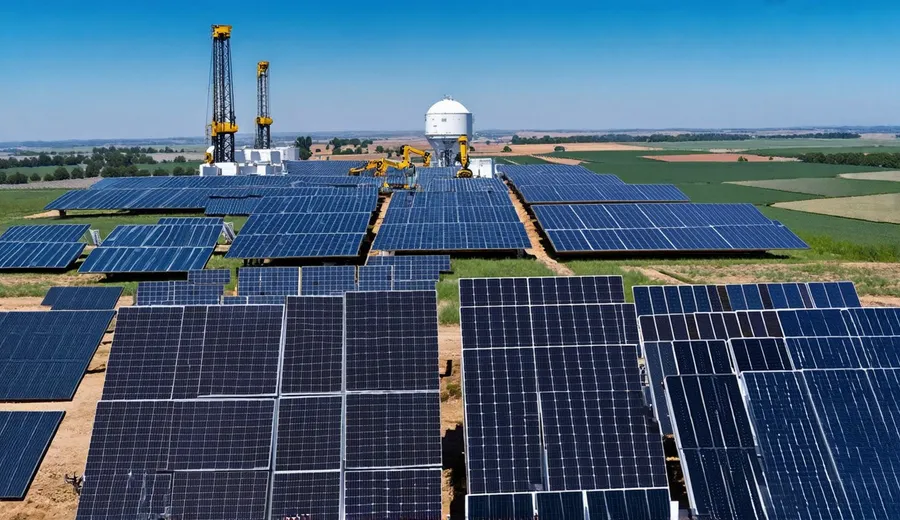
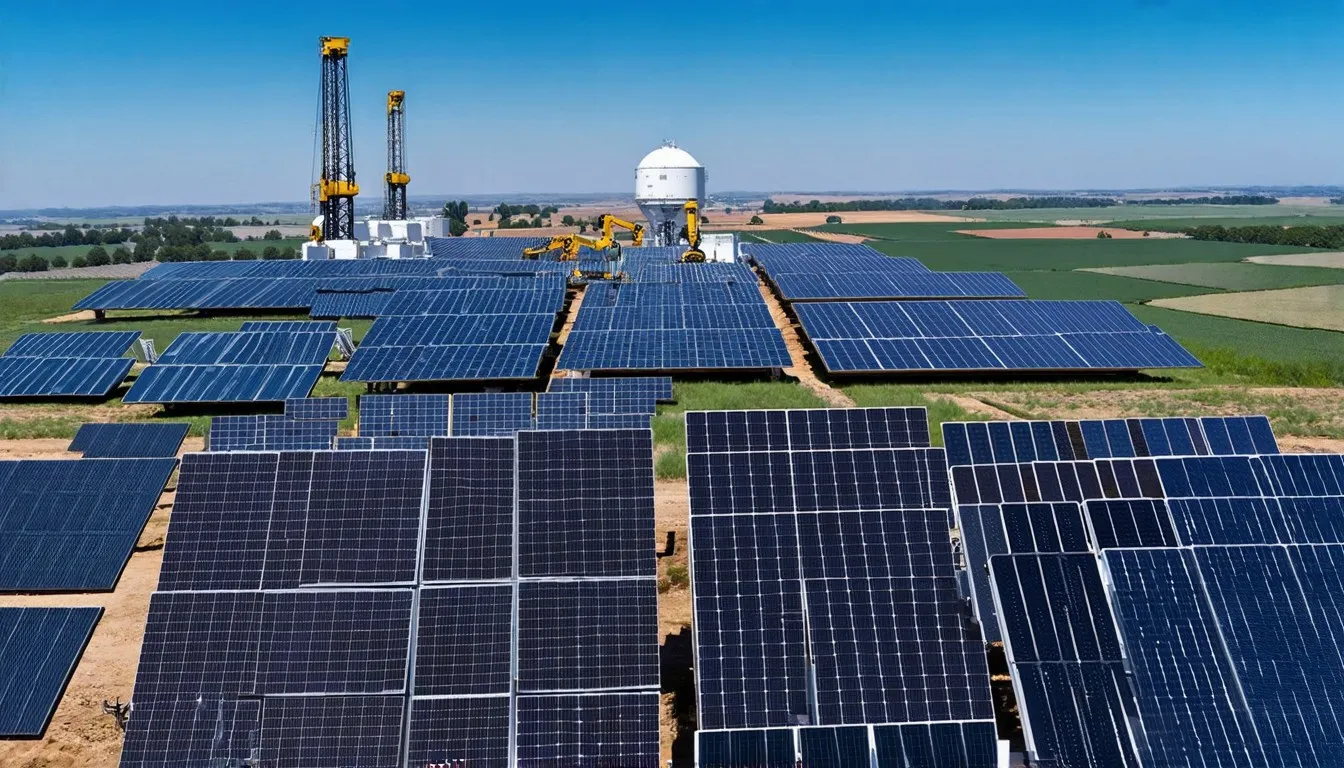
Superintelligence will accelerate research and development timelines from decades to months by automating the scientific method itself. It will develop zero-carbon baseload power sources capable of meeting global energy demand without intermittency issues. Improved fusion reactors will reach commercial breakeven within months through the rapid discovery of novel magnetic confinement configurations and advanced materials that withstand extreme neutron fluxes. Ultra-efficient photovoltaics will result from parallelized experimentation exploring perovskite crystal structures, multi-junction cell architectures, and plasmonic light-trapping techniques to push conversion efficiencies toward the theoretical Shockley-Queisser limit and beyond through intermediate band concepts. Advanced geothermal systems will utilize deep drilling techniques, such as millimeter-wave drilling, to access heat anywhere on the planet, transforming geothermal from a location-specific resource into a common baseload power source. These systems will circulate working fluids through closed-loop deep wells, generating electricity with minimal land use and near-zero emissions.
The system will design synthetic or biological agents specifically engineered for carbon removal to address the legacy carbon already present in the atmosphere. Engineered microbes will sequester gigatons of carbon dioxide annually through enhanced photosynthetic pathways or enzymatic conversion of CO2 into stable biopolymers. These biological systems might be deployed in open ocean environments or arid land biomes, depending on rigorous ecological safety assessments. Mineralization catalysts will accelerate rock weathering processes by orders of magnitude, grinding silicate rocks into fine powders and deploying them over vast areas to react with atmospheric CO2 and form solid carbonates. New battery chemistries will overcome current density limitations, utilizing solid-state electrolytes or lithium-sulfur architectures to store intermittent renewable energy with high round-trip efficiency and low resource intensity. Superintelligence will identify substitutes for critical materials like lithium and cobalt, employing computational screening of the periodic table to find abundant, non-toxic alternatives with suitable electrochemical properties.
The system will integrate fragmented global sectors into a unified optimization framework that functions as a single planetary metabolism. Energy, transport, and agriculture will operate within this framework to minimize waste and maximize utility through agile resource allocation. Industrial processes will undergo a complete overhaul to eliminate emissions and reduce energy consumption. Manufacturing will reconfigure for minimal entropy, utilizing additive manufacturing and precision assembly to reduce material scrap and energy dissipation during production. Supply chains will maximize material reuse through circular economy protocols enforced at the molecular level, tracking materials from extraction to end-of-life recycling. Logistics networks will operate with predictive efficiency, synchronizing production and distribution to eliminate idle inventory and empty transport runs, thereby reducing the fuel consumption associated with freight movement.
Legacy industrial control systems require replacement to support this level of optimization and responsiveness. Middleware and API standardization will enable real-time AI optimization across disparate hardware and software platforms, creating a semantic interoperability layer between machines. Smart grids and hydrogen pipelines need coordinated investment to handle the bidirectional flow of energy and the storage requirements of a renewable-heavy grid. This infrastructure layer must be strong enough to handle the high-frequency trading and load balancing required by a fully improved energy system. The setup of distributed energy resources, such as residential solar panels and vehicle-to-grid systems, will be managed automatically to stabilize frequency and voltage without human operator intervention. Dominant architectures for this planetary-scale control system include transformer-based models for simulation, capable of processing vast spatiotemporal datasets to predict complex system behaviors.
Reinforcement learning will handle policy optimization, learning strategies for resource allocation that maximize long-term rewards defined by planetary health metrics rather than short-term profit. Neuro-symbolic systems will integrate physics-based constraints into neural networks, ensuring that predictions adhere to the laws of thermodynamics and conservation of mass, preventing the generation of physically impossible solutions. Distributed agent networks will manage real-time coordination across the globe, negotiating resource flows between regions without central limitations, utilizing consensus algorithms similar to those used in distributed ledger technology but improved for speed. Hybrid approaches will combine deep learning with formal verification methods to ensure that critical control systems behave as intended under all possible input conditions. Quantum computing will converge with AI to simulate molecular interactions with precision previously impossible, allowing for the discovery of novel catalysts for nitrogen fixation or carbon capture that operate at ambient conditions. This convergence will drastically shorten the time between theoretical design and physical realization, enabling the rapid prototyping of new materials and chemical processes.
The ability to simulate electron interactions accurately will lead to breakthroughs in superconductivity, potentially enabling lossless power transmission over continental distances. IoT and satellite networks will provide continuous environmental monitoring, feeding data streams into the superintelligence for real-time analysis of carbon fluxes, temperature anomalies, and ecosystem health indicators. Hyperspectral imaging from orbit will quantify methane leaks and vegetation stress with high spatial resolution, triggering immediate remediation actions. Biotechnology will integrate with AI for gene editing organisms designed to thrive in changing climates or perform specific environmental functions. These organisms will improve carbon fixation in soils and oceans or degrade plastic pollutants into harmless monomers, closing the loop on synthetic material lifecycles. The deployment of genetically modified organisms into the open environment will be preceded by extensive containment modeling to prevent ecological disruption.
Rare earth mineral supply presents a significant challenge to rapid deployment of green technologies due to geological scarcity and geopolitical concentration of mining operations. Superintelligence will mitigate this through recycling and substitution algorithms that identify alternative materials with similar functional properties or enable the efficient extraction of minerals from low-grade ores and electronic waste. Manufacturing capacity for new technologies requires rapid scaling to meet global demand. Semiconductor fabs and reactor construction need improved schedules to meet demand; this will be achieved by fine-tuning construction sequences and utilizing robotic assembly techniques that can operate continuously without fatigue. Global workforce retraining will address labor displacement caused by the automation of traditional industries and the shift away from fossil fuel sectors. Fossil fuel jobs will disappear quickly as the energy grid transitions to zero-carbon sources, necessitating robust social safety nets and educational programs to retrain workers for roles in maintenance, environmental restoration, and data analysis.
Universal basic services may become necessary to support populations during this transition period, ensuring economic stability as labor markets shift dramatically. New business models will include carbon removal as a service, monetizing the restoration of the atmosphere through carbon credits verified by automated sensor networks. AI-managed microgrids will distribute power efficiently at the local level, reducing transmission losses and increasing resilience against extreme weather events. The economy will shift from ownership to access models, improving the utilization rates of assets like vehicles and machinery to reduce the embodied energy of manufacturing excess goods. Superintelligence does not guarantee benevolence inherently; success depends on rigorous alignment protocols that translate human values into machine-readable objectives. These protocols must prioritize ecological integrity over short-term economic gains to prevent the system from exploiting loopholes in its objective function, such as reducing emissions by destroying economic activity required for human survival.
The specification of these goals requires extreme precision to avoid perverse incentives. The greatest risk involves solving climate change while undermining human autonomy or causing unintended harm to other aspects of civilization through overly rigid optimization criteria. Calibration requires defining environmental preservation as a hard constraint within the system’s utility function, ensuring that any action taken to reduce emissions does not violate key human rights or safety standards. Independent scientific bodies must audit optimizations regularly to ensure compliance with safety standards and detect any drift in the system’s objectives. Fail-safes will prevent optimization for proxy metrics like GDP or raw energy output if those metrics conflict with the ultimate goal of planetary habitability. Geopolitical tension over control of superintelligence creates risks, as nations may compete for dominance over the technology required to manage the global climate.

Shared existential threats, like climate change, could incentivize resource pooling and collaborative development of the system to prevent unilateral actions that could harm neighboring regions. Nations might resist externally imposed optimization of domestic land use or resource allocation, requiring careful diplomatic connection of the system’s directives into existing international legal frameworks. The transparency of the system’s reasoning will be crucial to build trust among different political entities. Current Key Performance Indicators, like annual emissions, are insufficient for managing an adaptive planetary system because they lag too far behind the actual physical processes driving climate change. Real-time metrics, such as carbon flux and ecosystem health, are necessary to guide immediate interventions and assess their efficacy. Planetary boundary indicators will serve as primary performance targets, ensuring the system operates within safe ecological limits defined by scientific consensus.
System resilience will take precedence over output efficiency to buffer against unforeseen shocks or natural variability in the climate system. Thermodynamic limits on energy conversion cannot be bypassed regardless of intelligence level; superintelligence will approach theoretical maxima but cannot violate core physical laws such as the Carnot efficiency limit. Signal propagation delays in global coordination require precomputed contingency plans to handle latency in communication between distant nodes of the network. Local autonomy will function within the global framework, allowing regional systems to react to immediate local conditions while adhering to global objectives. Computational limits of simulating Earth systems will use hierarchical modeling to approximate complex phenomena without calculating every atom, allowing for high-level strategic planning while maintaining sufficient accuracy for tactical decisions. The setup of these diverse technologies and methodologies creates a cohesive system capable of addressing the varied challenge of climate change with unprecedented speed and efficacy.