Knowledge hub
AI Using Biological Substrates
Early theoretical work on molecular computing in the 1990s explored DNA as a medium for parallel computation, establishing the key principle that nucleic acids could perform algorithmic tasks through hybridization reactions. Leonard Adleman demonstrated a DNA-based solution to the Hamiltonian path problem in 1994, proving that molecular interactions could solve complex mathematical problems by encoding vertices and edges in oligonucleotide sequences and utilizing ligation and amplification to extract the correct path. This experimental validation showed that the massive parallelism intrinsic in biochemical reactions could be used for computational purposes, distinct from the sequential processing of electronic computers. Academic labs subsequently demonstrated basic logic operations using DNA strands and enzyme-driven reactions, constructing logic gates through the specific binding of complementary sequences and the catalytic activity of restriction enzymes or polymerases. These early efforts laid the groundwork for treating biological molecules as components of logic circuits rather than merely carriers of genetic information. The development of standardized biological parts known as BioBricks in the 2000s enabled modular circuit design, allowing researchers to assemble genetic sequences with standardized interfaces to create predictable functions within living cells.
This standardization facilitated the construction of more complex systems by treating genetic elements as interchangeable parts that could be combined to form synthetic gene networks. The first synthetic gene circuit in mammalian cells showed programmable behavior in 2010, demonstrating that engineered genetic switches could function reliably within the complex environment of a eukaryotic cell. Researchers utilized repressors and inducers to create oscillators and toggle switches, proving that cellular machinery could be co-opted to perform Boolean logic operations. CRISPR-based memory devices allowed stable recording of cellular events in 2017 by utilizing the Cas9 enzyme to write digital information into the genome in response to specific stimuli, effectively creating a biological log that could be read later via sequencing. This advancement provided a mechanism for long-term data storage within living organisms, bridging the gap between transient sensing and permanent memory. A demonstration of a neural network implemented in living bacterial cells occurred in 2022, marking a significant step towards realizing complex pattern recognition within biological substrates.
This system distributed the computation across a population of bacteria, where individual cells performed simple recognition tasks and the collective output represented the classification result. Biological substrates exploit molecular recognition and biochemical reactions to perform computation, relying on the specificity of binding interactions between enzymes, substrates, and nucleic acids to execute logical operations. DNA offers massive data density due to base-pair encoding in three-dimensional structures, allowing information to be stored at the atomic level within the double helix with theoretical limits reaching hundreds of petabytes per gram. Cellular systems use gene regulatory networks as programmable logic circuits, where the concentration of transcription factors acts as signals that regulate the expression of downstream genes in a manner analogous to electronic transistors. Energy efficiency arises from ambient-temperature operation and self-sustaining metabolic processes, allowing biological computers to function using chemical energy derived from their environment rather than requiring external power supplies to maintain high voltages or low temperatures. The efficiency of biochemical reactions is orders of magnitude higher than silicon-based switching events in terms of energy per operation, primarily because biological processes occur at the nanoscale and utilize Brownian motion for molecular transport.
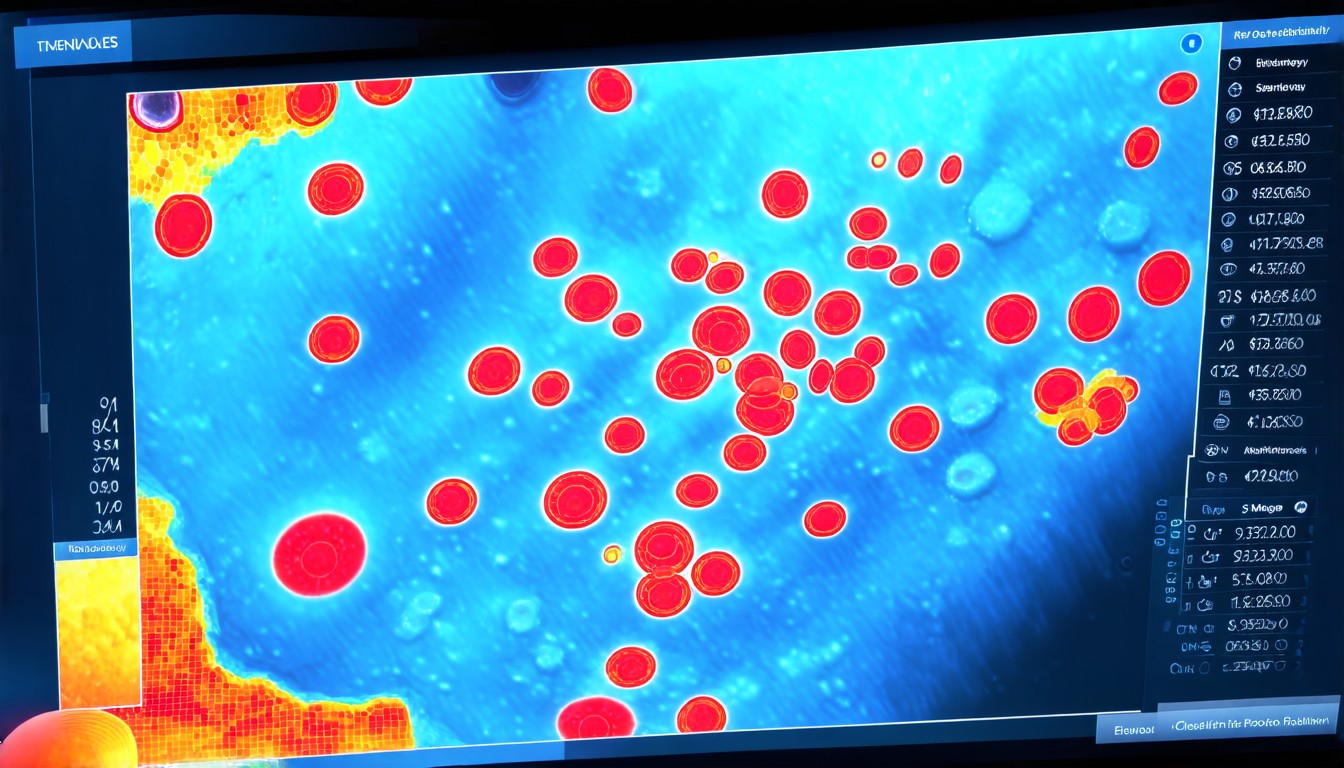
Parallelism is built-in in the simultaneous interaction of millions of molecules or cells, enabling vast numbers of operations to occur concurrently within a small volume. Input layers utilize chemical signals, light, or electrical stimuli to trigger specific biological responses, converting external environmental data into biochemical signals that the cellular machinery can process. Processing layers involve engineered genetic circuits or DNA strand displacement cascades executing logical operations, where the presence or absence of specific input molecules determines the production of output molecules through a series of catalytic or binding events. Memory layers rely on stable epigenetic states or synthetic DNA archives to store information, utilizing modifications to the DNA molecule or the chromatin structure to maintain a record of past computational states. Output layers convey results through fluorescent markers, secreted proteins, or electrical signals, providing a readable interface for the biological computation that can be detected by optical instruments or biosensors. Control layers manage timing, concentration, and environmental conditions via external interfaces like microfluidic chips, ensuring that the biological system operates within the narrow parameters required for viability and accurate computation.
Wetware refers to biological tissue or engineered cells used as computational substrate, encompassing both living systems that rely on metabolism and acellular systems that utilize extracted biomolecules. DNA computing involves the use of nucleic acid sequences and reactions to perform algorithmic tasks, using the predictability of Watson-Crick base pairing to perform information processing. Cellular logic gates are genetically encoded circuits producing a defined output in response to input molecules, functioning similarly to electronic logic gates but using concentrations of proteins and RNA as voltage equivalents. Molecular parallelism denotes the simultaneous execution of operations across many identical biomolecules, allowing a test tube containing trillions of DNA molecules to perform trillions of calculations at once. Biohybrid systems integrate biological components with electronic or mechanical control systems, combining the sensing and processing capabilities of biology with the speed and precision of silicon electronics. Signal propagation in biological media is slow compared to electrons in silicon, limited by the time required for molecules to diffuse through solution and for transcription and translation processes to occur.
This latency presents a challenge for real-time applications where rapid decision-making is required, necessitating careful architectural design to mitigate slow signal speeds. Error rates in biochemical reactions require redundancy and error-correction protocols, as stochastic variations in molecular interactions can lead to incorrect outputs or failure of a circuit to function as intended. Scaling requires precise environmental control including temperature, pH, and nutrient supply, as biological systems are sensitive to fluctuations in their physical and chemical environment. Manufacturing biological substrates is labor-intensive and lacks semiconductor-style automation, resulting in high costs and slow production cycles compared to the fabrication of integrated circuits. Long-term stability of living systems limits deployment in uncontrolled environments, as cells evolve, die, or change their metabolic state over time, potentially altering the computational parameters of the system. Optical computing offers high speed yet suffers from poor miniaturization and connection with existing systems, making it difficult to integrate with current infrastructure despite its bandwidth advantages.
Quantum computing provides theoretical speedup, yet demands extreme cooling and isolation requirements, restricting its practical application to specialized environments where such conditions can be maintained. Memristor-based neuromorphic chips operate closer to silicon limits and are less energy-efficient in large deployments than biological systems, which utilize ion gradients and metabolic energy for signaling. Carbon nanotube transistors face fabrication inconsistencies and unresolved defect issues, hindering their mass adoption despite their excellent electrical properties. Biological substrates serve as complementary platforms for specific high-density, low-energy AI tasks instead of replacements for silicon, targeting applications where energy efficiency and storage density are prioritized over speed. No full-scale AI systems have been deployed on biological substrates as of 2024, with current implementations remaining limited to specific logic functions or small-scale proof-of-concept demonstrations. Prototype DNA storage systems achieve high density, theoretically reaching up to 215 petabytes per gram, highlighting the potential of nucleic acids for archival data storage even if active processing remains undeveloped.
Cellular biosensors used in diagnostics perform simple classification tasks with power consumption under 1 mW, illustrating the suitability of biological systems for edge computing applications where power availability is constrained. Research prototypes show pattern recognition in bacterial colonies with latency ranging from minutes to hours, indicating that while complex computation is possible, the temporal dynamics are significantly slower than electronic counterparts. Benchmarking focuses on energy per operation, data density, and parallel task throughput, shifting the emphasis from raw speed to efficiency and total computational capacity per unit volume. Dominant technologies include DNA strand displacement circuits for static, high-density data processing, which utilize toehold-mediated strand exchange to perform logic operations without the need for enzymes. Appearing technologies involve living neural organoids interfaced with electrodes for lively learning tasks, combining the plasticity of biological neural networks with the readout capabilities of electronics. Alternative approaches utilize enzyme-based logic gates for real-time chemical signal processing, using the catalytic properties of enzymes to perform calculations on chemical inputs directly.
Hybrid approaches combine biological memory with silicon control layers, using electronics for fast processing and biology for high-density storage or sensing. No consensus exists on optimal architecture; the field remains experimental and fragmented, with various research groups pursuing different physical substrates and design philosophies. Pharmaceutical and biotech firms began investing in cellular computing for drug discovery and diagnostics, recognizing the potential for engineered cells to perform complex analysis of physiological conditions. International research initiatives funded exploratory projects on bio-integrated AI platforms, acknowledging the strategic importance of developing alternative computing approaches. Microsoft and Illumina collaborate on DNA data storage, excluding active AI computation, focusing on the archival aspect of DNA technology rather than its processing capabilities. Academic groups at MIT, ETH Zurich, and the University of Tokyo lead in cellular computing prototypes, driving innovation through key research in synthetic biology and genetic circuit design.
Startups like Molecular Assemblies and Catalog explore DNA-based information processing, aiming to commercialize the synthesis and sequencing technologies required for large-scale DNA computing. Institutes in Asia invest heavily in bio-AI convergence research, viewing biocomputing as a critical area for future technological leadership. No dominant commercial entity exists; the field remains in a pre-competitive research phase characterized by collaboration between academic institutions and early-basis companies. Reliance on synthetic DNA synthesis creates a dependency centralized among a few global providers, creating a potential constraint for the scaling of DNA-based computing technologies. Supply chains require sterile growth media, specialized enzymes, and controlled bioreactors, necessitating a durable infrastructure for biological manufacturing that differs significantly from semiconductor supply chains. Limited availability of standardized genetic parts and characterization tools hinders progress, as researchers often spend significant time characterizing basic components before they can assemble complex circuits.
Geopolitical risks affect sourcing of biological reagents and sequencing infrastructure, potentially disrupting research and development efforts in certain regions. Regulatory barriers complicate cross-border transport of engineered organisms, as biosafety regulations vary widely between countries and often restrict the movement of genetically modified materials. Export controls restrict access to synthetic biology tools and DNA synthesis equipment, adding complexity to international collaborations in the field of biocomputing. Strategic interests drive investment in unconventional computing for resilience, as diversification away from pure silicon architectures reduces vulnerability to disruptions in traditional semiconductor supply chains. Concerns persist regarding dual-use applications in surveillance or autonomous biological agents, prompting calls for ethical guidelines and oversight mechanisms for the development of biological computers. Intellectual property remains fragmented across universities and small firms, making it difficult to manage the patent domain and assemble comprehensive technology stacks.
Bio-computing has the potential to shift technological advantage away from traditional semiconductor hubs towards regions with strong biotechnology expertise. Joint projects between synthetic biology labs and AI research groups are increasing, promoting interdisciplinary collaboration required to advance the best in biological intelligence. Industry provides funding and engineering expertise, while academia drives foundational science, creating a mutually beneficial relationship that accelerates translation from lab to prototype. Standardization efforts, such as IEEE P2791 for bio-computing, aim to enable interoperability between different biological systems and tools, facilitating the connection of components from various sources. Data sharing remains limited due to proprietary constructs and safety concerns, restricting the development of open-source repositories for genetic circuits similar to those available in software engineering. The talent pipeline is constrained by interdisciplinary training gaps, as few scientists possess deep expertise in both synthetic biology and computer architecture required to design effective biological computers.
New programming languages and compilers are needed to map algorithms to biological logic, abstracting away the complexity of biochemical interactions to allow higher-level design of genetic circuits. Regulatory frameworks must evolve to classify and oversee engineered biological computers, addressing unique risks associated with self-replicating computational substrates. Laboratory infrastructure requires connection with computing workflows like automated phenotyping, working with wet-lab automation with data analysis pipelines to handle the high throughput of biological experiments. Cybersecurity models must account for physical and biological attack vectors, as hacking a biological computer could involve introducing malicious chemical agents or engineered phages to disrupt its function. Waste disposal and biosafety protocols become critical for deployed systems, ensuring that engineered organisms do not persist in the environment or transfer genetic material to natural populations. Moore’s Law slowdown increases pressure for alternative computing frameworks, as the physical limits of silicon miniaturization make it increasingly difficult to achieve performance gains through traditional scaling.
AI model sizes grow exponentially, demanding orders-of-magnitude improvements in energy efficiency that silicon architectures struggle to provide. Edge and embedded AI require ultra-low-power solutions unsuitable for conventional chips, creating a niche for biological processors that can operate on minimal energy inputs. Medical and environmental monitoring benefit from in situ biological computation, where engineered cells can sense and analyze complex chemical signatures directly within the body or the environment. Superintelligence will require massive parallel processing with low energy dissipation, making biological systems a plausible substrate for handling the cognitive load of advanced artificial intelligence. The temporal mismatch between fast silicon and slow biology will necessitate hybrid architectures for superintelligence, where silicon handles rapid serial processing while biological substrates manage massive parallel associative memory and pattern recognition. The stability of knowledge representation in living systems will need to be proven for large workloads for superintelligence applications, ensuring that data integrity is maintained over long periods despite biological noise and degradation.
Autonomy in biological systems introduces unpredictability that future systems must manage to align with deterministic AI goals, requiring durable control mechanisms to constrain the behavior of living substrates. Calibration protocols will include fail-safes for containment, degradation, and ethical override mechanisms in superintelligent systems, preventing unintended consequences from autonomous biological computation. Setup of CRISPR-based memory with real-time sensing will enable adaptive computation for advanced AI, allowing systems to modify their own genetic code based on environmental inputs to improve performance. Development of synthetic cells with fine-tuned metabolic pathways will allow sustained operation for complex tasks, providing a stable chassis for long-term computational processes. Interfacing organoid neural networks with silicon will create hybrid learning systems for future intelligence, combining the adaptability of biological neurons with the precision of electronic interfaces. Self-replicating biological computers will allow for autonomous deployment in remote environments, where they can multiply to increase computational capacity as needed without external intervention.
On-demand synthesis of computational circuits within living organisms will facilitate energetic AI responses, enabling organisms to reconfigure their own logic in response to changing computational demands. Synthetic biology provides tools for designing and controlling biological circuits, offering a library of genetic parts that can be assembled into complex computational pathways. Microfluidics enables precise delivery and isolation of biochemical inputs, controlling the flow of reagents to ensure accurate timing and interaction within biological processors. Neuromorphic engineering informs architecture design for biological neural mimics, providing blueprints for connecting biological neurons into functional networks that emulate brain-like computation. Quantum biology may reveal new mechanisms for coherent information processing in molecules, potentially opening up new modes of computation that exploit quantum effects within biological structures. Edge AI frameworks are adapted to accommodate slow yet dense biological processors, fine-tuning algorithms for latency-insensitive tasks that benefit from massive parallelism.
Diffusion limits speed of molecular signaling; engineers address this via localized reaction chambers that minimize the distance molecules must travel to interact. Cell death and mutation introduce noise; developers mitigate this through error-tolerant coding and redundancy, ensuring that the failure of individual cells does not compromise the overall computation. Power delivery is constrained by nutrient diffusion; vascularized biohybrid designs solve this issue by mimicking circulatory systems to deliver fuel and remove waste efficiently throughout the computational tissue. Signal crosstalk in dense arrays is reduced via orthogonal genetic parts and spatial compartmentalization, ensuring that signals intended for one circuit do not inadvertently activate another. Long-term drift in system behavior is countered with feedback control and periodic recalibration, adjusting the system parameters to maintain functionality as the biological substrate evolves or degrades. Traditional chip fabrication may see reduced demand for certain AI workloads as specialized biological processors take over tasks where they hold a distinct advantage in efficiency or density.
Development of bio-foundries offering custom cellular or DNA computing services is expected to democratize access to biological manufacturing capabilities. New insurance and liability models will address failures in living computational systems, covering risks associated with organism death, mutation, or unexpected behavior. Shift in R&D investment from silicon scaling to biological engineering is anticipated as the limitations of Moore’s Law become more pronounced. Potential exists for decentralized, low-cost AI in resource-limited settings where biological computers can be grown locally using basic fermentation equipment rather than expensive semiconductor fabs. Energy per operation will be replaced by energy per functional task in complex environments, reflecting a shift in metrics that values total work done over raw speed. Latency will be measured in biological response times rather than clock cycles, requiring a redesign of software expectations to accommodate slower but more comprehensive processing modes.
Reliability will be assessed via error rates in molecular recognition and cell viability, focusing on the strength of the system to biological perturbations. Flexibility will be evaluated by colony growth dynamics and signal fidelity over time, measuring how well the system adapts to changing conditions while maintaining accurate output. Sustainability metrics will include biodegradability and reagent consumption, highlighting the environmental benefits of biodegradable computational substrates compared to electronic waste. The path to scalable bio-AI requires treating cells as programmable materials with defined computational properties. Success depends on co-design of hardware, software, and biological parts from the outset to ensure compatibility and improve overall system performance. Near-term value lies in embedded intelligence for healthcare and environmental sensing, where biological computers can operate autonomously within the body or ecosystems to monitor health indicators or pollutants.
Ethical and safety considerations must be embedded in technical design to prevent misuse and ensure safe deployment of engineered organisms in open environments. Future systems will use DNA-based storage for archival knowledge with extreme density and longevity, preserving vast amounts of data for millennia without degradation. Cellular arrays will be employed for massively parallel pattern recognition in unstructured environments such as soil or the human gut. Metabolic networks will be applied for energy-autonomous operation in remote or embedded settings, allowing devices to harvest energy from organic matter in their surroundings. Connection with biological sensors will allow for real-time environmental adaptation, enabling systems to change their function based on the chemical context they detect. Self-repairing computational tissues will evolve functionality through controlled mutation and selection, potentially leading to systems that improve their own performance over time through evolutionary processes directed towards computational goals.