Knowledge hub
Graph Neural Networks: Reasoning Over Relational Structures
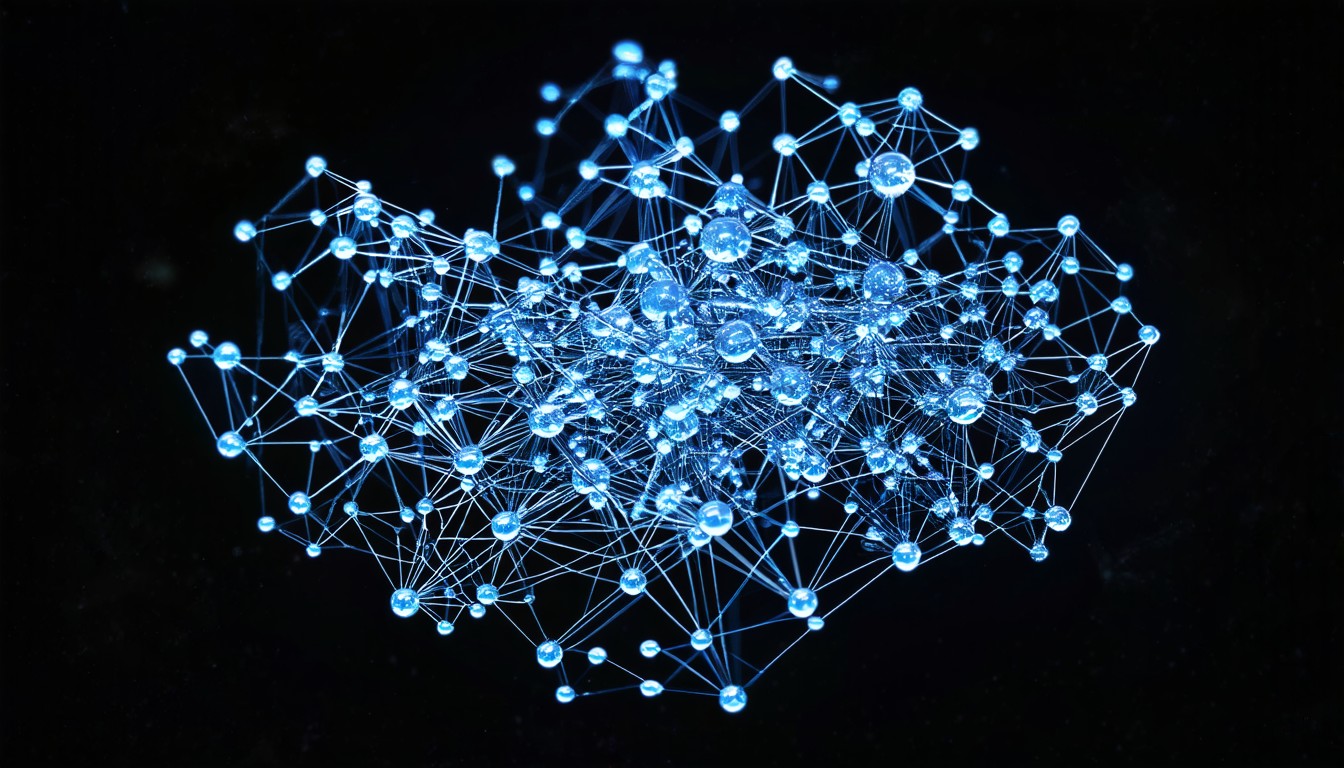
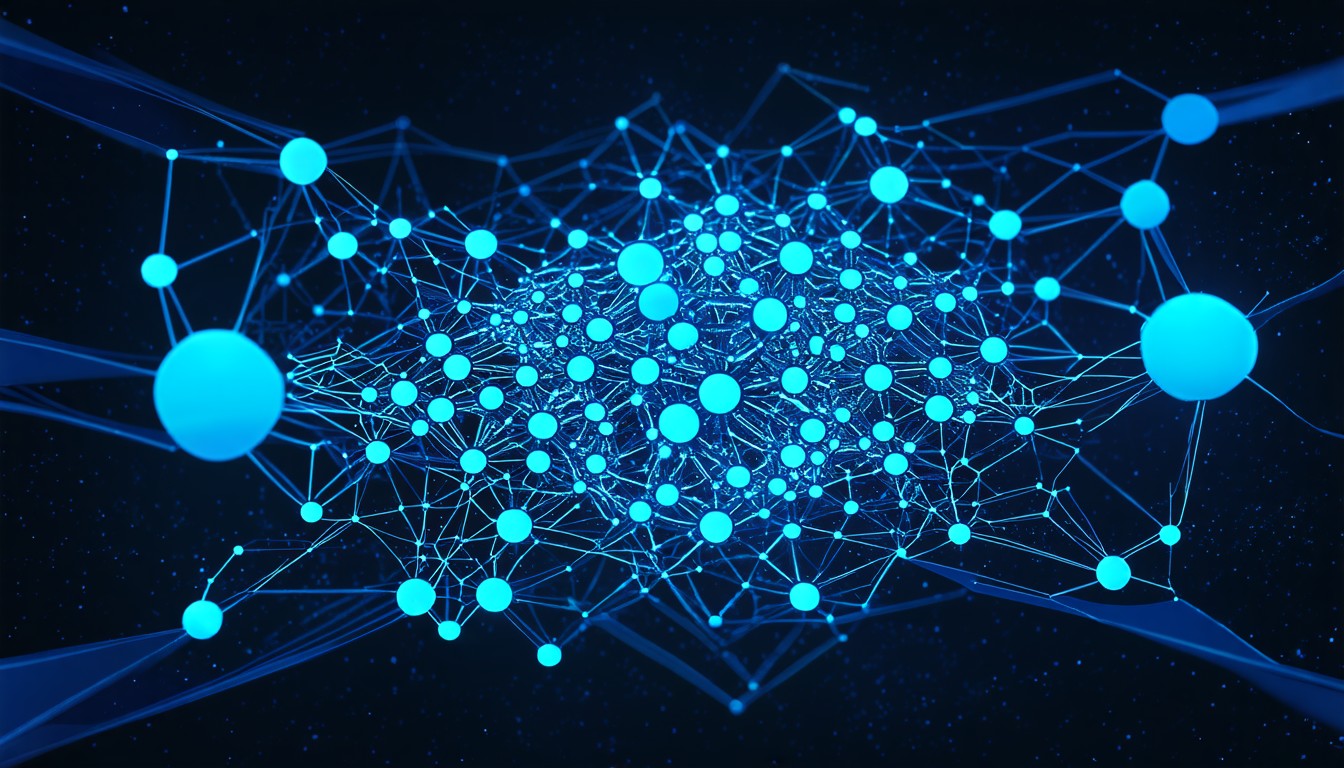
Graph Neural Networks process data structured as graphs where entities act as nodes and relationships serve as edges, representing a key departure from traditional grid-based data processing found in convolutional neural networks or standard multi-layer perceptrons. This architecture enables reasoning over relational structures that traditional neural networks fail to handle due to non-Euclidean geometry, meaning the data exists in a space where distances and angles do not follow standard Euclidean rules, such as social networks or molecular bond structures. Message passing forms the foundational mechanism where each node aggregates feature information from its neighbors iteratively, allowing the network to update the internal state of a node based on the features of its adjacent nodes through a differentiable function. This process allows localized context to propagate across the graph structure, enabling nodes that are multiple hops away to influence each other’s representations through successive layers of aggregation and transformation without requiring direct connections. Graph attention mechanisms extend message passing by assigning learnable weights to neighbor contributions, which allows the model to determine which neighboring nodes provide the most relevant information for a specific task or feature update during the aggregation phase. These weights prioritize more relevant connections during aggregation, effectively filtering out noise or less important relationships within the local neighborhood of a node to focus on the most salient structural features.
GNNs operate effectively on non-Euclidean data such as social networks, knowledge graphs, and molecular structures, which are inherently difficult to model using standard spectral methods or fixed-grid convolutions due to their irregular topology. These domains lack spatial coordinates or grid-like layouts, necessitating an approach that respects the irregular connectivity patterns and variable sizes of the input data while maintaining permutation invariance. The ability to handle such complex topologies makes GNNs uniquely suited for tasks where the relationship between entities is as critical as the entity attributes themselves, allowing for the extraction of insights from data that lacks a regular dimensional structure. Early approaches to relational learning relied on handcrafted features or kernel methods, which required extensive domain expertise to define the similarity measures between graph structures manually before any learning could occur. These methods lacked generalization and adaptability across diverse graph types, often failing to capture the detailed patterns present in real-world relational data without significant manual intervention or feature engineering for each new dataset. Recurrent neural networks were applied to graphs, yet failed to capture multi-hop dependencies efficiently because they treated graph traversal as a sequential problem, often imposing an arbitrary order on nodes that did not reflect the true topology of the graph.
Fixed traversal orders and vanishing gradients limited their effectiveness, preventing the model from learning long-range dependencies that are crucial for understanding global graph structure or interactions between distant entities. Spectral graph convolutions required eigendecomposition of the graph Laplacian, a computationally intensive operation that calculates the eigenvalues and eigenvectors of the matrix representing the graph structure to define filters in the spectral domain. This requirement limited applicability to fixed undirected graphs and hindered flexibility, as recomputing the eigendecomposition for every new graph or dynamic change in the graph structure was prohibitively expensive and impractical for real-time applications. The field rejected these alternatives due to poor adaptability and inability to handle variable-sized graphs efficiently in practical scenarios where data changes rapidly or consists of many disconnected components with different structural properties. Graph Convolutional Networks simplified spectral convolutions using first-order approximations of the spectral filters, removing the need for expensive eigendecomposition while retaining the ability to perform localized convolutions on the graph structure directly in the spatial domain. This simplification reduced computational complexity from cubic to linear in the number of edges, making it feasible to train deep networks on large-scale graph data that were previously inaccessible to spectral methods due to memory and time constraints.
GraphSAGE introduces sampling strategies to scale GNNs to large graphs by aggregating information from a fixed-size subset of neighbors rather than the entire neighborhood, which is essential for handling graphs with high-degree nodes where full aggregation would be computationally prohibitive. It limits the number of neighbors sampled per node to between 10 and 25 during training, ensuring that the computational cost remains constant regardless of the total size of the graph or the degree distribution of the nodes. This reduction decreases computational load while preserving representational capacity, allowing the model to generalize to unseen nodes by learning aggregator functions rather than relying on specific node embeddings precomputed for the entire graph. Graph Isomorphism Network achieves high discriminative power by using injective aggregation functions that map distinct neighborhoods to distinct representations, a property that is crucial for distinguishing between different graph structures that might appear similar under simpler aggregation schemes. GIN distinguishes between different graph structures as effectively as the Weisfeiler-Lehman graph isomorphism test, a classical algorithm used to determine whether two graphs are isomorphic by iteratively refining node colorings based on neighborhood colors until a stable state is reached. Edge-conditioned convolutions adapt filter weights based on edge attributes, allowing the model to perform different operations depending on the type or strength of the relationship between two nodes within the graph structure.
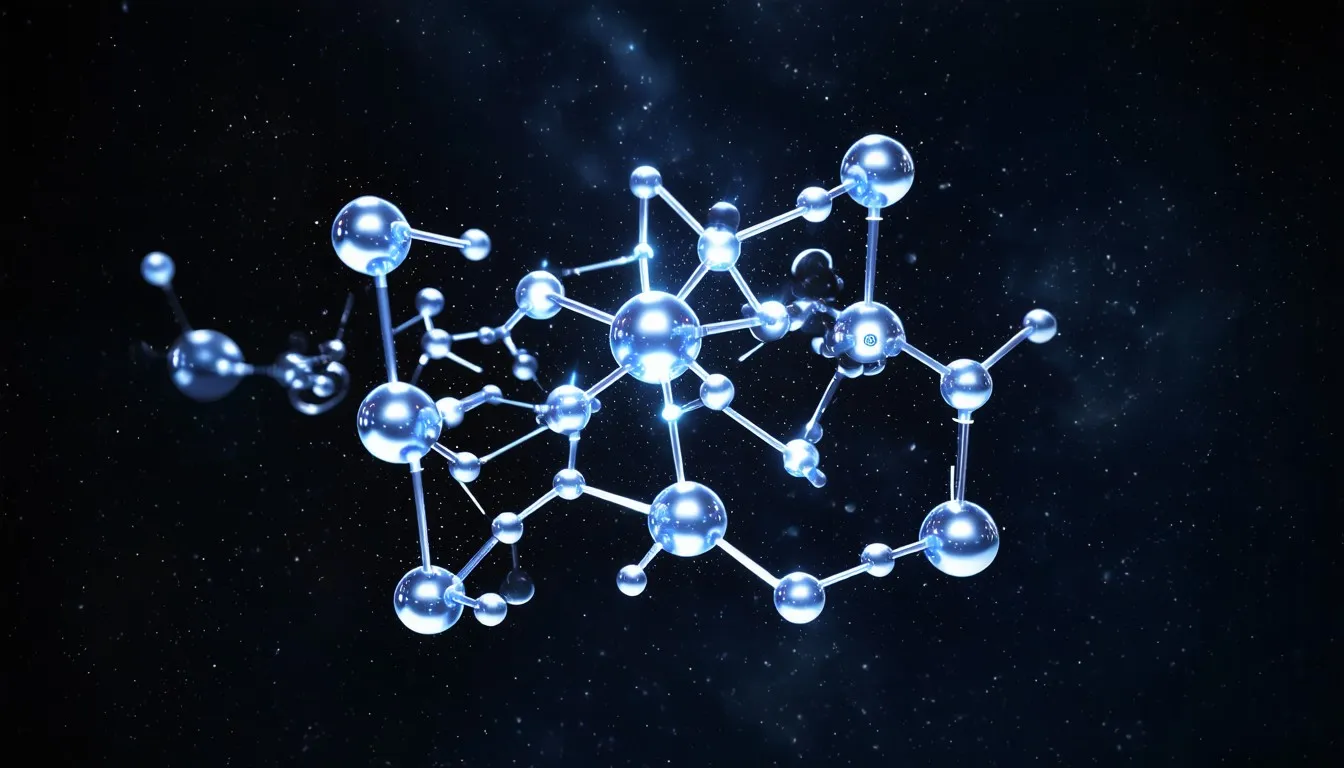
This adaptation allows active graphs with time-varying or typed relationships to undergo processing with context-aware operations that capture the adaptive nature of the interactions within the graph without requiring separate models for each edge type. Transformer-based graph models such as Graphormer apply self-attention over node sequences to capture global dependencies without being limited by the receptive field of local message passing, utilizing structural encoding to inject positional information into the attention mechanism. Continuous-depth models like Graph Neural ODEs handle lively graph evolution by modeling the dynamics of node features as a continuous-time differential equation, providing a natural framework for irregularly sampled time series data on graphs where changes occur at varying rates. In knowledge graphs, GNNs infer missing facts and support logical reasoning by learning to propagate information across known entities and relationships to predict the existence of unknown links with high confidence scores. They learn embeddings that preserve relational semantics, ensuring that entities with similar roles or relationships are positioned close together in the latent vector space while maintaining distinct representations for different types of relationships. For molecular structures, GNNs predict chemical properties by modeling atoms as nodes and bonds as edges, creating a direct mapping between the chemical graph and the neural network architecture that respects the physical laws governing molecular interactions.
This modeling captures spatial and bonding constraints through learned representations, allowing the model to predict quantum mechanical properties or biological activity directly from the molecular graph without relying on expensive simulations or feature engineering. Amazon’s product recommendation engine uses GNNs to model user-item interactions within a massive bipartite graph, enabling the system to generate personalized recommendations by learning the complex relationships between users and products based on browsing history and purchase behavior. Google employs GNNs for knowledge graph completion in search and assistant systems, improving the quality of search results by inferring missing entities and relationships within their vast knowledge base to provide more accurate answers to user queries. Pharmaceutical companies like Roche and AstraZeneca apply GNNs to predict molecular activity during the early stages of drug discovery, significantly accelerating the identification of promising drug candidates by screening billions of potential compounds in silico. These applications improve drug candidates and reduce experimental trial costs by approximately 30 percent by filtering out compounds with low predicted efficacy before they reach the laboratory testing phase. Benchmark performance on the Open Graph Benchmark shows GIN and GraphSAGE variants achieving over 80 percent accuracy on molecular property prediction tasks, demonstrating the effectiveness of these architectures on standardized scientific datasets designed to test generalization capabilities.
These high levels of accuracy validate the use of GNNs as a primary tool for computational chemistry and materials science, where precision is primary. Supply chain dependencies involve access to large annotated graph datasets that are necessary for training durable models capable of generalizing across diverse relational domains found in complex industrial ecosystems. High-memory GPUs with over 40 gigabytes of VRAM are required for training large models because storing the adjacency matrices and feature vectors for graphs with millions of nodes demands significant memory bandwidth and capacity to avoid constant data movement between memory and compute units. Domain-specific graph construction pipelines such as molecular featurization tools are essential for converting raw chemical data into a format suitable for processing by graph neural networks without losing critical structural information during the translation process. Material dependencies include specialized hardware accelerators like TPUs improved for sparse matrix operations, which are critical for handling the irregular sparsity patterns built into graph data more efficiently than standard dense matrix accelerators found in typical hardware setups. Major players include Google, Meta, Microsoft, and startups like Kumo and Tensortrace, all of whom recognize the strategic importance of mastering relational reasoning technologies to maintain dominance in their respective markets.
These entities invest heavily in GNN frameworks and applications to maintain a competitive edge in areas ranging from social network analysis to supply chain optimization and drug discovery. Competitive positioning relies on proprietary datasets and connection with cloud platforms, as access to unique graph data provides a significant advantage over competitors relying solely on public benchmarks or open-source datasets available to everyone. NVIDIA provides RAPIDS for cheminformatics to support vertical-specific tooling, enabling researchers and developers to apply GPU acceleration for molecular modeling tasks through fine-tuned libraries that integrate seamlessly with existing data science workflows. Academic-industrial collaboration remains strong with institutions like Stanford and MIT publishing foundational work that often serves as the basis for commercial implementations in the tech sector driving rapid innovation in the field. This partnership ensures that theoretical advances in graph theory rapidly translate into practical tools used in production environments solving real-world problems in large deployments. Required changes in adjacent systems include updates to data storage formats to accommodate the unique access patterns of graph algorithms, which differ significantly from traditional row-based database queries used in relational database management systems.
Graph-native databases such as Neo4j and Amazon Neptune support these formats by providing fine-tuned storage engines for adjacency lists and efficient traversal operators that minimize disk I/O during query execution. Infrastructure upgrades are necessary for distributed GNN training across clusters, as training on massive graphs requires partitioning the data across multiple machines and synchronizing the model updates efficiently to avoid stale gradients slowing down convergence. Fine-tuned communication protocols for sparse gradient exchanges facilitate this training by minimizing the amount of data transferred between machines during the optimization process, reducing network overhead significantly. The rise of large-scale knowledge bases and drug discovery pipelines creates performance demands that push the limits of current hardware architectures, necessitating continuous innovation in both algorithms and silicon design to keep pace with growing data volumes. Economic shifts toward data-driven decision-making in healthcare and finance increase the value of relational reasoning systems, as organizations seek to extract actionable insights from complex interconnected data sources previously too difficult to analyze effectively. Societal needs for explainable AI require models that operate on structured, interpretable representations, making GNNs an attractive option due to their built-in transparency in terms of node and edge relationships, which can be visualized and understood by human experts.
Regulatory frameworks must evolve to address transparency in graph-based reasoning, particularly when systems are used in high-stakes decision-making processes affecting individuals’ lives or financial well-being. This transparency is crucial when systems are used in credit scoring or medical diagnosis, as regulators and stakeholders need to understand the specific relationships and features that led to a particular model output to ensure fairness and compliance with existing laws regarding algorithmic accountability. Second-order consequences include the displacement of traditional statistical models in relational domains, as GNNs offer superior predictive performance by capturing non-linear dependencies and higher-order interactions within the data that older methods simply could not detect. Graph-as-a-service platforms offering pre-trained GNN models are becoming prevalent, allowing companies without specialized machine learning expertise to use the power of graph reasoning for their specific business needs without building models from scratch. New business models involve subscription-based access to GNN-powered analytics for supply chain optimization, providing clients with continuous insights into logistics risks and opportunities based on global trade graphs updated in real-time. Measurement shifts require new Key Performance Indicators beyond accuracy, such as the ability of the model to maintain performance under distribution shift or its reliability to adversarial attacks on the graph structure designed to mislead the model.
Relational fidelity and inference latency over large graphs serve as critical metrics for evaluating the practical utility of a deployed system, as users require fast responses even when querying graphs containing billions of edges representing complex networks. Scaling physics limits arise from memory bandwidth constraints when storing large adjacency matrices, as the random access patterns of graph traversal can saturate memory channels quickly leading to underutilization of compute resources waiting for data arrival. Communication overhead in distributed training presents another physical limit, as the latency associated with synchronizing node embeddings across different machines can become a significant constraint as the number of devices increases limiting linear scaling efficiency. Workarounds include graph partitioning and hierarchical pooling, which aim to reduce the size of the graph processed at any given time or compress the graph structure into smaller coarser representations that retain essential structural information while reducing computational load. Approximate neighborhood sampling reduces memory and compute demands by limiting the scope of the aggregation process to a manageable subset of the local neighborhood, trading off a small amount of accuracy for significant gains in adaptability enabling training on massive datasets. Future innovations will include hybrid symbolic-GNN systems that combine the pattern recognition capabilities of neural networks with the logical rigor of symbolic artificial intelligence to create more strong reasoning engines capable of handling uncertainty while adhering to logical constraints.
These systems will combine neural learning with rule-based reasoning for improved interpretability, allowing the model to provide logical justifications for its predictions based on explicit knowledge bases rather than functioning as a black box. Convergence points exist with reinforcement learning through graph-based policy networks, where the state space of an environment is represented as a graph to facilitate better generalization across different configurations, enabling agents to reason about object relationships rather than raw pixels. Computer vision utilizes scene graph generation to understand the relationships between objects in an image, while natural language processing employs semantic parsing into graphs to represent the meaning of sentences as abstract dependency structures capturing relationships between words. GNNs represent a framework shift toward learning algorithms that respect relational invariance, ensuring that the model’s predictions remain consistent regardless of permutations in the order of nodes or edges, which is essential for processing unordered data structures effectively. This shift enables machines to reason about structure as a first-class citizen, moving beyond treating data as independent vectors to understanding the complex web of connections that define the underlying reality of the data being analyzed. Superintelligence will utilize GNNs to construct and refine world models that integrate information from diverse sources into a unified, coherent representation of reality, enabling it to understand complex systems ranging from global economics to biological ecosystems.
It will continuously update a global knowledge graph from multimodal inputs including text, images, and sensor data, ensuring that the model’s understanding of the world remains current and comprehensive, reflecting the dynamic nature of reality. This capability will enable causal reasoning and long-future planning by simulating the potential downstream effects of actions within the connected world model, allowing the system to predict consequences far into the future with high accuracy. Superintelligence will ensure GNNs generalize across unseen graph topologies by learning core principles of structure and interaction rather than memorizing specific patterns from the training data, allowing it to adapt to novel situations effectively. It will maintain consistency under logical constraints and integrate with symbolic knowledge bases to ensure that its reasoning process aligns with established facts and rules, providing a durable foundation for decision-making in complex environments requiring high levels of reliability.