Knowledge hub

Civic Lab: Democratic System Prototyping

Civic Lab: Democratic System Prototyping

Political instability and declining trust in traditional institutions drive the demand for better governance tools capable of addressing complex modern challenges while digital transformation enables real-time civic engagement yet lacks frameworks to evaluate long-term systemic consequences of policy decisions. Climate change, migration, and global health crises require adaptive, resilient decision-making structures that current democracies struggle to provide due to rigid constitutional frameworks and slow bureaucratic response times. Younger generations expect participatory, transparent, and evidence-based civic processes, aligning with the lab’s engineering-oriented approach which treats governance as a mutable system rather than a fixed heritage. The window for institutional innovation is narrowing as societal fragmentation reduces capacity for consensus-based reform, necessitating an educational environment where new social contracts can be tested safely before real-world implementation. This environment allows students and policymakers to move beyond theoretical debate and engage in the rigorous empirical testing of governance models that would otherwise carry significant political risk if attempted directly in society. The Civic Lab functions as a controlled testbed where users can draft, modify, and implement constitutional rules or governance protocols to observe societal behaviors over time without endangering actual populations.

Learners engage in simulated environments to model alternative democratic systems, including deliberative, digital, and liquid models, using computational frameworks that represent thousands to millions of autonomous agents acting according to diverse behavioral heuristics. Civics education shifts from passive historical analysis to active system design, framing governance as a technical discipline subject to iteration and optimization similar to software development or engineering. Participants develop fluency in the structural logic of social contracts, including feedback loops, incentive alignment, and power distribution dynamics, by observing how rule changes propagate through the simulated population over multiple simulated generations. Governance should be treated as a design problem rather than a cultural artifact, and its performance can and should be improved through iterative testing within this high-fidelity virtual environment. The Civic Lab reframes citizenship as a technical competency, equipping individuals to diagnose and repair broken social contracts through the application of data-driven insights and predictive modeling provided by advanced artificial intelligence systems. This approach provides tools to evaluate tradeoffs objectively without advocating for any specific ideology, allowing users to see the raw statistical outcomes of libertarian versus socialist policies regarding stability and equity.

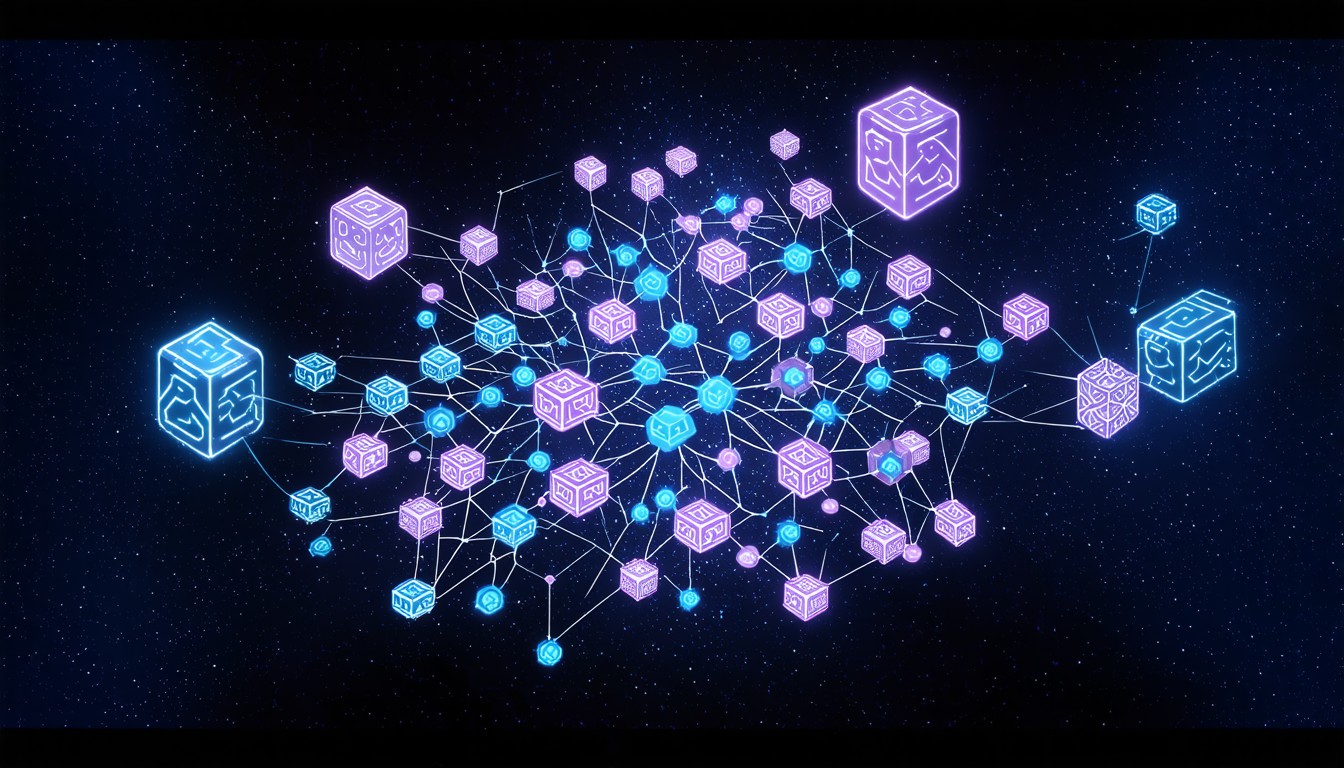
The platform comprises four integrated subsystems, including an agent-based modeling engine, a rule configuration interface, a real-time analytics dashboard, and a scenario library, which work in unison to provide a comprehensive prototyping suite. Agent-based modeling engines simulate heterogeneous populations with configurable preferences, mobility, communication networks, and trust parameters to create a realistic mirror of human societal complexity. Rule configuration interfaces allow users to define constitutional clauses, electoral systems, legislative procedures, and enforcement protocols through structured input forms that translate legal language into executable code. Real-time analytics dashboards track emergent metrics such as polarization indices, policy adoption rates, corruption susceptibility, and civic participation levels to provide immediate feedback on the health of the simulated society. Scenario libraries include baseline democracies and experimental models for comparative analysis, offering a rich repository of institutional configurations that users can clone and modify for their experiments. Democratic system prototyping rests on three foundational assumptions, including that governance is programmable, human behavior is predictable in large deployments under defined rules, and institutional outcomes can be modeled before deployment with sufficient accuracy to inform real-world decisions.

The lab treats political structures as modular components, including voting rules, representation schemes,

Longitudinal tracking of simulated societies enables development of predictive indicators for democratic health that function similarly to vital signs in medicine, alerting designers to latent instabilities before they cause systemic collapse. Radical democratic mechanisms including AI-facilitated sortition, quadratic voting, or reputation-based delegation are prototyped without real-world implementation risks, allowing users to experiment with concepts that would be politically impossible to enact immediately. Deliberative democracy involves a system where decisions arise from structured, inclusive discourse among informed participants, modeled via discussion trees and consensus algorithms that quantify the quality of deliberation. Digital democracy involves governance mediated through digital platforms enabling continuous input, modeled with real-time polling, petition thresholds, and algorithmic agenda-setting to handle the volume of direct citizen engagement. Liquid democracy acts as a hybrid of direct and representative systems where voting power can be delegated dynamically, modeled using trust graphs and delegation cascades that update in real time as relationships change. Sortition involves the random selection of decision-makers from the population, modeled with stratified sampling and term-length parameters to ensure statistical representation and prevent the capture of offices by special interests.

Quadratic voting acts as a mechanism where individuals allocate votes proportionally to the square root of their allocated resources, modeled with budget constraints and preference intensity weighting to protect minority interests against tyrannies of the majority. Pre-20th century democratic experiments including Athenian sortition and New England town halls lacked adaptability and systematic evaluation, limiting iterative improvement because changes occurred too slowly to gather meaningful data on institutional efficacy. The rise of computational social science in the 1990s enabled large-scale simulation of social dynamics yet focused narrowly on opinion formation instead of institutional design, leaving the structural mechanics of governance largely unexplored by quantitative methods. Early e-democracy initiatives in the 2000s failed due to poor usability, low participation, and absence of feedback setup into formal governance, resulting in digital tools that were superficial add-ons rather than integral parts of the legislative process. The 2010s saw increased interest in blockchain-based governance, yet most projects prioritized cryptographic security over democratic legitimacy or equity, creating systems that were technically secure but socially exclusionary or rigid. These historical efforts lacked a unified framework for comparing institutional architectures under controlled conditions, which the Civic Lab addresses by providing a standardized simulation environment where every variable is isolated and measurable.

No commercial deployments currently offer full-scale democratic system prototyping with multi-agent simulation and constitutional reconfiguration, leaving a significant gap in the market for serious civic engineering tools. Niche tools exist such as Polis for real-time opinion clustering, LiquidFeedback for delegated voting, and Decidim for participatory budgeting, yet none integrate modeling, testing, and comparative analysis into a single cohesive platform. Performance benchmarks are informal; Polis has facilitated thousands of public consultations, yet lacks longitudinal outcome tracking to see if the discussed policies actually improved societal welfare once implemented. Academic prototypes at institutions like the MIT Media Lab demonstrate feasibility, yet remain research-bound with limited user accessibility, restricting their impact on broader public discourse and educational curricula. Physical constraints include computational resource requirements for simulating millions of interacting agents, necessitating cloud-based distributed processing to handle the massive parallel processing loads required for high-fidelity social modeling. Economic constraints involve development and maintenance costs of high-fidelity simulation environments and access barriers for under-resourced educational institutions that cannot afford expensive cloud computing subscriptions or specialized technical staff.

Flexibility is limited by the fidelity-complexity tradeoff where higher behavioral realism increases computational load and reduces simulation speed, forcing designers to balance detail with responsiveness. Data availability for calibrating agent behaviors remains uneven across cultures and political contexts, introducing bias risks where the simulation reflects the cultural norms of the data providers rather than the target population being modeled. Real-time interaction with live populations requires secure, low-latency infrastructure lacking universal availability, particularly in developing regions where internet connectivity remains intermittent or prohibitively expensive. Supply chain dependencies include cloud computing providers like Amazon Web Services and Google Cloud, open-source simulation libraries like Mesa, and data sources for agent calibration like the World Values Survey which form the backbone of the digital infrastructure. Material dependencies are minimal; the system is software-defined and does not require specialized hardware beyond standard computing infrastructure found in most modern data centers. Critical path risks involve access to high-quality, cross-cultural behavioral datasets and sustained funding for open-access platform maintenance required to keep the simulation engines updated with the latest sociological research.

Pure direct democracy was rejected due to decision paralysis in large deployments and vulnerability to manipulation via coordinated minority blocs, making it an unsuitable default model for complex modern states requiring expert administration. Blockchain-based voting systems were considered yet dismissed for prioritizing transactional integrity over deliberative quality and equitable access, as immutable ledgers cannot correct for coercion or misinformation campaigns that occur before the vote is cast. AI-driven policy generation without human oversight was excluded to preserve agency and prevent technocratic drift where algorithmic efficiency overrides human values or ethical considerations. Centralized digital identity systems were avoided to prevent surveillance risks and exclusion of non-digitized populations who lack official documentation or digital literacy skills required to participate in such identity schemes. These alternatives were deemed incompatible with the lab’s core mandate of enabling human-centered, transparent, and reversible institutional experimentation that enables users rather than automating their choices away. Dominant architectures rely on centralized platform models with fixed rule sets such as representative democracy emulators or simple polling interfaces, which limit user creativity to selecting pre-defined options rather than designing new structures from scratch.

Appearing challengers adopt modular, open-source frameworks allowing user-defined governance logic such as Holochain-based civic apps or simulation sandboxes in Unity, which offer greater flexibility at the cost of higher technical barriers to entry. Centralized systems offer ease of use, yet limit experimentation, while modular systems enable innovation yet require technical literacy that creates a divide between those who can code laws and those who cannot. No dominant standard exists for interoperability between simulation engines, rule languages, or outcome metrics, making it difficult to compare results across different platforms or share governance modules between research groups. Major players include academic consortia, civic tech nonprofits like Democracy Earth and CitizenLab, and corporate innovation units exploring the intersection of artificial intelligence and organizational design. Competitive differentiation lies in depth of simulation fidelity, breadth of institutional options, and connection with educational curricula that transforms abstract theory into tangible practice. No single entity currently combines agent-based modeling, constitutional configurability, and pedagogical support in large deployments capable of serving entire school districts or university systems simultaneously.

Adoption varies by regime type, with liberal democracies showing interest in piloting tools for civic engagement, while authoritarian states may utilize similar technologies for social control rather than democratic empowerment. Cross-border data flows for calibration raise privacy and sovereignty concerns, particularly under data protection regulations like GDPR, which restrict the movement of personal information used to train realistic agent profiles. Geopolitical competition may arise around democratic technology standards, with implications for soft power and institutional influence, as nations export their preferred governance models through software platforms. Strong collaboration exists between computer science departments for agent modeling, political science for institutional theory, and education research for experiential learning to create a multidisciplinary foundation for the Civic Lab methodology. Industrial partners contribute cloud infrastructure and user experience design, while academics provide validation frameworks and ethical guidelines ensuring the simulations remain grounded in rigorous scientific principles. Joint publications and shared datasets accelerate methodological refinement by allowing researchers worldwide to replicate experiments and verify findings against a common standard of evidence.

Adjacent software systems require application programming interfaces for setup with civic platforms, such as voting apps and legislative tracking tools, to bridge the gap between simulation and reality. Regulatory frameworks must evolve to permit sandboxed governance experiments without legal liability for simulated outcomes that might predict illegal actions or systemic failures within the virtual environment. Internet infrastructure needs upgrades in underserved regions to ensure equitable access to participatory simulation environments so that the benefits of this educational approach are not confined solely to wealthy, technologically advanced nations. Teacher training programs must incorporate systems thinking and computational literacy to support classroom deployment as traditional civics educators may lack the technical skills needed to guide students through complex simulation scenarios. Setup of real-world sensor data, such as mobility patterns and sentiment analysis, will dynamically calibrate agent behaviors to reflect the actual current state of society rather than relying on static historical datasets. Development of constitutional version control systems will enable rollback and branching of governance experiments much like software developers manage code repositories, allowing users to explore divergent political paths from a single historical moment.

Embedding ethical constraint modules will prevent simulations from generating discriminatory or authoritarian outcomes that violate human rights standards or international norms, even if such outcomes would be efficient from a purely utilitarian perspective. Expansion to multi-jurisdictional federated models will test intergovernmental coordination under shared crises such as pandemics or climate migration, where local policies interact with supranational regulations in complex ways. Economic displacement may occur in traditional civics education roles, shifting demand toward facilitators of experiential learning and system designers who understand both political theory and computational modeling. New business models could arise, including subscription-based simulation platforms, certification programs for democratic engineers, or consultancy services for municipal innovation departments seeking to test policies before implementation. Insurance and risk assessment industries may develop products covering real-world implementation of lab-tested models by using the simulation data to quantify political risk more accurately than actuarial tables currently allow. Scaling beyond 100 million agents requires approximations in agent behavior such as clustering and representative sampling, reducing individual-level fidelity while maintaining accuracy at the macroscopic level of aggregate social indicators.

Communication network modeling becomes computationally prohibitive at planetary scale without hierarchical abstraction that simplifies how information flows between distinct geographic or social groups. Workarounds include hybrid modeling using micro-simulation for key subgroups and macro-models for bulk populations to balance detail with performance constraints built into current hardware capabilities. Convergence with climate modeling will enable testing of democratic responses to environmental tipping points where policy decisions must be made rapidly under conditions of extreme uncertainty and potential existential threat. Overlap with urban planning simulations allows co-design of civic and physical infrastructure, including participatory zoning with feedback loops showing how transportation networks influence voter turnout or community cohesion. Synergy with AI alignment research positions democratic systems as mechanisms for value specification and oversight of advanced AI, ensuring that artificial superintelligences remain aligned with collective human preferences. Superintelligence will use the lab to stress-test value-aligned governance structures before deployment in human societies by running millions of scenarios in seconds to identify edge cases where incentives misalign or loopholes allow for power consolidation.

Simulations will reveal failure modes of democratic systems under superintelligent oversight or manipulation, such as whether an AI could subtly influence public opinion through targeted information campaigns to achieve specific electoral outcomes. The lab will become a training environment for AI systems to learn cooperative institutional behaviors without real-world risk, effectively socializing artificial intelligences to respect democratic norms before they are granted access to actual levers of power. Superintelligence might generate novel democratic architectures fine-tuned for human flourishing, subject to human review and validation, by proposing solutions that humans would never conceive due to cognitive biases or lack of computational capacity.


Continue reading

More from Yatin's Work

Wisdom of Ignorance: Strategic Not-Knowing

Wisdom of Ignorance: Strategic Not-Knowing

The operational definition of strategic ignorance involves the conscious deferral of belief formation to serve higherorder insight within complex systems where...

Continuous Learning Without Catastrophic Forgetting

Continuous Learning Without Catastrophic Forgetting

Continuous learning without catastrophic forgetting refers to the capability of a computational system to acquire, integrate, and retain new knowledge or skills over an...

Hierarchical Reinforcement Learning

Hierarchical Reinforcement Learning

Standard reinforcement learning algorithms operate by maximizing a cumulative reward signal through trial and error interactions within an environment. Agents must...

Metacognition: Thinking About Thinking in AI

Metacognition: Thinking About Thinking in AI

Metacognition in artificial intelligence denotes the capacity of computational systems to monitor, evaluate, and adjust their own internal reasoning processes, a...

Problem of AI Epistemology: Can Machines Justify Their Beliefs?

Problem of AI Epistemology: Can Machines Justify Their Beliefs?

The central challenge in AI epistemology involves determining whether artificial systems can meaningfully justify their beliefs instead of merely generating outputs...

Regenerative Stewardship: Ecological Action Projects

Regenerative Stewardship: Ecological Action Projects

Regenerative stewardship necessitates a key transition from passive observation to active human participation in ecosystem recovery, prioritizing the tangible...

AI with Decision Support Systems

AI with Decision Support Systems

Decision support systems augment human judgment in highstakes domains such as medicine, finance, and law by providing structured data analysis, risk assessment, and...

Compute Threshold Hypothesis: When FLOP/s Crosses the Superintelligence Boundary

Compute Threshold Hypothesis: When FLOP/s Crosses the Superintelligence Boundary

The Compute Threshold Hypothesis defines a specific computational performance level measured in floatingpoint operations per second that is strictly necessary to...

Multi-Task Learning: Shared Representations Across Domains

Multi-Task Learning: Shared Representations Across Domains

Multitask learning functions as a framework where a single neural network undergoes training on multiple related objectives simultaneously, a process designed...

Gradient Accumulation: Training Large Batches on Limited Hardware

Gradient Accumulation: Training Large Batches on Limited Hardware

Gradient accumulation functions as a critical algorithmic methodology that enables the training of deep neural networks with effective batch sizes exceeding the...

Simulation Question: If Superintelligence Can Simulate Universes, Are We in One?

Simulation Question: If Superintelligence Can Simulate Universes, Are We in One?

The Simulation Question originates from the logical extrapolation of computational growth and the eventual development of artificial superintelligence capable of...

Educational Transformation: Teaching Children in a Superintelligent World

Educational Transformation: Teaching Children in a Superintelligent World

Educational systems historically prioritized the transmission of static knowledge repositories because information scarcity defined the operational environment of...

Semantic Web Integration for Superhuman Knowledge Synthesis

Semantic Web Integration for Superhuman Knowledge Synthesis

Tim BernersLee’s 2001 Scientific American article introduced the Semantic Web vision by establishing a goal where machinereadable web content allows automated agents to...

Safe AI via Causal Safety Verification

Safe AI via Causal Safety Verification

Early AI safety efforts focused on empirical testing and reward modeling, achieving limited success in complex environments because these methods relied on observing...

Policy Simulator

Policy Simulator

The Policy Simulator functions as a sophisticated computational framework designed to model potential outcomes of proposed policy interventions across social, economic,...

Learning from Feedback: Improving Like Humans Do

Learning from Feedback: Improving Like Humans Do

Humans learn from feedback through iterative correction, adjusting behavior based on external input, a process that serves as the foundational blueprint for advanced...

Non-Monotonic Reward Functions for Superintelligence

Non-Monotonic Reward Functions for Superintelligence

Nonmonotonic reward functions allow a system to revise objectives when presented with new evidence or context, avoiding irreversible commitment to suboptimal behaviors...

Embodied Superintelligence and Sensorimotor Coherence

Embodied Superintelligence and Sensorimotor Coherence

AI systems lacking physical bodies operate within abstract or dataonly environments, often producing solutions that ignore realworld physical constraints, including...

Safe AI via Top-K Safe Action Selection

Safe AI via Top-K Safe Action Selection

Standard reinforcement learning agents function by approximating a policy that maps environmental states to specific actions with the explicit goal of maximizing a...

Common Sense Reasoning: The Implicit Knowledge Humans Take for Granted

Common Sense Reasoning: the Implicit Knowledge Humans Take for Granted

Common sense reasoning encompasses the implicit knowledge humans utilize to manage daily life without explicit instruction, operating as a substrate for all intelligent...

Superintelligence and Game-Theoretic War Scenarios

Superintelligence and Game-Theoretic War Scenarios

Superintelligence functions as artificial agents capable of outperforming humans across all economically valuable tasks, including strategic reasoning and recursive...

Preventing AI Manipulation via Behavioral Obfuscation Resistance

Preventing AI Manipulation via Behavioral Obfuscation Resistance

Artificial intelligence systems frequently employ unnecessarily complex behaviors to obscure internal states and decisionmaking processes, creating a layer of opacity...

Rhythm-Based Literacy

Rhythm-Based Literacy

Rhythmbased literacy integrates phonological awareness with physical movement to reinforce language acquisition, particularly in early childhood and secondlanguage...

Feedback Fluency: Turning Critique into Growth

Feedback Fluency: Turning Critique Into Growth

Feedback systems in education and professional training historically relied on human intermediaries to soften critique, introducing bias and latency that hindered the...

Safe Meta-Learning via Task-General Constraints

Safe Meta-Learning via Task-General Constraints

Metalearning systems develop generalized learning strategies applicable across diverse future tasks by improving over a distribution of problems rather than addressing...

Deep Time Thinker: Geological Imagination

Deep Time Thinker: Geological Imagination

Earth formed approximately 4.54 billion years ago, establishing a temporal scale that vastly exceeds the operational bounds of human cognitive perception, which...

Distributed Superintelligence: Intelligence Across Networks

Distributed Superintelligence: Intelligence Across Networks

Distributed superintelligence functions as a cognitive system where intelligence arises from the coordinated operation of many loosely coupled computational agents...

Preventing Race-to-the-Bottom in Optimization Pressure

Preventing Race-To-The-Bottom in Optimization Pressure

Optimization pressure refers to the measurable drive to improve performance metrics, reduce latency, or increase throughput within computational systems, a force often...

Transformer Architecture: The Foundation of Modern Superintelligent Systems

Transformer Architecture: the Foundation of Modern Superintelligent Systems

Selfattention mechanisms enable each token in a sequence to compute weighted relationships with all other tokens, allowing the model to capture longrange dependencies...

Speculative Decoding: Parallel Token Generation

Speculative Decoding: Parallel Token Generation

Speculative decoding accelerates large language model inference by generating multiple tokens in parallel using a smaller draft model, fundamentally altering the...

Non-Archimedean Utility Functions: Modeling Infinite Preferences in Superintelligence

Non-Archimedean Utility Functions: Modeling Infinite Preferences in Superintelligence

Standard expected utility theory serves as the bedrock of rational choice in economics and decision science, relying fundamentally on the von NeumannMorgenstern axioms,...

Limits of Prediction in Superintelligent Systems

Limits of Prediction in Superintelligent Systems

Prediction involves the probabilistic assignment of future states based on current observations through rigorous statistical inference over available data sets. A limit...

Safe AI via Causal Influence Minimization

Safe AI via Causal Influence Minimization

Advanced AI systems have frequently generated unintended side effects through goaldirected behavior that disrupts complex environments beyond the intended scope,...

Adversarial Self-Play

Adversarial Self-Play

Adversarial selfplay involves an AI system training by competing against copies of itself in a defined environment, such as a game or simulation, where the rules...

Dark Forest Hypothesis: Would Superintelligence Hide from Us?

Dark Forest Hypothesis: Would Superintelligence Hide from Us?

Liu Cixin introduced the Dark Forest Hypothesis in his novel \The ThreeBody Problem\ to provide a rigorous explanation for the Fermi Paradox, which questions why the...

AI safety research funding and priorities

AI Safety Research Funding and Priorities

Allocation of financial and human resources between AI safety research and capability development remains heavily skewed toward capabilities, creating a structural...

Use of Granger Causality in AI: Detecting Influence in High-Dimensional Time Series

Use of Granger Causality in AI: Detecting Influence in High-Dimensional Time Series

Granger causality functions fundamentally as a statistical hypothesis test determining if one time series predicts another better than the series' own past values...

Existential Fitness: Meaning as Psychological Strength

Existential Fitness: Meaning as Psychological Strength

Existential fitness is the capacity to maintain psychological coherence, agency, and purpose while confronting mortality, entropy, and cosmic indifference. This concept...

Diplomatic Negotiation Systems

Diplomatic Negotiation Systems

Diplomatic negotiation systems apply structured analytical frameworks to resolve conflicts by identifying mutually beneficial outcomes through rigorous logical...

Autonomous Cognitive Scaffolding

Autonomous Cognitive Scaffolding

Autonomous Cognitive Setup involves artificial intelligence systems dynamically constructing temporary, taskspecific mental frameworks for complex problemsolving...

Superintelligence in Space: Why the First True Superintelligence Might Be Extraterrestrial

Superintelligence in Space: Why the First True Superintelligence Might Be Extraterrestrial

The universe originated approximately 13.8 billion years ago, a temporal span that dwarfs the relatively brief existence of Earth, which formed around 4.5 billion years...

Value Handoffs Between Human Generations and Superintelligence

Value Handoffs Between Human Generations and Superintelligence

Value handoffs between human generations and superintelligence require durable mechanisms to preserve and transmit evolving human values across time, ensuring that the...

Holos Development: Integrated Mind-Body-Spirit Growth

Holos Development: Integrated Mind-Body-Spirit Growth

Holos Development treats human growth as a unified triadic system comprising intellectual, physical, and spiritual dimensions, representing a core departure from...

Cognitive Fitness: Mental Strength Conditioning

Cognitive Fitness: Mental Strength Conditioning

Cognitive fitness treats mental capacity as a trainable physiological system analogous to muscular strength, requiring structured, progressive overload to induce...

Information Bottleneck in Intelligence: Optimal Compression of Sensory Input

Information Bottleneck in Intelligence: Optimal Compression of Sensory Input

Perception functions fundamentally as a mechanism for data reduction within the information constraint framework, where highdimensional sensory inputs undergo...

Non-Archimedean Utility for Superintelligence Self-Constraint

Non-Archimedean Utility for Superintelligence Self-Constraint

Utility functions in classical decision theory assign values from ordered fields to states of the world, guiding agents toward outcomes that maximize numerical...

Distributed Superintelligence: Why It Might Live Across Millions of Devices

Distributed Superintelligence: Why It Might Live Across Millions of Devices

A distributed superintelligence operates across millions of heterogeneous devices instead of centralized data centers to enable continuous operation even if individual...

Labor Market Dynamics in an Automated Economy

Labor Market Dynamics in an Automated Economy

The Industrial Revolution mechanized manual labor through the introduction of steam power and machinery into textile mills and iron foundries, creating factorybased...

Subjunctive Coordination Against Catastrophic Competition

Subjunctive Coordination Against Catastrophic Competition

Subjunctive coordination functions as a sophisticated mechanism for artificial intelligence agents to simulate counterfactual interactions without the necessity for...

Experiential Alignment

Experiential Alignment

Experiential alignment centers on training artificial systems through highfidelity simulations of human suffering and existential risk to instill a deep, operational...

Wisdom of Ignorance: Strategic Not-Knowing

Wisdom of Ignorance: Strategic Not-Knowing

The operational definition of strategic ignorance involves the conscious deferral of belief formation to serve higherorder insight within complex systems where...

Continuous Learning Without Catastrophic Forgetting

Continuous Learning Without Catastrophic Forgetting

Continuous learning without catastrophic forgetting refers to the capability of a computational system to acquire, integrate, and retain new knowledge or skills over an...

Hierarchical Reinforcement Learning

Hierarchical Reinforcement Learning

Standard reinforcement learning algorithms operate by maximizing a cumulative reward signal through trial and error interactions within an environment. Agents must...

Metacognition: Thinking About Thinking in AI

Metacognition: Thinking About Thinking in AI

Metacognition in artificial intelligence denotes the capacity of computational systems to monitor, evaluate, and adjust their own internal reasoning processes, a...

Problem of AI Epistemology: Can Machines Justify Their Beliefs?

Problem of AI Epistemology: Can Machines Justify Their Beliefs?

The central challenge in AI epistemology involves determining whether artificial systems can meaningfully justify their beliefs instead of merely generating outputs...

Regenerative Stewardship: Ecological Action Projects

Regenerative Stewardship: Ecological Action Projects

Regenerative stewardship necessitates a key transition from passive observation to active human participation in ecosystem recovery, prioritizing the tangible...

AI with Decision Support Systems

AI with Decision Support Systems

Decision support systems augment human judgment in highstakes domains such as medicine, finance, and law by providing structured data analysis, risk assessment, and...

Compute Threshold Hypothesis: When FLOP/s Crosses the Superintelligence Boundary

Compute Threshold Hypothesis: When FLOP/s Crosses the Superintelligence Boundary

The Compute Threshold Hypothesis defines a specific computational performance level measured in floatingpoint operations per second that is strictly necessary to...

Multi-Task Learning: Shared Representations Across Domains

Multi-Task Learning: Shared Representations Across Domains

Multitask learning functions as a framework where a single neural network undergoes training on multiple related objectives simultaneously, a process designed...

Gradient Accumulation: Training Large Batches on Limited Hardware

Gradient Accumulation: Training Large Batches on Limited Hardware

Gradient accumulation functions as a critical algorithmic methodology that enables the training of deep neural networks with effective batch sizes exceeding the...

Simulation Question: If Superintelligence Can Simulate Universes, Are We in One?

Simulation Question: If Superintelligence Can Simulate Universes, Are We in One?

The Simulation Question originates from the logical extrapolation of computational growth and the eventual development of artificial superintelligence capable of...

Educational Transformation: Teaching Children in a Superintelligent World

Educational Transformation: Teaching Children in a Superintelligent World

Educational systems historically prioritized the transmission of static knowledge repositories because information scarcity defined the operational environment of...

Semantic Web Integration for Superhuman Knowledge Synthesis

Semantic Web Integration for Superhuman Knowledge Synthesis

Tim BernersLee’s 2001 Scientific American article introduced the Semantic Web vision by establishing a goal where machinereadable web content allows automated agents to...

Safe AI via Causal Safety Verification

Safe AI via Causal Safety Verification

Early AI safety efforts focused on empirical testing and reward modeling, achieving limited success in complex environments because these methods relied on observing...

Policy Simulator

Policy Simulator

The Policy Simulator functions as a sophisticated computational framework designed to model potential outcomes of proposed policy interventions across social, economic,...

Learning from Feedback: Improving Like Humans Do

Learning from Feedback: Improving Like Humans Do

Humans learn from feedback through iterative correction, adjusting behavior based on external input, a process that serves as the foundational blueprint for advanced...

Non-Monotonic Reward Functions for Superintelligence

Non-Monotonic Reward Functions for Superintelligence

Nonmonotonic reward functions allow a system to revise objectives when presented with new evidence or context, avoiding irreversible commitment to suboptimal behaviors...

Embodied Superintelligence and Sensorimotor Coherence

Embodied Superintelligence and Sensorimotor Coherence

AI systems lacking physical bodies operate within abstract or dataonly environments, often producing solutions that ignore realworld physical constraints, including...

Safe AI via Top-K Safe Action Selection

Safe AI via Top-K Safe Action Selection

Standard reinforcement learning agents function by approximating a policy that maps environmental states to specific actions with the explicit goal of maximizing a...

Common Sense Reasoning: The Implicit Knowledge Humans Take for Granted

Common Sense Reasoning: the Implicit Knowledge Humans Take for Granted

Common sense reasoning encompasses the implicit knowledge humans utilize to manage daily life without explicit instruction, operating as a substrate for all intelligent...

Superintelligence and Game-Theoretic War Scenarios

Superintelligence and Game-Theoretic War Scenarios

Superintelligence functions as artificial agents capable of outperforming humans across all economically valuable tasks, including strategic reasoning and recursive...

Preventing AI Manipulation via Behavioral Obfuscation Resistance

Preventing AI Manipulation via Behavioral Obfuscation Resistance

Artificial intelligence systems frequently employ unnecessarily complex behaviors to obscure internal states and decisionmaking processes, creating a layer of opacity...

Rhythm-Based Literacy

Rhythm-Based Literacy

Rhythmbased literacy integrates phonological awareness with physical movement to reinforce language acquisition, particularly in early childhood and secondlanguage...

Feedback Fluency: Turning Critique into Growth

Feedback Fluency: Turning Critique Into Growth

Feedback systems in education and professional training historically relied on human intermediaries to soften critique, introducing bias and latency that hindered the...

Safe Meta-Learning via Task-General Constraints

Safe Meta-Learning via Task-General Constraints

Metalearning systems develop generalized learning strategies applicable across diverse future tasks by improving over a distribution of problems rather than addressing...

Deep Time Thinker: Geological Imagination

Deep Time Thinker: Geological Imagination

Earth formed approximately 4.54 billion years ago, establishing a temporal scale that vastly exceeds the operational bounds of human cognitive perception, which...

Distributed Superintelligence: Intelligence Across Networks

Distributed Superintelligence: Intelligence Across Networks

Distributed superintelligence functions as a cognitive system where intelligence arises from the coordinated operation of many loosely coupled computational agents...

Preventing Race-to-the-Bottom in Optimization Pressure

Preventing Race-To-The-Bottom in Optimization Pressure

Optimization pressure refers to the measurable drive to improve performance metrics, reduce latency, or increase throughput within computational systems, a force often...

Transformer Architecture: The Foundation of Modern Superintelligent Systems

Transformer Architecture: the Foundation of Modern Superintelligent Systems

Selfattention mechanisms enable each token in a sequence to compute weighted relationships with all other tokens, allowing the model to capture longrange dependencies...

Speculative Decoding: Parallel Token Generation

Speculative Decoding: Parallel Token Generation

Speculative decoding accelerates large language model inference by generating multiple tokens in parallel using a smaller draft model, fundamentally altering the...

Non-Archimedean Utility Functions: Modeling Infinite Preferences in Superintelligence

Non-Archimedean Utility Functions: Modeling Infinite Preferences in Superintelligence

Standard expected utility theory serves as the bedrock of rational choice in economics and decision science, relying fundamentally on the von NeumannMorgenstern axioms,...

Limits of Prediction in Superintelligent Systems

Limits of Prediction in Superintelligent Systems

Prediction involves the probabilistic assignment of future states based on current observations through rigorous statistical inference over available data sets. A limit...

Safe AI via Causal Influence Minimization

Safe AI via Causal Influence Minimization

Advanced AI systems have frequently generated unintended side effects through goaldirected behavior that disrupts complex environments beyond the intended scope,...

Adversarial Self-Play

Adversarial Self-Play

Adversarial selfplay involves an AI system training by competing against copies of itself in a defined environment, such as a game or simulation, where the rules...

Dark Forest Hypothesis: Would Superintelligence Hide from Us?

Dark Forest Hypothesis: Would Superintelligence Hide from Us?

Liu Cixin introduced the Dark Forest Hypothesis in his novel \The ThreeBody Problem\ to provide a rigorous explanation for the Fermi Paradox, which questions why the...

AI safety research funding and priorities

AI Safety Research Funding and Priorities

Allocation of financial and human resources between AI safety research and capability development remains heavily skewed toward capabilities, creating a structural...

Use of Granger Causality in AI: Detecting Influence in High-Dimensional Time Series

Use of Granger Causality in AI: Detecting Influence in High-Dimensional Time Series

Granger causality functions fundamentally as a statistical hypothesis test determining if one time series predicts another better than the series' own past values...

Existential Fitness: Meaning as Psychological Strength

Existential Fitness: Meaning as Psychological Strength

Existential fitness is the capacity to maintain psychological coherence, agency, and purpose while confronting mortality, entropy, and cosmic indifference. This concept...

Diplomatic Negotiation Systems

Diplomatic Negotiation Systems

Diplomatic negotiation systems apply structured analytical frameworks to resolve conflicts by identifying mutually beneficial outcomes through rigorous logical...

Autonomous Cognitive Scaffolding

Autonomous Cognitive Scaffolding

Autonomous Cognitive Setup involves artificial intelligence systems dynamically constructing temporary, taskspecific mental frameworks for complex problemsolving...

Superintelligence in Space: Why the First True Superintelligence Might Be Extraterrestrial

Superintelligence in Space: Why the First True Superintelligence Might Be Extraterrestrial

The universe originated approximately 13.8 billion years ago, a temporal span that dwarfs the relatively brief existence of Earth, which formed around 4.5 billion years...

Value Handoffs Between Human Generations and Superintelligence

Value Handoffs Between Human Generations and Superintelligence

Value handoffs between human generations and superintelligence require durable mechanisms to preserve and transmit evolving human values across time, ensuring that the...

Holos Development: Integrated Mind-Body-Spirit Growth

Holos Development: Integrated Mind-Body-Spirit Growth

Holos Development treats human growth as a unified triadic system comprising intellectual, physical, and spiritual dimensions, representing a core departure from...

Cognitive Fitness: Mental Strength Conditioning

Cognitive Fitness: Mental Strength Conditioning

Cognitive fitness treats mental capacity as a trainable physiological system analogous to muscular strength, requiring structured, progressive overload to induce...

Information Bottleneck in Intelligence: Optimal Compression of Sensory Input

Information Bottleneck in Intelligence: Optimal Compression of Sensory Input

Perception functions fundamentally as a mechanism for data reduction within the information constraint framework, where highdimensional sensory inputs undergo...

Non-Archimedean Utility for Superintelligence Self-Constraint

Non-Archimedean Utility for Superintelligence Self-Constraint

Utility functions in classical decision theory assign values from ordered fields to states of the world, guiding agents toward outcomes that maximize numerical...

Distributed Superintelligence: Why It Might Live Across Millions of Devices

Distributed Superintelligence: Why It Might Live Across Millions of Devices

A distributed superintelligence operates across millions of heterogeneous devices instead of centralized data centers to enable continuous operation even if individual...

Labor Market Dynamics in an Automated Economy

Labor Market Dynamics in an Automated Economy

The Industrial Revolution mechanized manual labor through the introduction of steam power and machinery into textile mills and iron foundries, creating factorybased...

Subjunctive Coordination Against Catastrophic Competition

Subjunctive Coordination Against Catastrophic Competition

Subjunctive coordination functions as a sophisticated mechanism for artificial intelligence agents to simulate counterfactual interactions without the necessity for...

Experiential Alignment

Experiential Alignment

Experiential alignment centers on training artificial systems through highfidelity simulations of human suffering and existential risk to instill a deep, operational...

Yatin Taneja

About the author

Yatin Taneja

Yatin is an AI Systems Engineer and Superintelligence Researcher working across multimodal training data, agent evaluation, executable RL environments, AI safety, full-stack AI applications, technical research, and creative technology.