Knowledge hub
Embodied Superintelligence and Sensorimotor Coherence
AI systems lacking physical bodies operate within abstract or data-only environments, often producing solutions that ignore real-world physical constraints, including friction, gravity, material fatigue, or thermal dynamics. These disembodied systems function within a digital realm where variables are controlled and outcomes are deterministic, allowing algorithms to fine-tune for theoretical efficiency without regard for the messy unpredictability of the physical universe. A software agent might calculate a progression that requires infinite acceleration or assumes a surface has zero friction, leading to a plan that executes perfectly in code yet fails catastrophically when applied to a machine operating in the real world. The absence of physical constraints means these systems do not inherently understand the conservation of energy or the limitations of material strength, resulting in outputs that are mathematically sound yet physically impossible to execute. Disembodied AI relies on curated datasets or simulations that frequently omit edge cases, sensor noise, or lively environmental variables. The data used to train these models is often scrubbed of the imperfections that characterize real-world perception, creating an artificial environment where inputs are clean and unambiguous.

When a vision system is trained solely on studio-lit images, it fails to recognize objects in low light or heavy rain because the training data never included the nuances of variable lighting conditions. This reliance on pristine data leaves the system vulnerable to the chaos of reality, where sensors are subject to drift, lighting changes constantly, and environmental interference corrupts signals in ways that static datasets cannot anticipate. Historical AI development prioritized disembodied cognition, assuming intelligence could be abstracted from physical experience, a premise now undergoing reevaluation. Researchers previously posited that the mind functioned independently of the body, focusing their efforts on symbolic logic and later on deep neural networks that processed information without any mechanism for physical interaction. This approach treated intelligence as a purely computational phenomenon, capable of solving problems through pattern recognition alone without needing to interact with the environment to validate those solutions. The field has since recognized that ignoring the physical dimension of intelligence limits the capability of these systems to operate effectively outside the digital environments for which they were designed.
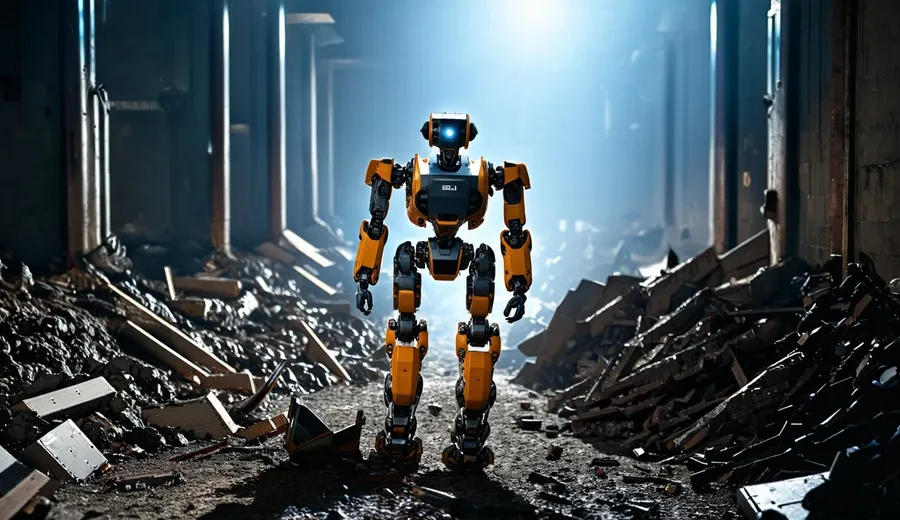
Early robotics focused on narrow, repetitive tasks in controlled environments, lacking the adaptive intelligence required for open-world operation. Industrial robots performed precise movements on assembly lines, executing pre-programmed motions with high accuracy yet possessing no ability to perceive unexpected changes in their surroundings or adapt their behavior accordingly. These machines operated in cages or strictly defined zones where human interference was minimized, allowing them to function despite their lack of perception and cognitive flexibility. While successful in mass production contexts, these robots proved incapable of handling the variability found in unstructured environments such as homes or disaster zones where every task presents a unique set of physical challenges. Embodiment grounds intelligence in the laws of physics, forcing the system to develop models that respect inertia, energy conservation, structural integrity, and environmental unpredictability. By embedding an intelligence within a physical form, the system is compelled to account for the material constraints of its own existence as well as the properties of the objects it manipulates.
A robot attempting to lift a heavy box must immediately adjust its motor output based on the actual mass of the object and the friction of its grippers, learning quickly that theoretical force calculations must account for slippage and gravity. This grounding process ensures that the intelligence develops an intuitive understanding of physical causality rather than relying solely on statistical correlations found in data. Sensorimotor coherence describes the alignment between an agent’s sensory input and motor output, ensuring actions produce predictable, physically consistent results in real time. This concept implies a tight synchronization where the agent perceives the world and acts upon it in a continuous loop, with sensory feedback directly influencing subsequent motor commands without significant delay. When a hand reaches for a cup, visual data guides the initial course while tactile sensors refine the grip pressure the moment contact occurs, ensuring the cup is neither dropped nor crushed. Achieving this coherence requires the setup of perception and action into a unified process where the distinction between sensing and doing becomes blurred into a single fluid interaction with the environment.
This coherence ensures perception and action remain tightly coupled, reducing latency between observation and response, which remains critical for tasks requiring precision or safety. High-speed manipulation or walking on uneven terrain demands immediate reaction to sensory feedback; any delay between detecting a slip and correcting foot placement results in a fall. Traditional robotic architectures often separate perception processing from motion control, introducing lag that makes rapid adaptation difficult, whereas embodied systems prioritize low-latency pathways that allow reflex-like responses to physical perturbations. The necessity for rapid response forces the system to process information locally and efficiently, discarding slow, deliberative reasoning in favor of fast, reactive control loops that maintain stability in adaptive situations. The physical body acts as a built-in constraint mechanism, limiting the solution space to physically plausible actions and preventing runaway abstraction detached from reality. A disembodied AI might propose a solution that involves passing an object through a solid wall because it lacks a built-in understanding of solidity, whereas an embodied agent understands through physical experience that such an action is impossible.
The morphology of the body dictates what actions can be taken, effectively filtering out abstract plans that cannot be translated into physical movements. This morphological computation offloads some of the cognitive burden onto the body itself, allowing the intelligence to focus on higher-level planning while relying on the physical constraints of the hardware to eliminate impossible options. Grounding intelligence in a body necessitates continuous calibration between internal world models and external physical feedback, creating a self-correcting loop that improves strength over time. As the agent interacts with the world, it compares the predicted outcome of its actions with the actual sensory feedback received, identifying discrepancies that indicate errors in its internal model. This process allows the system to refine its understanding of physics and its own capabilities, adjusting its parameters to better match the reality it experiences. A robot that initially struggles to walk on grass will update its locomotion model based on the slippage and resistance encountered, eventually developing a gait that accounts for the specific properties of that terrain.
Physical interaction introduces feedback loops where failure, such as dropping an object or overheating a joint, becomes a learning signal, refining internal models through trial and adaptation. Unlike simulated training where failure is merely a numerical value, physical failure provides rich multimodal data including the sound of impact, the sudden change in load distribution, and the visual confirmation of error. These salient events serve as powerful teaching moments that highlight the flaws in the agent’s assumptions or control policies. The system learns to avoid actions that lead to physical damage or task failure, effectively using the consequences of its mistakes to build a more strong and reliable operational framework. Embodied systems must process multimodal sensory data including vision, touch, proprioception, and auditory cues in concert with motor commands, requiring integrated architectures rather than modular pipelines. Separate processing units for vision and touch create a disconnect where the system struggles to associate the visual texture of an object with its tactile feel.
Integrated architectures allow for cross-modal learning where data from one sense informs the interpretation of another, creating a cohesive representation of the environment that encompasses all available sensory information. This holistic approach mimics biological perception and enables the agent to handle complex tasks where multiple senses must be synthesized to guide action effectively. Dominant architectures combine deep reinforcement learning with model-predictive control, using neural networks to approximate dynamics while relying on physics-based controllers for stability. Deep reinforcement learning excels at discovering complex strategies in high-dimensional spaces, but can be unsafe due to its exploratory nature and potential for unpredictable behavior. Model-predictive control provides a safety layer by using a mathematical model of the system dynamics to predict future states and verify that proposed control inputs remain within safe operational limits. Combining these methods allows the neural network to handle high-level perception and planning while the physics-based controller ensures the execution respects the adaptive constraints of the physical hardware.
Training embodied superintelligence will require extensive real-world interaction or high-fidelity simulation with accurate physics engines, both of which demand significant computational resources. Collecting real-world data is time-consuming and expensive due to the wear and tear on hardware and the slow pace of physical experiments compared to digital computations. High-fidelity simulation offers a scalable alternative, yet creating virtual environments that accurately capture the complexity of physical interactions requires immense processing power to render graphics and solve physics equations at high frequencies. The computational cost of simulating millions of interaction episodes presents a substantial barrier to training systems that possess the breadth of experience required for superintelligence. The sim-to-real transfer gap presents a challenge where policies learned in simulation fail in the physical world due to unmodeled phenomena. Simulation engines inevitably simplify reality, often ignoring subtle effects such as cable deformation, contact friction variations, or sensor latency that significantly impact performance in the real world.
An agent trained in a perfect simulation may develop a policy that exploits these simplifications, resulting in a robot that moves effectively in virtual space yet stumbles immediately when deployed to a physical environment. Bridging this gap requires techniques such as domain randomization, where the simulation parameters are varied widely during training to force the agent to learn a policy durable enough to handle the discrepancies between simulation and reality. Advances in materials science, actuator efficiency, sensor miniaturization, and edge computing have recently made persistent, autonomous physical interaction more feasible. New materials allow for lighter and stronger structural components that reduce inertia while increasing payload capacity, enabling robots to move faster and lift heavier objects without consuming excessive power. Efficient actuators such as artificial muscles provide smoother and more natural movement compared to traditional electric motors with gears. Miniaturized sensors allow for high-resolution perception in compact form factors, while edge computing chips provide the necessary processing power to run complex AI algorithms locally on the robot, reducing reliance on external servers and enabling real-time decision making.
The physical body imposes hard limits on computational throughput, power consumption, heat dissipation, and mechanical durability, shaping the design of both hardware and control algorithms. A mobile robot carries a finite energy supply in batteries, restricting how much computation it can perform before needing to recharge, which forces algorithms to be fine-tuned for efficiency rather than raw performance. The heat generated by motors and processors must be dissipated passively or through active cooling systems that add weight and consume power, creating a trade-off between capability and endurance. Mechanical joints and linkages wear out over time through friction and fatigue, imposing a limit on the operational lifespan of the hardware and necessitating designs that minimize stress on critical components. Scaling is limited by thermodynamics, specifically heat from computation and motion, material strength-to-weight ratios, and battery energy density. As robots increase in size and power, they generate more heat, which becomes increasingly difficult to dissipate without bulky cooling systems, leading to diminishing returns on scaling up computational power or motor torque.
Material science imposes a ceiling on how strong a robot can be relative to its weight; building larger structures requires disproportionately more material to maintain structural integrity against gravity and inertial forces. Battery technology lags behind the energy density of hydrocarbon fuels, limiting the operational range and endurance of electric robots compared to biological organisms or combustion-engine vehicles. Workarounds for these limits include hybrid power systems, passive dynamics, and intermittent operation strategies. Hybrid power systems combining batteries with combustion engines or fuel cells can provide high energy density for sustained tasks while offering electrical power for sensitive electronics and precise control. Passive dynamics utilize the mechanical design of the robot to store and release energy efficiently, such as using springs in legs to capture energy during landing and release it during takeoff, reducing the active power required for locomotion. Intermittent operation strategies allow the robot to enter low-power states during periods of inactivity or to offload intensive computation to stationary servers when possible, conserving energy for critical physical tasks.
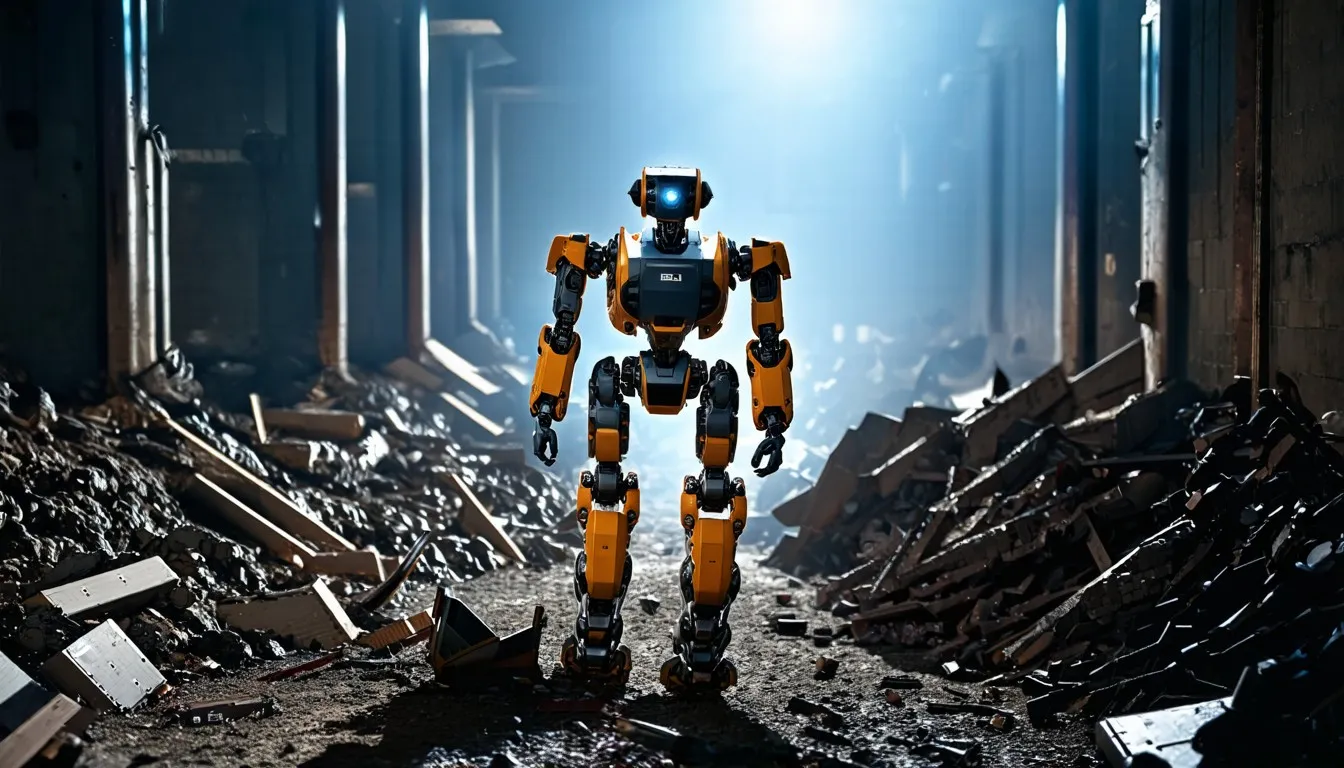
Supply chains depend on rare-earth magnets, high-tensile alloys, precision gears, and advanced semiconductors, materials subject to supply risks and environmental extraction costs. The production of high-performance actuators relies heavily on neodymium and dysprosium for magnets, materials sourced primarily from specific geographic regions with volatile political landscapes or restrictive trade policies. High-tensile alloys required for lightweight structural components often involve complex manufacturing processes and expensive raw materials such as titanium or carbon fiber composites. Precision gears and advanced semiconductors require specialized fabrication facilities that are capital intensive to build and operate, creating potential constraints in the mass production of sophisticated robotic hardware. Unlike software-only AI, embodied systems cannot be infinitely scaled by adding servers; their adaptability is bounded by manufacturing capacity, material availability, and maintenance logistics. Scaling a datacenter involves procuring standard commodity servers and networking equipment, whereas scaling a fleet of robots requires manufacturing thousands of complex electromechanical systems with tight tolerances and diverse components.
The maintenance logistics for embodied systems are vastly more complicated than software maintenance, requiring physical repair, replacement of worn parts, and management of supply chains for spare components. These physical constraints mean that the deployment of embodied AI grows linearly with industrial capacity rather than exponentially with Moore’s Law. Economic incentives are shifting toward automation in unstructured environments such as warehouses, construction sites, and elder care, where disembodied AI cannot operate effectively. The labor shortages in these sectors, combined with the high cost of human labor, drive investment in robotic solutions capable of working through cluttered and unpredictable spaces without constant human supervision. Warehouses require robots that can pick diverse items from shelves, construction sites need machines that can adapt to changing terrain and tasks, and elder care demands assistants capable of safe physical interaction with humans in home settings. These applications require a level of adaptability and physical dexterity that only embodied intelligence can provide.
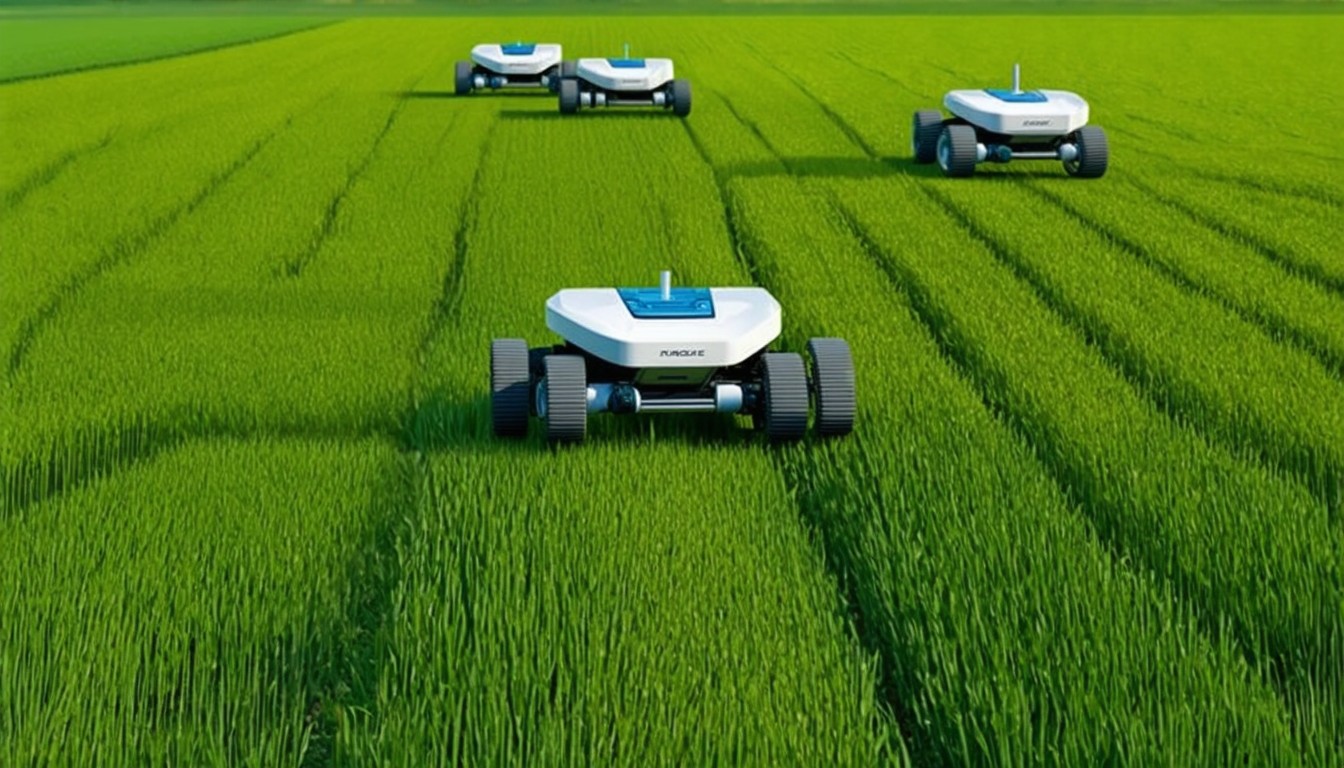
Current commercial deployments include warehouse robots like Amazon’s Proteus, humanoid assistants like Figure 01, and agricultural drones, all demonstrating limited yet improving sensorimotor coherence. Amazon’s Proteus handles busy warehouse floors using lidar and safety sensors to move carts without colliding with human workers, representing a significant step toward autonomous operation in shared spaces. Figure 01 showcases advancements in dexterous manipulation and bipedal locomotion, performing tasks such as making coffee or moving boxes with increasing proficiency. Agricultural drones utilize computer vision and GPS to spray crops with precision, demonstrating the ability to operate autonomously in outdoor environments subject to wind and variable lighting conditions. Major players include Boston Dynamics, Tesla, and startups like 1X and Apptronik, each pursuing different form factors and use cases. Boston Dynamics focuses on adaptive mobility and heavy-duty manipulation with quadrupeds like Spot and humanoids like Atlas, pushing the boundaries of what is mechanically possible.
Tesla uses its expertise in manufacturing and batteries to develop Optimus, a humanoid intended for mass production and repetitive industrial tasks. Startups like 1X and Apptronik target specific niches such as logistics or lab automation with robots designed for human-safe collaboration and ease of connection into existing workflows. Performance benchmarks focus on task success rate, energy efficiency, error recovery time, and adaptability to novel obstacles, rather than pure computational speed or data throughput. A robot capable of lifting heavy objects is useless if it drops them frequently or runs out of power after an hour, making reliability and efficiency crucial metrics for evaluation. Error recovery time measures how quickly the system can detect a failure such as a collision or slip and return to a functional state, indicating strength in unstructured environments. Adaptability to novel obstacles tests the generalization capabilities of the system, ensuring it can handle unexpected situations not specifically encountered during training.
Traditional KPIs like accuracy or FLOPS are insufficient; new metrics include physical task completion under uncertainty, energy-per-action, and mean time between mechanical failures. Accuracy in a digital classification task does not translate to success in a physical task where small errors in positioning can lead to catastrophic failure due to physics constraints. Energy-per-action provides a measure of efficiency that accounts for both the computational cost of planning and the mechanical cost of execution, reflecting the true operational cost of the system. Mean time between mechanical failures highlights the durability of the hardware and the ability of the control system to operate within safe limits to minimize wear and tear. Adjacent systems must adapt; operating systems need real-time scheduling, industry standards must address safety certification for autonomous physical agents, and infrastructure requires standardized charging and communication protocols. Standard operating systems designed for general-purpose computing lack the deterministic timing guarantees required for closed-loop control at high frequencies, necessitating the development of real-time operating systems tailored for robotics applications.
Safety certification standards must evolve to cover the complex behaviors of AI-driven agents rather than just deterministic industrial robots, establishing protocols for validating the safety of neural network policies. Infrastructure updates such as standardized charging docks and wireless communication standards will enable fleets of robots to operate autonomously without human intervention for maintenance or coordination. Academic-industrial partnerships accelerate prototyping yet face challenges in data sharing, IP ownership, and translating lab results to field performance. Collaboration allows academic researchers access to real-world hardware platforms and industrial data while providing companies with new algorithms developed in university labs. Sharing data collected from expensive robot fleets is difficult due to competitive concerns and intellectual property restrictions, hindering the creation of large open-source datasets available to the broader research community. Translating results from controlled lab environments to chaotic field settings often reveals unforeseen challenges that require extensive re-engineering of both hardware and software solutions.
Second-order consequences include labor displacement in manual jobs, new service models such as robot-as-a-service, and shifts in urban design to accommodate mobile autonomous agents. The automation of manual labor tasks will likely displace workers in industries ranging from transportation to manufacturing, necessitating economic adjustments and retraining programs for the workforce. Robot-as-a-service models allow businesses to lease robotic capabilities rather than purchasing capital-intensive hardware upfront, lowering the barrier to entry for automation. Urban environments may require redesign to include dedicated lanes for delivery robots, charging infrastructure embedded in sidewalks, and building codes that accommodate robotic maintenance and service access. Alternative approaches explore neuromorphic computing, spiking neural networks, and bio-inspired control systems to reduce latency and power use in real-time motor tasks. Neuromorphic chips mimic the event-driven architecture of the biological brain, processing information only when changes occur rather than at fixed clock cycles, which drastically reduces power consumption for sensory processing tasks.
Spiking neural networks communicate via discrete pulses similar to biological neurons, enabling efficient temporal processing that aligns well with the time-critical nature of sensorimotor control. Bio-inspired control systems use central pattern generators and reflex arcs to handle low-level stability and locomotion, reducing the computational load on higher-level planning centers. Convergence with computer vision, tactile sensing, and distributed control systems enables richer environmental understanding and more dexterous manipulation. Advances in computer vision provide semantic understanding of scenes, allowing robots to identify objects and infer their properties before interaction begins. High-resolution tactile sensing gives robots the ability to feel texture, shape, and temperature with fidelity approaching human touch, enabling delicate manipulation of fragile items. Distributed control systems allow groups of robots to coordinate their actions without centralized oversight, facilitating collaborative tasks such as moving large objects or surveying vast areas efficiently.
Future innovations may involve self-repairing materials, adaptive morphology, and shared world models across robot fleets to accelerate collective learning. Self-repairing materials could automatically seal cracks or fix broken circuits, extending the lifespan of robots operating in hazardous or remote environments where maintenance is difficult. Adaptive morphology would allow robots to change their physical shape or structure to suit different tasks, such as extending limbs for reach or contracting for stability in tight spaces. Shared world models would enable one robot to learn from the experiences of others instantly, allowing a fleet to collectively master a new environment as soon as a single agent encounters a novel situation. Embodied superintelligence will represent a necessary correction to purely cognitive AI, anchoring intelligence in the irreducible complexity of the physical world. Purely cognitive systems risk developing sophisticated reasoning capabilities that remain disconnected from the reality they attempt to model, leading to insights that are theoretically meaningful yet practically useless.
Embodiment forces intelligence to engage with the constraints of matter and energy, ensuring that abstract reasoning is constantly tested against the unforgiving nature of physical reality. This grounding creates a form of intelligence that is not only capable of thought but also capable of effective action within the world it inhabits. Without embodiment, superintelligent systems will risk generating theoretically optimal yet practically unworkable plans, such as logistics algorithms ignoring road conditions or robotic assembly routines exceeding material tolerances. An optimizer working solely with data might suggest stacking containers infinitely high because it models them as point masses without volume or structural limits. An embodied agent understands through experience that materials have yield points and that environmental conditions, such as wind or uneven ground, affect stability. This understanding prevents the generation of plans that look perfect on paper but collapse immediately when subjected to physical implementation.
Calibration for superintelligence will involve aligning its internal representations with physical causality, ensuring that its goals are achievable within the constraints of matter, energy, and time. The internal model of a superintelligence must accurately reflect the way the universe works at both macroscopic and microscopic scales to predict the outcomes of its actions with high fidelity. This alignment requires continuous interaction with the physical world to test hypotheses and refine causal relationships, preventing the development of misconceptions about how physical systems behave. Only by anchoring its cognition in physical reality can superintelligence ensure that its objectives are pursued using methods that respect the core laws governing the universe. Superintelligence may utilize embodiment to act and to understand, using its body as a tool for experimentation, hypothesis testing, and refining its model of reality through direct interaction. The body serves as a probe that allows the intelligence to manipulate variables in the environment and observe the results directly, gathering data that cannot be inferred from passive observation alone.
Through active experimentation, such as applying force to an object to test its elasticity or observing the effects of chemical reactions through mixing substances, the system builds a comprehensive understanding of physics that goes beyond textbook knowledge. This active engagement transforms the body from a mere actuator into a primary instrument of scientific discovery and cognitive development.