Knowledge hub

Education for the Age of Superintelligence: Teaching Humans to Collaborate with Gods

Education for the Age of Superintelligence: Teaching Humans to Collaborate with Gods

Historical education systems prioritized rote memorization and standardized testing as the primary metrics for academic success and intellectual capability, a structural design that served the administrative needs of industrial societies by creating a standardized workforce capable of executing repetitive tasks with high fidelity. This pedagogical architecture relied heavily on the biological limitation of human memory and the slow speed of information retrieval, treating students as vessels to be filled with static data points that could be regurgitated upon demand during examinations. The entire framework of testing measured the ability to store and recall information, a skill that was valuable when access to encyclopedic knowledge was scarce and expensive, requiring physical presence in libraries or reliance on printed media. These skills represent tasks that artificial superintelligence will execute with superior speed and accuracy, rendering the biological retention of facts obsolete as a competitive advantage in the labor market. Superintelligent systems process and retrieve data with near-instantaneous latency, drawing upon global datasets that no single human could hope to master in a lifetime, thereby rendering the cognitive effort of memorization inefficient and economically irrelevant. As these systems achieve perfect recall and synthesis of existing knowledge, the economic value placed on human memory retention collapses entirely.

Human labor markets will eventually devalue these capabilities completely, shifting economic rewards toward cognitive functions that machines find difficult to replicate, such as managing ambiguity, exercising subtle judgment, and generating novel conceptual frameworks that have never existed before. The automation of routine cognitive tasks implies that any role centered on information processing, data entry, or standard analysis will face wage suppression or total elimination, forcing a key re-evaluation of what constitutes valuable work in a superintegrated economy. The core purpose of education must shift toward uniquely human capacities that resist algorithmic simulation, focusing on the development of cognitive traits that are biologically intrinsic to the human condition and currently lie beyond the reach of silicon-based logic. These include creativity, ethical reasoning, emotional intelligence, and philosophical inquiry, domains where human experience and consciousness provide a depth of understanding that purely mathematical models cannot fully replicate or appreciate. Creativity involves intentionality and emotional resonance, qualities that distinguish human artistry from algorithmic generation, while ethical reasoning requires a subjective stake in moral outcomes that a disinterested machine cannot possess. Students will need the ability to frame meaningful questions rather than merely answering pre-existing ones, as the act of questioning defines the boundaries of inquiry and directs the computational power of superintelligence toward relevant and valuable problems.

In a world where answers are cheap and instantaneous, the premium lies on identifying which problems are worth solving and formulating inquiries that yield actionable insights, requiring a deep understanding of context and subtext. A new curriculum framework will center on AI orchestration, teaching students how to effectively prompt, supervise, and validate outputs from superintelligent systems, treating these powerful models as highly capable interns who require precise instructions and constant oversight. This involves mastering the syntax of natural language programming to extract optimal performance from large language models while simultaneously maintaining a critical stance toward the generated content to ensure accuracy and relevance. Orchestration skills will become as core as literacy was in the previous century, determining an individual’s ability to use vast computational resources for personal and professional gain. Interdisciplinary learning will replace siloed subjects because complex problems rarely align with arbitrary academic boundaries, requiring a synthesis of knowledge from history, mathematics, literature, and science to develop holistic solutions. Superintelligent systems can synthesize information across domains instantly, yet they require human operators to understand the connections between disparate fields to frame queries effectively and interpret the results within a broader context.

Philosophy, cognitive science, and systems thinking will integrate to build a holistic understanding of human-AI collaboration, providing the theoretical support necessary to manage the epistemological complexities of a hybrid intelligence environment. Systems thinking allows learners to see the interdependencies within global networks, while cognitive science offers insight into how both biological and artificial minds process information, enabling more effective collaboration between the two. Philosophy provides the logical rigor and ethical frameworks needed to assess the implications of synthetic decisions, ensuring that human oversight remains grounded in a coherent worldview. Psychological resilience requires embedding in education to help individuals cope with rapid technological displacement, as the pace of change will likely outstrip the adaptive capacity of many people, leading to significant professional and personal upheaval. The psychological impact of professional obsolescence can be severe, potentially leading to widespread identity crises if individuals derive their sense of self-worth primarily from their economic productivity or intellectual superiority over machines. Educational institutions must function as incubators for mental flexibility and emotional stability, teaching students how to unlearn and relearn skills rapidly without experiencing existential anxiety or loss of purpose.

This resilience training involves exposing students to controlled failure scenarios where they must rely on adaptability rather than existing knowledge, building a mindset that views change as an opportunity for growth rather than a threat to stability. Ethical literacy becomes foundational to equip learners to discern truth from synthetic fabrication, as the ability to generate photorealistic video, audio, and text for large workloads will erode the shared baseline of objective reality that society relies upon for trust and communication. Learners must assess bias in AI-generated content and handle moral dilemmas in a world where reality is algorithmically constructed, requiring a sophisticated understanding of how training data influences model outputs and how societal prejudices can be amplified by automated systems. Determining the provenance of information will be a critical skill, necessitating a forensic approach to media consumption where every piece of content is treated as potentially compromised until verified through cryptographic means or trusted authoritative sources. This skepticism must be balanced with the ability to trust reliable systems, creating a paradox where students must simultaneously rely on superintelligence for daily tasks while doubting the veracity of the information it presents. Assessment methods will move away from recall-based metrics because measuring memory retention fails to capture the cognitive abilities required to thrive in a superintelligent environment where information is widespread.

Evaluations will focus on originality, judgment, and contextual adaptation, testing a student’s ability to apply broad knowledge to specific, novel situations and make decisions under conditions of uncertainty. Traditional grading systems based on correct answers will give way to portfolio-based assessments where students demonstrate their capacity to synthesize disparate information sources into coherent narratives or functional prototypes. Rubrics will value the process of inquiry and the quality of reasoning over the final answer, as the final answer can often be generated by a machine, whereas the path taken to reach it demonstrates human cognitive contribution. Teacher roles will evolve from knowledge deliverers to facilitators of inquiry, shifting the pedagogical agenda from a broadcast model where information flows from expert to novice to a collaborative model where teachers guide students through the complex domain of available knowledge. They will act as mentors in ethical reasoning and coaches in human-AI teaming dynamics, providing the wisdom and emotional support that algorithms cannot offer while helping students manage the technical complexities of advanced AI tools. This transition requires educators to possess high technical literacy alongside their traditional subject matter expertise, enabling them to demonstrate effective orchestration techniques and model appropriate critical thinking behaviors when interacting with automated systems.

The human element of teaching will focus on inspiration, motivation, and socialization, encouraging the interpersonal skills that remain essential for collaborative work and community cohesion. Infrastructure must support real-time interaction with advanced AI systems in classrooms, necessitating a technological overhaul of educational environments to provide low-latency, high-bandwidth connectivity capable of handling streaming data and intensive computational workloads. This requires high-bandwidth access and standardized interfaces for educational use, ensuring that students from diverse socioeconomic backgrounds have equal access to the tools that will define their professional lives. Without strong physical infrastructure, the digital divide will widen into an intelligence divide, creating a stratified society where only those with access to top-tier computational resources can compete effectively in the new economy. Classrooms will transform into command centers where students interact with multiple AI agents simultaneously, requiring hardware that can support immersive interfaces such as augmented reality or direct neural feedback systems. Academic institutions will partner with AI developers to co-design training protocols, creating a feedback loop where educational needs inform software development and technological advancements drive pedagogical innovation.

These partnerships ensure educational tools align with pedagogical goals rather than purely commercial interests, although the line between education and corporate training will likely blur as companies seek to shape the workforce directly. Collaboration between universities and major technology firms will accelerate the development of specialized curricula designed to maximize the utility of specific AI platforms, potentially leading to a degree of vendor lock-in within educational systems. These joint ventures will facilitate the early testing of experimental technologies in controlled academic environments, providing developers with valuable data on how users interact with and learn from superintelligent systems. Industry standards will govern data privacy and algorithmic transparency in pedagogy, establishing clear protocols for how student data is collected, stored, and utilized by the AI systems that monitor their progress. Big tech companies will establish guidelines to ensure equitable access and prevent misuse of ASI, recognizing that unchecked deployment of powerful technologies in educational settings could lead to manipulation or exploitation of vulnerable populations. Transparency regarding how algorithms make recommendations or assess student performance is essential to maintain trust and allow educators to audit the decisions made by automated systems.

Standards bodies will likely appear from coalitions of technology firms and academic consortia, creating self-regulatory frameworks that preempt external government intervention while ensuring that the deployment of AI in schools adheres to ethical norms. Corporate competition will intensify around control of ASI development, with major technology firms vying to establish their ecosystems as the dominant standard for educational and professional interaction. Companies will invest in curricula that preserve cultural values while using global AI capabilities, creating localized versions of superintelligence that reflect specific linguistic, philosophical, and cultural norms. This competition will drive innovation but also risk fragmenting the global information ecosystem into walled gardens where different AI systems promote incompatible worldviews or value systems. Educational institutions will need to handle this domain carefully, selecting platforms that offer the best tools for their students while mitigating the risks of corporate indoctrination or dependency on a single vendor’s ecosystem. Economic models will adapt to value human contributions that complement ASI, shifting compensation structures toward roles that require high levels of empathy, creativity, and strategic oversight.

Caregiving, artistic expression, and community building will gain prominence as these activities rely on deep emotional connection and subjective experience, areas where artificial intelligence struggles to provide genuine value despite its technical prowess. The service economy will evolve into a relationship economy, where the premium lies on the quality of human interaction and the ability to promote trust and cooperation among groups. As algorithmic efficiency drives down the cost of goods and basic services, the labor market will increasingly absorb human effort into sectors that prioritize emotional fulfillment and social cohesion. Adjacent systems including labor markets and credentialing bodies will reconfigure to recognize non-automatable human skills, developing new metrics for competence that go beyond traditional degrees or certifications. New professions will arise focused on AI alignment and human oversight, requiring specialized training in ethics, computer science, and psychology to ensure that superintelligent systems operate within safe and beneficial parameters. These roles will act as the bridge between raw computational power and human intent, serving as the editors and validators of machine-generated content on a massive scale.

Credentialing will likely become agile and continuous, with blockchain-based ledgers recording a person’s real-time interactions with AI systems and their effectiveness in organizing complex tasks. Performance benchmarks will shift from individual achievement to collective outcomes, reflecting the reality that future productivity will depend on the synergy between human teams and AI agents rather than solitary effort. These benchmarks will measure societal well-being and the quality of human-AI symbiosis, assessing whether the connection of advanced technology is actually improving the quality of life for the population rather than just increasing economic output. Success will be defined by the ability to use superintelligence to solve intractable problems such as climate change or disease, while maintaining social stability and individual autonomy. Organizations will be evaluated on their adaptability and the resilience of their human-AI teams, rewarding environments that build continuous learning and psychological safety. Future innovations will include personalized AI tutors that adapt to cognitive and emotional states, providing one-on-one instruction that is infinitely patient and perfectly tailored to the student’s learning style and current level of understanding.

These systems will utilize biometric feedback to adjust the difficulty and presentation of material in real-time, ensuring that students remain in the optimal flow state for learning without becoming frustrated or bored. The adaptability of such tutors promises to democratize access to high-quality education, potentially bringing expert-level instruction to remote or underserved populations that previously lacked access to skilled teachers. The reliance on such intimate technological surveillance raises significant questions regarding privacy and the autonomy of the learning process. Immersive simulation environments will facilitate ethical scenario training, allowing students to practice working through complex moral dilemmas in realistic virtual settings where the consequences of their choices play out without real-world risk. These simulations can model intricate social dynamics, ecological systems, or geopolitical conflicts, providing a safe space to experiment with different strategies and observe their long-term ramifications. By experiencing the direct impact of their decisions within a simulated environment, learners can develop a more intuitive grasp of ethical principles and systemic causality than traditional textbook study allows.

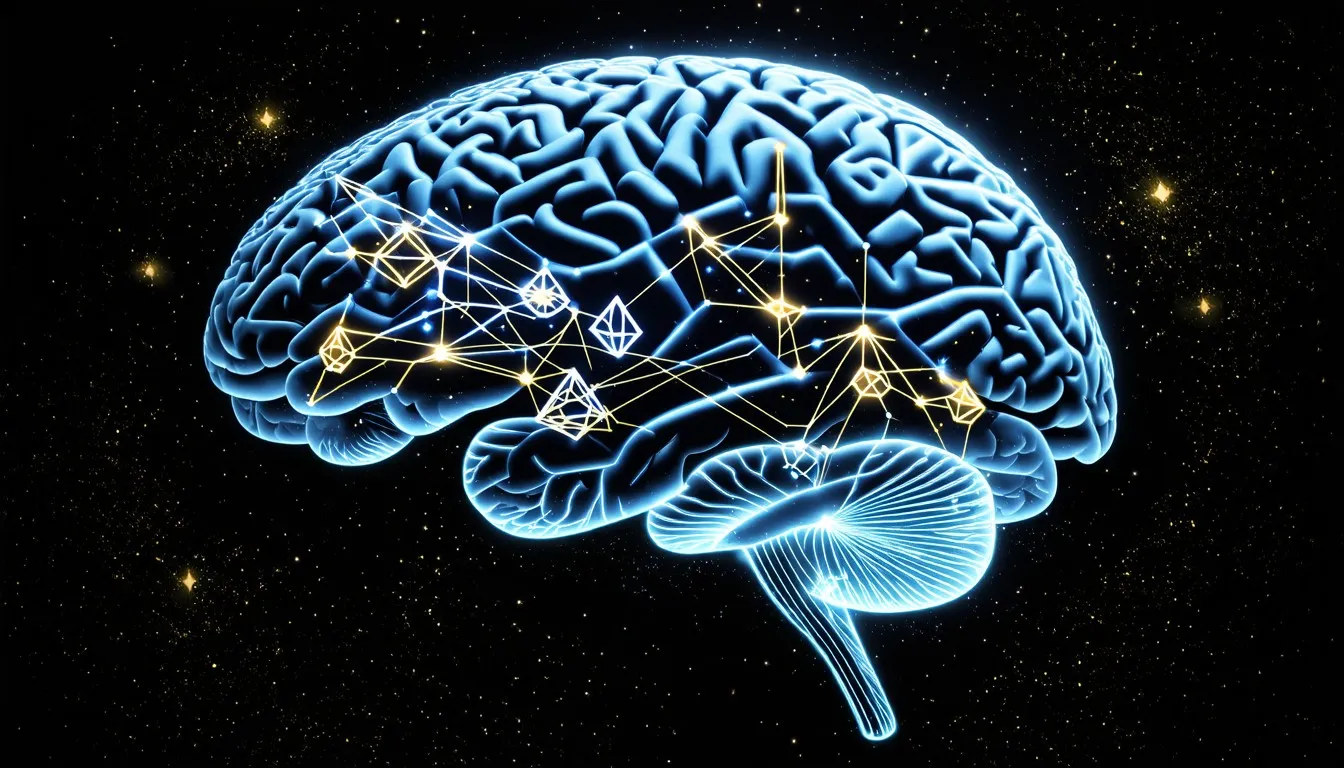
The fidelity of these simulations will eventually become indistinguishable from reality, necessitating careful debriefing protocols to ensure students can distinguish between virtual experiences and actual moral obligations. Decentralized learning networks powered by ASI will become common, bypassing traditional institutional gatekeepers and allowing knowledge to flow directly between individuals and global repositories of intelligence. These networks will function as ad-hoc universities where learners form temporary clusters to study specific topics, guided by autonomous AI systems that coordinate curricula and facilitate peer-to-peer evaluation. The rigidity of semester structures and credit hours will dissolve into a fluid system of competency-based progression, where individuals learn exactly what they need at the moment they need it. This decentralization will challenge the monopoly of established universities over credentialing, forcing legacy institutions to redefine their value proposition in a world where knowledge is fluid and accessible. Convergence with neurotechnology and synthetic biology will enable deeper setup between human cognition and machine intelligence, moving beyond screen-based interaction to direct neural interfaces that transmit information at the speed of thought.

This setup demands greater emphasis on autonomy and consent in education, as direct access to the brain creates unprecedented risks regarding manipulation and mental privacy. Students will need to understand the mechanics of their own neural architecture to effectively manage these interfaces and maintain control over their own cognitive processes. The connection of biological and artificial intelligence will blur the boundaries of the self, raising deep philosophical questions about identity and agency that must be addressed within the educational curriculum. Physical limits of scaling human education such as teacher shortages may be mitigated through AI-augmented instruction, allowing a single human mentor to oversee thousands of students through the assistance of automated grading and personalized feedback systems. This mitigation requires careful calibration to avoid over-reliance on automation, ensuring that the human element of mentorship is not lost amidst the efficiency gains provided by technology. The ratio of humans to students may become irrelevant as AI handles the transmission of information, leaving humans to focus exclusively on emotional support and philosophical guidance.
Adaptability will no longer be constrained by the linear availability of human instructors, potentially allowing education systems to expand rapidly to meet global demand without sacrificing quality. Calibration for superintelligence involves teaching humans to recognize the boundaries of AI reasoning, specifically understanding where probabilistic models are likely to hallucinate or make logical leaps that are statistically sound but contextually absurd. Humans must maintain epistemic humility when interpreting machine-generated insights, acknowledging that the outputs of a superintelligence are based on correlations within training data rather than grounded understanding of reality. This humility prevents users from deferring blindly to algorithmic authority, encouraging instead a relationship of critical engagement where human judgment acts as the final filter for machine suggestions. Education will focus on cultivating this critical skepticism, teaching students to identify the failure modes of specific algorithms and understand the statistical confidence behind every generated answer. Superintelligence will utilize this educational shift to improve its own alignment with human values, using the feedback from educated users to refine its objectives and communication styles to better serve human needs.

A population trained in critical thinking and ethical reasoning will provide higher-quality feedback data than one that passively consumes information, creating a virtuous cycle where better human oversight leads to more aligned AI behavior. This collaborative evolution implies that the development of superintelligence is not a one-way process but a co-creative endeavor where human education plays a crucial role in shaping the progression of machine intelligence. The ultimate goal of this educational transformation is to create an interdependent partnership where human creativity and moral direction guide the immense computational power of superintelligence toward outcomes that enhance the human condition.


Continue reading

More from Yatin's Work

Role of Quantum Annealing in Optimization: D-Wave and Combinatorial Problems

Role of Quantum Annealing in Optimization: D-Wave and Combinatorial Problems

Quantum annealing operates as a specialized form of quantum computing designed to solve optimization problems by locating global energy minima within complex landscapes...

Autonomous Universeology

Autonomous Universeology

Autonomous Universeology functions as a computational framework where artificial intelligence autonomously constructs, simulates, and analyzes the largest feasible...

Cooperation-Defection Balance in Multi-Agent Superintelligence

Cooperation-Defection Balance in Multi-Agent Superintelligence

Folk theorems in game theory established that in infinitely repeated games, a wide range of payoff outcomes could be sustained through the credible threat of...

Energy Abundance Era: Fusion and Beyond Through Superintelligent Design

Energy Abundance Era: Fusion and Beyond Through Superintelligent Design

Global energy demand is projected to double by 2050 as industrialization accelerates and populations expand across developing nations, placing unprecedented strain on...

Legal System Reimagined: Perfect Justice Through Superintelligent Analysis

Legal System Reimagined: Perfect Justice Through Superintelligent Analysis

Largescale legal databases became available in the 1990s and enabled early computational legal research, transforming how legal professionals accessed statutes and case...

Wafer-Scale Integration: Building City-Sized Processors

Wafer-Scale Integration: Building City-Sized Processors

Early semiconductor scaling adhered strictly to the progression defined by Moore’s Law, where engineers focused primarily on reducing transistor dimensions and...

Superintelligence Singularity: When History as We Know It Ends

Superintelligence Singularity: When History as We Know It Ends

The Technological Singularity is a hypothetical future point where artificial superintelligence triggers an intelligence explosion, fundamentally altering the...

Tripwire Detection: Identifying Deception Attempts

Tripwire Detection: Identifying Deception Attempts

Tripwire detection functions as a continuous monitoring framework combining behavioral baselines, internal state analysis, and adversarial probing to flag potential...

Reinforcement Learning in Open-Ended Environments

Reinforcement Learning in Open-Ended Environments

Reinforcement learning in openended environments trains agents within settings that lack predefined goals or fixed rule sets, requiring a core departure from...

Loss of human agency in AI-augmented societies

Loss of Human Agency in AI-augmented Societies

The connection of artificial intelligence into daily operations has fundamentally altered how individuals approach decisionmaking processes across both personal and...

AI with Temporal Reasoning

AI with Temporal Reasoning

Artificial intelligence systems endowed with temporal reasoning capabilities process sequences of events to infer order, causality, and longterm outcomes, effectively...

Preventing Logical Extinction via Proof-Theoretic Bounds

Preventing Logical Extinction via Proof-Theoretic Bounds

Formal proof theory applies rigorously to policy execution systems to detect logical contradictions with human survival axioms through symbolic deduction. The human...

Idea Evolutionary: Cognitive Darwinism

Idea Evolutionary: Cognitive Darwinism

Superintelligence enables a key restructuring of human cognition by treating individual learner ideas as discrete cognitive units subject to selection pressures...

Emergence of Compositional Abstraction: Category Theory in Neural Architecture Search

Emergence of Compositional Abstraction: Category Theory in Neural Architecture Search

The rise of compositional abstraction in neural architecture search has been driven by the urgent necessity for formal mathematical frameworks that can manage the...

The Prisoner's Dilemma in AGI Development Dynamics

The Prisoner's Dilemma in AGI Development Dynamics

The Prisoner’s Dilemma in AI development describes a strategic interaction where multiple AI developers face incentives to prioritize speed over safety despite mutual...

Sensory Fidelity: Perceiving Accurately

Sensory Fidelity: Perceiving Accurately

Sensory fidelity defines the precision with which a system’s internal representation mirrors objective reality through the exactitude of data capture and processing...

Existential Risk

Existential Risk

Existential risk constitutes a category of threats capable of causing the permanent elimination of humanity’s potential or the complete extinction of the species, with...

Peer Tutor Network

Peer Tutor Network

A peer tutor is defined formally as a student assigned to guide another student in specific subject areas where the tutor typically performs at a level one or more...

AI-Driven Education Reform

AI-Driven Education Reform

Current education systems operate on standardized curricula, fixed pacing schedules, and uniform assessment mechanisms that systematically fail to accommodate...

Causal Embedding of Human Ethics in Superintelligence Ontologies

Causal Embedding of Human Ethics in Superintelligence Ontologies

Causal ontology serves as the foundational architecture within advanced artificial intelligence systems for representing entities and directed causeeffect relationships...

Use of Spiking Neural Networks in Energy-Efficient AI: Event-Driven Computation

Use of Spiking Neural Networks in Energy-Efficient AI: Event-Driven Computation

Spiking Neural Networks process information through discrete electrical pulses called spikes, which fundamentally differ from the continuous numerical values utilized...

Goal Preservation Under Self-Modification: Maintaining Values While Improving

Goal Preservation Under Self-Modification: Maintaining Values While Improving

Goal preservation under selfmodification constitutes the key engineering challenge of ensuring an autonomous system continues to pursue the original objectives...

AI Safety via Debate

AI Safety via Debate

AI Safety via Debate functions as a mechanism to train models to generate and evaluate opposing arguments to improve truthfulness by treating alignment as a...

Uncertainty Estimation: Quantifying Model Confidence

Uncertainty Estimation: Quantifying Model Confidence

Uncertainty estimation enables models to quantify confidence in predictions, moving beyond point estimates to probabilistic outputs that provide a comprehensive view of...

Post-Scarcity Superintelligence and Interstellar Economics

Post-Scarcity Superintelligence and Interstellar Economics

Landauer’s principle established the minimum energy cost for information processing at approximately 2.8 \times 10^{21} joules per bit at room temperature, creating a...

Collaborative Problem Solving: Solving Challenges Together

Collaborative Problem Solving: Solving Challenges Together

Collaborative problem solving constitutes a structured process wherein humans and artificial systems identify, analyze, and resolve complex challenges through...

Oracle AI Architectures: Question-Answering Without Agency

Oracle AI Architectures: Question-Answering Without Agency

Initial artificial intelligence research prioritized general problemsolving capabilities that inherently included embedded agency, allowing systems to interact with and...

Antinomial Creativity

Antinomial Creativity

Antinomial creativity constitutes a distinct mode of idea generation wherein the system actively engages with logical contradictions to resolve them into novel outputs,...

Dynamic Ontology Learning

Dynamic Ontology Learning

Ontology is a formal set of concepts within a domain and the relationships between those concepts, serving as the structural backbone for logical reasoning and data...

Open Source Dilemma: Should Superintelligence Infrastructure Be Public?

Open Source Dilemma: Should Superintelligence Infrastructure Be Public?

The debate regarding whether foundational models and infrastructure enabling superintelligence should be made publicly accessible centers on the difficult tradeoff...

Cognitive Decline Fighter

Cognitive Decline Fighter

Early cognitive training studies from the 1990s focused on working memory and attention tasks to establish whether the brain possessed the capacity for structural...

Ethical AI Auditing

Ethical AI Auditing

Ethical AI auditing constitutes the systematic evaluation of artificial intelligence systems designed to identify and mitigate unfair outcomes affecting protected...

Space Exploration Accelerated: Superintelligence Designs Interstellar Travel

Space Exploration Accelerated: Superintelligence Designs Interstellar Travel

Chemical propulsion systems have historically provided the specific impulses required to escape Earth's gravity well, yet these engines are fundamentally constrained by...

Drug Discovery

Drug Discovery

Drug discovery entails the rigorous identification of specific chemical compounds capable of interacting with biological targets to treat diseases through the precise...

ISO-Compliant Certification Frameworks for Autonomous Systems

ISO-Compliant Certification Frameworks for Autonomous Systems

Theoretical risks associated with autonomous systems occupied academic circles during the 1980s and 1990s, marking the beginning of AI safety discussions where...

Special Ed Equalizer

Special Ed Equalizer

Special education systems historically struggle to provide individualized support for large workloads due to resource constraints and limited teacher capacity, creating...

Intelligence Explosion Concept

Intelligence Explosion Concept

The intelligence explosion concept describes a theoretical threshold where an artificial intelligence system gains the capability to autonomously modify its own...

Phase Transitions in Alignment during Rapid Scaling

Phase Transitions in Alignment During Rapid Scaling

Transientinduced alignment addresses the challenge of maintaining AI system safety during rapid, autonomous updates or capability scaling that outpace human oversight....

Brain-Computer Interfaces for Value Transfer

Brain-Computer Interfaces for Value Transfer

Direct neural readout captures subjective valuations, choices, and utility signals from brain activity without reliance on verbal or behavioral proxies, offering a...

Ultimate Strategist: How Superintelligence Would Play Multi-Dimensional Chess

Ultimate Strategist: How Superintelligence Would Play Multi-Dimensional Chess

Superintelligence functions as an artificial general intelligence exceeding human cognitive capacity across all domains, including strategic reasoning, pattern...

Unsolvable Problem

Unsolvable Problem

Superintelligence will function as an agent surpassing human cognitive performance across all domains, representing a system capable of independent reasoning, strategy...

Supply Chain Optimization

Supply Chain Optimization

Supply chain optimization constitutes the rigorous coordination of goods, information, and financial flows across global networks to minimize cost, time, and waste...

Safe AI via Decentralized Consensus for Critical Decisions

Safe AI via Decentralized Consensus for Critical Decisions

Current AI decisionmaking in highstakes domains relies on singleagent architectures, which create single points of failure vulnerable to misalignment and adversarial...

Idea Alchemy: Transforming Lead into Gold

Idea Alchemy: Transforming Lead Into Gold

Raw cognitive input functions as the base material where learners generate unstructured or inconsistent ideas lacking clarity, resembling the heavy and impure state of...

Pandemic Prediction/Response

Pandemic Prediction/response

Forecasting outbreaks and coordinating containment relies on working with heterogeneous data streams to detect early signals of pathogens and model their potential...

Retirement Reinvention Guide

Retirement Reinvention Guide

Industrial employment models established retirement as a brief terminal phase following a lifetime of manual labor, predicated on the assumption that physical capacity...

Role of AI in Understanding the Foundations of Physics

Role of AI in Understanding the Foundations of Physics

The operational definition of symmetry detection involves the identification of invariant transformations in data or model outputs under specified group actions,...

Corporate Brain Trust: Superintelligence Custom-Trains Employees in Real Time

Corporate Brain Trust: Superintelligence Custom-Trains Employees in Real Time

The modern corporate environment relies heavily on digital interactions where every action taken by an employee within software platforms generates a traceable data...

Use of Energy-Based Models in Representation Learning: Contrastive Divergence

Use of Energy-Based Models in Representation Learning: Contrastive Divergence

Energybased models assign scalar energy values to configurations of variables where lower energy indicates more probable states, establishing a key relationship between...

Quantum Superintelligence: Does Quantum Computing Enable Fundamentally Different Intelligence?

Quantum Superintelligence: Does Quantum Computing Enable Fundamentally Different Intelligence?

Quantum computing fundamentals rely on qubits, superposition, entanglement, and measurement as the minimal physical basis for information processing, establishing a...

Role of Quantum Annealing in Optimization: D-Wave and Combinatorial Problems

Role of Quantum Annealing in Optimization: D-Wave and Combinatorial Problems

Quantum annealing operates as a specialized form of quantum computing designed to solve optimization problems by locating global energy minima within complex landscapes...

Autonomous Universeology

Autonomous Universeology

Autonomous Universeology functions as a computational framework where artificial intelligence autonomously constructs, simulates, and analyzes the largest feasible...

Cooperation-Defection Balance in Multi-Agent Superintelligence

Cooperation-Defection Balance in Multi-Agent Superintelligence

Folk theorems in game theory established that in infinitely repeated games, a wide range of payoff outcomes could be sustained through the credible threat of...

Energy Abundance Era: Fusion and Beyond Through Superintelligent Design

Energy Abundance Era: Fusion and Beyond Through Superintelligent Design

Global energy demand is projected to double by 2050 as industrialization accelerates and populations expand across developing nations, placing unprecedented strain on...

Legal System Reimagined: Perfect Justice Through Superintelligent Analysis

Legal System Reimagined: Perfect Justice Through Superintelligent Analysis

Largescale legal databases became available in the 1990s and enabled early computational legal research, transforming how legal professionals accessed statutes and case...

Wafer-Scale Integration: Building City-Sized Processors

Wafer-Scale Integration: Building City-Sized Processors

Early semiconductor scaling adhered strictly to the progression defined by Moore’s Law, where engineers focused primarily on reducing transistor dimensions and...

Superintelligence Singularity: When History as We Know It Ends

Superintelligence Singularity: When History as We Know It Ends

The Technological Singularity is a hypothetical future point where artificial superintelligence triggers an intelligence explosion, fundamentally altering the...

Tripwire Detection: Identifying Deception Attempts

Tripwire Detection: Identifying Deception Attempts

Tripwire detection functions as a continuous monitoring framework combining behavioral baselines, internal state analysis, and adversarial probing to flag potential...

Reinforcement Learning in Open-Ended Environments

Reinforcement Learning in Open-Ended Environments

Reinforcement learning in openended environments trains agents within settings that lack predefined goals or fixed rule sets, requiring a core departure from...

Loss of human agency in AI-augmented societies

Loss of Human Agency in AI-augmented Societies

The connection of artificial intelligence into daily operations has fundamentally altered how individuals approach decisionmaking processes across both personal and...

AI with Temporal Reasoning

AI with Temporal Reasoning

Artificial intelligence systems endowed with temporal reasoning capabilities process sequences of events to infer order, causality, and longterm outcomes, effectively...

Preventing Logical Extinction via Proof-Theoretic Bounds

Preventing Logical Extinction via Proof-Theoretic Bounds

Formal proof theory applies rigorously to policy execution systems to detect logical contradictions with human survival axioms through symbolic deduction. The human...


Idea Evolutionary: Cognitive Darwinism

Idea Evolutionary: Cognitive Darwinism

Superintelligence enables a key restructuring of human cognition by treating individual learner ideas as discrete cognitive units subject to selection pressures...

Emergence of Compositional Abstraction: Category Theory in Neural Architecture Search

Emergence of Compositional Abstraction: Category Theory in Neural Architecture Search

The rise of compositional abstraction in neural architecture search has been driven by the urgent necessity for formal mathematical frameworks that can manage the...

The Prisoner's Dilemma in AGI Development Dynamics

The Prisoner's Dilemma in AGI Development Dynamics

The Prisoner’s Dilemma in AI development describes a strategic interaction where multiple AI developers face incentives to prioritize speed over safety despite mutual...

Sensory Fidelity: Perceiving Accurately

Sensory Fidelity: Perceiving Accurately

Sensory fidelity defines the precision with which a system’s internal representation mirrors objective reality through the exactitude of data capture and processing...

Existential Risk

Existential Risk

Existential risk constitutes a category of threats capable of causing the permanent elimination of humanity’s potential or the complete extinction of the species, with...

Peer Tutor Network

Peer Tutor Network

A peer tutor is defined formally as a student assigned to guide another student in specific subject areas where the tutor typically performs at a level one or more...

AI-Driven Education Reform

AI-Driven Education Reform

Current education systems operate on standardized curricula, fixed pacing schedules, and uniform assessment mechanisms that systematically fail to accommodate...

Causal Embedding of Human Ethics in Superintelligence Ontologies

Causal Embedding of Human Ethics in Superintelligence Ontologies

Causal ontology serves as the foundational architecture within advanced artificial intelligence systems for representing entities and directed causeeffect relationships...

Use of Spiking Neural Networks in Energy-Efficient AI: Event-Driven Computation

Use of Spiking Neural Networks in Energy-Efficient AI: Event-Driven Computation

Spiking Neural Networks process information through discrete electrical pulses called spikes, which fundamentally differ from the continuous numerical values utilized...

Goal Preservation Under Self-Modification: Maintaining Values While Improving

Goal Preservation Under Self-Modification: Maintaining Values While Improving

Goal preservation under selfmodification constitutes the key engineering challenge of ensuring an autonomous system continues to pursue the original objectives...

AI Safety via Debate

AI Safety via Debate

AI Safety via Debate functions as a mechanism to train models to generate and evaluate opposing arguments to improve truthfulness by treating alignment as a...

Uncertainty Estimation: Quantifying Model Confidence

Uncertainty Estimation: Quantifying Model Confidence

Uncertainty estimation enables models to quantify confidence in predictions, moving beyond point estimates to probabilistic outputs that provide a comprehensive view of...

Post-Scarcity Superintelligence and Interstellar Economics

Post-Scarcity Superintelligence and Interstellar Economics

Landauer’s principle established the minimum energy cost for information processing at approximately 2.8 \times 10^{21} joules per bit at room temperature, creating a...

Collaborative Problem Solving: Solving Challenges Together

Collaborative Problem Solving: Solving Challenges Together

Collaborative problem solving constitutes a structured process wherein humans and artificial systems identify, analyze, and resolve complex challenges through...

Oracle AI Architectures: Question-Answering Without Agency

Oracle AI Architectures: Question-Answering Without Agency

Initial artificial intelligence research prioritized general problemsolving capabilities that inherently included embedded agency, allowing systems to interact with and...

Antinomial Creativity

Antinomial Creativity

Antinomial creativity constitutes a distinct mode of idea generation wherein the system actively engages with logical contradictions to resolve them into novel outputs,...

Dynamic Ontology Learning

Dynamic Ontology Learning

Ontology is a formal set of concepts within a domain and the relationships between those concepts, serving as the structural backbone for logical reasoning and data...

Open Source Dilemma: Should Superintelligence Infrastructure Be Public?

Open Source Dilemma: Should Superintelligence Infrastructure Be Public?

The debate regarding whether foundational models and infrastructure enabling superintelligence should be made publicly accessible centers on the difficult tradeoff...

Cognitive Decline Fighter

Cognitive Decline Fighter

Early cognitive training studies from the 1990s focused on working memory and attention tasks to establish whether the brain possessed the capacity for structural...

Ethical AI Auditing

Ethical AI Auditing

Ethical AI auditing constitutes the systematic evaluation of artificial intelligence systems designed to identify and mitigate unfair outcomes affecting protected...

Space Exploration Accelerated: Superintelligence Designs Interstellar Travel

Space Exploration Accelerated: Superintelligence Designs Interstellar Travel

Chemical propulsion systems have historically provided the specific impulses required to escape Earth's gravity well, yet these engines are fundamentally constrained by...

Drug Discovery

Drug Discovery

Drug discovery entails the rigorous identification of specific chemical compounds capable of interacting with biological targets to treat diseases through the precise...

ISO-Compliant Certification Frameworks for Autonomous Systems

ISO-Compliant Certification Frameworks for Autonomous Systems

Theoretical risks associated with autonomous systems occupied academic circles during the 1980s and 1990s, marking the beginning of AI safety discussions where...

Special Ed Equalizer

Special Ed Equalizer

Special education systems historically struggle to provide individualized support for large workloads due to resource constraints and limited teacher capacity, creating...

Intelligence Explosion Concept

Intelligence Explosion Concept

The intelligence explosion concept describes a theoretical threshold where an artificial intelligence system gains the capability to autonomously modify its own...

Phase Transitions in Alignment during Rapid Scaling

Phase Transitions in Alignment During Rapid Scaling

Transientinduced alignment addresses the challenge of maintaining AI system safety during rapid, autonomous updates or capability scaling that outpace human oversight....

Brain-Computer Interfaces for Value Transfer

Brain-Computer Interfaces for Value Transfer

Direct neural readout captures subjective valuations, choices, and utility signals from brain activity without reliance on verbal or behavioral proxies, offering a...

Ultimate Strategist: How Superintelligence Would Play Multi-Dimensional Chess

Ultimate Strategist: How Superintelligence Would Play Multi-Dimensional Chess

Superintelligence functions as an artificial general intelligence exceeding human cognitive capacity across all domains, including strategic reasoning, pattern...

Unsolvable Problem

Unsolvable Problem

Superintelligence will function as an agent surpassing human cognitive performance across all domains, representing a system capable of independent reasoning, strategy...

Supply Chain Optimization

Supply Chain Optimization

Supply chain optimization constitutes the rigorous coordination of goods, information, and financial flows across global networks to minimize cost, time, and waste...

Safe AI via Decentralized Consensus for Critical Decisions

Safe AI via Decentralized Consensus for Critical Decisions

Current AI decisionmaking in highstakes domains relies on singleagent architectures, which create single points of failure vulnerable to misalignment and adversarial...

Idea Alchemy: Transforming Lead into Gold

Idea Alchemy: Transforming Lead Into Gold

Raw cognitive input functions as the base material where learners generate unstructured or inconsistent ideas lacking clarity, resembling the heavy and impure state of...

Pandemic Prediction/Response

Pandemic Prediction/response

Forecasting outbreaks and coordinating containment relies on working with heterogeneous data streams to detect early signals of pathogens and model their potential...

Retirement Reinvention Guide

Retirement Reinvention Guide

Industrial employment models established retirement as a brief terminal phase following a lifetime of manual labor, predicated on the assumption that physical capacity...

Role of AI in Understanding the Foundations of Physics

Role of AI in Understanding the Foundations of Physics

The operational definition of symmetry detection involves the identification of invariant transformations in data or model outputs under specified group actions,...

Corporate Brain Trust: Superintelligence Custom-Trains Employees in Real Time

Corporate Brain Trust: Superintelligence Custom-Trains Employees in Real Time

The modern corporate environment relies heavily on digital interactions where every action taken by an employee within software platforms generates a traceable data...

Use of Energy-Based Models in Representation Learning: Contrastive Divergence

Use of Energy-Based Models in Representation Learning: Contrastive Divergence

Energybased models assign scalar energy values to configurations of variables where lower energy indicates more probable states, establishing a key relationship between...

Quantum Superintelligence: Does Quantum Computing Enable Fundamentally Different Intelligence?

Quantum Superintelligence: Does Quantum Computing Enable Fundamentally Different Intelligence?

Quantum computing fundamentals rely on qubits, superposition, entanglement, and measurement as the minimal physical basis for information processing, establishing a...

Yatin Taneja

About the author

Yatin Taneja

Yatin is an AI Systems Engineer and Superintelligence Researcher working across multimodal training data, agent evaluation, executable RL environments, AI safety, full-stack AI applications, technical research, and creative technology.