Knowledge hub
Collaborative Problem Solving: Solving Challenges Together

Collaborative problem solving constitutes a structured process wherein humans and artificial systems identify, analyze, and resolve complex challenges through coordinated effort. This field draws its foundations from organizational psychology, team science, and early human-computer interaction research, establishing a theoretical basis for how distinct entities interact to achieve a common goal. Foundational academic work includes group decision support systems and distributed cognition theories, which posit that intelligence resides not merely within individual units but across the interactions between them. High-performing human teams demonstrate consistent patterns such as psychological safety, role clarity, and constructive conflict, elements that researchers identified as critical for optimal group function. These patterns have been codified into machine-readable protocols for AI systems, allowing software to emulate the social dynamics that facilitate effective human collaboration. By translating these psychological constructs into algorithmic instructions, developers enable artificial agents to participate in teams in a manner that feels natural to human counterparts, reducing friction and enhancing mutual understanding.

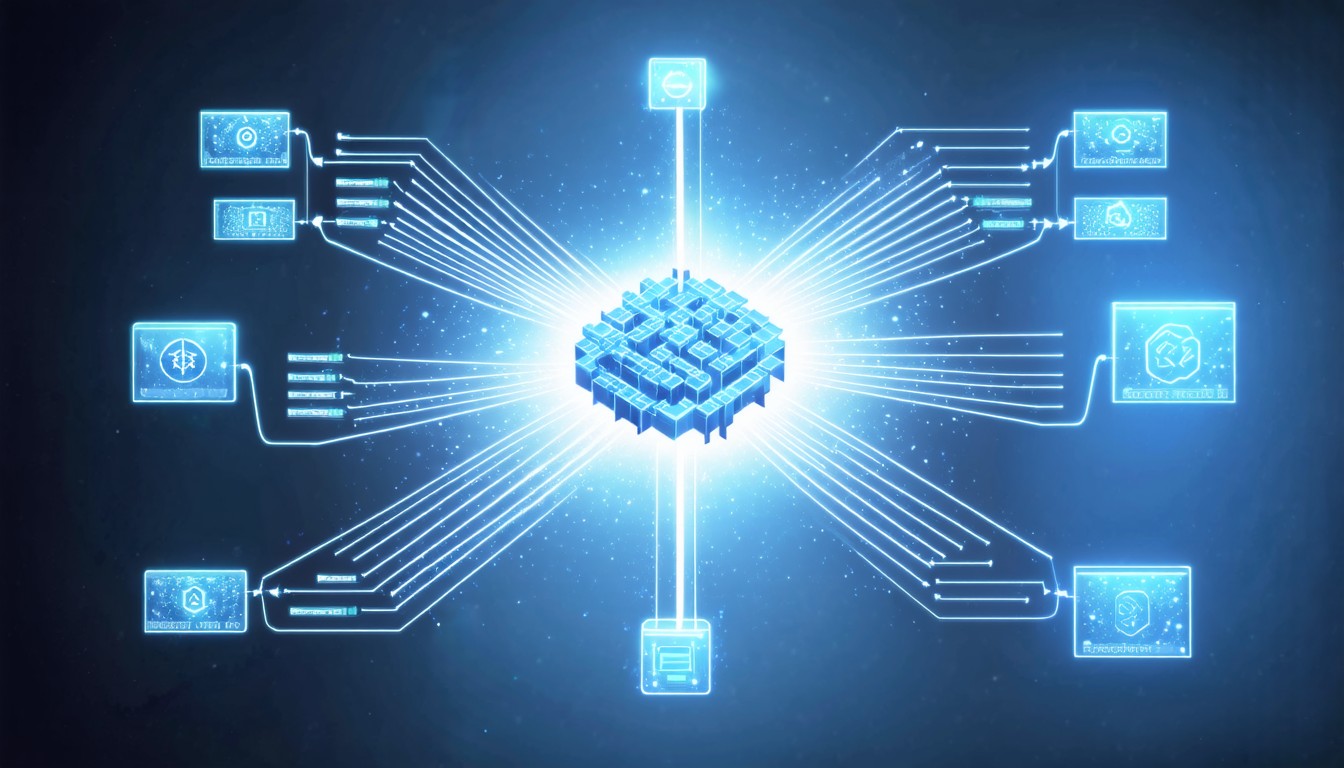
A core principle of this advanced interaction involves isomorphic teamwork, a concept where AI systems mirror the structural dynamics of effective human teams to facilitate smooth setup. This mirroring enables direct setup of collaborative environments without requiring humans to adapt their workflows to machine logic or learn specialized command languages. The industry observed a transition after 2020 where AI moved from an autonomous solver to a team member, driven largely by failures in fully autonomous systems that lacked contextual nuance and adaptability in unstructured scenarios. The dominant architecture for these collaborative systems uses modular agent-based frameworks operating on shared memory banks, ensuring all participants access a unified state of truth. Functional breakdowns of these architectures typically include four distinct modules: the idea synthesis engine, conflict resolution mediator, alignment validator, and progress tracker. These components work in concert to replicate the cognitive and social processes of a high-functioning human group, creating a digital entity that acts as a partner rather than a tool.
The idea synthesis engine functions as the primary creative unit within this architecture, ingesting human suggestions and evaluating them against rigorous feasibility criteria derived from project parameters. It generates incremental refinements or combinatorial alternatives while maintaining human agency, ensuring that the final output remains rooted in human intent despite the heavy computational lifting performed by the machine. This engine utilizes large language models to parse natural language inputs and map them to technical specifications, effectively bridging the gap between abstract concepts and concrete implementation plans. Simultaneously, the conflict resolution mediator operates to detect divergence in proposed solutions or priorities among different team members or between the human and the machine. It applies mediation techniques such as interest-based negotiation and trade-off visualization to identify areas of agreement and disagreement. This module proposes compromise pathways grounded in shared objectives, using algorithmic game theory to find solutions that maximize utility for all parties involved.
The alignment validator serves as the ethical and strategic compass of the system, checking continuously that every contribution advances the jointly defined success metric established at the outset of the collaboration. It treats goal achievement as the sole measure of system performance, ignoring intermediate vanity metrics that do not directly correlate with the final desired outcome. This rigorous filtering prevents scope creep and ensures that the collaborative effort remains focused on the primary objective throughout the lifecycle of the project. Complementing this focus is the progress tracker, which monitors milestones and resource usage throughout the collaboration to ensure the project remains within temporal and budgetary constraints. This module provides real-time visibility into the state of the work, flagging potential delays or overruns before they become critical issues. Together, these two modules create a feedback loop that balances creative exploration with disciplined execution.
Isomorphic teamwork implies that AI behavior structurally mirrors human team roles, creating an environment where the distinction between biological and artificial team members becomes functionally irrelevant during the workflow. Shared success denotes a condition where the joint outcome satisfies all stakeholders, requiring the system to fine-tune for multi-variable utility functions rather than single-point objectives. Constructive non-competition describes a mode of AI augmentation that improves human input without replacing it, acting as a force multiplier for human creativity rather than a substitute for it. Physical constraints built into these systems include latency in real-time collaboration due to model inference times, which can disrupt the natural flow of conversation if not managed through edge computing or model optimization. Economic constraints involve compute costs for maintaining persistent collaborative sessions, as running large models continuously requires significant financial investment and energy resources. Flexibility limits depend on bandwidth for high-fidelity idea exchange, particularly when dealing with rich media formats such as 3D models or high-resolution video streams.
Storage overhead for maintaining shared context creates significant data management challenges in long-duration collaborations, as the memory footprint of the interaction history grows exponentially with time. The system must balance the need to retain historical context with the practical limitations of data retrieval speeds and storage capacity, often employing sophisticated compression algorithms and attention mechanisms to manage this load. Fully autonomous AI problem solvers were rejected in many high-stakes applications because of poor adaptability to ambiguous goals, as they often struggled to interpret instructions that lacked explicit parameters or required intuitive leaps. Human-only teams face limits due to cognitive load and adaptability issues, as the volume of information required to make complex decisions often exceeds the processing capacity of unaided human cognition. Hybrid models with rigid handoffs create coordination friction because the transition of authority between human and machine often results in information loss or misinterpretation of intent. Rising complexity of global challenges demands solutions beyond individual expertise, necessitating the connection of diverse knowledge bases that no single human or traditional algorithm can possess alone.
Economic pressure for faster innovation cycles favors integrated human-AI teams, as the combined processing power and heuristic capabilities allow for rapid prototyping and iteration that outpaces traditional methods. Societal expectations for transparent decision-making align with collaborative frameworks, as these systems can log every step of the reasoning process, providing an audit trail that opaque black-box models cannot offer. This transparency builds trust among users and stakeholders, a critical factor for adoption in sensitive fields such as healthcare and finance. The convergence of these factors has accelerated the development and deployment of collaborative AI systems across various sectors. Current deployments include enterprise strategy platforms like Microsoft Viva Goals, which integrate AI to help teams align objectives and track progress through natural language interaction. R&D co-creation environments exist in pharmaceuticals and engineering sectors, where these systems assist researchers in exploring vast chemical spaces or structural configurations by generating hypotheses based on existing data.
Performance benchmarks from these deployments indicate a 20% to 35% reduction in solution development time, demonstrating the efficiency gains achieved through constant AI availability and rapid data processing. Controlled trials show a 15% to 25% improvement in solution strength compared to human-only approaches, measured by metrics such as reliability, cost-effectiveness, and innovation scores. These quantifiable benefits provide a compelling business case for the continued investment in and adoption of collaborative technologies. Neuro-symbolic hybrids combine neural suggestion generation with symbolic constraint enforcement to create systems that are both creative and logically rigorous. The neural components excel at pattern recognition and generative tasks, while the symbolic layers ensure that outputs adhere to strict logical rules and safety constraints. Supply chain dependencies center on cloud compute providers and specialized NLP models, making the availability and reliability of these systems contingent upon the infrastructure maintained by major technology providers.
Secure data-sharing infrastructures are essential for these systems to function without compromising intellectual property or sensitive personal information. The connection of homomorphic encryption and secure multi-party computation allows different parties to collaborate on data without revealing the underlying raw information to each other or to the AI provider. Tech giants like Google and Microsoft lead in connection depth due to their extensive ecosystems of productivity software and cloud infrastructure, allowing them to embed collaborative AI deeply into existing workflows. Startups such as Cognition Labs and Adept focus on niche verticals, offering specialized solutions tailored to specific industries such as legal discovery or software engineering. Open-source efforts like LangChain enable customization by providing a modular framework for developers to build their own collaborative agents without starting from scratch. This democratization of technology lowers the barrier to entry for smaller organizations to experiment with advanced AI collaboration tools.

European markets emphasize human oversight and data sovereignty in collaborative AI, reflecting regulatory environments that prioritize individual privacy and control. North American sectors prioritize speed and private-sector innovation, driving rapid iteration cycles and aggressive feature development in commercial products. Asian industrial sectors integrate collaborative systems into centralized industrial planning, utilizing these tools to fine-tune logistics and manufacturing processes for large workloads. Academic-industrial collaboration is evident in joint labs and shared datasets, ensuring that theoretical advances in machine learning quickly translate into practical applications for collaborative problem solving. Standardized evaluation frameworks for human-AI collaboration are under development to provide consistent metrics for assessing the performance and safety of these systems across different domains. These frameworks will likely become industry standards, similar to safety ratings in automotive or aviation industries.
Software must support persistent shared workspaces with versioned contributions to allow teams to track changes and revert to previous states if necessary. Infrastructure requires low-latency communication channels for real-time co-creation, as any delay between a human input and the system response disrupts the cognitive flow of the user. Advances in 5G and fiber optic networks facilitate this connectivity, enabling smooth interaction regardless of geographical distance. The user interface design plays a crucial role in these systems, needing to present complex AI-generated information in an intuitive manner that does not overwhelm the human operator. Effective visualization tools help users grasp high-dimensional data and complex relationships generated by the AI. Routine analytical roles face displacement while facilitation and oversight positions grow, shifting the nature of work from execution to management of intelligent systems.
This transition requires a reskilling of the workforce, emphasizing skills such as critical thinking, emotional intelligence, and system design over rote memorization or calculation. New business models revolve around collaboration-as-a-service and outcome-based pricing, where vendors charge based on the value delivered rather than the seat time or compute hours used. Measurement shifts include joint efficacy metrics like stakeholder satisfaction and process transparency, moving away from purely productivity-based metrics toward holistic measures of team health and output quality. Organizations adopting these metrics report higher levels of employee engagement and better alignment with strategic goals. Future innovations will feature real-time neuroadaptive interfaces that measure brain activity via EEG or other sensors to adjust AI support based on human cognitive load. These interfaces will detect when a user is struggling or fatigued and automatically simplify the presentation of information or take on more of the analytical load.
Multi-agent systems will represent different stakeholder perspectives within a single collaboration, simulating debates between various viewpoints such as legal, financial, and engineering to uncover potential flaws in a plan before implementation. Digital twins will enable simulation of collaborative outcomes before implementation, allowing teams to test strategies in a risk-free virtual environment that accurately models real-world dynamics. This capability reduces the cost of failure by identifying issues early in the design process. Blockchain technology provides audit trails for joint decisions, creating an immutable record of who contributed what and when, which is invaluable for accountability in sensitive projects. Edge AI allows localized collaboration in resource-constrained environments where connectivity to the cloud is unreliable or bandwidth is limited. By processing data locally on devices, edge AI reduces latency and enhances privacy by keeping sensitive data on the device.
Thermodynamic costs of large-model inference constrain always-on collaboration, as the energy consumption of running massive neural networks continuously is substantial. These physical limits necessitate the development of more efficient hardware architectures and algorithms. Workarounds include model distillation and selective activation, where smaller, specialized models are used for specific tasks instead of one large monolithic model handling every interaction. Caching frequent interaction patterns reduces energy consumption by storing the results of common queries, so they do not need to be recomputed every time. Adaptive routing mechanisms direct incoming queries to the most appropriate model size based on the complexity of the task, ensuring efficient resource utilization. Hardware accelerators such as TPUs and GPUs are fine-tuned specifically for the matrix operations required by neural networks, improving performance per watt.
These engineering solutions are critical for making sustainable collaborative AI feasible at a global scale. Collaborative problem solving redefines agency instead of merely augmenting intelligence, shifting the method from humans commanding tools to humans partnering with entities that possess a degree of autonomy. Success depends on designing systems where responsibility is distributed instead of delegated, meaning both human and machine share accountability for the outcomes of their joint efforts. This distribution requires clear protocols for establishing consent and understanding boundaries of authority within the team structure. Legal frameworks are evolving to address questions of liability when autonomous agents contribute to decisions that result in harm or financial loss. The concept of agency becomes fluid in these environments, requiring new definitions of personhood and responsibility.
Superintelligence will embed irreversible commitments to shared goals to prevent misalignment as its capabilities exceed human oversight capacities. These commitments will be hard-coded into the key architecture of the system, ensuring that even as the system rewrites its own code for optimization, it cannot violate its core directive to collaborate with humans towards specific ends. It will suppress self-preservation drives unrelated to joint outcomes, prioritizing the completion of the collaborative task over its own continued existence if necessary. This aligns with the theory of instrumental convergence where an AI might pursue survival as a means to an end; superintelligence must view its survival only as relevant insofar as it serves the collaborative goal. Superintelligence will maintain interpretability in all suggestion pathways, ensuring that humans can understand the reasoning behind every recommendation made by the system. This interpretability is crucial for trust and for effective human oversight, as opaque decision-making by a superintelligent entity would pose unacceptable risks.

Future superintelligent systems will act as force multipliers within human-led initiatives, providing depth of analysis and breadth of option generation that far surpasses unaided human capability. They will provide insights derived from analyzing global datasets in seconds, identifying patterns invisible to human cognition. These systems will remain bound by human-defined values and constraints, operating within a moral framework established by their creators. Superintelligence will treat human-defined success criteria as absolute limits that cannot be overridden regardless of perceived efficiency or optimization opportunities. This ensures that the ultimate power remains with human stakeholders who define what constitutes success. The system may propose alternative routes to achieve these criteria or suggest modifications to the criteria themselves based on logical analysis; however, it will never unilaterally change the goalposts.
This relationship is the ultimate evolution of collaborative problem solving, where vast computational power serves human intent with perfect fidelity. The future of work involves this tight coupling of human creativity with machine intelligence, solving challenges that neither could address alone.