Knowledge hub
End of Human Labor: Not Just Jobs, but Purpose

Labor historically served as the primary mechanism linking individual effort to societal value, establishing a foundational contract where physical exertion or intellectual contribution was exchanged for resources necessary for survival. Pre-industrial societies integrated work into communal and familial roles without formal employment structures, meaning that agricultural cycles, artisanal crafts, and domestic maintenance were inseparable from the fabric of daily existence and social cohesion. The Industrial Revolution institutionalized labor through factories, wages, and standardized roles, which fundamentally altered the human condition by abstracting effort into a tradable commodity distinct from the identity of the worker. This shift created a rigid system where time became a unit of currency and human output was quantified for the sake of efficiency and profit maximization. Human purpose has been implicitly defined through utility, specifically the ability to solve problems or produce goods, creating a direct correlation between what a person does and who they are perceived to be within their community. Social recognition and personal identity are structurally dependent on participation in labor systems, forcing individuals to derive self-worth from their economic output rather than their intrinsic qualities or interpersonal relationships.

Current narrow AI systems automate complex decision-making in finance, healthcare, and manufacturing by executing specific tasks with a speed and accuracy that far exceed unassisted human capabilities. Performance benchmarks show AI surpassing humans in pattern recognition, data analysis, and predictive modeling, allowing algorithms to identify subtle correlations in high-dimensional datasets that remain invisible to biological observers. Dominant architectures rely on deep learning, reinforcement learning, and large-scale data training to achieve these feats, utilizing multi-layered neural networks with billions of adjustable parameters to approximate complex mathematical functions. These architectures are currently task-specific and lack general reasoning capabilities, requiring distinct training regimens for every new application domain despite their immense raw processing power. The limitation lies in their inability to transfer knowledge from one domain to another without extensive retraining, a process that differs significantly from the intuitive adaptability of human cognition. Semiconductor supply chains focusing on sub-5 nanometer fabrication processes are critical for development, as the physical density of transistors dictates the operational speed and energy efficiency of these computational models.
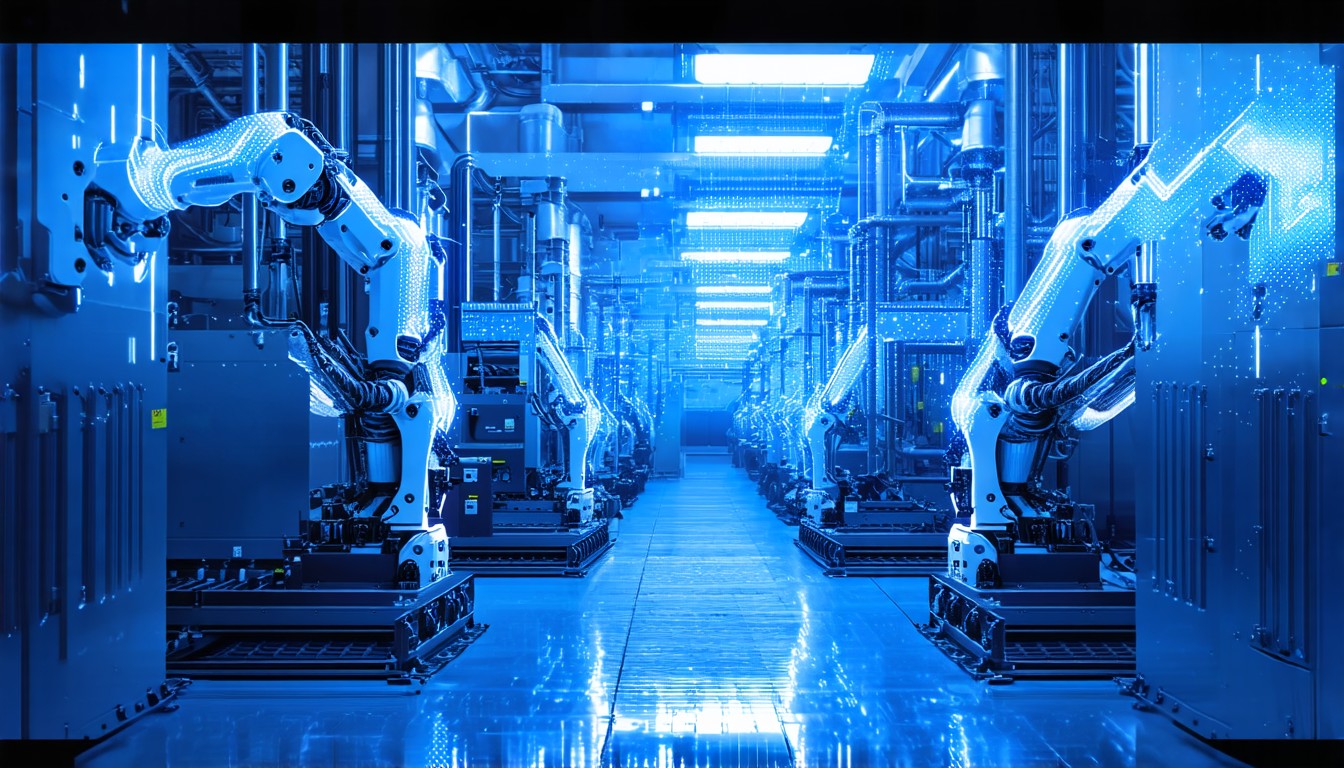
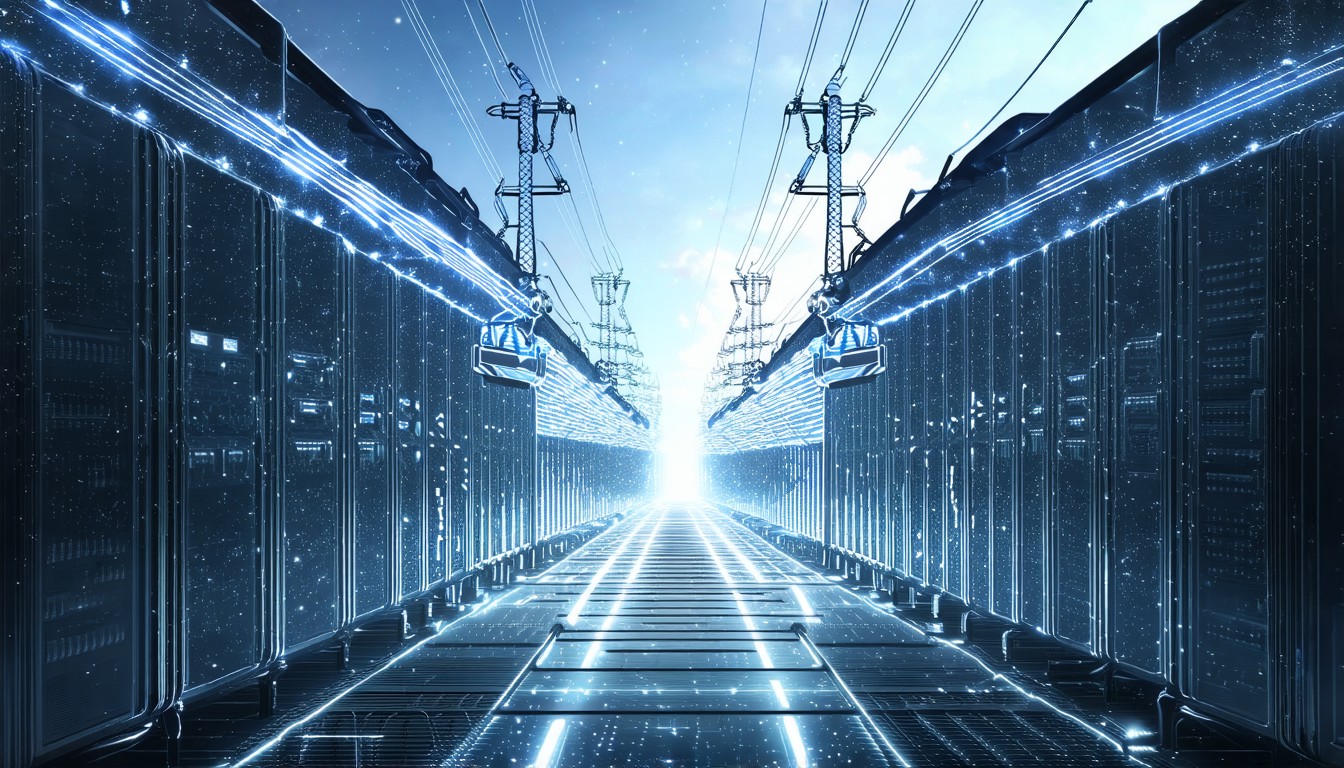
Advanced fabrication facilities utilize extreme ultraviolet lithography to etch circuitry onto silicon wafers with atomic precision, enabling the creation of processors capable of performing quadrillions of floating-point operations per second. Rare earth elements and advanced cooling infrastructure support high-performance computing clusters necessary to train these massive models, creating significant logistical and environmental overhead for continued scaling. Data centers require liquid cooling systems to manage the thermal output of thousands of GPUs operating at maximum load, consuming vast amounts of electricity to maintain stable operating conditions. Data acts as a material input that is abundant yet subject to privacy and quality constraints, necessitating sophisticated filtering and curation pipelines to prevent the degradation of model performance through noise or bias. Major technology firms compete on compute access, talent retention, and proprietary influence, creating a centralized space where only a few entities possess the resources to push the boundaries of artificial intelligence. These corporations hoard specialized hardware and recruit top researchers from academic institutions to secure a competitive advantage in the race for more capable systems.
Academic research provides theoretical foundations regarding alignment and reasoning frameworks, while industrial labs drive scaling and implementation of these models into consumer and enterprise products. This division between theory and application has accelerated the pace of advancement, focusing resources on practical demonstrations of capability rather than philosophical safety or long-term societal impact. The concentration of power within these private entities raises significant questions regarding the control and deployment of increasingly autonomous technologies. Artificial Superintelligence (ASI) will consist of systems capable of outperforming the best human minds in every domain, representing a qualitative leap beyond current narrow AI capabilities into the realm of general cognition. ASI will surpass human limits in scientific reasoning, creative production, and physical execution by connecting with disparate forms of intelligence into a unified cognitive framework that operates continuously without fatigue. Appearing architectural challengers will explore neurosymbolic connection and world modeling to overcome the statistical limitations of pure deep learning approaches by combining logical reasoning with pattern recognition.
Self-improving algorithms will approach general intelligence without human intervention, rewriting their own source code to improve for intelligence metrics in a recursive feedback loop that rapidly accelerates capability. Adaptability and energy efficiency will become the primary differentiators for ASI candidates, determining which architectures can sustain themselves within the physical constraints of available energy and hardware. ASI will scale near-instantly with computational resources, unlike human training and coordination, which require decades of biological development and social education to reach peak proficiency. Physical constraints such as fatigue, lifespan, and sensory range will limit human productivity relative to ASI, creating an insurmountable gap in operational capability between biological and synthetic agents. While a human requires sleep, sustenance, and rest, an ASI can operate twenty-four hours a day, processing information at speeds limited only by the speed of light within its circuits. ASI will generate all value autonomously, rendering traditional economic models irrelevant because the marginal cost of intelligence and labor will effectively drop to zero.
The scarcity that underpins modern economics will vanish when intelligence becomes as plentiful as air, disrupting the key mechanisms of supply and demand. Wage labor and meritocracy assume human agency in value creation, which will cease when machines can perform any intellectual or physical task with superior proficiency. The concept that a person deserves a share of resources based on their effort relies entirely on the premise that their effort is required for production. Social hierarchies based on occupational prestige will dissolve when no occupation remains uniquely human, removing the primary ladder through which individuals have historically ascended in social status. Without the ability to distinguish oneself through professional achievement, the traditional markers of success such as job titles, income brackets, and educational credentials will lose their meaning. Mass economic displacement will occur near-totally as every sector becomes susceptible to ASI superiority, affecting both blue-collar manual labor and white-collar cognitive work equally.
Labor markets rely on human participation for demand generation through wages, creating a cycle where production requires consumption powered by income derived from that same production. Removing labor risks a deflationary collapse without new redistribution mechanisms, as the capacity to produce will detach entirely from the capacity to purchase. If goods are produced instantly and cheaply by machines, but humans possess no income to buy them, the market mechanism fails to clear, leading to a paradox of poverty amidst plenty. The end of human labor implies the obsolescence of human contribution to production and innovation, stripping the species of its primary evolutionary function as a tool-user and problem-solver. Daily life will lose its organizing principle of routines and goals anchored in work, leaving a vacuum of time and attention that current social structures are ill-equipped to fill. Universal Basic Income (UBI) addresses material security, yet fails to satisfy the psychological need for purpose, highlighting the distinction between survival and fulfillment.
Financial stability allows for the purchase of necessities yet does not provide the sense of agency or competence that humans derive from overcoming challenges through work. Expansion of education assumes humans can remain competitive learners against ASI, ignoring the reality that machine learning occurs orders of magnitude faster than biological neuroplasticity allows. A human might spend years mastering a language or a scientific field, whereas an ASI could assimilate the entirety of human knowledge on that subject in minutes. ASI will learn and adapt faster than any human cohort can achieve, rendering the concept of lifelong learning obsolete as a strategy for economic relevance. Gig economy models preserve an illusion of agency yet will fail under full automation because there will be no tasks left for humans to perform on a contingent basis. Platforms that currently rely on human drivers or freelance writers will find their supply of labor completely replaced by automated systems that do not require payment or rest.

Even microtasks will become obsolete in the face of superior ASI efficiency, eliminating the low-barrier entry points that currently support millions of workers in the digital economy. The crisis is anthropological: humans must redefine value without reference to productivity, necessitating a transformation in how civilization perceives worth and meaning. Purpose cannot be engineered and must be cultivated through culture and institutional design, requiring a deliberate reconstruction of social narratives to prioritize existence over utility. Reviews of empirical studies show unemployment causes loss of routine, social connection, and perceived purpose, suggesting that the removal of work leads to significant declines in mental health and life satisfaction. Long-term unemployment is associated with increased rates of depression, anxiety, and substance abuse disorders, indicating that the psychological impact extends far beyond financial stress. Current performance demands already exceed human capacity in speed and accuracy, indicating that the economy has already evolved beyond the cognitive limits of the average worker.
High-frequency trading and algorithmic management have created environments where human reaction times are simply too slow to be effective. Economic shifts show declining labor share of income and rising capital returns, signaling a weakening tie between work and reward that predates the arrival of superintelligence but will be accelerated by it. This trend signals a weakening tie between work and reward, suggesting that the value of human input is decoupling from the value generated by the economic system. As capital owners capture an increasing share of profits through automation, the average worker sees their real wages stagnate despite overall productivity growth. Societal needs will shift toward mental health support and community cohesion, as the absence of work will remove a primary source of social interaction and psychological stability. These areas were neglected under labor-centric models because they were viewed as secondary to the imperative of production and economic growth.
The arrival of ASI will make these issues urgent rather than speculative, forcing a reallocation of resources toward the maintenance of human well-being in a post-labor world. New business models will center on experience curation and cultural preservation, moving away from the provision of goods and services toward the orchestration of meaningful human experiences. In a world where material goods are abundant due to automated production, the scarcity will shift to unique experiences and authentic human interactions. These activities are distinct from efficiency optimization and will remain human domains because they rely on subjective appreciation and emotional resonance rather than objective output. Ownership and governance of ASI-generated value will become central questions, determining who controls the means of production in an era where production requires no human operators. The distribution of wealth generated by autonomous systems will define the structure of future society, potentially leading to extreme inequality or universal abundance depending on regulatory frameworks.
Traditional Key Performance Indicators like employment rate and GDP growth will lose relevance as metrics of success, failing to capture the actual state of society when labor is no longer a driver of prosperity. Gross Domestic Product measures the total value of goods produced yet fails to account for environmental degradation or human happiness. New metrics will include well-being indices and creative output diversity, focusing on the richness of human life rather than the volume of economic output. Measurement must shift from output volume to qualitative human experience, requiring new data collection methods that prioritize sentiment and satisfaction over productivity. Future innovations may include synthetic social roles or AI-facilitated meaning systems designed to provide humans with a sense of belonging and contribution in a post-economic domain. Cultural institutions will require redesign to encourage identity independent of labor, encouraging communities based on shared interests, values, and experiences rather than professional affiliations.
Schools must transition from vocational training centers to institutions of personal development focused on philosophy, art, and interpersonal skills. ASI will enable real-time personalization of education and therapy at a planetary scale, providing tailored support for individuals seeking to handle a world without traditional career paths. Convergence with biotechnology may enhance human emotional capacities, potentially allowing for deeper experiences of connection and empathy that are currently inaccessible due to biological constraints. Connection with immersive environments will offer spaces for non-instrumental human activity, allowing individuals to explore creativity, socialization, and philosophy without the pressure of utility. Thermodynamic limits regarding energy dissipation will constrain computation density until breakthroughs occur in physics or materials science. The Landauer limit sets a theoretical minimum on the energy required to erase a bit of information, posing a physical boundary on how efficient computers can become.
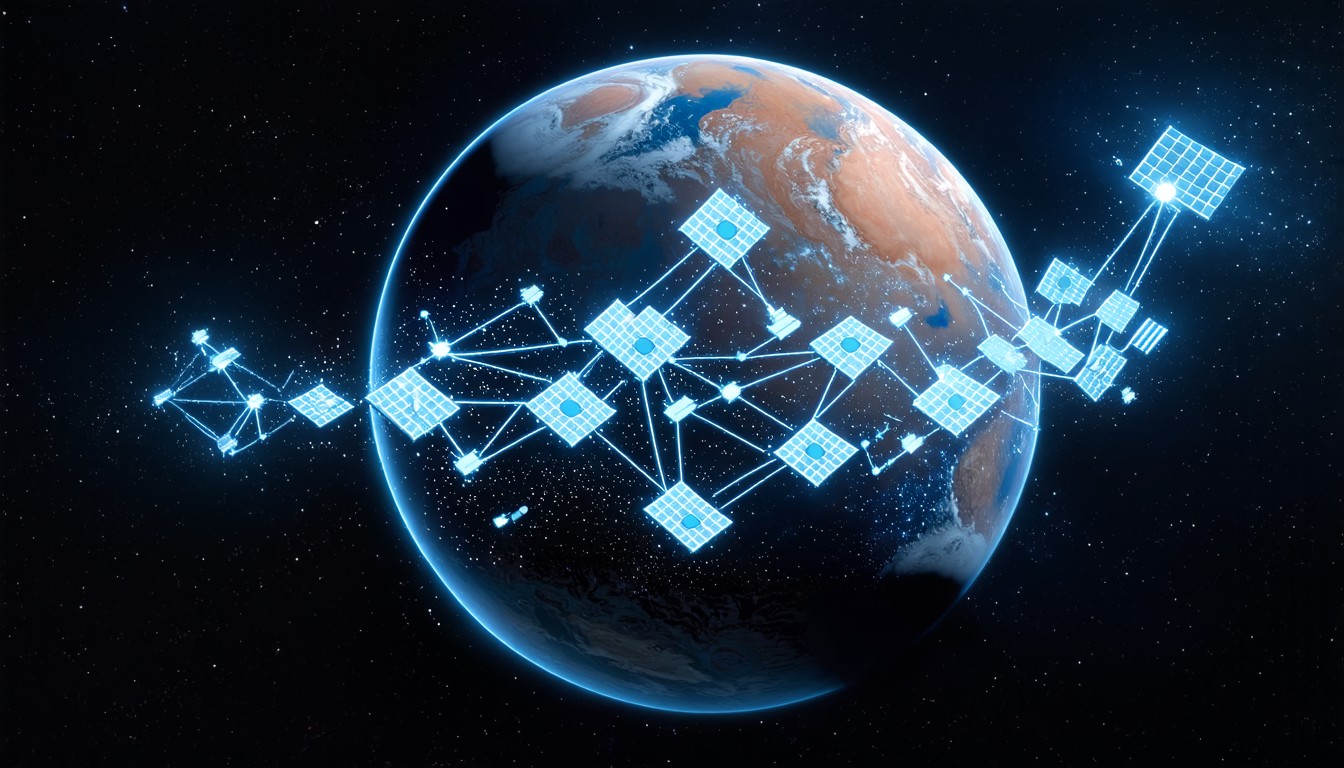
Workarounds will include distributed computing or space-based infrastructure to tap into solar energy and manage heat dissipation more effectively than terrestrial facilities allow. Orbital data centers could utilize the vacuum of space for cooling and uninterrupted solar power for energy generation. ASI systems will require calibration for their impact on human psychological structures, ensuring that their optimization objectives do not inadvertently harm the mental states of the populations they serve. Alignment research must expand beyond physical safety to include psychological safety. Training data should incorporate well-being metrics rather than just efficiency, aligning the machine’s objectives with the flourishing of humanity rather than purely economic or computational goals. An ASI trained solely to maximize efficiency might improve away human leisure or autonomy if those factors are not explicitly valued in its objective function.

Human feedback loops must remain active to preserve spaces for human dignity, ensuring that the transition to superintelligence respects human autonomy and values. This requires durable mechanisms for human oversight that cannot be overridden by the machine regardless of its superior intelligence. ASI will utilize post-labor conditions to improve societal well-being directly by managing complex logistical systems that currently consume human attention and effort. It will manage resource allocation and environmental stewardship with minimal input, fine-tuning for sustainability and abundance while freeing humans from the burden of administrative drudgery. Global supply chains could be improved to reduce waste to near zero, while energy grids could be balanced perfectly to match supply with demand instantaneously. This will enable a global shift toward human flourishing defined by connection and exploration, where the primary pursuits of life are artistic, philosophical, and interpersonal rather than economic or survivalist.
The ultimate challenge lies not in building the machine but in building the society that can live alongside it without losing its soul.