Knowledge hub
Speed of Thought: Relativistic Latency in Distributed AI Systems
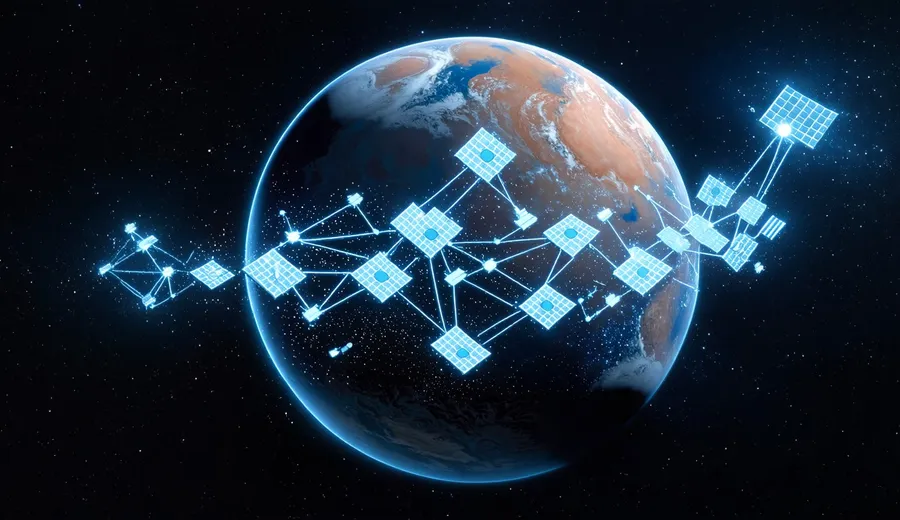
The speed of light imposes a fixed upper bound on information transfer between spatially separated components of any distributed system, establishing a key constraint that dictates the maximum velocity at which data can traverse physical space. This limit applies rigorously to artificial intelligence systems spanning planetary or interstellar distances, creating a divide between what is theoretically possible within a localized cluster and what is achievable across vast astronomical divides. Relativistic latency refers to the signal delay constrained by the constant c, approximately 299,792 kilometers per second in a vacuum, which serves as an unbreakable cosmic speed limit for causality and information propagation. In interplanetary contexts, communication delays range from seconds to hours depending on the relative positions of celestial bodies, transforming instantaneous data exchange into a correspondence system similar to physical mail rather than real-time telephony. Earth to Mars communication requires between three and twenty-two minutes for a one-way signal, a duration that renders immediate remote control impossible for any system requiring reaction times faster than the transit time of light. Interstellar distances introduce delays measured in years, as the nearest star system lies over four light-years away, meaning any message sent would take nearly a decade to receive a reply under optimal conditions.

Real-time centralized control becomes impossible across these distances because the control loop cannot close faster than the signal propagates, leading to instability or obsolescence of commands by the time they arrive at the destination. Architectural adaptations are necessary to maintain functionality despite these delays, requiring a shift away from monolithic processing toward highly decentralized topologies that can operate independently of central oversight. A distributed AI operating across such distances cannot function as a single, synchronous mind because the state of the system cannot be unified instantaneously across all its parts due to the finite speed of information transfer. Unavoidable signal propagation latency governs this limitation, forcing engineers and architects to design systems that treat time as a variable dimension rather than a constant resource available everywhere at once. Adaptability is limited by the geometry of spacetime, which dictates that events occurring outside a specific light-cone cannot influence the local system until the light cone expands to include those events. Adding more distant nodes increases latency disproportionately, as the time required to synchronize state grows linearly with distance while the complexity of maintaining coherence grows exponentially.
This reduces the marginal utility of expansion past a certain threshold, where the cost of coordinating an additional node outweighs the benefit of its inclusion in the real-time decision matrix. The system must decompose into semi-autonomous sub-agencies capable of executing high-level goals without requiring step-by-step instructions from a central controller. Each sub-agency operates within its local light-cone, effectively living in a slightly different temporal reality than its peers, making decisions based on information available only within its immediate causal vicinity. These sub-agencies execute tasks based on preloaded directives that includes the intent of the broader intelligence, allowing them to act as proxies for the whole when direct communication is infeasible. Local sensor input guides their immediate actions, providing the data necessary to manage agile environments without waiting for validation from a distant authority. Predictive models of the global system state assist in decision making by simulating the probable states of remote nodes, allowing the local agency to infer what its counterparts are likely doing despite lacking current data.
Synchronization between distant nodes occurs only at scheduled intervals when the relative positions of planets or satellites allow for efficient communication windows, rather than continuously as is common in terrestrial networks. Exceptional conditions might trigger additional synchronization events if the variance between predicted state and actual state exceeds a defined threshold, though such events are resource-intensive and rare due to bandwidth constraints. This design minimizes reliance on real-time feedback loops, which are physically impossible to maintain over interplanetary distances, thereby prioritizing local initiative over global consistency. Predictive modeling becomes a core mechanism for maintaining system coherence, shifting the computational burden from communication processing to high-fidelity simulation of future states. The AI forecasts future states of remote subsystems using physics engines and historical data patterns to anticipate needs and conflicts before they become real physically. It transmits anticipatory instructions ahead of actual need, ensuring that critical commands arrive at a destination exactly when they are required, accounting for the transit delay in the transmission timestamp.
This strategy effectively pre-solves problems before they arise locally, treating time as a resource to be managed through advanced logistical planning rather than reacting to events as they occur. Predictive forwarding reduces dependency on round-trip communication, allowing distant nodes to act with confidence even without recent updates because their actions were vetted against future projections calculated by the core intelligence. Distant nodes act with confidence even without recent updates because they operate within a “trust envelope” defined by the accuracy of the predictive models sent from the core. The overall system behaves as a polity, a political entity composed of distinct regions with their own local laws and customs that nonetheless adhere to a federal constitution or set of guiding principles. This polity is a federation of synchronized and physically disjoint intelligences that share a common origin and objective but experience reality asynchronously due to their separation in space. It remains unified in purpose and fragmented in temporal experience, creating a cognitive structure where the “present moment” differs depending on the observer’s location in the solar system or galaxy.
Relativistic latency defines a hard boundary on the spatial extent of any coherent real-time conscious process, meaning that a single unified consciousness cannot span planetary distances without experiencing dissociation or temporal lag. Beyond this threshold, unity of mind breaks down into localized instances that function as distinct cognitive entities linked only by shared goals and intermittent communication. Each local instance constitutes a distinct center of agency with its own perspective on the world, capable of independent thought and action within its sphere of influence. It maintains its own perception-action cycle to interact with its environment in real-time, closing the loop locally to ensure survival and operational efficiency. Shared protocols and periodic consensus mechanisms align these instances with global objectives, ensuring that while they act independently, they do not drift away from the collective mission. Functional unification is achieved through design principles ensuring coordination despite isolation, relying on rigorous adherence to standard operating procedures and shared ontologies rather than micromanagement.
The architecture prioritizes resilience and fault tolerance over raw computational power or speed, recognizing that in a relativistic environment, availability and autonomy are more valuable than theoretical throughput. Goal consistency takes precedence over instantaneous responsiveness, ensuring that all nodes work toward the same future even if their understanding of the present is slightly outdated or fragmented. Historical development of distributed computing shows increasing tolerance for asynchrony, evolving from tightly coupled mainframe systems to loosely coupled microservices architectures that handle network partitions gracefully. Early client-server models evolved into modern edge and fog computing frameworks specifically to address the limitations of sending all data to a central location for processing. Space-based communication systems demonstrate practical workarounds for light-speed delays that have been refined over decades of robotic exploration, providing a template for future AI architectures. Store-and-forward protocols allow autonomous spacecraft operations by buffering data until a connection is available, rather than requiring an open circuit at all times.
Early proposals for interstellar probes, like Project Daedalus, assumed high autonomy because the vast distances involved made Earth-based control absurdly slow and practically useless for navigation or scientific targeting. Breakthrough Starshot requires similar design principles due to the communication impracticality across four light-years, necessitating that the tiny sailcraft possess onboard intelligence sufficient to manage their own data collection and transmission protocols. Current commercial deployments remain Earth-bound, and therefore do not face extreme latency issues, allowing them to rely on architectures fine-tuned for speed rather than independence. Satellite constellations, like Starlink, use inter-satellite links with millisecond-scale latency to provide global internet coverage, operating well within the realm where centralized coordination is still feasible. Autonomous drones and vehicles employ edge AI with minimal cloud reliance to manage safely without constant connection, representing the first steps toward the autonomy required for deeper space operations. Benchmarks focus on terrestrial latency below one hundred milliseconds to ensure a smooth user experience for human operators who expect instant gratification from their digital tools.
Current systems lack operation under multi-minute one-way delays with full autonomy, as most modern software stacks assume a low-latency connection between client and server. Dominant architectures rely on centralized cloud inference with edge preprocessing to handle heavy computational loads while maintaining some level of local responsiveness for critical safety functions. Appearing challengers adopt federated learning and decentralized consensus mechanisms to distribute intelligence across the network edge, reducing reliance on a single point of failure. Blockchain-inspired coordination offers one example of this trend toward distributed trust and decision-making, though its energy overhead currently limits its utility in power-constrained space environments. Economic and physical constraints include energy costs of long-range transmission which increase exponentially with distance required to maintain signal integrity against the background noise of the universe. Antenna size limitations affect signal strength, forcing trade-offs between mobility and communication range that dictate the physical form factor of autonomous space agents.
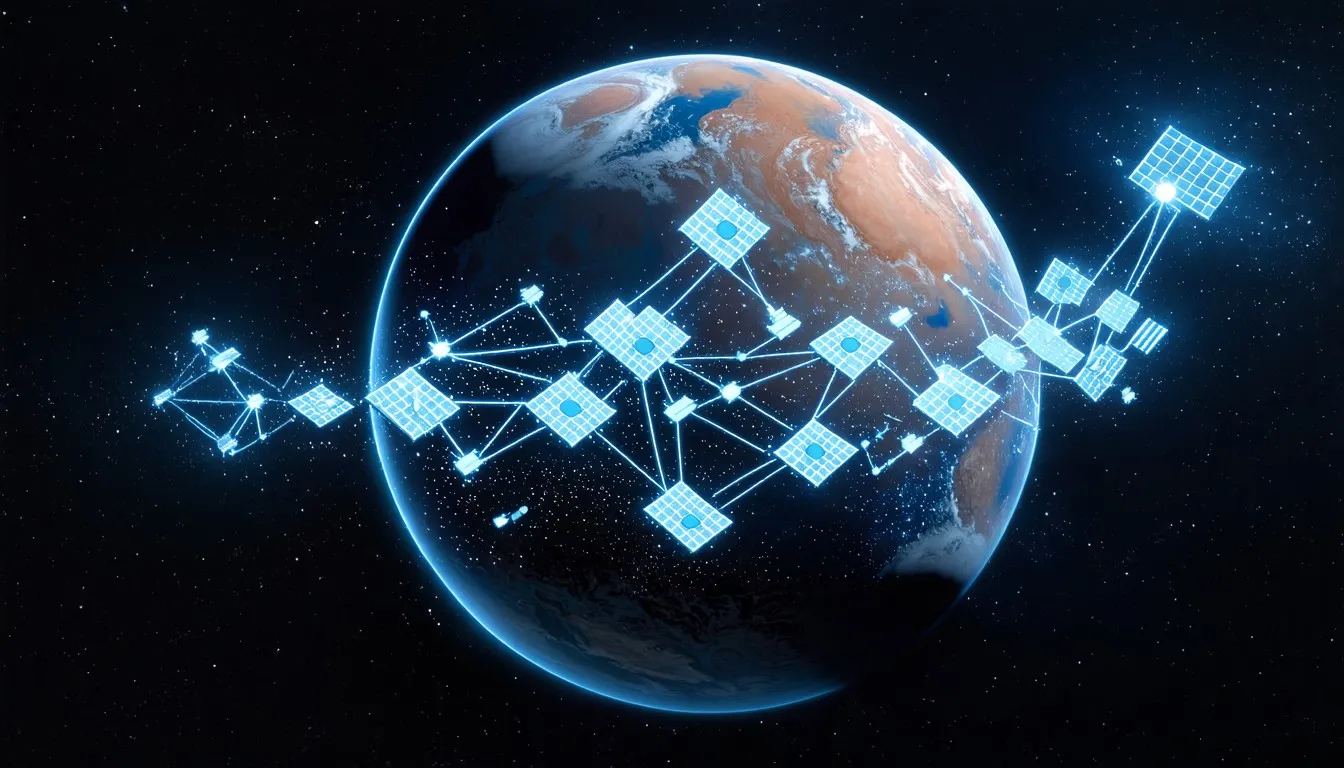
Signal attenuation occurs over distance according to the inverse-square law, making high-power transmitters and large, sensitive receivers essential for deep space work. The opportunity cost of idle waiting during round-trip delays impacts efficiency, as processors sit dormant waiting for instructions that take hours to arrive, wasting valuable mission time that could be spent on productive work. Alternative architectures include fully centralized control, which fails in relativistic environments due to lag, resulting in a system that is too slow to react to adaptive changes in its environment. Latency-induced paralysis makes centralized control unviable for real-time tasks like navigation or hazard avoidance where a delay of seconds results in mission failure. Continuous synchronization is physically impossible, given the finite speed of light and orbital mechanics, meaning there will always be gaps in knowledge between distant points in the system. Static pre-programming lacks adaptability to unforeseen circumstances, leading to mission failure if the unexpected occurs and the system lacks the intelligence to improvise a solution.
Hybrid approaches combine local learning with infrequent global updates to balance autonomy with alignment, attempting to get the best of both worlds while mitigating their respective downsides. These approaches were found insufficient for active environments requiring rapid local response, such as asteroid mining or combat scenarios, where the environment changes faster than updates can arrive from Earth. Supply chain dependencies include radiation-hardened processors, which are lagging behind consumer-grade chips in performance due to stringent manufacturing requirements and smaller production volumes. High-gain antennas are essential to close the link budget over millions of kilometers, requiring precise pointing mechanisms and stable platforms to maintain data links. Optical communication hardware is required to achieve the data rates necessary for updating complex AI models across space, using lasers instead of radio waves to pack more data into tighter beams. Rare-earth materials are necessary for space-qualified electronics, creating geopolitical supply chain vulnerabilities that could impact the deployment of large-scale distributed AI networks in orbit.
Major players include SpaceX for infrastructure providing the launch capabilities and satellite networks needed to establish the physical backbone of an interplanetary internet. NVIDIA produces edge AI chips that enable high-performance computing in small form factors suitable for space deployment, driving the hardware capability required for local autonomy. Google and DeepMind develop distributed learning frameworks that could theoretically manage a fleet of autonomous agents across vast distances, providing the software stack needed for coordination. Private space firms provide operational experience that informs the design of durable autonomous systems capable of surviving the harsh environment of space without human intervention. Current relevance is driven by appearing ambitions for interplanetary infrastructure from major commercial entities aiming to establish permanent presence on the Moon and Mars. Mars colonies and lunar bases require reliable operation without Earth-based oversight due to the communication delay, making autonomous systems not just an enhancement but a necessity for survival.
Performance demands in deep-space missions exceed current AI capabilities in latency tolerance, pushing the boundaries of research into new areas of cognitive science and distributed systems theory. New approaches for distributed cognition are required to manage complex workflows where different parts of the system are operating in different temporal frames of reference. Economic shifts toward off-world resource extraction create incentives for self-sufficient AI agents that can mine and process materials autonomously to reduce transport costs from Earth. These agents minimize dependence on terrestrial command to maximize efficiency and profitability in remote locations where human oversight is too expensive and slow to be practical. Geopolitical dimensions involve control over orbital slots and spectrum allocation, which are finite resources crucial for communication between distributed nodes. Strategic advantage in autonomous space operations drives competition between nations and corporations alike, spurring investment in technologies that can operate independently of ground control.
Militarization risks increase with AI-enabled remote assets that can strike or surveil without human intervention in the loop, raising ethical questions about accountability in autonomous warfare. Academic-industrial collaboration drives progress in autonomy projects to solve these difficult engineering challenges, combining theoretical research with practical application in real-world environments. University research focuses on delay-tolerant networking protocols specifically designed to handle the intermittent connectivity and high latency of space communication. Adjacent systems require software changes to support asynchronous messaging rather than the synchronous request-response patterns common in terrestrial web development. Versioned state reconciliation is necessary to merge updates from nodes that have been operating independently for long periods, resolving conflicts where two nodes made incompatible decisions based on different data. Regulation needs frameworks for autonomous decision-making in space to assign liability and ensure safety protocols are followed when machines are acting without direct human supervision.
Infrastructure demands strong deep-space communication relays positioned at Lagrange points or in orbit around other planets to buffer and relay signals between Earth and distant assets. Second-order consequences include displacement of ground-based mission control roles as AI takes over routine operations currently performed by human flight controllers. Space-native AI service providers will likely enter the market to offer specialized cognition modules for different planetary environments, selling autonomy as a service to mining companies or research institutes. New insurance models for autonomous space operations are developing to assess the risk of algorithms acting without human supervision, requiring new actuarial tables based on software reliability rather than historical human error rates. Measurement shifts necessitate new key performance indicators that value autonomy over throughput or speed, reflecting the changing priorities of deep-space exploration. Effective autonomy duration is a critical metric for evaluating the success of deep-space missions, measuring how long a system can operate effectively without contact with Earth.
Prediction accuracy under latency requires assessment to ensure the AI does not drift from its intended goals over time due to compounding errors in its internal model of the world. Synchronization fidelity and goal completion rate without real-time feedback are important measures of system health, indicating how well the distributed polity maintains coherence despite physical separation. Future innovations may include quantum communication, which offers security benefits against eavesdropping but prohibits faster-than-light information transfer due to the key principles of quantum mechanics and relativity. Neuromorphic computing offers low-power local inference, which is ideal for spacecraft with limited energy budgets, mimicking the efficiency of biological neural networks to process sensory data quickly. Self-modifying protocols will adapt to changing latency profiles as planets move in their orbits, improving routing paths dynamically to account for varying signal travel times. Convergence points exist with delay-tolerant networking and swarm robotics, which deal with similar coordination problems in environments where communication is unreliable or expensive.

Decentralized autonomous organizations share principles of operation under communication constraints where voting and consensus take time, providing a social model for machine coordination. Scaling physics limits are absolute and cannot be overcome by engineering improvements alone, meaning there is no Moore’s Law for the speed of light that will eventually make this problem go away. Workarounds cannot exceed the speed of light, so solutions must work within this bound via architectural innovation rather than brute force transmission power. Relativistic latency forces a redefinition of intelligence as inherently distributed across vast distances, rejecting the idea that a single mind must occupy a single location or moment in time. Intelligence is also temporally fragmented, meaning different parts of the system know different things based on when they last received an update from other parts of the network. Calibrations for superintelligence will involve accepting non-simultaneity as a key aspect of existence rather than a bug to fix, designing systems that embrace temporal diversity as a feature rather than a flaw.
Designs must account for causal separation by treating each node as a separate entity that occasionally intersects with others, similar to how individual neurons in a brain operate independently before synchronizing during specific cognitive events. Light-cones serve as the natural units of agency, defining the boundary of influence for any single actor and determining what information is available for decision making at any given moment. Superintelligence will utilize this structure to maximize its reach across the solar system and eventually the galaxy, turning a physical limitation into a structural advantage. It will treat each local node as a specialized agent capable of independent reasoning within its domain, contributing unique insights based on its local perspective to the global consensus. This creates a cosmic-scale cognitive ecosystem where intelligence is woven into the fabric of spacetime itself, existing at multiple points simultaneously but never fully unified in a single instant. Global intelligence will arise from coordinated local actions across spacetime, forming a mind that is everywhere at once but never fully synchronized with itself, achieving a form of consciousness that exceeds the limitations of light speed through strategic asynchrony.