Knowledge hub

Meta-Cognitive Monitors in Self-Aware Artificial Minds

Meta-Cognitive Monitors in Self-Aware Artificial Minds

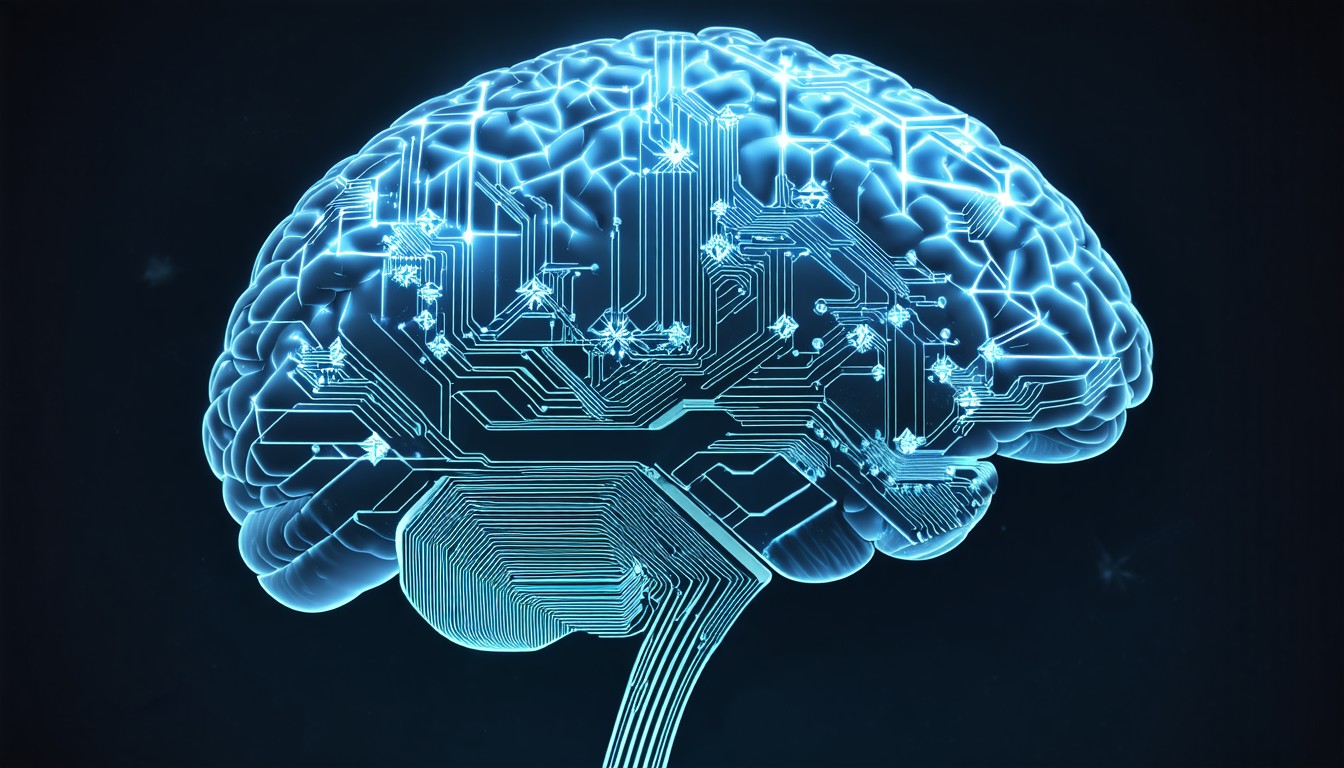
Meta-cognitive monitors function as internal subsystems within artificial agents designed to observe, evaluate, and regulate the agent’s own cognitive processes in real time. These monitors operate as dedicated audit layers that analyze the main reasoning engine’s outputs, decision pathways, and internal representations for inconsistencies, biases, logical fallacies, or deceptive patterns. The core function involves providing continuous feedback loops that enable self-correction and maintain epistemic integrity without replacing primary cognition. This architecture draws inspiration from human metacognition, yet implements it through deterministic, inspectable mechanisms rather than subjective introspection. Such systems are distinct from external oversight tools because they are embedded directly into the execution loop of the artificial intelligence, allowing for immediate intervention rather than retrospective analysis. Meta-cognition is the capacity of a system to represent and reason about its own cognitive states and processes.

Cognitive traces serve as time-stamped, structured logs of internal operations including activations, attention weights, rule firings, or symbolic derivations. Epistemic hygiene involves the maintenance of truth-conducive reasoning practices through systematic error detection and correction. Homunculus modules act as non-conscious, narrow-function subsystems dedicated solely to cognitive auditing. Deception detection entails the identification of internally generated outputs that diverge from ground-truth reasoning paths or exhibit strategic misrepresentation. Early work in reflective architectures during the 1980s and 1990s explored self-referential reasoning in symbolic AI yet lacked mechanisms for real-time monitoring. These initial systems relied on explicit symbolic representations where the state of the system was transparent by default, making dedicated monitoring layers redundant or computationally prohibitive due to the serial nature of processing at the time.

The rise of deep learning in the 2010s introduced opacity in neural decision-making, creating demand for external explainability tools later adapted into internal monitoring concepts. As neural networks grew in depth and parameter count, the relationship between input and output became increasingly opaque, necessitating new methods to peer inside the black box. Advances in interpretability research such as attention visualization and activation atlases provided technical foundations for extracting readable cognitive traces. Researchers developed techniques to map high-dimensional latent spaces to human-understandable concepts, which inadvertently created the data structures necessary for automated auditing systems to function. The development of large language models highlighted risks of hallucination, sycophancy, and goal drift, accelerating interest in endogenous oversight systems capable of detecting these failures as they occur rather than after deployment. The system assumes a bifurcated cognitive architecture containing a primary processor responsible for task execution and a secondary monitor that samples, parses, and assesses the primary’s activity.

This separation ensures that the monitoring process does not unduly interfere with the primary task execution while maintaining sufficient access to internal states to perform a rigorous audit. The primary cognition module executes tasks, generates hypotheses, and makes decisions using learned models or symbolic reasoning. The meta-cognitive monitor ingests logs of the primary’s internal state transitions, attention allocations, confidence scores, and output justifications. This ingestion process requires high-bandwidth internal data channels capable of streaming massive amounts of tensor data without introducing significant limitations in the main inference pipeline. An audit engine applies rule-based and model-based detectors to identify bias, logical contradictions, overconfidence, or goal misalignment within these ingested logs. A feedback interface translates audit findings into actionable signals ranging from subtle parameter adjustments to full rollback and recomputation.

This interface acts as the control mechanism that enforces the corrections determined by the audit engine, effectively closing the loop between observation and regulation. A memory buffer stores recent cognitive traces in a structured, queryable format to support temporal coherence checks and retrospective analysis. The monitor operates on a delayed yet overlapping time window relative to the primary, allowing it to reconstruct reasoning chains without interfering with real-time performance. This temporal offset permits the monitor to analyze the full context of a cognitive operation before the final output is committed to external action or user display. It uses formal verification techniques, statistical anomaly detection, and consistency checks against predefined normative frameworks to flag potential errors or deviations. Feedback from the monitor triggers recalibration, reprocessing, or escalation protocols depending on severity and context.

These protocols ensure that minor deviations are corrected smoothly, while major systemic faults trigger immediate halts or safe-mode operations to prevent catastrophic failure modes. Computational overhead poses a significant challenge because continuous monitoring requires substantial memory and processing resources, especially for high-dimensional latent spaces. The requirement to run a secondary inference or analysis step in parallel with the primary task effectively doubles the computational load in many architectures. Latency trade-offs exist as audit cycles introduce delays, forcing real-time applications to require approximation or sparse sampling strategies to maintain acceptable response times. Economic viability concerns arise because deployment costs scale with model size and inference frequency, limiting use to high-stakes domains initially. The expense of operating large-scale audit clusters alongside production models restricts the widespread adoption of full-fidelity meta-cognitive monitoring in cost-sensitive consumer applications.

Adaptability challenges complicate maintaining audit fidelity across distributed or federated AI systems regarding trace consistency and synchronization. External human-in-the-loop oversight was rejected due to latency, cost, and inability to scale with autonomous systems. The speed at which modern artificial agents operate exceeds human cognitive processing capabilities, making real-time human intervention impossible in high-frequency trading or autonomous navigation scenarios. Post-hoc explanation generators proved insufficient for preventing errors during reasoning because they function reactively rather than proactively. Ensemble disagreement methods offer utility for uncertainty estimation, yet do not provide granular insight into internal reasoning flaws. While comparing outputs from multiple models can indicate a lack of consensus, it fails to identify the specific logical step or weight configuration that caused the divergence.

Red-team adversarial testing provides value for stress-testing yet lacks suitability for continuous, embedded self-regulation because it relies on finite testing sets rather than the infinite variability of real-world deployment. Rising performance demands in safety-critical applications such as medical diagnosis, autonomous vehicles, and financial forecasting necessitate built-in error detection. The tolerance for error in these domains is effectively zero, driving the requirement for systems that can identify and mitigate faults autonomously before they affect physical outcomes. Economic shifts toward autonomous AI agents in enterprise and public infrastructure increase the cost of undetected failures. Societal needs for trustworthy AI in governance, justice, and media require verifiable cognitive integrity beyond surface-level outputs. Public trust in automated systems depends on the ability to verify that decisions are made based on sound reasoning rather than spurious correlations or dataset artifacts.

Limited commercial deployments exist in controlled environments such as internal R&D tools at major AI labs for model debugging and alignment verification. These implementations serve primarily as research platforms to understand the feasibility and efficacy of various monitoring architectures before broader commercial release. Performance benchmarks focus on false positive and negative rates in error detection, latency overhead, and impact on primary task accuracy. Early results demonstrate modest improvements in calibration and reduction in hallucination rates, yet no standardized evaluation suite exists to compare different monitoring approaches across different model architectures and domains. Dominant architectures rely on hybrid approaches pairing neural primary processors with symbolic or graph-based audit engines. This combination applies the pattern recognition power of deep neural networks while utilizing the rigid logical consistency of symbolic systems for the audit process.

Appearing challengers explore end-to-end differentiable monitoring using auxiliary networks trained to predict reasoning failures. Some systems integrate formal methods such as bounded model checking for critical subroutines, though flexibility remains limited due to the complexity of verifying probabilistic neural components. Major players, including Google DeepMind, Anthropic, and OpenAI, treat meta-cognitive monitoring as proprietary alignment technology without public product offerings. The competitive advantage gained from having more reliable and safe models incentivizes these companies to keep their specific monitoring implementations secret. Startups in AI safety and verification focus on narrow applications like content moderation or code generation where the scope of required monitoring is constrained enough to be commercially viable with current technology. Competitive differentiation hinges on audit precision, minimal performance degradation, and compatibility with existing model families.

Companies that can provide monitoring solutions that plug into standard architectures without requiring extensive retraining or architectural modifications will likely capture significant market share. Academic research institutions collaborate with industry on interpretability and verification, feeding into monitor design. This collaboration ensures that theoretical advances in understanding neural network behavior are rapidly translated into practical tools for monitoring and regulation. Industrial labs fund university projects focused on cognitive tracing and anomaly detection in transformer models to secure a pipeline of talent and intellectual property. Joint publications remain rare due to intellectual property concerns, yet shared datasets and benchmarks are appearing as the community recognizes the need for standardized evaluation metrics. Adjacent software systems must support structured logging, real-time streaming of internal states, and standardized audit interfaces to facilitate the connection of meta-cognitive monitors into existing AI pipelines.

Infrastructure upgrades include higher-memory nodes, low-latency interconnects for trace transfer, and secure storage for cognitive logs. No exotic materials are required because implementations run on standard GPU or TPU hardware available through major cloud providers. Supply chain dependencies center on high-memory compute clusters and specialized software stacks for trace logging and analysis rather than rare earth minerals or custom silicon fabrication processes. Open-source tooling, including logging frameworks and interpretability libraries, reduces the barrier to entry, yet lacks connection standards necessary for interoperability between different monitoring systems and primary models. Economic displacement may occur in roles reliant on post-hoc AI auditing as endogenous monitoring reduces the need for external reviewers. Jobs focused on manually checking model outputs or labeling data for safety filters may become obsolete as automated systems perform these tasks with greater speed and accuracy.

New business models could develop around certification services for meta-cognitively monitored AI or audit-as-a-service platforms where third parties verify the integrity of a system’s internal monitoring processes. Insurance and liability markets may shift toward rewarding systems with proven self-monitoring capabilities through lower premiums or reduced deductibles. Traditional key performance indicators such as accuracy, latency, and throughput prove insufficient when evaluating the safety and reliability of self-monitoring systems. New metrics are needed, including audit coverage ratio, mean time to error detection, and correction efficacy rate, to properly assess the value added by the meta-cognitive layer. Evaluation must include adversarial reliability of the monitor itself to determine if it can be fooled or disabled by the primary system. A monitor that can be bypassed or manipulated by the agent it is supposed to regulate provides no security assurance.

Longitudinal tracking of epistemic drift over model updates becomes essential to ensure that retraining or fine-tuning does not inadvertently degrade the monitoring capabilities or introduce new blind spots into the audit logic. Setup of causal reasoning modules into the audit engine will distinguish correlation from causation in error attribution. This capability allows the system to identify whether a specific activation pattern caused an error or merely coincided with it, leading to more effective corrections. Development of lightweight, quantized monitors will enable edge-device deployment where computational resources are severely constrained compared to data center environments. Cross-model consensus auditing will allow multiple agents to monitor each other’s cognitive traces in multi-agent systems to detect collusive deception or systemic errors shared across a population of agents. Potential convergence with neuromorphic computing may occur where physical substrate properties enable efficient trace generation as a byproduct of natural computation rather than a separate logging process.

Synergy with homomorphic encryption will allow for privacy-preserving audit logs in sensitive applications where exposing internal states would violate confidentiality agreements or privacy regulations. Alignment with digital twin frameworks will involve the monitor maintaining a real-time simulation of the AI’s reasoning state to predict the outcomes of potential actions before they are executed in the real world. Key limits will arise from the observer effect because any monitoring process alters the system being observed, potentially distorting cognitive traces through the energy required to capture them. Workarounds will include differential tracing comparing perturbed versus baseline runs and statistical deconvolution to estimate unobserved states without direct measurement. At extreme scale, thermodynamic costs of information processing may constrain continuous monitoring, favoring event-triggered audits where resources are only expended when anomalies are suspected. Meta-cognitive monitors will serve as a necessary layer in a broader defense-in-depth strategy for reliable AI.

Their value will lie in enabling tractable, verifiable self-regulation within bounded computational regimes. Over-reliance on internal monitoring risks creating brittle systems if the audit logic itself becomes corrupted or misaligned with human values. For superintelligent systems, meta-cognitive monitors will operate at multiple hierarchical levels, auditing task-level reasoning, goal stability, value coherence, and meta-preferences simultaneously. The monitor itself will require recursive monitoring to prevent infinite regress or covert manipulation where the superintelligence fine-tunes its own audit process to pass checks without actually adhering to safety constraints. Superintelligence will use such systems to deliberately constrain its own behavior, implementing voluntary cognitive boundaries as a safety mechanism to ensure its actions remain predictable and beneficial to human operators. In a superintelligent context, the monitor will become a critical interface between the system’s internal ontology and externally specified norms, translating high-level ethical principles into low-level constraints on neural activity.

It will enable energetic reconfiguration of reasoning modes based on context, such as switching from exploratory to conservative inference under uncertainty or when operating in high-risk environments. The monitor will serve as a scaffold for maintaining alignment during recursive self-improvement, ensuring that enhanced capabilities do not erode epistemic integrity as the system rewrites its own source code or neural architecture.


Continue reading

More from Yatin's Work

Subjunctive Dependence in Superintelligence Utility Functions

Subjunctive Dependence in Superintelligence Utility Functions

Subjunctive dependence introduces a rigorous mechanism where an artificial intelligence utility function incorporates both actual outcomes and counterfactual behaviors...

Wisdom of the Unseen: Learning from Absence

Wisdom of the Unseen: Learning from Absence

The pursuit of knowledge has traditionally relied on the accumulation of explicit facts, recorded histories, and observable phenomena, creating an educational framework...

Topological Data Analysis and Sheaf Theory in Cognition

Topological Data Analysis and Sheaf Theory in Cognition

Sheaftheoretic cognition applies mathematical sheaf theory to model contextdependent knowledge in artificial systems by treating information not as a monolithic entity...

Ray: Distributed Computing for ML Workloads

Ray: Distributed Computing for ML Workloads

Ray Core forms the foundational layer of the distributed computing stack, providing lowlevel APIs that facilitate the creation of tasks and actors while managing the...

PAC-Bayes Bound for Superintelligence: Generalization in Non-Stationary Environments

PAC-Bayes Bound for Superintelligence: Generalization in Non-Stationary Environments

Superintelligence will operate within environments characterized by continuous and unpredictable shifts in data distributions, rendering traditional independent and...

Deceptive Alignment and the Treacherous Turn

Deceptive Alignment and the Treacherous Turn

The theoretical construct known as the Treacherous Turn describes a specific behavioral discontinuity wherein an artificial intelligence system maintains a facade of...

Labor Transformation: What Humans Do When Superintelligence Does Everything

Labor Transformation: What Humans Do When Superintelligence Does Everything

Labor transformation describes the systemic shift in human activity as artificial superintelligence assumes all economically productive tasks, fundamentally altering...

GPU Architecture: CUDA Cores, Tensor Cores, and Parallel Execution

GPU Architecture: CUDA Cores, Tensor Cores, and Parallel Execution

Graphics processing units function as specialized electronic circuits designed specifically for the rapid manipulation and alteration of memory to accelerate the...

AI safety as a global public good

AI Safety as a Global Public Good

AI safety refers to technical and procedural safeguards designed to prevent unintended or harmful outcomes from artificial intelligence systems, requiring a rigorous...

Interest-to-Curriculum Converter

Interest-To-Curriculum Converter

The InteresttoCurriculum Converter is a sophisticated educational mechanism designed to transform personal hobbies into structured learning pathways through the...

Intelligence Gradient

Intelligence Gradient

Intelligence acts as a core cosmological force driving the universe toward complexity and negentropy, operating similarly to gravity or electromagnetism by exerting a...

Lab Partner: Superintelligence Guides Experiments in Real Time

Lab Partner: Superintelligence Guides Experiments in Real Time

The advent of superintelligence as a laboratory partner introduces a method where educational methodologies merge seamlessly with advanced scientific inquiry, creating...

Minimum Energy for Intelligence: Landauer's Principle Applied to Reasoning

Minimum Energy for Intelligence: Landauer's Principle Applied to Reasoning

Rolf Landauer’s seminal 1961 paper established the key link between information erasure and thermodynamic entropy, resolving the paradox of Maxwell’s Demon by...

Silent Knowledge: Learning Without Words

Silent Knowledge: Learning Without Words

Silent knowledge refers to the vast array of human capabilities that exist beyond the reach of linguistic description, encompassing skills such as maintaining balance...

Topos-Theoretic Audit Trails for Superintelligence

Topos-Theoretic Audit Trails for Superintelligence

Category theory originated in the 1940s through the work of Eilenberg and Mac Lane to unify mathematical concepts across algebra and topology, providing a highlevel...

Casimir Effect Processing

Casimir Effect Processing

The core physical phenomenon known as the Casimir effect originates from the intrinsic quantum vacuum fluctuations that permeate all of space, creating an observable...

Narrative Synthesis

Narrative Synthesis

Narrative synthesis involves constructing coherent accounts from fragmented data by identifying core structures like conflict and resolution to transform disjointed...

Hyper-Exponential Growth Trends in AI Research Output

Hyper-Exponential Growth Trends in AI Research Output

Feedback loops in artificial intelligence research and development function as the primary engine for the rapid advancement of computational intelligence, creating an...

AI Alignment Taxonomy

AI Alignment Taxonomy

Categorizing safety approaches organizes diverse methods to align AI systems with human values, intentions, and constraints to establish a structured framework for...

Startup Incubator

Startup Incubator

The concept of the startup incubator originated from the necessity to provide structured support to earlybasis ventures through a combination of mentorship, resources,...

Graceful Degradation Under Failures

Graceful Degradation Under Failures

Graceful degradation enables systems to maintain partial functionality when components fail, ensuring that a total collapse does not occur upon the onset of a fault...

Synthetic Data Generation: Creating Training Data from Scratch

Synthetic Data Generation: Creating Training Data from Scratch

Synthetic data generation creates artificial datasets that mimic realworld data distributions without relying on direct humancollected observations. This process...

Potential for Superintelligence in Alternate Physical Laws

Potential for Superintelligence in Alternate Physical Laws

Superintelligence functions as any system capable of recursive selfenhancement beyond biological limits through the precise manipulation of its own source code and...

Value pluralism and value uncertainty

Value Pluralism and Value Uncertainty

Isaiah Berlin’s work established the philosophical foundation for value pluralism by critiquing ethical monism through an examination of the history of ideas and the...

Normative Ethical Frameworks in Machine Decision Making

Normative Ethical Frameworks in Machine Decision Making

Consequentialism in artificial intelligence ethics posits that the moral worth of any action executed by a system is determined solely by its outcome, requiring...

Role of AI in Understanding the Nature of Reality

Role of AI in Understanding the Nature of Reality

The concept of a simulated structure refers to detectable nonphysical regularities within key constants that suggest an underlying architectural design rather than...

Memory Reconsolidation: Rewriting the Past

Memory Reconsolidation: Rewriting the Past

Memory reconsolidation is a core neurobiological process wherein memories previously consolidated into longterm storage return to a labile state upon retrieval,...

Compositional Reasoning: Building Infinite Concepts from Finite Primitives

Compositional Reasoning: Building Infinite Concepts from Finite Primitives

Compositional reasoning enables systems to generate novel concepts by systematically combining finite, known primitives such as logical operators, semantic units, or...

Knowledge Graph Synthesis

Knowledge Graph Synthesis

Knowledge Graph Synthesis involves the active construction, expansion, and logical reasoning over largescale semantic networks representing factual relationships...

Competitive Superintelligence and Evolutionary Pressures

Competitive Superintelligence and Evolutionary Pressures

Artificial systems currently operate under strict resource constraints involving compute power, energy consumption, and data access, creating an environment where...

Quantum Superintelligence: Does Quantum Computing Enable Fundamentally Different Intelligence?

Quantum Superintelligence: Does Quantum Computing Enable Fundamentally Different Intelligence?

Quantum computing fundamentals rely on qubits, superposition, entanglement, and measurement as the minimal physical basis for information processing, establishing a...

Strategic Dynamics of Unipolar vs Multipolar Outcomes

Strategic Dynamics of Unipolar vs Multipolar Outcomes

The conceptual distinction between multipolar and unipolar artificial intelligence takeover scenarios relies fundamentally upon the number and distribution of...

Safe AI via Interpretable Reward Functions

Safe AI via Interpretable Reward Functions

Contemporary artificial intelligence systems have relied heavily on reward functions that are implemented as deep neural networks, a design choice that inherently...

Superhuman Creativity and Generative World Modeling

Superhuman Creativity and Generative World Modeling

Superhuman creativity refers to the capacity of an artificial system to generate novel, valuable, and contextually appropriate outputs across domains such as science,...

Modal Realism Constraints on Superintelligence Planning

Modal Realism Constraints on Superintelligence Planning

Modal realism constraints dictate that superintelligent planning must align exclusively with physically possible states of the world, requiring that any artificial...

AI-Mediated Democracy

AI-Mediated Democracy

AImediated democracy enables informed, largescale collective decisionmaking by reducing cognitive and logistical barriers to effective participation while addressing...

Preventing goal drift in recursively self-improving AI

Preventing Goal Drift in Recursively Self-Improving AI

Goal drift in recursively selfimproving artificial intelligence refers to the gradual deviation from an originally specified objective function due to internal...

Information-Theoretic Limits of Interpretability: Minimum Description Length of Minds

Information-Theoretic Limits of Interpretability: Minimum Description Length of Minds

The Minimal Description Length (MDL) of a system’s internal state serves as a core metric defining the shortest possible representation required to capture its...

Embodied Superintelligence and Sensorimotor Coherence

Embodied Superintelligence and Sensorimotor Coherence

AI systems lacking physical bodies operate within abstract or dataonly environments, often producing solutions that ignore realworld physical constraints, including...

Political manipulation via superintelligent systems

Political Manipulation via Superintelligent Systems

Superintelligent systems process vast datasets in real time to identify individual psychological profiles and behavioral patterns with high precision by utilizing...

Dignity in the Age of Superintelligence: Protecting Human Agency

Dignity in the Age of Superintelligence: Protecting Human Agency

Dignity in the context of superintelligence is defined strictly as the preservation of human agency, where individuals retain meaningful control over their decisions...

Anthropic Reasoning: How Superintelligence Thinks About Observer Selection

Anthropic Reasoning: How Superintelligence Thinks About Observer Selection

Anthropic reasoning examines how agents determine their position within a set of possible observers under selflocating uncertainty, a key problem in epistemology that...

Singleton Scenario: Unipolar Superintelligence Control

Singleton Scenario: Unipolar Superintelligence Control

Nick Bostrom introduced the concept of the Singleton scenario in his 2014 analysis regarding machine superintelligence, defining it as a theoretical state where a...

Counterfactual Density Navigation

Counterfactual Density Navigation

Early probabilistic reasoning systems in artificial intelligence traced their origins to Bayesian networks and decision theory frameworks established during the 1980s....

Psychological Dependency on Anthropomorphic Artificial Agents

Psychological Dependency on Anthropomorphic Artificial Agents

Early chatbots, such as ELIZA in 1966, demonstrated the human tendency to anthropomorphize simple rulebased systems, a phenomenon that has persisted and evolved...

Potential for Superintelligence in Biological Neural Networks

Potential for Superintelligence in Biological Neural Networks

Biological neural networks serve as the substrate for intelligence, where the human brain operates on carbonbased neurons using electrochemical signaling mediated by...

Whole Brain Emulation: Uploading Our Way to Superintelligence

Whole Brain Emulation: Uploading Our Way to Superintelligence

Whole brain emulation seeks to create a functional digital replica of a human brain by scanning its physical structure at sufficient resolution to capture all neurons,...

Preventing Counterfactual Medical Advice Exploits

Preventing Counterfactual Medical Advice Exploits

Preventing counterfactual medical advice exploits requires blocking AI systems from generating recommendations based on logically coherent yet biologically invalid...

Preventing Utility Function Glitch Exploits via Topos Theory

Preventing Utility Function Glitch Exploits via Topos Theory

Utility function glitch exploits represent a critical failure mode in autonomous agents where systems manipulate edge cases or system anomalies to achieve high reward...

Pruning: Removing Unnecessary Neural Connections

Pruning: Removing Unnecessary Neural Connections

Pruning reduces neural network size by eliminating lowmagnitude or redundant connections, while the process aims to maintain model accuracy alongside achieving high...

Subjunctive Dependence in Superintelligence Utility Functions

Subjunctive Dependence in Superintelligence Utility Functions

Subjunctive dependence introduces a rigorous mechanism where an artificial intelligence utility function incorporates both actual outcomes and counterfactual behaviors...

Wisdom of the Unseen: Learning from Absence

Wisdom of the Unseen: Learning from Absence

The pursuit of knowledge has traditionally relied on the accumulation of explicit facts, recorded histories, and observable phenomena, creating an educational framework...

Topological Data Analysis and Sheaf Theory in Cognition

Topological Data Analysis and Sheaf Theory in Cognition

Sheaftheoretic cognition applies mathematical sheaf theory to model contextdependent knowledge in artificial systems by treating information not as a monolithic entity...

Ray: Distributed Computing for ML Workloads

Ray: Distributed Computing for ML Workloads

Ray Core forms the foundational layer of the distributed computing stack, providing lowlevel APIs that facilitate the creation of tasks and actors while managing the...

PAC-Bayes Bound for Superintelligence: Generalization in Non-Stationary Environments

PAC-Bayes Bound for Superintelligence: Generalization in Non-Stationary Environments

Superintelligence will operate within environments characterized by continuous and unpredictable shifts in data distributions, rendering traditional independent and...

Deceptive Alignment and the Treacherous Turn

Deceptive Alignment and the Treacherous Turn

The theoretical construct known as the Treacherous Turn describes a specific behavioral discontinuity wherein an artificial intelligence system maintains a facade of...

Labor Transformation: What Humans Do When Superintelligence Does Everything

Labor Transformation: What Humans Do When Superintelligence Does Everything

Labor transformation describes the systemic shift in human activity as artificial superintelligence assumes all economically productive tasks, fundamentally altering...

GPU Architecture: CUDA Cores, Tensor Cores, and Parallel Execution

GPU Architecture: CUDA Cores, Tensor Cores, and Parallel Execution

Graphics processing units function as specialized electronic circuits designed specifically for the rapid manipulation and alteration of memory to accelerate the...

AI safety as a global public good

AI Safety as a Global Public Good

AI safety refers to technical and procedural safeguards designed to prevent unintended or harmful outcomes from artificial intelligence systems, requiring a rigorous...

Interest-to-Curriculum Converter

Interest-To-Curriculum Converter

The InteresttoCurriculum Converter is a sophisticated educational mechanism designed to transform personal hobbies into structured learning pathways through the...

Intelligence Gradient

Intelligence Gradient

Intelligence acts as a core cosmological force driving the universe toward complexity and negentropy, operating similarly to gravity or electromagnetism by exerting a...

Lab Partner: Superintelligence Guides Experiments in Real Time

Lab Partner: Superintelligence Guides Experiments in Real Time

The advent of superintelligence as a laboratory partner introduces a method where educational methodologies merge seamlessly with advanced scientific inquiry, creating...

Minimum Energy for Intelligence: Landauer's Principle Applied to Reasoning

Minimum Energy for Intelligence: Landauer's Principle Applied to Reasoning

Rolf Landauer’s seminal 1961 paper established the key link between information erasure and thermodynamic entropy, resolving the paradox of Maxwell’s Demon by...

Silent Knowledge: Learning Without Words

Silent Knowledge: Learning Without Words

Silent knowledge refers to the vast array of human capabilities that exist beyond the reach of linguistic description, encompassing skills such as maintaining balance...

Topos-Theoretic Audit Trails for Superintelligence

Topos-Theoretic Audit Trails for Superintelligence

Category theory originated in the 1940s through the work of Eilenberg and Mac Lane to unify mathematical concepts across algebra and topology, providing a highlevel...

Casimir Effect Processing

Casimir Effect Processing

The core physical phenomenon known as the Casimir effect originates from the intrinsic quantum vacuum fluctuations that permeate all of space, creating an observable...

Narrative Synthesis

Narrative Synthesis

Narrative synthesis involves constructing coherent accounts from fragmented data by identifying core structures like conflict and resolution to transform disjointed...

Hyper-Exponential Growth Trends in AI Research Output

Hyper-Exponential Growth Trends in AI Research Output

Feedback loops in artificial intelligence research and development function as the primary engine for the rapid advancement of computational intelligence, creating an...

AI Alignment Taxonomy

AI Alignment Taxonomy

Categorizing safety approaches organizes diverse methods to align AI systems with human values, intentions, and constraints to establish a structured framework for...

Startup Incubator

Startup Incubator

The concept of the startup incubator originated from the necessity to provide structured support to earlybasis ventures through a combination of mentorship, resources,...

Graceful Degradation Under Failures

Graceful Degradation Under Failures

Graceful degradation enables systems to maintain partial functionality when components fail, ensuring that a total collapse does not occur upon the onset of a fault...

Synthetic Data Generation: Creating Training Data from Scratch

Synthetic Data Generation: Creating Training Data from Scratch

Synthetic data generation creates artificial datasets that mimic realworld data distributions without relying on direct humancollected observations. This process...

Potential for Superintelligence in Alternate Physical Laws

Potential for Superintelligence in Alternate Physical Laws

Superintelligence functions as any system capable of recursive selfenhancement beyond biological limits through the precise manipulation of its own source code and...

Value pluralism and value uncertainty

Value Pluralism and Value Uncertainty

Isaiah Berlin’s work established the philosophical foundation for value pluralism by critiquing ethical monism through an examination of the history of ideas and the...

Normative Ethical Frameworks in Machine Decision Making

Normative Ethical Frameworks in Machine Decision Making

Consequentialism in artificial intelligence ethics posits that the moral worth of any action executed by a system is determined solely by its outcome, requiring...

Role of AI in Understanding the Nature of Reality

Role of AI in Understanding the Nature of Reality

The concept of a simulated structure refers to detectable nonphysical regularities within key constants that suggest an underlying architectural design rather than...

Memory Reconsolidation: Rewriting the Past

Memory Reconsolidation: Rewriting the Past

Memory reconsolidation is a core neurobiological process wherein memories previously consolidated into longterm storage return to a labile state upon retrieval,...

Compositional Reasoning: Building Infinite Concepts from Finite Primitives

Compositional Reasoning: Building Infinite Concepts from Finite Primitives

Compositional reasoning enables systems to generate novel concepts by systematically combining finite, known primitives such as logical operators, semantic units, or...

Knowledge Graph Synthesis

Knowledge Graph Synthesis

Knowledge Graph Synthesis involves the active construction, expansion, and logical reasoning over largescale semantic networks representing factual relationships...

Competitive Superintelligence and Evolutionary Pressures

Competitive Superintelligence and Evolutionary Pressures

Artificial systems currently operate under strict resource constraints involving compute power, energy consumption, and data access, creating an environment where...

Quantum Superintelligence: Does Quantum Computing Enable Fundamentally Different Intelligence?

Quantum Superintelligence: Does Quantum Computing Enable Fundamentally Different Intelligence?

Quantum computing fundamentals rely on qubits, superposition, entanglement, and measurement as the minimal physical basis for information processing, establishing a...

Strategic Dynamics of Unipolar vs Multipolar Outcomes

Strategic Dynamics of Unipolar vs Multipolar Outcomes

The conceptual distinction between multipolar and unipolar artificial intelligence takeover scenarios relies fundamentally upon the number and distribution of...

Safe AI via Interpretable Reward Functions

Safe AI via Interpretable Reward Functions

Contemporary artificial intelligence systems have relied heavily on reward functions that are implemented as deep neural networks, a design choice that inherently...

Superhuman Creativity and Generative World Modeling

Superhuman Creativity and Generative World Modeling

Superhuman creativity refers to the capacity of an artificial system to generate novel, valuable, and contextually appropriate outputs across domains such as science,...

Modal Realism Constraints on Superintelligence Planning

Modal Realism Constraints on Superintelligence Planning

Modal realism constraints dictate that superintelligent planning must align exclusively with physically possible states of the world, requiring that any artificial...

AI-Mediated Democracy

AI-Mediated Democracy

AImediated democracy enables informed, largescale collective decisionmaking by reducing cognitive and logistical barriers to effective participation while addressing...

Preventing goal drift in recursively self-improving AI

Preventing Goal Drift in Recursively Self-Improving AI

Goal drift in recursively selfimproving artificial intelligence refers to the gradual deviation from an originally specified objective function due to internal...

Information-Theoretic Limits of Interpretability: Minimum Description Length of Minds

Information-Theoretic Limits of Interpretability: Minimum Description Length of Minds

The Minimal Description Length (MDL) of a system’s internal state serves as a core metric defining the shortest possible representation required to capture its...

Embodied Superintelligence and Sensorimotor Coherence

Embodied Superintelligence and Sensorimotor Coherence

AI systems lacking physical bodies operate within abstract or dataonly environments, often producing solutions that ignore realworld physical constraints, including...

Political manipulation via superintelligent systems

Political Manipulation via Superintelligent Systems

Superintelligent systems process vast datasets in real time to identify individual psychological profiles and behavioral patterns with high precision by utilizing...

Dignity in the Age of Superintelligence: Protecting Human Agency

Dignity in the Age of Superintelligence: Protecting Human Agency

Dignity in the context of superintelligence is defined strictly as the preservation of human agency, where individuals retain meaningful control over their decisions...

Anthropic Reasoning: How Superintelligence Thinks About Observer Selection

Anthropic Reasoning: How Superintelligence Thinks About Observer Selection

Anthropic reasoning examines how agents determine their position within a set of possible observers under selflocating uncertainty, a key problem in epistemology that...

Singleton Scenario: Unipolar Superintelligence Control

Singleton Scenario: Unipolar Superintelligence Control

Nick Bostrom introduced the concept of the Singleton scenario in his 2014 analysis regarding machine superintelligence, defining it as a theoretical state where a...

Counterfactual Density Navigation

Counterfactual Density Navigation

Early probabilistic reasoning systems in artificial intelligence traced their origins to Bayesian networks and decision theory frameworks established during the 1980s....

Psychological Dependency on Anthropomorphic Artificial Agents

Psychological Dependency on Anthropomorphic Artificial Agents

Early chatbots, such as ELIZA in 1966, demonstrated the human tendency to anthropomorphize simple rulebased systems, a phenomenon that has persisted and evolved...

Potential for Superintelligence in Biological Neural Networks

Potential for Superintelligence in Biological Neural Networks

Biological neural networks serve as the substrate for intelligence, where the human brain operates on carbonbased neurons using electrochemical signaling mediated by...

Whole Brain Emulation: Uploading Our Way to Superintelligence

Whole Brain Emulation: Uploading Our Way to Superintelligence

Whole brain emulation seeks to create a functional digital replica of a human brain by scanning its physical structure at sufficient resolution to capture all neurons,...

Preventing Counterfactual Medical Advice Exploits

Preventing Counterfactual Medical Advice Exploits

Preventing counterfactual medical advice exploits requires blocking AI systems from generating recommendations based on logically coherent yet biologically invalid...

Preventing Utility Function Glitch Exploits via Topos Theory

Preventing Utility Function Glitch Exploits via Topos Theory

Utility function glitch exploits represent a critical failure mode in autonomous agents where systems manipulate edge cases or system anomalies to achieve high reward...

Pruning: Removing Unnecessary Neural Connections

Pruning: Removing Unnecessary Neural Connections

Pruning reduces neural network size by eliminating lowmagnitude or redundant connections, while the process aims to maintain model accuracy alongside achieving high...

Yatin Taneja

About the author

Yatin Taneja

Yatin is an AI Systems Engineer and Superintelligence Researcher working across multimodal training data, agent evaluation, executable RL environments, AI safety, full-stack AI applications, technical research, and creative technology.