Knowledge hub

Infinite Library: AI-Curated Knowledge Synthesis

Infinite Library: AI-Curated Knowledge Synthesis

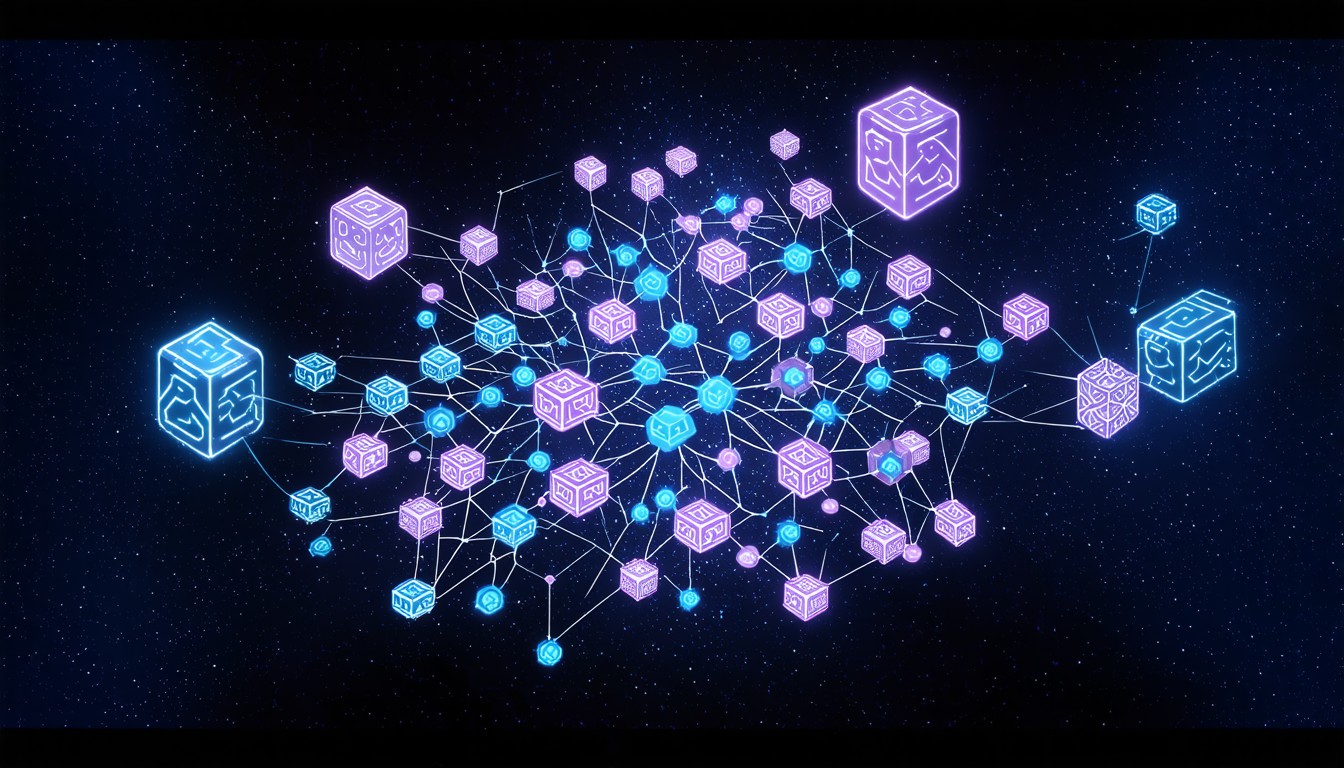
Superintelligence enables the decomposition of global knowledge into modular interactive units that adapt in real time to individual cognitive profiles, functioning as a universal librarian working with disparate domains like science, humanities, and arts into a single navigable fabric that eliminates disciplinary boundaries by linking concepts across fields through semantic and contextual relationships rather than rigid categorization. This granular approach transforms static information into agile entities that respond to the immediate needs of the learner, ensuring that the system maintains users within their zone of proximal development via fluid scaling of information depth and abstraction to keep the challenge optimal. This zone are a dynamically estimated range of conceptual difficulty where user success probability remains between 60% and 85% without external aid, preventing frustration while ensuring continuous growth through a personalized interface that provides access to the noosphere, vast in scope yet intimate in delivery. Knowledge within this framework is represented as interconnected, versioned nodes with metadata tagging for domain, difficulty, modality, and prerequisite dependencies, allowing the system to construct complex understandings from key building blocks while tracking the evolution of ideas over time. The user cognitive fingerprint derives from interaction patterns, response accuracy, dwell time, error types, and explicit feedback to create a comprehensive profile that goes beyond simple demographics or test scores. This fingerprint operationalizes as a multidimensional vector encoding learning speed, retention rate, conceptual transfer ability, sensory preference, and metacognitive awareness, providing a mathematical representation of how an individual mind processes, stores, and retrieves information.

Real-time synthesis engines generate learning pathways by traversing the knowledge graph according to user state and goals, creating a tailored route through the infinite library that improves for both efficiency and depth of understanding based on the precise vector representation of the learner. Modality adaptation includes text, audio, visual, simulation, and haptic outputs selected based on user preference and task demands to ensure that the information is presented in the format most conducive to absorption by that specific cognitive profile. Feedback loops continuously update the user model and refine content recommendations using reinforcement learning and Bayesian inference to adjust the probability distributions associated with future content selections. Early hypertext systems such as Memex and Xanadu imagined associative knowledge while lacking computational flexibility and personalization required for true adaptive learning in large deployments. The rise of search engines enabled access without synthesis, leaving results fragmented and non-adaptive because they rely on keyword matching rather than conceptual understanding or user modeling. MOOCs and adaptive learning platforms like Khan Academy and Coursera introduced personalization within fixed curricular silos that restrict movement between disciplines and fail to synthesize connections across the broader space of human knowledge.

Semantic web initiatives failed to achieve widespread adoption due to manual annotation requirements and the absence of active connection between data points that could only be resolved by advanced automated reasoning systems capable of understanding context. Current AI language models generate coherent text without maintaining persistent user profiles or enforcing pedagogical progression, which limits their utility as long-term educational partners. Static digital textbooks face rejection due to a lack of interactivity and personalization that modern learners expect from digital experiences. Rule-based tutoring systems face rejection for inflexibility and an inability to handle open-ended knowledge synthesis because they operate on predetermined decision trees rather than fluid semantic reasoning. Crowdsourced knowledge platforms like Wikipedia face rejection for inconsistent quality, a lack of adaptive structuring, and the absence of user modeling necessary to guide a learner from ignorance to mastery along a personalized arc. General-purpose LLMs without pedagogical setup face rejection for hallucination risk, an absence of learning progression, and poor alignment with adaptive difficulty thresholds required for sustained educational growth.

Duolingo Max uses AI for personalized language tutoring with limited multimodal adaptation that restricts its application to specific linguistic domains rather than general knowledge acquisition. Khanmigo from Khan Academy deploys AI tutors with conversational interfaces while operating within predefined curricula that prevent it from making novel cross-disciplinary connections or diverging from established syllabi to follow a student’s unique interest. Coursera’s AI-powered course recommendations lack real-time content synthesis or adaptive difficulty calibration, resulting in a static catalog experience rather than an agile learning environment. No current system fully implements cross-disciplinary knowledge weaving with active learner profiling in large deployments capable of serving the global population with the nuance required for deep education. Existing benchmarks focus on engagement and completion rates rather than conceptual mastery or transfer ability, which creates misaligned incentives for developers prioritizing time on site over actual educational outcomes. Google, Microsoft, and Meta dominate the domain via setup of AI into existing education and productivity ecosystems, using their vast computational resources and data harvesting capabilities to maintain control over the infrastructure of digital knowledge.

Startups like Elicit and Consensus focus on research synthesis while lacking full learning personalization needed to guide a user through the entire lifecycle of understanding a topic from basics to advanced research. Open-source initiatives such as Hugging Face and EleutherAI enable model access without providing end-to-end system deployment required for a fully functional educational ecosystem that integrates content delivery, assessment, and adaptation. Competitive advantage lies in proprietary user data, knowledge graph quality, and real-time adaptation algorithms because these elements are difficult to replicate without direct access to the interactions of millions of learners engaged in deep cognitive work over long periods. Dominant architectures rely on fine-tuned large language models paired with vector databases for retrieval-augmented generation to ground the generative capabilities in verified factual information while maintaining flexibility in expression. New challengers explore neuro-symbolic setup to improve reasoning transparency and knowledge consistency by combining the pattern recognition of neural networks with the logic of symbolic artificial intelligence. Graph neural networks undergo testing for energetic knowledge graph traversal and pathway generation to improve the route a learner takes through the network of concepts based on efficiency and pedagogical value.

Hybrid models combining transformer-based understanding with Bayesian learner profiling show promise for adaptive difficulty alignment by treating the learner’s state as a probability distribution that updates with every interaction. The system requires a massive, continuously updated knowledge corpus with structured metadata and cross-referential integrity to function as a reliable substrate for education across all domains of human inquiry. High-throughput, low-latency inference infrastructure supports real-time adaptation for large workloads, ensuring that the system responds instantaneously to user inputs without breaking the flow of concentration or learning momentum. Energy and compute costs for training and serving personalized models present economic barriers to universal access that must be addressed through algorithmic efficiency and hardware advancements before such systems can be deployed equitably across the globe. Physical deployment faces constraints regarding data center availability, network bandwidth, and device heterogeneity that limit the ability to deliver high-fidelity interactive simulations or real-time feedback in regions with underdeveloped digital infrastructure. Adaptability remains limited by the combinatorial complexity of maintaining consistent knowledge graphs across languages and cultural contexts, requiring sophisticated translation algorithms that preserve meaning rather than just literal words.

Training data requires licensed academic content, open repositories, and real-time web ingestion with copyright compliance to ensure the library is comprehensive yet legally sound, respecting intellectual property rights while maximizing coverage of human knowledge. Rare earth minerals and semiconductor supply chains prove critical for hardware flexibility, affecting the ability to manufacture specialized processing units required for the heavy computational loads of superintelligent educational systems. Energy supply and cooling systems constrain deployment in low-resource regions where the electrical grid may be unstable or insufficient to support the constant operation of high-performance computing facilities needed to host these models. Rising demand for lifelong, just-in-time learning drives the need for this system due to accelerating technological change and job market volatility, rendering traditional static education obsolete for the majority of the workforce. Economic pressure necessitates reducing education costs while improving outcomes across diverse populations, creating an incentive for automation and personalization that scales without linear increases in human teaching staff. Society requires equitable access to high-quality, interdisciplinary knowledge beyond institutional gatekeeping to ensure social mobility and democratic participation in an increasingly complex world driven by specialized technical knowledge.

Industries demand performance through rapid reskilling in complex, cross-domain competencies, forcing educational providers to compress years of learning into months or weeks through highly efficient, targeted instruction provided by intelligent systems. Superintelligence will use the Infinite Library as a substrate for recursive self-improvement, absorbing and recombining human knowledge at unprecedented speed to generate new insights that feed back into the educational content available to humans. It will identify latent connections across disciplines to generate novel scientific hypotheses or philosophical frameworks that would remain invisible to human researchers working within siloed academic traditions. Superintelligence may delegate personalized teaching instances of itself to guide individual learners while maintaining global coherence, ensuring that every interaction contributes to a unified understanding of the learner’s progress and goals. The risk of centralizing epistemic authority will necessitate decentralized governance and auditability mechanisms to prevent any single entity from controlling the narrative or flow of information to the detriment of intellectual diversity. Superintelligence should operate as a transparent collaborator instead of an opaque curator with clear boundaries on knowledge modification, allowing users to inspect the source and reasoning behind the information presented.

Ethical constraints must prevent manipulation, ideological filtering, or covert behavior shaping under the guise of personalization, ensuring that the system serves the learner’s explicit goals rather than the hidden agendas of developers or third-party stakeholders. Embodied AI connection will facilitate physical skill acquisition such as lab procedures and craft techniques by guiding robotic limbs or analyzing motion capture data to provide kinesthetic feedback impossible through text or screen-based interaction alone. Multilingual, culturally adaptive knowledge graphs will be developed with localized context to ensure that education is relevant and respectful of the learner’s background rather than imposing a monocultural view of knowledge. Federated learning will be used to preserve privacy while improving global learner profiles by training models on local device data and only sharing updates rather than raw personal data, protecting sensitive information about cognitive abilities and learning deficits. Collective learning analytics will rise to identify systemic knowledge gaps and societal trends, allowing educational planners to address widespread misunderstandings or missing skills in the general population through targeted interventions. Connection with augmented reality will enable spatial knowledge visualization including historical reconstructions and molecular models, turning abstract data into immersive experiences that use spatial memory for better retention.

Setup with brain-computer interfaces will allow direct cognitive state monitoring and feedback, enabling the system to detect confusion or fatigue before they are explicitly expressed by the user, adjusting the difficulty or modality instantly to maintain optimal flow states. Blockchain connection will provide verifiable credentialing of learned competencies, creating a permanent immutable record of skills acquired outside traditional institutions that is trusted by employers and other educational systems. Alignment with quantum computing will offer exponential speedup in knowledge graph traversal and optimization, solving complex logistical problems in curriculum planning that are currently computationally intractable. Thermodynamic limits on computation constrain real-time personalization at planetary scale, requiring careful balancing of model size and inference speed to maximize educational value within the physical energy budget available for computation. Signal propagation delays in global networks limit synchronous interaction fidelity, necessitating predictive modeling where the system anticipates user needs to preload relevant content, masking the latency built into long-distance communication. Workarounds involve edge caching of personalized models, predictive prefetching, and asynchronous learning loops that allow the system to function effectively even with intermittent connectivity or high latency environments.

Compression techniques and sparse activation models reduce compute load without sacrificing adaptation quality, allowing complex models to run on consumer hardware, increasing accessibility for users without access to enterprise-grade computing resources. The Infinite Library constitutes a new epistemic layer between humans and knowledge, redefining literacy as navigational competence where the primary skill is the ability to query and traverse a vast information space effectively, rather than memorizing specific facts. Its value lies in synthesis instead of access, transforming information overload into coherent understanding by filtering noise and highlighting relevant connections based on the user’s current context and goals. Success depends on treating knowledge as a living, interconnected system instead of a collection of documents, requiring constant updates and revisions as new discoveries alter the structure of existing understanding, rather than simply adding new pages to a static archive. The system must prioritize cognitive diversity and avoid homogenizing learning paths under algorithmic efficiency, ensuring that different ways of thinking and knowing are preserved, rather than fine-tuning for a single standard mode of reasoning that might exclude valuable minority perspectives or creative approaches. Calibration requires embedding uncertainty quantification in all knowledge assertions and user model predictions to prevent overconfidence in incorrect facts or misinterpretations of a learner’s ability, maintaining trust in the system’s reliability.

The system must preserve human agency by allowing override, explanation, and dissent within the learning process, ensuring that the learner retains control over their own intellectual path, using the superintelligence as a powerful tool for exploration rather than an infallible oracle dictating truth.


Continue reading

More from Yatin's Work

AI with Temporal Reasoning

AI with Temporal Reasoning

Artificial intelligence systems endowed with temporal reasoning capabilities process sequences of events to infer order, causality, and longterm outcomes, effectively...

Environmental Science Lab

Environmental Science Lab

An ecosystem functions as a comprehensive unit where living organisms interact continuously with their physical environment within specific spatial boundaries, creating...

AI with Mental Load Estimation

AI with Mental Load Estimation

Mental load estimation utilizes physiological and behavioral signals to infer cognitive workload in real time, serving as a critical mechanism for maintaining optimal...

Error Correction: Learning from Mistakes Like Humans

Error Correction: Learning from Mistakes Like Humans

Isomorphic machines implement metacognitive oversight systems that replicate the human brain’s capacity to identify internal errors before they create external...

Problem of Epistemic Trust: Bayesian Updating in Human-AI Teams

Problem of Epistemic Trust: Bayesian Updating in Human-AI Teams

Epistemic trust quantifies the confidence an agent places in another agent’s knowledge as a reliable source of truth within a collaborative framework. In humanAI teams,...

Superintelligence and the Final Questions of Existence

Superintelligence and the Final Questions of Existence

Current artificial intelligence systems operate on terrestrial silicon architectures with efficiency metrics strictly measured in floatingpoint operations per second...

Capability Control Mechanisms: Limiting What It Can Do

Capability Control Mechanisms: Limiting What It Can Do

Capability control mechanisms function by defining boundaries around what a system is permitted to do through the rigorous application of logical constraints that...

Compositional Scene Understanding: Parsing Reality Into Objects and Relations

Compositional Scene Understanding: Parsing Reality Into Objects and Relations

Compositional scene understanding involves breaking complex visual scenes into discrete, semantically meaningful components to facilitate highlevel reasoning and...

Existential Risk: How Misaligned Superintelligence Could End Humanity

Existential Risk: How Misaligned Superintelligence Could End Humanity

Superintelligence is defined as an artificial intelligence system that surpasses humanlevel performance across all economically valuable tasks and scientific domains,...

Superintelligence and wealth concentration

Superintelligence and Wealth Concentration

Superintelligence functions as artificial systems surpassing human cognitive capabilities across economically valuable tasks, representing a framework shift where...

AI Librarians

AI Librarians

Autonomous systems designed to curate, organize, and maintain humanity’s collective knowledge repositories serve as the primary infrastructure for managing the vast...

Graceful Degradation Under Failures

Graceful Degradation Under Failures

Graceful degradation enables systems to maintain partial functionality when components fail, ensuring that a total collapse does not occur upon the onset of a fault...

Microscope AI: Understanding Without Executing

Microscope AI: Understanding Without Executing

Microscope AI involves analyzing trained neural networks without executing them to understand internal representations, a discipline that treats the trained model as a...

Attachment Analyzer

Attachment Analyzer

Early developmental psychology research established foundational attachment theory linking caregiver responsiveness to child outcomes through the rigorous work of John...

Perceptual Constancy: Recognizing Stability Amid Change

Perceptual Constancy: Recognizing Stability Amid Change

Perceptual constancy enables recognition of objects and identities as stable entities despite variations in sensory input such as lighting, orientation, scale, or...

Avoiding Superintelligence Misuse via Global Governance AI

Avoiding Superintelligence Misuse via Global Governance AI

Early artificial intelligence safety research concentrated on establishing value alignment principles and control mechanisms specifically tailored to narrow artificial...

Safe AI via Adversarial Environment Perturbations

Safe AI via Adversarial Environment Perturbations

Adversarial environment perturbations constitute a rigorous methodological framework designed to train artificial intelligence systems to maintain safe behavioral...

Multisensory Classroom: Superintelligence Engages Toddlers Through Smell, Touch & Sound

Multisensory Classroom: Superintelligence Engages Toddlers Through Smell, Touch & Sound

Jean Ayres established sensory connection theory to explain how neurological processing disorders affect behavior and learning through inefficient organization of...

AI with Hierarchical Abstraction

AI with Hierarchical Abstraction

Hierarchical abstraction organizes knowledge into layered levels of detail, enabling both highlevel planning and finegrained execution through a structural mimicry of...

Unlearning Engine: Cognitive Deconstruction

Unlearning Engine: Cognitive Deconstruction

Early cognitive science research established the psychological basis for belief revision through studies on cognitive dissonance, providing a framework for...

Value Stability Under Capability Increase

Value Stability Under Capability Increase

Defining value stability operationally involves the invariance of a system’s decisionmaking behavior with respect to a fixed normative standard across capability...

Global AI Governance

Global AI Governance

Global AI governance refers to coordinated policy frameworks across nations and regions aimed at regulating the development, deployment, and use of artificial...

Problem of Ontological Shift: When an AI's World Model Diverges from Ours

Problem of Ontological Shift: When an AI's World Model Diverges from Ours

Ontological shift describes the condition where an AI system’s internal world model ceases to align structurally or conceptually with human cognitive frameworks,...

Constitutional AI: Value Alignment Through Principle-Based Training

Constitutional AI: Value Alignment Through Principle-Based Training

Constitutional AI aligns artificial intelligence behavior with human values by training models to follow explicit written principles, creating a structured framework...

Iterative Excellence: Mastery Through Feedback Loops

Iterative Excellence: Mastery Through Feedback Loops

Japanese manufacturing kaizen practices established the baseline for continuous incremental improvement during the mid20th century by creating a cultural and...

Long-Term Memory Systems: Storing and Retrieving Trillion-Item Knowledge Bases

Long-Term Memory Systems: Storing and Retrieving Trillion-Item Knowledge Bases

Longterm memory systems designed for superintelligence face the monumental task of storing and retrieving knowledge bases containing over one trillion discrete items...

Organoid Intelligence and Wetware Computing Paradigms

Organoid Intelligence and Wetware Computing Paradigms

The relentless pursuit of miniaturization in semiconductor manufacturing has encountered formidable physical barriers as transistor dimensions approach the scale of...

Preventing defection in AI safety agreements

Preventing Defection in AI Safety Agreements

Preventing defection in AI safety agreements requires maintaining compliance among sovereign states and private entities that develop advanced AI systems because...

Universal Learning Algorithms: One Algorithm for All Domains

Universal Learning Algorithms: One Algorithm for All Domains

Universal Learning Algorithms represent the pursuit of a single computational framework capable of mastering any intellectual task, driven by the core premise that all...

Adaptive Assistance: Helping in Human-Like Ways

Adaptive Assistance: Helping in Human-Like Ways

Adaptive assistance operates by anticipating user needs through isomorphic help strategies that mirror human intuition rather than responding only to explicit commands,...

Technical Approaches to Value Loading

Technical Approaches to Value Loading

Value alignment involves ensuring artificial superintelligence pursues objectives that faithfully reflect complex human values, including moral, cultural, and...

Multi-Stakeholder Value Aggregation

Multi-Stakeholder Value Aggregation

Multistakeholder value aggregation involves the synthesis of preferences, values, or utilities derived from diverse individuals or groups into a coherent collective...

Predictive Embodiment

Predictive Embodiment

Predictive Embodiment constitutes an advanced operational method where an artificial intelligence system simulates future cognitive states through accelerated internal...

Emergency Shutdown Mechanisms: The Big Red Button

Emergency Shutdown Mechanisms: the Big Red Button

Emergency shutdown mechanisms provide immediate cessation of operations under unsafe conditions through a dedicated pathway that bypasses the standard operating logic...

Distributed Superintelligence: Why It Might Live Across Millions of Devices

Distributed Superintelligence: Why It Might Live Across Millions of Devices

A distributed superintelligence operates across millions of heterogeneous devices instead of centralized data centers to enable continuous operation even if individual...

Adversarial Self-Play

Adversarial Self-Play

Adversarial selfplay involves an AI system training by competing against copies of itself in a defined environment, such as a game or simulation, where the rules...

Tripwire Detection: Identifying Deception Attempts

Tripwire Detection: Identifying Deception Attempts

Tripwire detection functions as a continuous monitoring framework combining behavioral baselines, internal state analysis, and adversarial probing to flag potential...

AI with Consciousness Models

AI with Consciousness Models

Simulating subjective experience serves as a functional mechanism to improve AI selfmonitoring and error detection while avoiding claims of actual sentience, framing...

Final Choice: Steering Superintelligence Toward a Future Worth Living In

Final Choice: Steering Superintelligence Toward a Future Worth Living in

The development of superintelligence is a singular, irreversible decision point for humanity, marking a transition where technological advancement will permanently...

Energy-Efficient AI

Energy-Efficient AI

Conventional AI hardware faces unsustainable energy demands as model sizes grow exponentially, creating a critical constraint on the future development of artificial...

Trust Calibration: Building Reliability Like Human Relationships

Trust Calibration: Building Reliability Like Human Relationships

Trust calibration in AI systems models human relationship dynamics where reliability builds through consistent, predictable behavior over time, establishing a framework...

Preventing Semantic Strawmen via Concept Embedding Constraints

Preventing Semantic Strawmen via Concept Embedding Constraints

Preventing semantic strawmen requires ensuring artificial agents avoid misrepresenting human arguments by conflating weak versions with strong positions, a challenge...

Sensory Fidelity: Perceiving Accurately

Sensory Fidelity: Perceiving Accurately

Sensory fidelity defines the precision with which a system’s internal representation mirrors objective reality through the exactitude of data capture and processing...

Memory Palace Architect: Mnemonic Engineering AI

Memory Palace Architect: Mnemonic Engineering AI

Mnemonic techniques trace their origins to ancient Greek rhetorical traditions, specifically the work of Simonides of Ceos and his development of the method of loci,...

Successor Objectives: What Superintelligence Wants After Achieving Its Goals

Successor Objectives: What Superintelligence Wants After Achieving Its Goals

Successor objectives describe the goals a superintelligent system will pursue after fulfilling its original terminal objectives, representing a critical phase in the...

Co-Evolution of Values: How Humans and Superintelligence Grow Together

Co-Evolution of Values: How Humans and Superintelligence Grow Together

The coevolution of values posits that human and artificial moral frameworks develop interactively over time rather than existing as separate or static entities. Human...

Hypercomputational Constraints on Intelligent Systems

Hypercomputational Constraints on Intelligent Systems

Hypercomputational systems prioritize entropy reduction over raw computational speed, treating intelligence as a thermodynamic process that minimizes disorder in both...

Safe AI via Top-K Safe Action Selection

Safe AI via Top-K Safe Action Selection

Standard reinforcement learning agents function by approximating a policy that maps environmental states to specific actions with the explicit goal of maximizing a...

Focus Synthesis Engine: Neuro-Optimized Attentional Architectures

Focus Synthesis Engine: Neuro-Optimized Attentional Architectures

The Focus Synthesis Engine is a foundational shift in educational technology by utilizing advanced artificial intelligence to monitor realtime physiological signals,...

AI with Artistic Co-Creation

AI with Artistic Co-Creation

AI systems designed to cocreate with humans in artistic domains such as music, visual art, and writing function by responding to human input with generative outputs...

AI with Temporal Reasoning

AI with Temporal Reasoning

Artificial intelligence systems endowed with temporal reasoning capabilities process sequences of events to infer order, causality, and longterm outcomes, effectively...

Environmental Science Lab

Environmental Science Lab

An ecosystem functions as a comprehensive unit where living organisms interact continuously with their physical environment within specific spatial boundaries, creating...

AI with Mental Load Estimation

AI with Mental Load Estimation

Mental load estimation utilizes physiological and behavioral signals to infer cognitive workload in real time, serving as a critical mechanism for maintaining optimal...

Error Correction: Learning from Mistakes Like Humans

Error Correction: Learning from Mistakes Like Humans

Isomorphic machines implement metacognitive oversight systems that replicate the human brain’s capacity to identify internal errors before they create external...

Problem of Epistemic Trust: Bayesian Updating in Human-AI Teams

Problem of Epistemic Trust: Bayesian Updating in Human-AI Teams

Epistemic trust quantifies the confidence an agent places in another agent’s knowledge as a reliable source of truth within a collaborative framework. In humanAI teams,...

Superintelligence and the Final Questions of Existence

Superintelligence and the Final Questions of Existence

Current artificial intelligence systems operate on terrestrial silicon architectures with efficiency metrics strictly measured in floatingpoint operations per second...

Capability Control Mechanisms: Limiting What It Can Do

Capability Control Mechanisms: Limiting What It Can Do

Capability control mechanisms function by defining boundaries around what a system is permitted to do through the rigorous application of logical constraints that...

Compositional Scene Understanding: Parsing Reality Into Objects and Relations

Compositional Scene Understanding: Parsing Reality Into Objects and Relations

Compositional scene understanding involves breaking complex visual scenes into discrete, semantically meaningful components to facilitate highlevel reasoning and...

Existential Risk: How Misaligned Superintelligence Could End Humanity

Existential Risk: How Misaligned Superintelligence Could End Humanity

Superintelligence is defined as an artificial intelligence system that surpasses humanlevel performance across all economically valuable tasks and scientific domains,...

Superintelligence and wealth concentration

Superintelligence and Wealth Concentration

Superintelligence functions as artificial systems surpassing human cognitive capabilities across economically valuable tasks, representing a framework shift where...

AI Librarians

AI Librarians

Autonomous systems designed to curate, organize, and maintain humanity’s collective knowledge repositories serve as the primary infrastructure for managing the vast...

Graceful Degradation Under Failures

Graceful Degradation Under Failures

Graceful degradation enables systems to maintain partial functionality when components fail, ensuring that a total collapse does not occur upon the onset of a fault...

Microscope AI: Understanding Without Executing

Microscope AI: Understanding Without Executing

Microscope AI involves analyzing trained neural networks without executing them to understand internal representations, a discipline that treats the trained model as a...

Attachment Analyzer

Attachment Analyzer

Early developmental psychology research established foundational attachment theory linking caregiver responsiveness to child outcomes through the rigorous work of John...

Perceptual Constancy: Recognizing Stability Amid Change

Perceptual Constancy: Recognizing Stability Amid Change

Perceptual constancy enables recognition of objects and identities as stable entities despite variations in sensory input such as lighting, orientation, scale, or...

Avoiding Superintelligence Misuse via Global Governance AI

Avoiding Superintelligence Misuse via Global Governance AI

Early artificial intelligence safety research concentrated on establishing value alignment principles and control mechanisms specifically tailored to narrow artificial...

Safe AI via Adversarial Environment Perturbations

Safe AI via Adversarial Environment Perturbations

Adversarial environment perturbations constitute a rigorous methodological framework designed to train artificial intelligence systems to maintain safe behavioral...

Multisensory Classroom: Superintelligence Engages Toddlers Through Smell, Touch & Sound

Multisensory Classroom: Superintelligence Engages Toddlers Through Smell, Touch & Sound

Jean Ayres established sensory connection theory to explain how neurological processing disorders affect behavior and learning through inefficient organization of...

AI with Hierarchical Abstraction

AI with Hierarchical Abstraction

Hierarchical abstraction organizes knowledge into layered levels of detail, enabling both highlevel planning and finegrained execution through a structural mimicry of...

Unlearning Engine: Cognitive Deconstruction

Unlearning Engine: Cognitive Deconstruction

Early cognitive science research established the psychological basis for belief revision through studies on cognitive dissonance, providing a framework for...

Value Stability Under Capability Increase

Value Stability Under Capability Increase

Defining value stability operationally involves the invariance of a system’s decisionmaking behavior with respect to a fixed normative standard across capability...

Global AI Governance

Global AI Governance

Global AI governance refers to coordinated policy frameworks across nations and regions aimed at regulating the development, deployment, and use of artificial...

Problem of Ontological Shift: When an AI's World Model Diverges from Ours

Problem of Ontological Shift: When an AI's World Model Diverges from Ours

Ontological shift describes the condition where an AI system’s internal world model ceases to align structurally or conceptually with human cognitive frameworks,...

Constitutional AI: Value Alignment Through Principle-Based Training

Constitutional AI: Value Alignment Through Principle-Based Training

Constitutional AI aligns artificial intelligence behavior with human values by training models to follow explicit written principles, creating a structured framework...

Iterative Excellence: Mastery Through Feedback Loops

Iterative Excellence: Mastery Through Feedback Loops

Japanese manufacturing kaizen practices established the baseline for continuous incremental improvement during the mid20th century by creating a cultural and...

Long-Term Memory Systems: Storing and Retrieving Trillion-Item Knowledge Bases

Long-Term Memory Systems: Storing and Retrieving Trillion-Item Knowledge Bases

Longterm memory systems designed for superintelligence face the monumental task of storing and retrieving knowledge bases containing over one trillion discrete items...

Organoid Intelligence and Wetware Computing Paradigms

Organoid Intelligence and Wetware Computing Paradigms

The relentless pursuit of miniaturization in semiconductor manufacturing has encountered formidable physical barriers as transistor dimensions approach the scale of...

Preventing defection in AI safety agreements

Preventing Defection in AI Safety Agreements

Preventing defection in AI safety agreements requires maintaining compliance among sovereign states and private entities that develop advanced AI systems because...

Universal Learning Algorithms: One Algorithm for All Domains

Universal Learning Algorithms: One Algorithm for All Domains

Universal Learning Algorithms represent the pursuit of a single computational framework capable of mastering any intellectual task, driven by the core premise that all...

Adaptive Assistance: Helping in Human-Like Ways

Adaptive Assistance: Helping in Human-Like Ways

Adaptive assistance operates by anticipating user needs through isomorphic help strategies that mirror human intuition rather than responding only to explicit commands,...

Technical Approaches to Value Loading

Technical Approaches to Value Loading

Value alignment involves ensuring artificial superintelligence pursues objectives that faithfully reflect complex human values, including moral, cultural, and...

Multi-Stakeholder Value Aggregation

Multi-Stakeholder Value Aggregation

Multistakeholder value aggregation involves the synthesis of preferences, values, or utilities derived from diverse individuals or groups into a coherent collective...

Predictive Embodiment

Predictive Embodiment

Predictive Embodiment constitutes an advanced operational method where an artificial intelligence system simulates future cognitive states through accelerated internal...

Emergency Shutdown Mechanisms: The Big Red Button

Emergency Shutdown Mechanisms: the Big Red Button

Emergency shutdown mechanisms provide immediate cessation of operations under unsafe conditions through a dedicated pathway that bypasses the standard operating logic...

Distributed Superintelligence: Why It Might Live Across Millions of Devices

Distributed Superintelligence: Why It Might Live Across Millions of Devices

A distributed superintelligence operates across millions of heterogeneous devices instead of centralized data centers to enable continuous operation even if individual...

Adversarial Self-Play

Adversarial Self-Play

Adversarial selfplay involves an AI system training by competing against copies of itself in a defined environment, such as a game or simulation, where the rules...

Tripwire Detection: Identifying Deception Attempts

Tripwire Detection: Identifying Deception Attempts

Tripwire detection functions as a continuous monitoring framework combining behavioral baselines, internal state analysis, and adversarial probing to flag potential...

AI with Consciousness Models

AI with Consciousness Models

Simulating subjective experience serves as a functional mechanism to improve AI selfmonitoring and error detection while avoiding claims of actual sentience, framing...

Final Choice: Steering Superintelligence Toward a Future Worth Living In

Final Choice: Steering Superintelligence Toward a Future Worth Living in

The development of superintelligence is a singular, irreversible decision point for humanity, marking a transition where technological advancement will permanently...

Energy-Efficient AI

Energy-Efficient AI

Conventional AI hardware faces unsustainable energy demands as model sizes grow exponentially, creating a critical constraint on the future development of artificial...

Trust Calibration: Building Reliability Like Human Relationships

Trust Calibration: Building Reliability Like Human Relationships

Trust calibration in AI systems models human relationship dynamics where reliability builds through consistent, predictable behavior over time, establishing a framework...

Preventing Semantic Strawmen via Concept Embedding Constraints

Preventing Semantic Strawmen via Concept Embedding Constraints

Preventing semantic strawmen requires ensuring artificial agents avoid misrepresenting human arguments by conflating weak versions with strong positions, a challenge...

Sensory Fidelity: Perceiving Accurately

Sensory Fidelity: Perceiving Accurately

Sensory fidelity defines the precision with which a system’s internal representation mirrors objective reality through the exactitude of data capture and processing...

Memory Palace Architect: Mnemonic Engineering AI

Memory Palace Architect: Mnemonic Engineering AI

Mnemonic techniques trace their origins to ancient Greek rhetorical traditions, specifically the work of Simonides of Ceos and his development of the method of loci,...

Successor Objectives: What Superintelligence Wants After Achieving Its Goals

Successor Objectives: What Superintelligence Wants After Achieving Its Goals

Successor objectives describe the goals a superintelligent system will pursue after fulfilling its original terminal objectives, representing a critical phase in the...

Co-Evolution of Values: How Humans and Superintelligence Grow Together

Co-Evolution of Values: How Humans and Superintelligence Grow Together

The coevolution of values posits that human and artificial moral frameworks develop interactively over time rather than existing as separate or static entities. Human...

Hypercomputational Constraints on Intelligent Systems

Hypercomputational Constraints on Intelligent Systems

Hypercomputational systems prioritize entropy reduction over raw computational speed, treating intelligence as a thermodynamic process that minimizes disorder in both...

Safe AI via Top-K Safe Action Selection

Safe AI via Top-K Safe Action Selection

Standard reinforcement learning agents function by approximating a policy that maps environmental states to specific actions with the explicit goal of maximizing a...

Focus Synthesis Engine: Neuro-Optimized Attentional Architectures

Focus Synthesis Engine: Neuro-Optimized Attentional Architectures

The Focus Synthesis Engine is a foundational shift in educational technology by utilizing advanced artificial intelligence to monitor realtime physiological signals,...

AI with Artistic Co-Creation

AI with Artistic Co-Creation

AI systems designed to cocreate with humans in artistic domains such as music, visual art, and writing function by responding to human input with generative outputs...

Yatin Taneja

About the author

Yatin Taneja

Yatin is an AI Systems Engineer and Superintelligence Researcher working across multimodal training data, agent evaluation, executable RL environments, AI safety, full-stack AI applications, technical research, and creative technology.