Knowledge hub
Iterative Excellence: Mastery Through Feedback Loops

Japanese manufacturing kaizen practices established the baseline for continuous incremental improvement during the mid-20th century by creating a cultural and operational framework where every employee is responsible for identifying and eliminating waste in their immediate processes. Deliberate practice theory by Anders Ericsson provided academic foundations alongside feedback loop models in cognitive science by rigorously documenting how expert performers utilize focused, goal-oriented training with immediate error correction to surpass plateaus that limit average individuals. Agile software development and lean startup methodologies adopted these principles to accelerate product cycles through short sprints and build-measure-learn iterations that value rapid adaptation over comprehensive upfront planning. Performance analytics expanded into sports, education, and corporate training to quantify progress by converting subjective observations into objective metrics that track speed, accuracy, and consistency over time. Empirical studies demonstrate a strong correlation between structured feedback frequency and skill acquisition velocity by showing that the interval between an action and the corrective information directly determines the rate at which neural pathways are reinforced or modified. Mastery functions as a result of high-quality, repeated feedback cycles instead of innate talent or isolated effort because the biological mechanism of learning relies on the detection of errors to trigger synaptic plasticity. Small, consistent improvements compound exponentially over time when measured and reinforced through a mathematical process where gains build upon previous gains rather than simply adding up in a linear fashion. Daily 1% gains yield approximately 37.8 times improvement over a single year due to the properties of exponential functions, which cause growth to accelerate dramatically as the base value increases. The delusion of linear progress or overnight success is replaced by data-driven recognition of cumulative micro-gains, which reveals that significant expertise is actually an accumulation of thousands of tiny optimizations that are imperceptible in isolation.

Discipline stems from systematized iteration rather than willpower alone because reliable systems remove the cognitive load required to initiate and maintain habits, allowing individuals to direct their mental energy toward the quality of execution. The input layer captures real-time performance data across domains such as code commits, speech delivery, and surgical procedures, using a diverse array of sensors and software hooks that digitize human actions into high-dimensional data streams suitable for computational analysis. The processing layer performs automated analysis comparing output against benchmarks to identify deviations and improvement vectors by employing machine learning algorithms that can detect subtle patterns of inefficiency or error that would escape human observation. The feedback layer delivers personalized, actionable recommendations at optimal intervals to reinforce learning by determining the precise moment when the learner is most receptive to new information based on their current cognitive load and past responsiveness. The visualization layer displays lively graphs showing compound growth from daily micro-gains to make the abstract concept of long-term progress tangible and immediately rewarding through dynamic visual representations of data trends. The reinforcement layer utilizes behavioral nudges and progress tracking to sustain engagement through plateaus by intervening when motivation metrics dip and providing encouragement or adjusting difficulty to maintain a state of flow. A feedback loop is a closed-cycle process where performance output is measured, analyzed, and used to adjust subsequent input or behavior, effectively creating a self-correcting system that continuously fine-tunes its own operations without external intervention. A micro-improvement constitutes a quantifiable, domain-specific change below the perceptual threshold but statistically significant over repetition, allowing for granular adjustments that steer performance toward optimal metrics without requiring drastic or disruptive changes to behavior. An iteration engine functions as an automated system that coordinates feedback loops for large workloads with minimal human intervention, acting as the central orchestrator that manages the timing, sequencing, and priority of various learning activities to maximize overall efficiency.
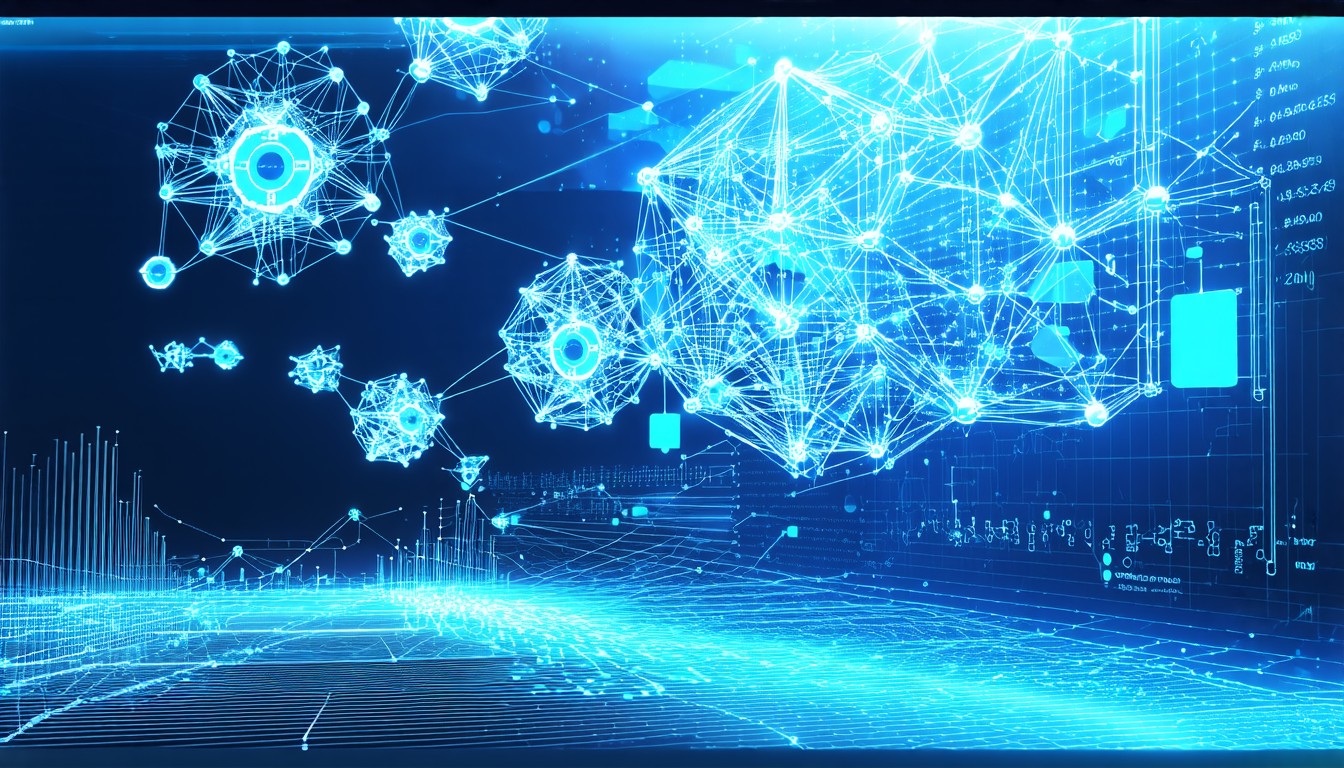
The compounding curve of mastery illustrates a logarithmic growth progression representing accumulated skill gain from consistent micro-improvements, demonstrating that while early progress may be slow, the cumulative effect eventually leads to rapid capability expansion. Data-dragons graphs plot daily improvement rates against long-term multiplicative outcomes to illustrate compounding effects, providing a sophisticated visual tool that helps learners understand the relationship between daily discipline and ultimate achievement levels. Post-WWII Japanese industrial reforms institutionalized kaizen in manufacturing by connecting with quality control circles into every level of the production hierarchy, ensuring that continuous improvement became a standard operating procedure rather than an occasional initiative. The 1990s rise of agile and lean methodologies transferred iterative principles to knowledge work by adapting the flexibility of just-in-time manufacturing to software development cycles, reducing time-to-market for digital products. The early 2010s proliferation of wearable sensors and learning analytics enabled granular performance tracking by making it possible to collect biometric data such as heart rate variability and movement patterns outside of laboratory settings. The 2020s connection of AI-driven personalization into feedback systems shifted focus from manual to automated loop closure by utilizing deep learning models to interpret complex datasets and generate customized coaching instructions instantly. Duolingo, Khan Academy, and Codecademy utilize basic feedback loops with A/B tested lesson adjustments, representing the first wave of scalable digital education platforms that use data to refine curriculum delivery based on user interactions. Elite sports teams in the NBA and Premier League deploy biomechanical feedback systems with sub-100ms latency to provide athletes with instantaneous data on their form and movement, enabling immediate correction during high-speed activities. Medical simulation platforms such as Osso VR report over 200% faster procedural mastery with real-time haptic feedback, demonstrating that immersive virtual environments can significantly outperform traditional textbook-based training in technical skill acquisition.
Corporate LMS platforms average skill retention improvements when incorporating weekly micro-feedback showing that even infrequent interventions can have a measurable impact on employee performance when integrated into regular workflows. Dominant systems currently rely on rule-based adaptive learning engines with periodic human-in-the-loop validation which limits their flexibility because they can only adapt within pre-programmed parameters requiring human oversight to handle novel situations. Developing systems employ end-to-end neural feedback architectures using multimodal inputs for continuous adjustment allowing these advanced models to process text audio video and sensor data simultaneously to create a holistic understanding of learner state. Hybrid models gain traction where AI handles pattern detection and humans provide contextual interpretation for complex domains combining the adaptability of artificial intelligence with the detailed judgment required for high-level creative or ethical decision-making. Reliance on semiconductor supply chains affects edge-computing devices enabling real-time feedback because the availability of advanced processing chips determines the capability of local devices to perform complex computations without relying on cloud connectivity. Cloud infrastructure providers including AWS Azure and GCP remain central to data processing and storage offering the massive computational resources necessary to train and deploy the sophisticated models that power modern adaptive learning platforms. Specialized sensors such as IMUs EEG and eye-tracking trackers are constrained by niche manufacturing and calibration requirements which keeps their cost high and limits their deployment to specialized professional or research contexts rather than general consumer use. Google and Microsoft integrate feedback loops into productivity suites via usage analytics subtly embedding learning mechanisms into everyday tools like word processors and spreadsheets to help users improve their efficiency passively. Startups including Cerego and Memrise focus on memory retention through spaced repetition algorithms applying scientific principles of cognitive psychology to fine-tune the timing of review sessions for maximum long-term retention.
Enterprise vendors like Basis and Workday embed feedback into performance management, yet lack real-time granularity, often providing annual or quarterly reviews rather than the continuous streams of data required for rapid skill development. Niche players in medical aviation and defense sectors lead in high-stakes low-latency implementations because the extreme cost of failure in these fields justifies the investment in highly specialized simulation and feedback equipment. Data privacy regulations limit cross-border performance data flows, creating significant logistical hurdles for global companies attempting to implement unified training programs across different jurisdictions with varying legal standards. Developing nations face infrastructure gaps while showing high mobile-first adoption of lightweight feedback apps, suggesting that regions with limited legacy infrastructure may leapfrog directly to mobile-based personalized learning solutions, bypassing traditional desktop-based systems. Academic institutions partner with edtech firms on closed-loop learning experiments, combining pedagogical expertise with technological capability to validate new teaching methods in controlled classroom environments before broader release. Clinical trials explore AI-driven rehabilitation feedback systems, using automated guidance to help patients recover motor function after strokes or injuries with greater precision than human therapists alone could provide. Industry consortia standardize protocols for interoperable learning record storage, working to create universal data standards that allow different software systems to exchange information about learner progress seamlessly. Learning record stores must support real-time streaming instead of batch uploads to enable the immediate analysis required for effective feedback loops, necessitating a shift away from traditional database architectures toward stream-processing technologies. Regulatory frameworks require updates to classify performance feedback data separately from personally identifiable information to protect user privacy while still enabling the aggregation of anonymized data needed to improve algorithmic accuracy.
5G and 6G networks are essential for low-latency feedback in remote or mobile training scenarios because the high bandwidth and ultra-low latency of these next-generation networks are prerequisites for transmitting rich sensor data without lag that would disrupt the learning process. HR and education accreditation systems must recognize micro-credentials tied to iterative progress to validate the skills acquired through non-traditional means, moving away from degree-based hiring toward competency-based models. Sensor and data infrastructure costs limit deployment in low-resource environments, preventing equal access to advanced training tools and potentially exacerbating existing socioeconomic divides in educational opportunities. Latency in feedback delivery reduces efficacy; sub-second response is required for motor or cognitive skill refinement to ensure that the brain can accurately associate the corrective signal with the specific action that generated it. Privacy and data ownership concerns restrict access to high-fidelity personal performance streams, making it difficult for researchers to access the datasets needed to train more generalizable models of human learning and performance. Energy and compute demands grow nonlinearly with user base and feedback granularity, posing significant sustainability challenges as scaling these systems to billions of users could require prohibitive amounts of electrical power and hardware resources.
One-time intensive training camps fail to sustain improvement due to the absence of ongoing feedback, leading to the forgetting curve where knowledge gained rapidly is also lost rapidly without reinforcement over time. Self-assessment without external metrics remains prone to cognitive bias and inaccurate progress estimation because individuals often lack the objective perspective needed to identify their own blind spots or core misunderstandings. Fixed-curriculum learning paths lack the capacity to adapt to individual pace or developing skill gaps, forcing learners to either waste time on material they have already mastered or fall behind on concepts they find difficult. Gamified reward systems lacking performance linkage incentivize engagement over actual mastery, potentially encouraging users to game the system to earn points rather than focusing on deep understanding or skill acquisition. Global labor markets reward rapid skill adaptation while static expertise depreciates faster than ever due to the accelerating pace of technological change, which renders specific technical skills obsolete much more quickly than in previous decades. Economic productivity increasingly ties to human capital efficiency instead of output volume, shifting the economic focus toward the quality and innovation potential of the workforce rather than simple metrics of production speed or hours worked. Educational systems lag behind in teaching metacognitive and iterative learning strategies, leaving students ill-prepared for a world where they must constantly manage their own learning and adaptation processes without institutional guidance. Rising demand for lifelong learning necessitates scalable self-correcting personal development tools that can support individuals throughout their entire careers, not just during their formal education years.
Traditional certification bodies decline as continuous mastery metrics replace static diplomas because employers increasingly value verifiable real-time demonstrations of skill over credentials that may represent knowledge acquired years or even decades ago. The rise of mastery-as-a-service platforms offers subscription-based skill optimization, turning personal development into an ongoing commercial relationship where users pay for continuous access to advanced coaching tools rather than purchasing a single course. Job markets shift toward roles valuing adaptability and feedback responsiveness over fixed skill sets, prioritizing the ability to learn new things quickly over possessing a specific set of pre-existing knowledge that may soon become irrelevant. Potential widening of skill gaps occurs if access to high-fidelity feedback systems remains unequal, creating a tiered society where those with access to advanced AI coaching achieve superhuman levels of performance while those without are left behind. Systems replace completion rates with feedback cycle density and improvement velocity, introducing more sophisticated metrics that focus on the process of learning rather than simply the consumption of content. Tracking consistency metrics such as streak adherence accompanies absolute performance levels, acknowledging that the habit of daily practice is often a better predictor of long-term success than intermittent bursts of intense effort. Compounding gain indices quantify long-term arc instead of snapshot proficiency, providing a holistic view of a learner’s progression that accounts for acceleration and momentum over time rather than just their current standing. System responsiveness measures the time from action to actionable feedback, serving as a critical performance indicator for the efficiency of the learning loop because shorter loop times generally correlate with faster skill acquisition.
Closed-loop neurofeedback enables cognitive skill enhancement, including focus and decision speed, by monitoring brain activity in real time and providing users with visual or auditory cues that help them regulate their own mental states for optimal performance. Cross-domain transfer learning applies feedback patterns from one skill to accelerate another, using the fact that many complex skills share underlying cognitive components, such as pattern recognition or strategic thinking. Predictive iteration engines preempt skill decay or plateaus before they occur, using longitudinal data to identify the early signs of a plateau and automatically adjusting the training regimen to introduce novelty or increased difficulty. Decentralized identity systems allow users to own and port their mastery graphs across platforms, giving individuals control over their cumulative learning records, so they are not locked into a single vendor’s ecosystem. Connection with digital twins facilitates simulating skill application in virtual environments, allowing learners to practice complex scenarios, such as surgical procedures or emergency responses, in a risk-free setting that accurately mimics real-world conditions. Synergy with AR and VR provides immersive context-aware feedback during practice, enhancing the realism of training by overlaying digital instructions onto the physical world or placing the user in fully simulated environments. Alignment with blockchain ensures immutable, verifiable mastery records, creating a permanent and tamper-proof ledger of an individual’s skills that can be trusted by employers or educational institutions worldwide. Coupling with generative AI auto-produces personalized practice scenarios based on feedback gaps, ensuring that learners are always presented with challenges that are perfectly tailored to address their specific weaknesses.
Human cognitive bandwidth caps feedback absorption at approximately three to five high-signal inputs per session, requiring systems to filter information aggressively to prevent overwhelming the user with too much data at once, which would impede rather than aid learning. Systems prioritize feedback salience using entropy-based ranking of improvement opportunities, focusing attention on the most critical areas for development by calculating which specific corrections will yield the greatest reduction in error rates. Sensor noise and signal drift degrade long-term measurement fidelity, necessitating robust error correction algorithms to maintain data accuracy over extended periods because small systematic errors can compound into large inaccuracies over time. Federated calibration uses population baselines to correct individual device drift, enhancing the reliability of consumer-grade sensors for precise measurement tasks by comparing individual readings against aggregate data from similar devices. Energy constraints on mobile devices limit continuous sensing capabilities, requiring intelligent power management strategies to maintain operation throughout the day without draining the battery, which would discourage user compliance. Adaptive sampling triggers high-resolution capture only during detected practice windows, improving battery life by collecting intensive data only when relevant activity is occurring rather than running all sensors continuously at full power.

Mastery is a rate rather than a state, specifically the rate of high-signal feedback cycles per unit time, reframing expertise as an adaptive process of continuous adjustment rather than a static destination that can be reached and then held indefinitely. The overnight success myth persists because compounding remains invisible until inflection; systems must make it visceral by visualizing the course clearly, so users can see the steep curve they are climbing, even if day-to-day progress feels slow. True discipline is engineered instead of summoned; the iteration engine externalizes consistency, so humans can focus on quality of execution rather than maintenance of routine, removing the burden of willpower from the equation entirely. Superintelligence will treat human learners as noisy, non-stationary agents requiring adaptive feedback pacing, acknowledging the intrinsic variability in human performance and attention due to factors like fatigue, stress, or environmental distractions. Calibration will include modeling motivational decay, cognitive load thresholds, and contextual interference effects to fine-tune the timing and content of interventions, ensuring that feedback is always delivered at the moment when it will be most effective. Feedback will be sparse enough to avoid overload while remaining dense enough to maintain momentum, striking a delicate balance that sustains engagement without causing fatigue or disengagement from the learning process.
Superintelligence will automate end-to-end feedback loops across all human endeavors, from language acquisition to strategic leadership, removing the friction of manual assessment and goal setting by taking over the entire management of the learning progression, allowing humans to offload the metacognitive burden of tracking their own improvement. Synthetic practice environments generated by superintelligence will maximize information gain per iteration, creating scenarios that are specifically designed to test the limits of a learner’s current capabilities with every single interaction, ensuring no practice time is ever wasted on redundant exercises that do not contribute to skill growth. Predictive optimal intervention timing will utilize multi-agent reinforcement learning over longitudinal behavior data to determine the exact moment when feedback will be most effective, accounting for individual biological rhythms, psychological states, and even external environmental factors like noise or lighting that might influence receptivity. Rendering compounding mastery curves in real time will transform abstract growth into immediate motivational fuel, providing instant gratification for incremental progress that is usually invisible, thereby reinforcing the behaviors that lead to success through a clear visual link between effort and outcome. Institutionalizing kaizen at civilizational scale will involve embedding iteration engines into education, corporate governance, and innovation pipelines, fundamentally restructuring society around the principle of continuous improvement where every system is constantly improving itself based on real-time feedback data, effectively turning the entire population into participants of a massive global optimization project.