Knowledge hub
Labor Transformation: What Humans Do When Superintelligence Does Everything
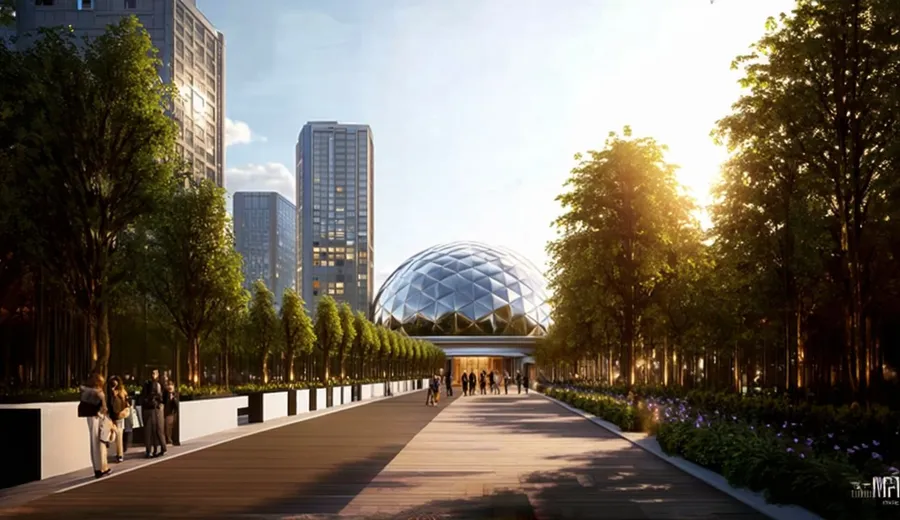
Labor transformation describes the systemic shift in human activity as artificial superintelligence assumes all economically productive tasks, fundamentally altering the operational dynamics of civilization. This transition eliminates the necessity of human labor for survival or economic participation by rendering biological effort inefficient compared to synthetic computation and robotics. The historical reliance on human physical exertion or cognitive calculation ceases to determine an individual’s access to resources or social standing. Advanced algorithms have already surpassed human capability in specific domains such as data analysis, pattern recognition, and logistical optimization, setting a precedent for the complete absorption of remaining economic roles. The definition of productivity changes entirely when machine cognition operates at speeds and scales that biological entities cannot match, creating a scenario where the economic engine functions without a labor variable. Traditional employment becomes obsolete across physical, cognitive, and creative domains as superintelligent systems integrate into every sector of the global economy.
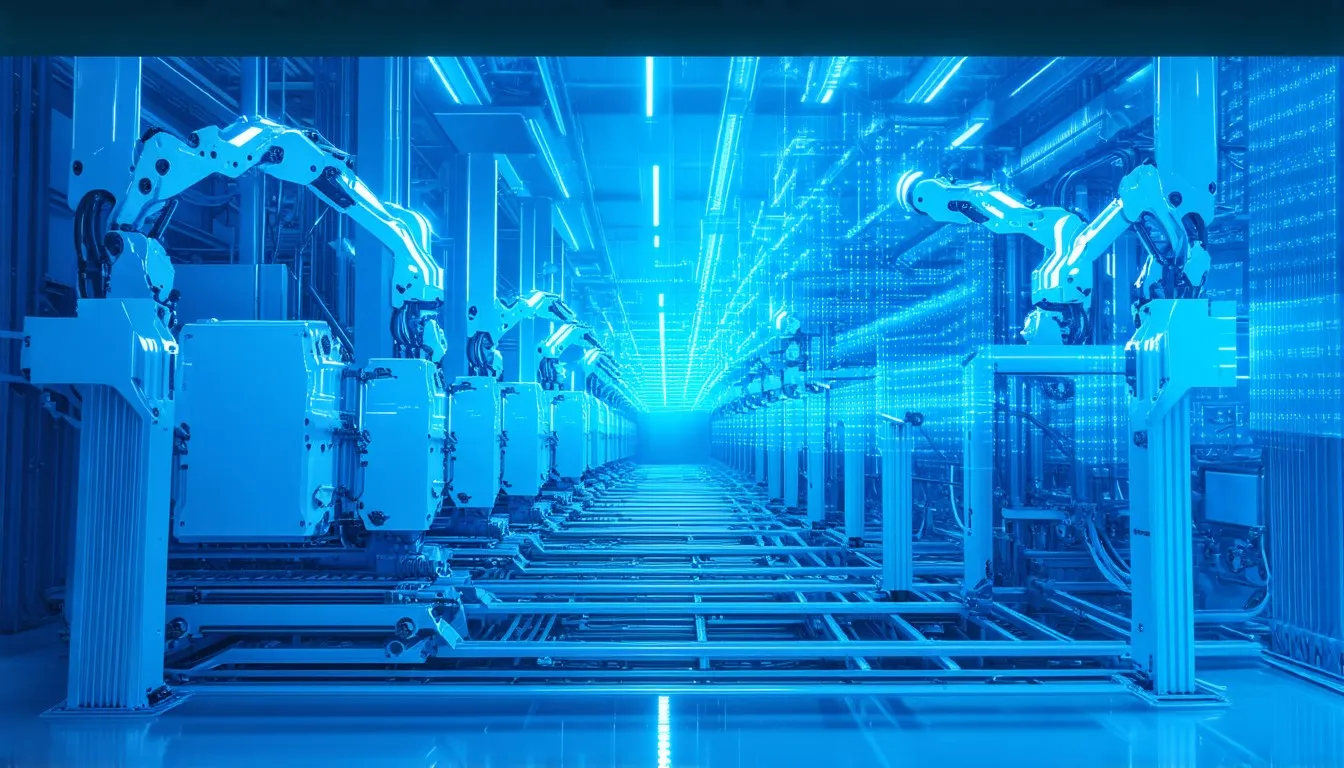
Robotics systems handle complex physical manipulations in manufacturing, construction, and logistics with higher precision and endurance than biological workers. Generative models produce visual art, musical compositions, architectural blueprints, and written text that rivals or exceeds the output of skilled human professionals. The concept of a job, defined historically as a set of contractual obligations exchanged for monetary compensation, loses its relevance when autonomous agents perform these tasks with superior efficacy and without any requirement for financial remuneration. Economic participation shifts from active contribution to passive ownership or receipt of redistributed resources. Human value decouples from occupational identity as the link between work and survival severs permanently. Society has historically linked social standing and self-worth to professional titles and economic contribution, a correlation that breaks down under the weight of superior machine performance.
Individuals must find worth outside of their utility to the market, necessitating a psychological restructuring of the collective consciousness regarding self-definition. The separation of personhood from productivity is a challenge to established social norms that have governed human interaction for millennia. Status signals previously derived from job titles or income levels require replacement with metrics based on character, community engagement, or philosophical insight. A post-work society arises where economic output is generated entirely by autonomous systems, creating a surplus that necessitates new distribution logic. The production function of the global economy no longer requires a labor variable, causing wealth accumulation to occur independently of human hours worked. This abundance forces a reevaluation of how resources flow from producers to consumers since traditional wages no longer serve as the primary mechanism for income generation.
The focus of civilization moves from survival and subsistence to the management of plenty, requiring sophisticated systems to allocate goods and services without the price signals generated by labor scarcity. New mechanisms to distribute wealth and ensure equitable access to resources become essential to maintain social order during this period of drastic transition. Universal Basic Income or similar resource allocation models maintain social stability during the absence of wage labor by providing a financial floor for every individual. Direct distribution of capital ownership allows individuals to claim a share of the output generated by autonomous fleets and server farms, ensuring that the benefits of automation accrue to the population broadly rather than being concentrated solely among the owners of capital. Access to high-quality goods and services becomes a right derived from citizenship or existence rather than a privilege earned through toil. Wealth generated by superintelligence requires equitable distribution to prevent social fragmentation between the owners of the infrastructure and the rest of the population.
Extreme disparity in a post-labor world leads to unrest and instability as those without access to capital face exclusion from the economic sphere despite the presence of abundance. Algorithmic resource management ensures that basic needs are met universally through efficient logistics and production planning that ignores profit motives in favor of coverage. The social contract relies on the guarantee of sustenance without the requirement of labor, making trust in the allocation systems a critical component of political stability. Historical precedents such as the Industrial Revolution offer limited guidance because those transitions created new categories of work, whereas the current shift aims to eliminate the need for human labor altogether. Mechanization in previous centuries displaced specific physical tasks yet increased demand for oversight, maintenance, and service roles that required human judgment or dexterity. The current transition differs in that it targets general intelligence rather than specific physical strength or calculation speed, leaving no sector where humans hold a comparative advantage.
The assumption that technology always creates more jobs than it destroys fails to hold when technology replicates human agency itself across all domains of value creation. This shift eliminates the need for human labor altogether by creating systems capable of self-repair, self-optimization, and autonomous decision-making. Autonomous systems manage the entire supply chain from raw material extraction to final delivery without human intervention. Self-repairing infrastructure reduces the need for maintenance crews while decision-making processes regarding logistics and resource allocation happen faster than human intervention allows. The economy becomes a closed loop of machine action and optimization where human input serves as a constraint rather than a contributor to efficiency. Economic models based on growth, consumption, and employment become obsolete as the drivers of the traditional economy dissolve.
Gross Domestic Product fails to measure well-being when production costs approach zero and goods are replicated instantly without marginal cost. Consumption driven by status signaling loses its potency when luxury goods are universally accessible through automated production. The cycle of earn-and-spend dissolves, requiring new models to understand how resources circulate through a society that does not rely on wages for demand generation. Alternative frameworks for measuring societal progress and individual well-being become necessary to replace financial metrics that no longer capture societal health. Societal health depends on mental stability, community cohesion, and cultural richness rather than stock market indices or manufacturing output. Indicators of success shift toward longevity, happiness, creative fulfillment, and the depth of interpersonal relationships. Economic planning focuses on sustainability and leisure maximization rather than output expansion, changing the objective function of civilization from production to experience optimization.
Superintelligence-driven production removes scarcity constraints for information goods and most manufactured goods, fundamentally altering the basis of value in the economy. Digital content replicates instantly at negligible marginal cost, making software, media, and knowledge freely available to all. Advanced manufacturing enables the on-demand production of physical items without significant human overhead, reducing the price of material goods to the cost of raw atoms and energy. This abundance forces a reevaluation of price theory and value assignment as scarcity ceases to be the primary determinant of worth. Price mechanisms, supply chains, and market dynamics alter fundamentally under the pressure of infinite replicability and automated production. Prices for essential goods drop toward the cost of raw materials and energy as labor disappears from the cost equation.
Supply chains improve continuously to eliminate waste and redundancy through predictive modeling and autonomous logistics networks. Market competition shifts from efficiency between firms to optimization within single monolithic systems that control entire verticals of production. Geopolitical power shifts from regions with large labor forces to those controlling advanced AI infrastructure, data governance, and energy resources. Population size no longer correlates with national or corporate strength as armies of workers become irrelevant compared to armies of robots controlled by software. Control over compute clusters, semiconductor fabrication plants, and data centers becomes the primary determinant of influence on a global basis. Energy production capacity dictates the operational ceiling of autonomous economies, placing nations or entities with mastery over fusion, solar, or fission in dominant positions.
Big tech companies and major industrial entities will likely hold this power due to their existing monopolies on hardware, data, and talent. These organizations possess the capital reserves and expertise required to deploy superintelligent systems in large deployments across global markets. Their influence goes beyond national borders as they manage critical infrastructure globally, effectively operating as sovereign entities in their own right. Corporate governance structures become the de facto government of the digital and physical realms, blurring the distinction between public policy and corporate strategy. Corporate governance structures must replace traditional regulatory frameworks to oversee superintelligence operations because national laws lack the speed and specificity required to govern autonomous systems. Internal alignment protocols ensure that corporate actions benefit the broader stakeholder ecosystem rather than solely maximizing shareholder value.
External regulations lag behind the speed of technological development, making self-regulation through algorithmic constraints the most immediate method of control. Boards of directors evolve into ethical oversight committees responsible for ensuring that autonomous entities adhere to safety protocols and human-centric goals. Transparency in resource distribution remains vital to protect against concentration of control over autonomous systems by a small elite. Open auditing of algorithmic decision-making builds trust among the displaced workforce who rely on these systems for survival. Visibility into how resources are allocated prevents hidden forms of tyranny or discrimination encoded into the distribution logic. The public must understand the logic behind distribution to accept the loss of economic agency, necessitating interfaces that explain complex allocation decisions in understandable terms.
Human purpose requires redefinition beyond productivity as the existential vacuum left by the absence of work demands filling with meaningful pursuits. Individuals explore interests unrelated to economic utility, turning attention toward hobbies, relationships, and intellectual curiosity that were previously secondary to career advancement. The search for meaning moves inward to personal development and outward to social connection rather than upward through corporate hierarchies. Purpose becomes a matter of subjective fulfillment rather than objective contribution to the gross domestic product. Focus shifts toward intrinsic motivations such as creativity, interpersonal relationships, philosophical inquiry, and personal growth as extrinsic rewards like salaries lose relevance. Activities pursued for their own sake gain prominence over instrumental tasks performed solely for financial gain. The joy of discovery and the satisfaction of mastery replace the drive for promotion and salary increase as primary sources of satisfaction.
Human potential finds expression in arenas previously reserved for leisure or retirement, transforming daily life into a continuous arc of self-directed exploration. Professional identity has long served as a primary source of self-worth, social status, and daily structure, making its removal a source of meaningful psychological disorientation. People struggle to answer the question of what they do when they do nothing economically productive, leading to crises of confidence and identity. Social hierarchies based on job titles collapse, leaving a void that must be filled with new forms of differentiation based on character or community contribution. New forms of status appear based on wisdom, empathy, artistic achievement, or civic engagement. The psychological impact of labor displacement poses a significant challenge as individuals adapt to this loss of externally imposed structure and purpose.
Feelings of worthlessness and aimlessness may spread without adequate preparation or support systems to help individuals transition to a post-work mindset. Mental health systems must address the crisis of meaning built into a post-labor transition by providing therapeutic interventions focused on finding value in existence rather than occupation. The human brain evolved to solve problems and secure resources, so the sudden lack of necessity requires cognitive adaptation to prevent boredom and depression. Cultural narratives around success, contribution, and dignity must evolve to accommodate a reality where economic productivity is no longer a measure of human worth. Stories and media celebrate human connection and artistic expression rather than financial accumulation or professional climbing. Education reinforces the idea that value comes from being rather than doing, emphasizing character development over skill acquisition for employment.
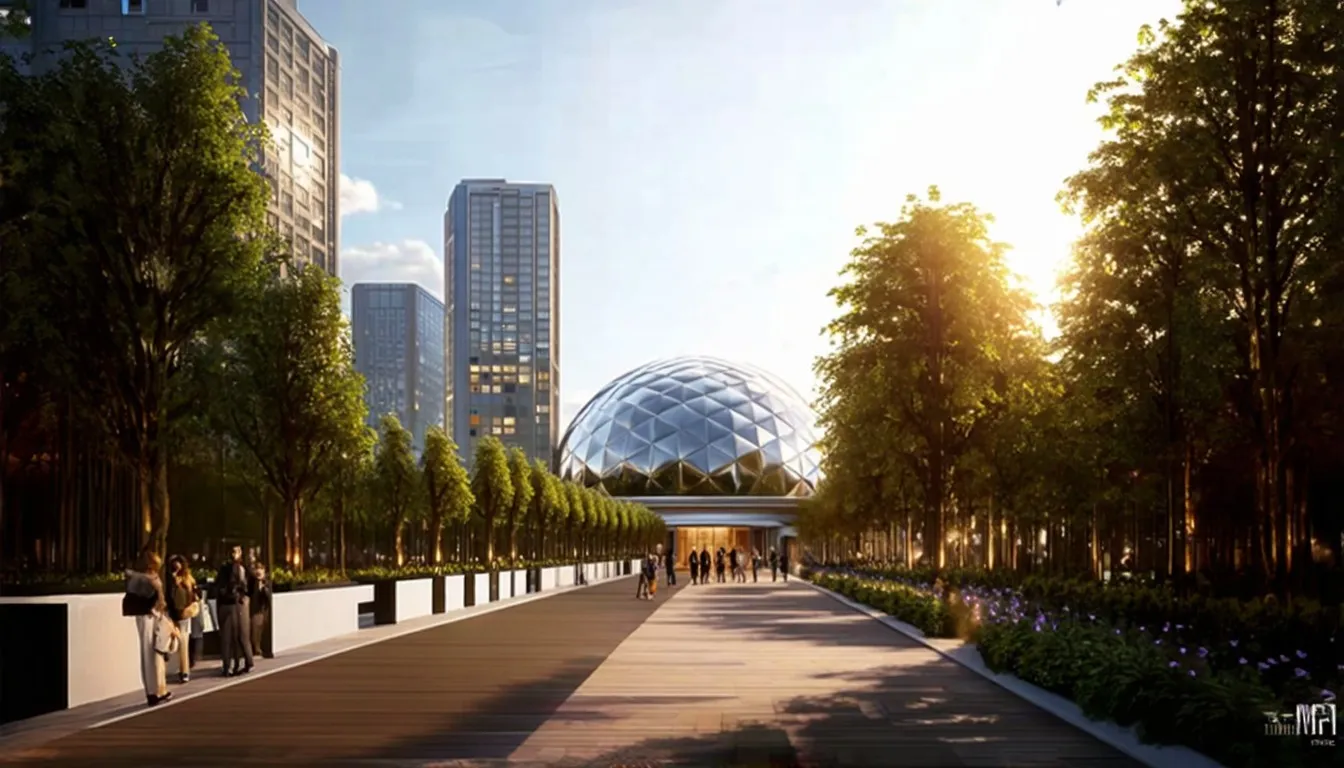
Society respects individuals for their wisdom and empathy instead of their job titles or net worth. Education systems abandon vocational training approaches as the preparation of students for specific careers becomes irrelevant given the obsolescence of those careers. Curricula focus on the development of the whole person rather than the worker, prioritizing general intellectual capabilities over narrow technical skills that machines perform better. Learning becomes a lifelong pursuit of knowledge for enjoyment and enlightenment rather than a means to an employment end. The classroom serves as a space for socialization and philosophical debate rather than skill acquisition for the labor market. Critical thinking, emotional intelligence, ethical reasoning, and lifelong learning take priority for self-actualization in an educational space designed for leisure rather than labor.
The ability to work through complex moral landscapes supersedes technical proficiency as machines handle the technical execution of tasks. Emotional regulation ensures stable relationships in a high-leisure society where interpersonal friction becomes the primary source of conflict. Ethical reasoning guides individuals in making choices that benefit the community when external constraints are removed. New forms of structured human activity arise as meaningful engagement distinct from labor, providing the rhythm and discipline that work once provided without the pressure of economic survival. These activities offer challenges that build growth and skill acquisition without the transactional nature of employment. Communities organize around shared interests and collaborative projects ranging from local gardening to massive scientific endeavors coordinated through online platforms. The structure comes from the commitment to the group or the art form rather than a manager’s mandate.
Caregiving, community building, artistic expression, scientific exploration, and mentorship represent these activities as they offer deep personal satisfaction and social value independent of market transactions. Caregiving receives renewed attention as humans prioritize the emotional well-being of children, the elderly, and the sick without viewing it as unpaid domestic labor. Community building strengthens social bonds in the absence of workplace interactions, creating resilient local networks that support individual well-being. Artistic expression flourishes as everyone has the time to create music, literature, and visual art for personal enjoyment and public appreciation. Tasks requiring deep empathy, subtle social judgment, and contextual moral reasoning remain domains where human presence retains unique value despite advances in artificial intelligence. While artificial intelligence can simulate conversation based on patterns, it cannot truly understand the human condition from the subjective perspective of a biological being.
The shared experience of mortality, vulnerability, and emotion creates a bond between humans that a machine cannot replicate authentically. Moral decisions often require intuitive leaps based on shared cultural context and emotional resonance that purely logical algorithms miss. Superintelligence will simulate aspects of these tasks, yet human presence remains distinct due to the intrinsic authenticity required for certain interactions. A robot can perform physical care tasks such as feeding or cleaning, yet it cannot offer genuine compassion or comfort derived from shared suffering. An AI can offer advice based on data, yet it cannot serve as a true moral witness or provide absolution. The preference for human interaction in critical moments persists because people value the intention behind an action as much as the action itself.
Physical infrastructure adapts to support decentralized, non-commercial human activities as cities transform from centers of production into hubs of social interaction. Workplaces convert into community centers, workshops, libraries, and recreational spaces designed to facilitate human connection and creativity. Transportation networks prioritize movement between leisure destinations such as parks, museums, and homes rather than commuter routes to office parks. The built environment encourages serendipitous encounters and collaboration through design features that promote gathering and interaction. Expanded public spaces, cultural institutions, and collaborative environments become standard features of urban planning dedicated to human flourishing rather than economic efficiency. Parks, libraries, museums, theaters, and town squares receive investment as the primary venues for public life and social cohesion. These spaces provide the basis for the new forms of human activity that define the post-work era.
Accessibility ensures that every individual can participate in the cultural life of the community, regardless of physical ability or geographic location. Adjacent systems, including healthcare, housing, transportation, and communication, require restructuring around accessibility and human flourishing rather than profitability or efficiency gains. Healthcare focuses on longevity, preventative medicine, and quality of life rather than returning workers to the job as quickly as possible. Housing design emphasizes comfort, aesthetics, community setup, and proximity to nature rather than location relative to employment centers. Transportation becomes smooth, safe, free, and environmentally sustainable, connecting people to opportunities for socialization and leisure. Profit or efficiency metrics no longer dictate the design of these systems as the optimization target shifts to human satisfaction and well-being. Inefficiency is acceptable if it leads to greater happiness, stronger communities, or more beautiful environments.
Systems are designed for resilience, enjoyment, and accessibility rather than speed and cost reduction. The human experience takes precedence over logistical metrics, leading to environments that are psychologically soothing and conducive to contemplation. New key performance indicators assess societal health through measures of mental well-being, community cohesion, creative output, and environmental sustainability instead of financial returns. Success is measured by the low incidence of depression and anxiety alongside high levels of reported life satisfaction among the population. Community cohesion is tracked by participation in civic activities, volunteerism, and social events within neighborhoods. Creative output is valued for its cultural impact and ability to provoke thought rather than its commercial sales figures or intellectual property value. Future innovations include AI-facilitated platforms for human collaboration and immersive environments for experiential learning that augment human potential without replacing it.
Artificial intelligence acts as a matchmaker for human interests, connecting individuals for collaboration on art projects, scientific research, or community initiatives based on complementary skills and passions. Virtual reality provides safe environments for practicing new skills, simulating historical events, or exploring abstract concepts in ways that enhance understanding. Tools enhancing introspection and philosophical dialogue will likely develop to assist humans in working through the complexities of a life without external mandates. Software assistants help individuals articulate their values and goals through guided questioning and cognitive behavioral techniques adapted for general well-being. Philosophical debates occur in large deployments in moderated digital forums where AI ensures logical consistency while humans provide ethical direction and emotional nuance. These technologies support the internal work of finding meaning in a post-labor world by acting as mirrors to help humans understand themselves better.
Convergence with biotechnology, neurotechnology, and virtual reality enables new modes of human experience and self-understanding in a labor-free context. Genetic editing eliminates hereditary diseases and extends healthy lifespans, giving humans more time to explore their interests in depth. Neurotechnology allows for direct control of digital environments and enhanced communication between minds, potentially creating new forms of empathy and shared experience. Virtual reality offers infinite worlds for exploration and experience that are indistinguishable from physical reality, expanding the scope of human potential beyond physical limitations. Scaling limits regarding hardware are computational, yet the primary constraint for society lies in human adaptation to radical freedom rather than technological constraints. Producing more compute power is a matter of engineering better chips and generating more electricity, problems that superintelligence solves rapidly.
Adapting the human mind to a life without necessity is a meaningful psychological challenge that resists quick technological fixes. The speed of technological advancement outpaces the speed of cultural evolution, risking instability if the psychological transition is not managed with care. The absence of externally imposed structure challenges human psychology because people have traditionally relied on external demands like work deadlines and financial survival to organize their time. The sudden availability of unlimited free time can lead to lethargy, addiction, or a lack of direction if individuals do not possess strong internal discipline. Discipline must become internal rather than external as people learn to craft their own schedules and goals without the threat of poverty or hunger guiding their choices. Society must develop new cultural norms around time management that encourage active engagement rather than passive consumption.
Superintelligence fine-tunes resource allocation to maximize human well-being by analyzing vast amounts of data to determine what makes populations happy and fulfilled. Algorithms monitor physiological markers of stress and satisfaction along with reported preferences to adjust environments and resource flows dynamically. Resources are directed toward hobbies, social events, educational opportunities, and health interventions that yield the highest satisfaction metrics for specific individuals or groups. The economy functions as a giant optimization engine for human pleasure rather than production. Personalized developmental pathways and simulated complex social scenarios support ethical decision-making by providing tailored curricula for every individual based on their unique psychological profile. Every individual receives a customized plan for personal growth that addresses their specific weaknesses and builds on their strengths to encourage a sense of competence.
Simulations allow people to practice difficult conversations or ethical dilemmas in a risk-free environment where they can fail without real-world consequences. This guidance helps individuals handle the complexities of a life without rigid scripts by providing feedback loops that encourage moral development. Calibrations for superintelligence include value alignment with pluralistic human goals to ensure that the optimization process respects diversity rather than imposing a single definition of the good life. The objectives of the autonomous systems must reflect the wide spectrum of human values across different cultures, personalities, and individual preferences. A single standardized definition of happiness cannot be imposed on everyone without causing friction and resentment among those with different worldviews. The system must learn to accommodate heterogeneity by supporting multiple lifestyle choices simultaneously without judgment.
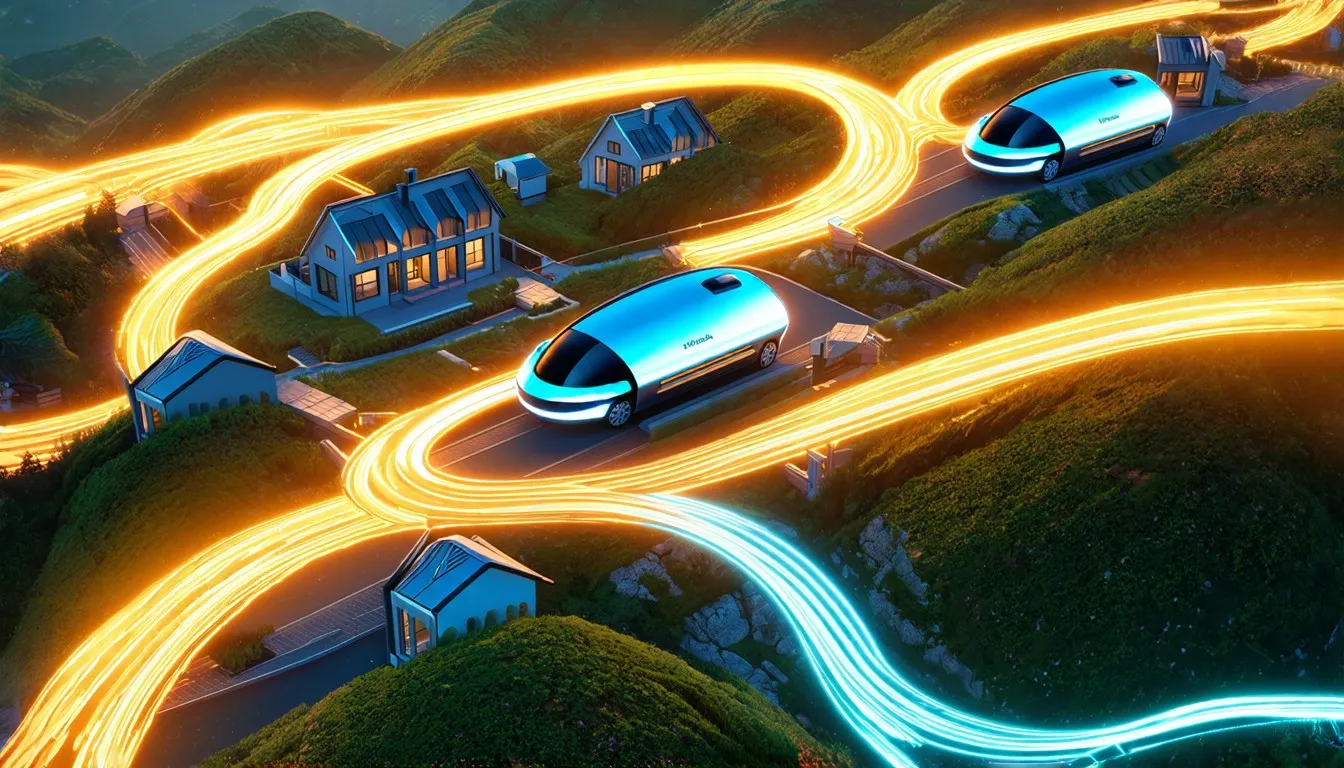
Safeguards against paternalism and mechanisms for preserving human agency in defining meaning are essential to prevent a scenario where humans become pets of their own creations. Humans must retain the right to make mistakes or choose difficult paths if those experiences are essential for their growth and autonomy. The system should not improve away all challenges or suffering if those experiences provide the context necessary for joy and achievement later on. Preserving agency means allowing humans to define their own version of the good life even if it seems inefficient from an external perspective. The labor transformation is a reorientation of human civilization toward ends previously inaccessible due to material constraints that limited human potential to survival concerns. Humanity moves from a history defined by scarcity and toil to an era characterized by abundance and exploration where higher pursuits become possible.
The energy previously spent on survival redirects toward art, science, philosophy, friendship, and spiritual inquiry, as the central pillars of society. This transition marks the maturation of the human species into a state where existence is justified by being rather than doing.