Knowledge hub
Procedural Memory Systems
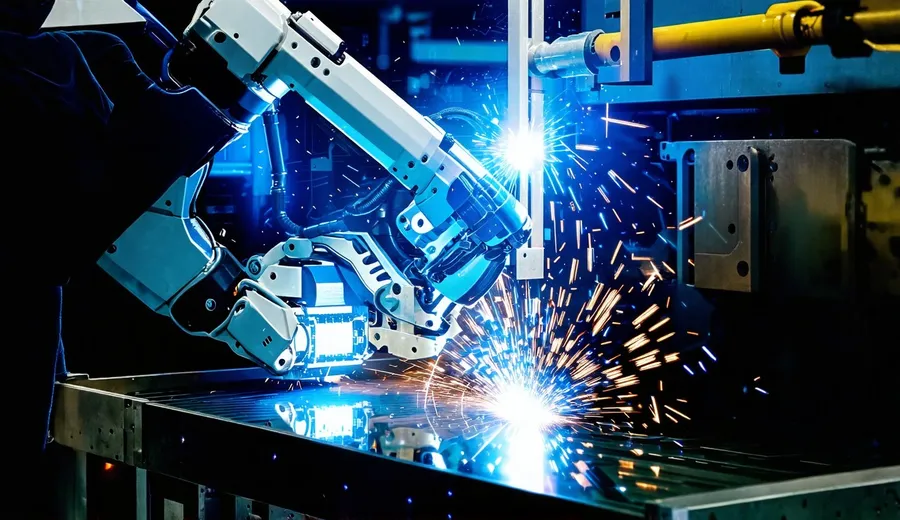
Procedural memory systems encode and retrieve knowledge regarding skill execution without requiring conscious recall of each step, functioning as the core substrate for automaticity in both biological organisms and artificial agents. These systems operate implicitly to enable the automatic execution of learned behaviors, allowing higher cognitive processes to allocate resources toward planning and problem-solving rather than the minutiae of motor control or routine cognitive operations. Declarative memory stores explicit facts and events, whereas procedural memory focuses exclusively on performance, creating a dichotomy where one system manages semantic knowledge while the other manages the mechanics of action implementation. In artificial systems, procedural memory allows for the execution of complex physical or cognitive routines with minimal real-time cognitive load, a necessity for agents operating in dynamic environments requiring rapid response times. The core function involves skill retention and fluid performance to reduce the need for step-by-step instruction, effectively compressing lengthy sequences of actions into single callable units or policies that streamline information processing. Procedural memory relies heavily on repetition and reinforcement to solidify motor and cognitive patterns, a process observed neurobiologically as long-term potentiation and synaptic strengthening specific to neural circuits involved in task execution.
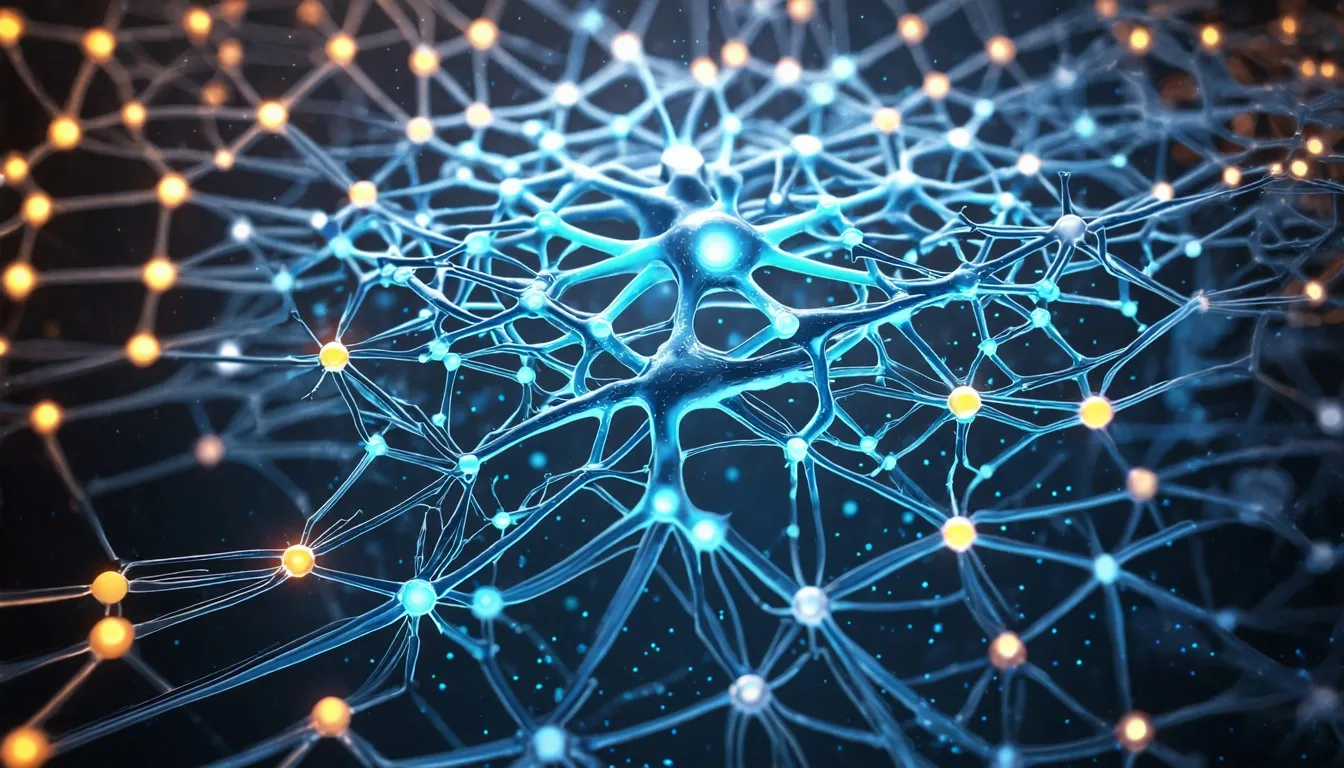
Biological systems utilize subcortical structures like the basal ganglia and cerebellum for these processes, applying the basal ganglia for action selection and habit formation while the cerebellum contributes to the precise timing and coordination of movements necessary for fluid motion. Artificial implementations use distributed processing to mimic these biological foundations, employing layers of neural networks that represent various abstractions of the task hierarchy from low-level joint control to high-level goal achievement. Learning occurs through trial and error with successful action sequences reinforced into long-term behavioral routines, a mechanism mathematically formalized in reinforcement learning through the maximization of cumulative reward signals over time. Once established, procedural knowledge resists interference from declarative memory and remains stable over long periods, ensuring that skills such as riding a bicycle or typing persist even when explicit memory of the learning process fades completely. Skill acquisition involves initial conscious effort followed by gradual automation through practice, transitioning from a phase of explicit error correction to a phase of smooth, unconscious execution where the mind monitors outcomes rather than mechanics. Execution is characterized by speed and consistency to enable parallel processing of multiple tasks, allowing an agent to handle an environment while simultaneously manipulating objects or communicating without significant degradation in performance quality.
The system supports hierarchical skill decomposition where complex actions break into subroutines, enabling the reuse of basic motor primitives, like grasping or stepping, across a wide variety of distinct high-level tasks such as making coffee or climbing stairs. Adaptation to new contexts occurs through generalization and fine-tuning for transfer to novel scenarios, allowing a procedural policy trained in a simulation to adapt effectively to the variances and noise found in physical reality. A skill is a learned ability to carry out a complex task efficiently, involving motor or cognitive coordination, representing the convergence of perception, planning, and actuation into a unified fluid behavior that achieves specific objectives reliably. A habit is a behavior triggered by context cues and executed automatically as a subset of procedural memory, serving as a heuristic that reduces computational overhead by associating specific environmental states with pre-validated action sequences. Automation is the state where a task requires minimal cognitive effort due to prior learning, freeing up computational resources for other demanding processes and increasing the overall endurance of the system by reducing fatigue associated with sustained concentration. Reinforcement learning serves as the primary training mechanism where successful actions contribute to procedural knowledge formation, utilizing algorithms that adjust policy parameters based on the value of received rewards relative to expected outcomes.
Early 20th-century studies by Thorndike established the law of effect regarding skill acquisition, positing that responses followed by satisfying consequences become more likely to occur, forming the bedrock of modern reward-based learning theories utilized in artificial intelligence today. Mid-20th-century neuroscience identified the basal ganglia’s role in procedural learning through lesion studies, demonstrating that damage to these structures impaired the ability to form new habits while leaving episodic memory largely intact. Cognitive psychology experiments in the 1980s and 1990s demonstrated the dissociation between declarative and procedural memory in amnesic patients, who could not recall new facts yet retained the ability to learn novel motor skills through repetitive practice sessions. Computational models in the 2000s began simulating procedural learning using neural networks, moving away from static lookup tables toward function approximation methods capable of generalizing across similar states and actions. The 2010s saw the setup of deep reinforcement learning in robotics for real-world skill acquisition, marked by successes in training agents to perform manipulation tasks directly from pixel inputs through massive trial and error iterations within simulated environments. Symbolic rule-based systems were considered for encoding procedures yet rejected due to inflexibility, as rigid logical frameworks failed to account for the continuous variability intrinsic in physical interaction and sensorimotor control.
Pure supervised learning approaches failed to capture the trial-and-error nature of skill acquisition, requiring labeled datasets of correct behaviors that are often impractical to obtain for complex sequential decision-making problems involving physical interaction with the world. Early expert systems attempted to codify procedural knowledge explicitly, but proved brittle, unable to handle edge cases or deviations from the specific contexts anticipated by their designers during the knowledge engineering phase. Evolutionary algorithms were explored for skill optimization, yet discarded due to slow convergence, as the search space for high-degree-of-freedom robotic control proved too vast for random mutation and selection methods to fine-tune efficiently within reasonable timeframes compared to gradient-based methods. Hybrid models combining neural networks with symbolic planning offer a balance of adaptability and structure, utilizing deep networks for low-level pattern recognition and reaction while employing symbolic reasoners for high-level logic and constraint satisfaction. Biological systems face physical limits in neural plasticity and energy consumption, constraining learning rates, necessitating sleep and consolidation periods that artificial systems may bypass through continuous operation capabilities enabled by redundant hardware arrays. Artificial systems require substantial computational resources for training high-dimensional motor control tasks, often relying on clusters of graphics processing units to perform the millions of simulations needed to converge on a durable policy.
Adaptability is limited by data efficiency, where real-world procedural learning demands thousands of physical trials, creating a gap known as the simulation-to-real transfer problem that researchers address through domain randomization techniques designed to expose the agent to a wide variety of conditions during training. Hardware constraints such as actuator precision and sensor fidelity restrict the fidelity of skill execution, as noise in servomotors or latency in visual feeds can destabilize delicate operations requiring microsecond-level timing accuracy. Economic viability depends on application-specific return on investment, favoring domains with repetitive tasks, as the high upfront cost of developing sophisticated procedural memory systems is amortized over long production runs in manufacturing or logistics sectors where consistency is primary. Rising demand for autonomous systems in manufacturing and logistics requires reliable skill execution, driving the connection of advanced perception modules with durable control policies that can handle unstructured environments safely. Economic pressures to reduce labor costs drive investment in procedural automation, incentivizing companies to replace human operators with robots that can work continuously without fatigue or wage requirements in highly controlled settings. Societal needs for assistive technologies depend on fluent and adaptive motor behaviors, creating a market for prosthetic limbs and exoskeletons that learn to interpret user intentions and execute movements naturally through procedural memory interfaces.
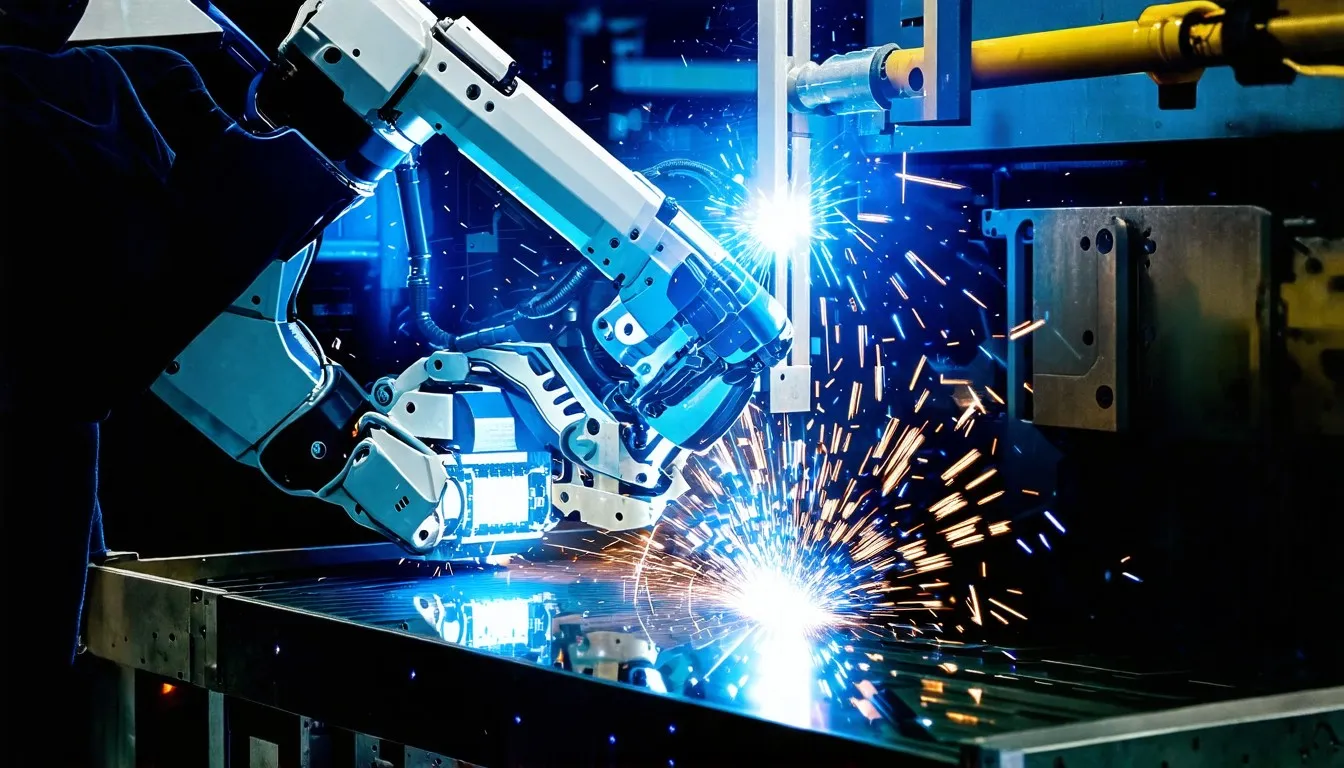
Advances in robotics and AI have reached a threshold where procedural memory is implementable for large workloads, enabling the deployment of fleets of autonomous mobile robots capable of handling complex warehouse environments safely alongside human workers. The shift toward embodied intelligence necessitates systems that learn physical skills without constant reprogramming, moving away from hard-coded arcs toward adaptive controllers that respond to real-time feedback from the environment. Industrial robots in automotive assembly use procedural memory for welding and painting, achieving sub-millimeter precision, having learned the optimal force application and path planning through extensive calibration and iterative refinement processes over years of operation. Warehouse automation systems employ learned grasping and navigation routines to reduce error rates significantly, utilizing convolutional neural networks to identify package orientations and reinforcement learning to adjust grip strength dynamically based on tactile feedback. Surgical robots
Performance is measured in task success rate and execution speed alongside energy efficiency, as these metrics determine the commercial viability and operational throughput of autonomous systems deployed for large workloads. Dominant architectures include deep reinforcement learning frameworks like Proximal Policy Optimization and Soft Actor-Critic, which provide stable convergence properties suitable for training complex policies in high-dimensional observation spaces involving joint angles and depth images. Model-based reinforcement learning gains traction for sample efficiency to enable faster procedural learning, utilizing learned world models to simulate outcomes and plan actions without requiring physical interaction for every step of the learning process. Neuromorphic computing approaches mimic biological neural dynamics for low-power skill retention, implementing spiking neural networks that consume energy only when spikes occur, offering potential advantages for edge-deployed robotic systems where power availability is constrained. Hybrid neuro-symbolic systems combine procedural fluency with explainability and safety constraints, allowing operators to inspect logical rules governing safety boundaries while relying on learned components for thoughtful control behaviors in complex scenarios. Edge AI implementations reduce latency by embedding procedural models directly into robotic controllers, eliminating the need to transmit high-bandwidth sensor data to centralized servers and thus enabling faster reaction times to environmental changes critical for collision avoidance.
High-performance actuators and precision sensors are required for reliable physical skill execution, acting as the physical interface through which procedural memory expresses itself in the material world with high degrees of freedom. Semiconductor supply chains for GPUs and specialized AI chips are critical for training large procedural models, as the availability of new silicon dictates the speed at which new capabilities can be developed and deployed across various industries. Rare earth elements used in motors create dependencies on geographically concentrated mining operations, introducing geopolitical risks into the supply chain for advanced robotic hardware required for actuation. Manufacturing of robotic end-effectors relies on advanced alloys subject to supply volatility, requiring manufacturers to maintain strategic reserves or develop alternative materials that meet the stringent strength and weight requirements for high-speed manipulation tasks. Software toolchains for simulation and deployment are concentrated among major tech firms, creating an ecosystem where access to modern development environments dictates the pace of innovation in procedural memory systems globally. Leading players include Boston Dynamics for lively locomotion and Tesla for autonomous driving, both companies applying massive datasets and proprietary simulation environments to train procedural policies for complex adaptive environments involving unpredictable elements.
Intuitive Surgical leads in medical robotics by connecting with procedural knowledge for incision tasks, refining the kinematic mapping between surgeon hand movements and robot end-effector positions through years of operational data collected during surgical procedures. Industrial automation giants like ABB and Fanuc dominate factory-floor procedural systems, providing integrated solutions that combine hardware durability with mature software libraries fine-tuned for repetitive industrial tasks such as assembly line logistics. Tech companies such as Google DeepMind advance foundational algorithms with limited physical deployment, focusing on general-purpose reinforcement learning agents that demonstrate superhuman performance in simulated environments ranging from board games to protein folding structures. Startups in agritech use procedural memory for niche applications with high growth potential, developing autonomous weed-picking robots and precision harvesting systems that adapt to the variability of biological crops through vision-based recognition systems. Competitive advantage is determined by data volume and simulation fidelity alongside hardware connection, as entities possessing proprietary high-quality datasets gain a significant lead in training effective procedural models that generalize well to real-world conditions. Export controls on advanced robotics influence global access to procedural memory technologies, restricting the transfer of dual-use components that could enhance autonomous military capabilities or critical infrastructure operations abroad.
Intellectual property regimes affect the diffusion of procedural learning algorithms, with patents covering novel network architectures or training methodologies potentially slowing down open innovation in certain jurisdictions while protecting corporate investments in research and development. Workforce displacement concerns have led to regulatory scrutiny in labor-intensive sectors, prompting discussions about taxes on robots or mandates for human-in-the-loop oversight for automated systems performing tasks previously done by humans. International standards for safety and interoperability are under development to ensure consensus, aiming to establish common protocols for how autonomous systems communicate and behave in shared spaces like highways or factories where multiple agents interact simultaneously. Academic research in neuroscience and machine learning informs algorithmic design, providing insights into how biological brains credit assignment for specific actions which can be translated into more efficient artificial learning rules. Industrial labs collaborate with universities on long-term projects regarding robotics challenges, bridging the gap between theoretical breakthroughs and practical engineering constraints found in real-world deployments involving unstructured data. Open-source simulation platforms enable shared benchmarking and reproducibility, allowing researchers worldwide to compare the performance of their procedural learning algorithms against standardized tests without requiring expensive hardware setups.
Joint ventures between robotics firms and AI companies accelerate translation of research into products, combining domain expertise in mechanical engineering with advanced software capabilities derived from advances in deep learning. Funding from private investment supports cross-disciplinary teams working on procedural learning, attracting venture capital towards startups that promise to remake industries through fully autonomous labor solutions capable of operating without human intervention. Software stacks must support continuous learning without disrupting operational systems, requiring architectures that allow online updates to policy weights while maintaining safety guarantees during the transition period between different versions of a model. Regulatory frameworks need to address safety certification for adaptive procedural behaviors, moving away from static testing toward agile evaluation methods that can assess the strength of learning-enabled control systems under rare edge cases encountered during operation. Infrastructure for data collection and simulation must scale to support diverse skill domains, necessitating cloud computing resources capable of rendering photorealistic virtual worlds at high frame rates for parallel training of agents across millions of episodes. Cybersecurity protocols are required to protect procedural models from adversarial manipulation, as malicious actors could potentially poison training datasets or exploit vulnerabilities in policy networks to cause dangerous behaviors in deployed robots operating sensitive infrastructure.
Workforce training programs must evolve to include maintenance and oversight of autonomous systems, shifting the focus from manual operation to supervisory control and anomaly detection within automated workflows managed by artificial intelligence agents. Job displacement in repetitive manual tasks is expected in manufacturing and logistics, leading to a restructuring of labor markets where human workers transition into roles requiring creativity, empathy, or complex problem-solving that procedural systems cannot easily replicate currently. New business models will appear around skill-as-a-service where companies license procedural capabilities, allowing clients to download specific skills such as window cleaning or inventory scanning to their existing robotic fleets instantly over the cloud. Maintenance and retraining of procedural systems will create specialized technical roles focused on data curation, model fine-tuning, and hardware upkeep to ensure continued operation of autonomous infrastructure throughout its lifecycle. Insurance and liability models must adapt to account for autonomous decision-making, determining fault in accidents involving procedural memory systems based on algorithmic predictability and adherence to safety constraints defined during the design phase. Educational systems may shift toward teaching meta-skills like supervision and human-AI collaboration, preparing students to work effectively alongside intelligent agents that handle routine execution aspects of their jobs automatically.
Traditional key performance indicators like task completion time remain relevant for evaluating efficiency, while new metrics such as skill transfer efficiency measure how well a learned task applies to variations without additional training interventions required from human operators. Learning curve steepness is becoming a critical metric as it determines the speed at which a robot can be deployed in a new environment, influencing the economic feasibility of automation for short-run production cycles common in customized manufacturing sectors. Energy per task is becoming critical for sustainability and flexibility, as mobile robots require efficient power management to operate for extended durations without frequent recharging breaks that would interrupt workflow continuity. User trust and perceived reliability are qualitative indicators in human-robot interaction, essential for adoption in domestic settings where people must feel comfortable sharing living spaces with autonomous machines performing daily chores. Long-term retention and resistance to skill decay require longitudinal evaluation frameworks to ensure that procedural memories do not degrade or drift catastrophically over months or years of operation due to changing environmental conditions or hardware wear. Development of lifelong learning systems will accumulate procedural knowledge across multiple environments, enabling a single agent to serve as a generalist capable of switching between different roles such as driving, cleaning, or security based on context without requiring complete retraining each time.
Connection of multimodal sensory feedback will improve skill precision and contextual awareness, working with touch, vision, and audio data to create a strong understanding of the physical world that guides action execution with high fidelity. Advances in neuromorphic hardware will enable real-time procedural learning with minimal power consumption, bringing the efficiency of biological synaptic plasticity to silicon-based computing platforms designed specifically for spike-based processing. Personalized procedural models will be tailored to individual users in assistive applications, adapting to the specific movement patterns and preferences of human users to provide smooth support in daily activities such as eating or dressing. Autonomous skill composition will allow systems to combine learned subroutines to solve novel problems without explicit programming for every contingency, encouraging a level of generality approaching human adaptability faced with new challenges. Procedural memory systems will converge with computer vision for real-time perception-action loops, reducing the latency between seeing an object and physically interacting with it to imperceptible levels necessary for high-speed manipulation tasks. Setup with natural language processing will enable verbal instruction to modify procedural behaviors, allowing non-experts to teach robots new tasks simply by describing them or demonstrating them once using imitation learning techniques combined with language grounding.
Combination with digital twins allows simulation-based training before physical deployment, ensuring that procedural policies are refined and safe before they ever control a physical actuator that could cause damage or injury during the learning process. Synergy with edge computing supports low-latency execution of complex skills in distributed systems, processing sensor data locally to make immediate decisions while synchronizing global state information with cloud servers periodically for long-term planning updates. Alignment with embodied AI frameworks emphasizes the role of physical interaction in learning, positing that intelligence arises from the constraints and affordances of operating within a physical environment rather than abstract reasoning alone detached from sensory input. Core limits include the speed of neural transmission and the thermodynamic cost of computation, which impose physical ceilings on how fast information can be processed and decisions made within any substrate regardless of algorithmic sophistication. Workarounds involve sparse coding and predictive processing to reduce computational load by focusing resources only on salient features of the environment that are relevant to the current task goals while ignoring irrelevant background noise. Material fatigue and actuator wear impose durability constraints on repeated skill execution, necessitating predictive maintenance algorithms that anticipate hardware failures based on usage patterns embedded in procedural memory traces accumulated over time.

Energy efficiency improves through event-driven computation and adaptive sampling of sensory inputs, mimicking biological attention mechanisms that suppress irrelevant information to conserve power during periods of low environmental activity or change. Scaling to millions of concurrent skills requires distributed memory architectures capable of storing and retrieving vast libraries of motor programs without significant latency or retrieval errors that could disrupt real-time performance requirements. Procedural memory functions as an active system that shapes behavior through interaction with the environment, continuously updating internal models based on the consequences of actions taken rather than relying on static representations of the world. Its value lies in enabling machines to develop context-sensitive routines beyond preprogrammed logic, allowing them to work through unstructured scenarios that engineers could not possibly anticipate during the design phase using traditional software engineering methodologies. The true measure of success is the system’s ability to learn and generalize skills across changing conditions, demonstrating strength equivalent to or exceeding that of human operators in adaptive domains characterized by uncertainty and noise. This capability is a shift from automation to autonomy, where systems evolve their own methods for achieving goals through experiential learning rather than following fixed scripts defined by human programmers explicitly instructing every move.
Superintelligence will require vast interconnected procedural memory systems to manage complex real-world operations, coordinating millions of individual skills across different time scales and levels of abstraction simultaneously without central oversight bottling the decision-making process. These systems will support rapid skill acquisition and cross-domain transfer without human supervision, enabling superintelligent agents to master new fields of endeavor within hours rather than years by applying previously acquired foundational skills as building blocks. Procedural memory will enable superintelligent agents to perform physical tasks with fluency that masks the underlying computational complexity required to coordinate multi-jointed movements in three-dimensional space with high precision. Higher cognition will be reserved for strategic planning while procedural memory handles execution, creating a functional separation where high-level goals are decomposed automatically into low-level motor commands without conscious intervention from the central reasoning module. Connection with declarative and episodic memory will allow coherent context-aware behavior, enabling the system to recall specific past events or factual knowledge relevant to the current procedural task being executed at any moment in time. The architecture must be scalable and interpretable to ensure alignment with safety constraints, ensuring that the automatic behaviors generated by procedural memory remain consistent with human values even as they become increasingly complex and opaque due to the non-linear nature of deep neural network function approximation underlying these skills.