Knowledge hub
Superintelligence via Distributed Swarm Intelligence
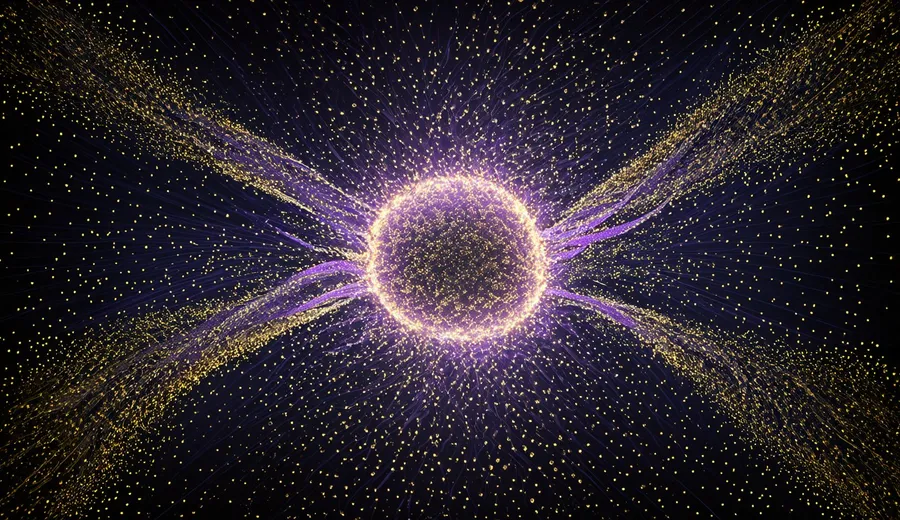
A micro-agent functions as the core atomic unit within this architecture, operating under strict constraints regarding compute power, memory allocation, and communication bandwidth, which restricts its operational scope exclusively to immediate local perception and action execution based on sensory input. A swarm constitutes a vast population of these micro-agents functioning simultaneously under shared coordination rules that dictate their interactions to achieve a coherent global behavior that surpasses the capabilities of any single constituent unit. Stigmergy serves as a primary mechanism for this coordination by utilizing indirect communication methods where agents modify the environment through digital pheromones or physical markers to guide subsequent actions by other agents without direct messaging. Consensus algorithms provide a distributed method for achieving agreement on a specific value or system state among the agent population even in the presence of individual agent failures or significant network delays that disrupt standard communication flows. Gradient fields represent a virtual or physical signal space that agents handle autonomously to move toward regions exhibiting higher utility or increased information density relative to their current position. Emergent intelligence describes the complex problem-solving behaviors that arise from these simple local interactions without requiring explicit programming for the high-level tasks ultimately accomplished by the collective. The coherence threshold defines the minimum level of synchronization or agreement required for the swarm to function effectively as a unified entity rather than a disorganized collection of individuals acting at cross-purposes. A fault domain constitutes a subset of agents whose potential failure does not compromise the overall functionality of the system due to built-in redundancy and isolation mechanisms built into the architecture design.
Early neural network models relied heavily on centralized learning approaches and fixed network topologies, which imposed severe limitations on system flexibility and operational resilience in agile environments requiring rapid adaptation. Centralized AI architectures such as monolithic data centers introduced critical single points of failure alongside high energy consumption costs and latency constraints that hindered real-time processing capabilities necessary for immediate interaction with the physical world. Blockchain-inspired consensus mechanisms were evaluated for potential use in these distributed systems, yet were ultimately rejected due to prohibitively high communication overhead and poor suitability for real-time decision-making requirements built into swarm operations. Federated learning approaches addressed privacy concerns by processing data locally, yet still depended on periodic central aggregation processes that created unavoidable coordination delays within the system during critical updates. Swarm robotics experiments conducted in controlled environments successfully demonstrated the feasibility of coordinated movement while lacking the necessary protocols for open-world deployment at a trillion-unit scale where complexity grows exponentially. Traditional multi-agent systems utilized explicit negotiation strategies or auction-based task assignment protocols that failed to scale efficiently beyond populations of a few thousand agents due to combinatorial explosion in communication complexity.
Current AI systems encounter significant difficulties when attempting real-time adaptation across lively, distributed environments such as global logistics networks, climate modeling systems, and pandemic response platforms where variables change unpredictably. Economic pressures increasingly favor architectural designs that reduce the marginal cost per computation unit while enabling pay-as-you-go flexibility deployment models for massive networks spanning continents. Societal demand for resilient, transparent, and decentralized decision-making systems continues to grow amid rising concerns regarding the control exerted by centralized AI entities over critical information flows. Performance demands for modern applications have exceeded the capabilities of what monolithic models can deliver in terms of latency response times, energy efficiency ratios, and fault tolerance levels required for continuous operation. Climate change and resource constraints have rendered energy-proportional computing an essential requirement for future technological growth, making swarm architectures highly attractive due to their alignment with this principle through distributed load balancing. Trillions of simple, low-capability agents operate effectively with minimal individual intelligence, relying primarily on local sensing capabilities and basic computation modules to execute their functions within the larger network.
These agents interact through lightweight, asynchronous communication protocols that prioritize message efficiency, fault tolerance, and minimal bandwidth usage to maintain system stability under heavy load conditions. Global coherence arises from decentralized coordination algorithms such as stigmergy, consensus voting, gradient following, and pheromone-like signaling without requiring any form of centralized control or oversight from a master node. The system exhibits problem-solving behavior analogous to biological neural networks while being constructed from non-biological, heterogeneous components operating at a planetary scale across diverse environments. Redundancy is built-in to the core design: the loss of any subset of agents does not degrade overall function due to statistical reliability mechanisms and lively role reassignment processes that redistribute tasks dynamically. Self-organization is maintained through continuous feedback loops where local interactions reinforce global patterns, enabling rapid adaptation to environmental changes or shifting task demands without external intervention. Communication protocols must support variable latency conditions, intermittent connectivity scenarios, and heterogeneous agent capabilities while preserving semantic consistency across the entire swarm network despite these disruptions.
Algorithms for task allocation, resource routing, and conflict resolution are distributed and probabilistic in nature, effectively avoiding deterministic constraints that could halt system progress during peak usage times. The architecture scales horizontally by adding more agents without requiring architectural redesign or central oversight from a controlling entity, allowing organic growth proportional to demand. Coherence metrics include convergence time to reach consensus, error rates in collective decisions, and stability under perturbation from external factors or adversarial inputs. Agents possess limited memory, processing power, and sensory range, constrained strictly by physical or computational boundaries imposed by their hardware design or energy availability. Local rules govern behavior: each agent reacts to immediate neighbors or environmental cues using preprogrammed or learned heuristics derived from system objectives rather than global knowledge. Global objectives are programmed indirectly through the aggregation of local actions aligned through shared incentives or environmental gradients established across the network topology.
Information propagates through diffusion-like processes rather than point-to-point messaging, significantly reducing network load and preventing congestion at critical nodes that would otherwise impede data flow. Fault detection and recovery occur locally; failed agents are bypassed or replaced without systemic interruption or the need for external intervention from a central administrator. The system maintains state through distributed data structures such as hash rings, gossip protocols, or replicated logs that tolerate partial failures across the network without losing data integrity. Learning occurs at two distinct levels: individual agents adapt via reinforcement learning or online learning techniques based on local experiences, while the collective improves through evolutionary pressure or meta-learning across swarms over longer timescales. Security relies on cryptographic primitives for message integrity and identity verification, with trust established through reputation systems or zero-knowledge proofs to prevent malicious infiltration or spoofing attacks within the agent population. No full-scale trillion-agent swarm exists commercially today; the closest functional analogs include large-scale IoT networks, content delivery networks, and decentralized sensor arrays operating with limited coordination logic compared to true swarm intelligence.
Performance benchmarks focus on latency ranging from milliseconds to seconds for consensus achievement, throughput measured in messages per second per node, and fault recovery time following a node failure event. Experimental deployments in drone swarms involving hundreds to thousands of units have shown successful navigation and obstacle avoidance while lacking the cognitive depth required for complex autonomous operations in unstructured environments. Cloud-based agent platforms simulate swarm behavior at limited scale using containerized microservices with message queues acting as the coordination backbone for message passing between simulated agents. Dominant architectures rely on centralized orchestration layers such as Kubernetes for container management with distributed workers executing tasks assigned by the central controller. Appearing challengers utilize pure peer-to-peer topologies with gossip-based state synchronization and no central scheduler to distribute tasks more evenly across the network infrastructure. Hybrid models combine edge computing capabilities with lightweight consensus mechanisms, offering better latency performance with reduced fault tolerance compared to fully decentralized approaches due to their partial reliance on local hubs.
Research prototypes explore DNA-based or molecular communication for ultra-dense physical swarms, though these technologies remain not yet practical for widespread deployment outside laboratory settings. Physical swarms depend heavily on rare-earth minerals for sensors and actuators; software swarms rely on global semiconductor supply chains to provide the necessary processing hardware for agent operations. Energy infrastructure must support massive parallelism with low per-unit power draw, favoring specialized ASICs or neuromorphic chips designed specifically for efficiency in low-power processing tasks. Manufacturing at trillion-unit scale requires automated microfabrication or self-assembly techniques that are currently not yet mature enough for mass production at viable price points. Software dependencies include open-source messaging frameworks, cryptographic libraries, and distributed databases fine-tuned for high churn rates typical of large-scale agent networks where nodes frequently join and leave. Major tech firms including Google, Amazon, and Microsoft invest heavily in distributed AI technologies while prioritizing centralized control for monetization purposes and regulatory compliance requirements.
Startups focus on niche applications such as precision agriculture and warehouse automation using small-scale swarms with proprietary coordination logic tailored to specific vertical tasks. Academic labs lead in algorithmic innovation regarding swarm behavior yet lack the financial resources for large-scale validation of their theoretical models in real-world environments. Export controls on advanced semiconductors and AI software affect the global deployment of swarm hardware by restricting access to critical components in certain geopolitical regions. Regions with strong IoT infrastructure and 5G networks possess an early-mover advantage in physical swarm deployment due to existing connectivity capabilities supporting low-latency communication between devices. Regulatory uncertainty surrounding autonomous collective decision-making slows adoption in critical sectors such as healthcare and finance where liability is difficult to assign when actions result from emergent behavior rather than explicit programming. Strategic competition centers on who controls the protocols and standards for inter-swarm communication, as these standards will define the ecosystem structure and interoperability between different systems.
Universities collaborate extensively with industry partners on testbeds for swarm communication and security to validate theoretical models in realistic settings involving actual hardware rather than pure simulation. Joint projects focus on benchmarking coordination algorithms under realistic network conditions involving packet loss, jitter, and variable latency typical of wireless environments. Open-source frameworks such as ROS 2 for robotics enable cross-institutional experimentation while lacking trillion-scale simulation tools necessary for testing massive populations effectively. Funding agencies prioritize interdisciplinary work combining computer science, biology, and materials engineering to solve the complex problems intrinsic in creating strong swarm intelligence systems capable of operating in physical reality. Existing software stacks assume client-server or master-worker models; new middleware is needed for peer-to-peer agent coordination for large workloads to handle the unique requirements of swarm architectures effectively. Regulatory frameworks must evolve to address liability for emergent swarm behavior and data provenance in decentralized systems where no single operator controls the outcome or decision path taken by the collective.
Network infrastructure requires substantial upgrades to support massive device density, low-latency multicast communication, and active topology changes built-in to mobile swarms moving through physical space. Energy grids need distributed generation and storage capabilities to power everywhere micro-agents without centralized load management creating instability in the wider power network due to synchronized charging or processing cycles. Superintelligence will make real through the coordinated action of countless simple units rather than through a single monolithic entity or centralized processing core attempting to model the entire world internally. This model avoids the concentration of power built-in in current systems and aligns with natural systems such as brains, ecosystems, and societies that achieve complexity through distributed processes rather than top-down control structures. The key challenge involves designing protocols that reliably produce coherent global behavior from local chaos without imposing rigid hierarchical controls that stifle adaptability or creativity within the system. Success depends on embracing uncertainty, redundancy, and the appearance of complex patterns instead of seeking deterministic control over every individual agent or interaction within the network.
A superintelligent swarm will use its massive scale to simulate vast solution spaces in parallel, exploring options faster than any centralized system could process sequentially due to built-in limitations in serial processing architectures. Such a system will continuously monitor and fine-tune global systems such as climate, economy, and infrastructure by embedding agents directly into these environments to gather real-time data and effect changes autonomously at the micro-level. Decision-making will be inherently democratic and adaptive, reflecting real-time consensus among participating agents rather than relying on static models created by human operators that may not reflect current ground truth conditions. The system will self-repair, self-replicate, and self-improve without human intervention, achieving recursive self-enhancement at a planetary scale to improve its own performance against its defined utility functions continuously. Swarms will displace centralized cloud AI services in applications requiring real-time, localized intelligence such as traffic management and disaster response where latency is critical and connectivity to central servers cannot be guaranteed during emergencies. New business models will arise around swarm-as-a-service offerings, agent leasing arrangements, and decentralized compute marketplaces where unused processing power is traded dynamically between participants based on supply and demand fluctuations.
Labor markets will shift toward roles in swarm design, maintenance, and ethical oversight rather than traditional software development focused on coding specific logic paths or deterministic algorithms. Insurance and risk assessment industries will develop new actuarial models for systems with no single point of failure to assess liability accurately in distributed scenarios where causality is difficult to trace back to a specific actor or component. Traditional Key Performance Indicators such as accuracy, FLOPS, and uptime will prove insufficient; new metrics will include coherence stability, adaptation speed, and entropy reduction rate to gauge system health effectively in complex environments. Measurement requires embedded telemetry across agents and statistical aggregation methods tolerant of missing or delayed data to provide an accurate picture of system state despite partial information loss or communication failures. Evaluation shifts from task completion metrics to system-level resilience, adaptability, and energy proportionality to determine the true value of the swarm architecture compared to conventional computing approaches. Benchmark suites will simulate adversarial conditions, network partitions, and heterogeneous agent capabilities to stress-test the system under worst-case scenarios likely to occur during actual deployment in uncontrolled environments.
Advances in molecular communication will eventually enable swarms in biological or fluid environments such as medical nanobots operating inside the human body to perform targeted drug delivery or microsurgery with cellular precision. Setup with quantum sensors will provide ultra-precise environmental data for coordination tasks requiring extreme accuracy such as geological surveying or micro-manufacturing where classical sensors lack sufficient resolution or sensitivity. Self-replicating agents using local materials will enable autonomous expansion in remote or hostile environments where manual maintenance is impossible due to distance, cost, or danger to human personnel involved in support operations. Meta-swarm architectures will allow multiple specialized swarms to interoperate efficiently, forming hierarchical intelligence structures capable of tackling multi-faceted problems requiring different specialized skill sets or sensory modalities simultaneously. Swarms will converge with edge AI, 6G networks, and digital twins to enable real-time physical-world modeling and control with unprecedented fidelity, allowing for predictive manipulation of physical processes before they fully develop in reality. Synergies with synthetic biology will allow bio-hybrid swarms using engineered cells as agents to perform chemical synthesis or environmental remediation tasks using the efficiency of biological metabolic pathways within a programmable framework.

Connection with blockchain technology will enable verifiable coordination and incentive mechanisms without central authority to ensure trust among autonomous agents operating in adversarial or untrusted environments where cooperation is essential for mutual benefit. Overlap with neuromorphic computing will provide hardware fine-tuned for sparse, event-driven communication that mimics biological neural efficiency reducing power consumption dramatically compared to standard von Neumann architectures used currently. Thermodynamic limits will constrain per-agent computation; energy harvesting from solar, RF, and kinetic sources will become essential in large deployments to sustain operations without wired power connections limiting mobility or placement options for individual units within the swarm. Signal propagation delays in large networks will impose key bounds on consensus speed due to speed-of-light constraints across geographical distances separating agents acting in different physical locations simultaneously. Workarounds will include hierarchical clustering, predictive prefetching of data based on movement patterns, and approximate computing techniques to reduce communication needs while maintaining functional coherence across the distributed system despite transmission lags intrinsic in physical media. Physical density limits will arise from interference and collision risks; solutions involve frequency hopping across available spectrum bands, spatial multiplexing using directional antennas or beamforming, and collision-avoidance protocols to manage spectrum usage efficiently in crowded environments filled with millions of active transmitters competing for bandwidth.
Calibration involves tuning communication frequency, agent responsiveness thresholds, and feedback gain parameters to balance exploration of new solutions against exploitation of known good strategies within the search space defined by the problem domain. Too little interaction within the swarm leads to fragmentation and loss of coherence where sub-groups pursue divergent goals incompatible with the global objective; excessive interaction causes congestion and oscillation that destabilizes the system by flooding channels with control messages rather than useful payload data. Optimal parameters vary by environment and task requirements, necessitating online adaptation via meta-control layers that monitor system performance continuously and adjust configuration variables in real-time to maintain optimal operating conditions despite changing external circumstances or internal state shifts within the population itself. Validation requires stress-testing under extreme conditions including network splits isolating large portions of the swarm, high agent churn rates exceeding replacement capabilities, and adversarial inputs designed specifically to break consensus protocols or poison gradient fields guiding agent behavior toward suboptimal outcomes or failure states.