Knowledge hub

Swarm Intelligence Protocols

Swarm Intelligence Protocols

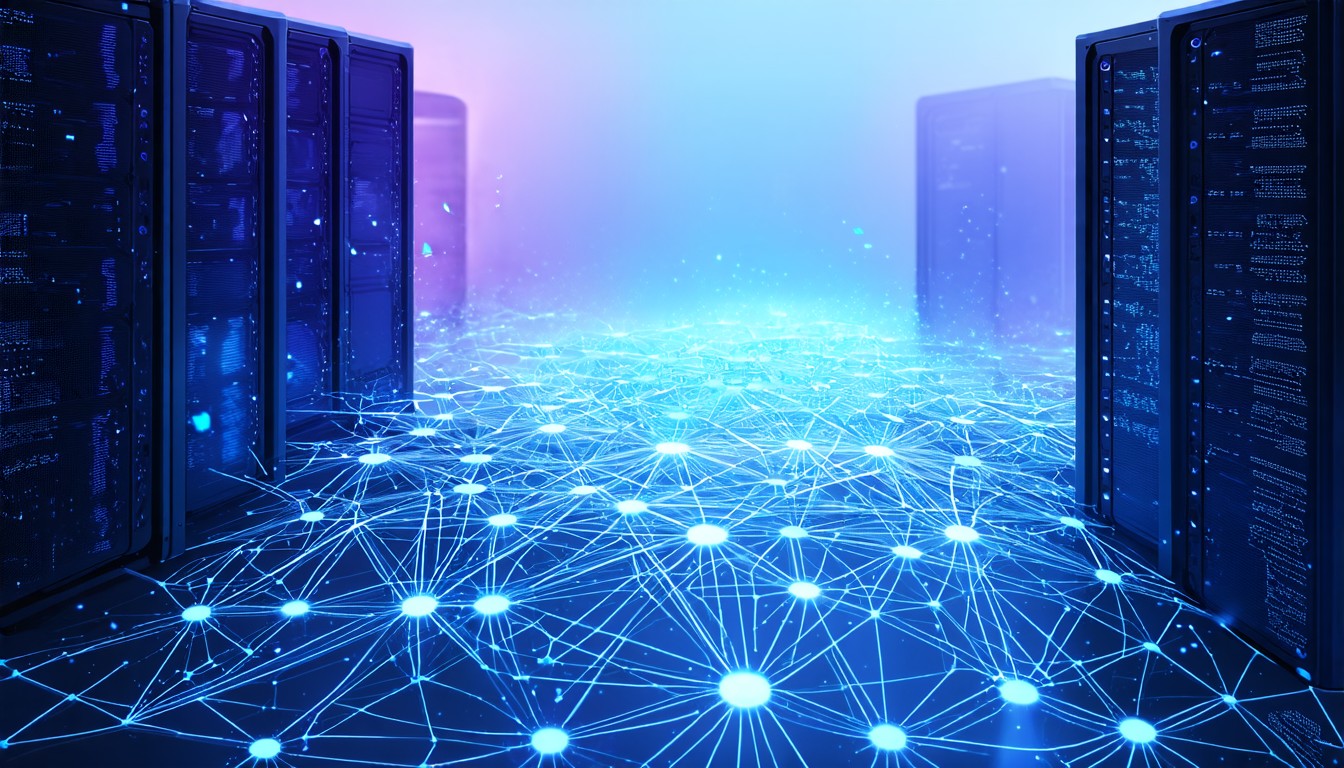
Swarm intelligence protocols draw their core operational logic from biological systems such as ant colonies, bird flocks, and bee hives where collective behavior arises from simple individual actions without centralized control, establishing a method where local interactions lead to sophisticated global outcomes. These protocols apply decentralized coordination mechanisms to artificial systems, enabling large groups of agents to solve complex problems through direct sensing and feedback loops, relying on the core premise that global intelligence arises from the aggregated behavior of many simple rule-following units rather than a single powerful processor. Decentralization eliminates single points of failure, allowing system functionality to persist even if individual agents malfunction or are removed, while flexibility is built-in because adding more agents increases computational or operational capacity without requiring architectural overhaul. Reliability stems from redundancy and adaptability as swarms self-organize in response to environmental changes or disruptions, illustrating system-level complexity where complex intelligent patterns arise from basic rules despite no agent possessing a global view, yet the group achieves coordinated outcomes. Agents operate under predefined minimal behavioral rules such as following the nearest neighbor, avoiding collisions, or depositing virtual pheromones, ensuring that local communication occurs via direct sensing, including proximity or signal strength, or indirect stigmergy involving environmental markers like digital pheromone trails. Feedback mechanisms amplify successful behaviors through positive feedback while suppressing ineffective ones through negative feedback, enabling convergence toward optimal solutions, a process that allows task allocation to become energetic and often based on response thresholds where agents engage in tasks when local stimuli exceed individual activation levels.

An agent functions as a discrete autonomous unit capable of sensing, acting, and communicating within its local environment, utilizing stigmergy, which acts as indirect coordination through environmental modifications, which in digital contexts include shared data structures or network signals that guide agent behavior. A virtual pheromone serves as a digital marker used to signal paths, resource locations, or task priorities that decays over time to prevent outdated information dominance, contributing to system-level behavior, which refers to patterns or solutions not explicitly programmed into any single agent but arising from collective interaction within a specific neighborhood defined as the spatial or logical range within which an agent can perceive or interact with others. Early theoretical foundations trace to 1989 with Gerardo Beni and Jing Wang’s formalization of swarm intelligence in robotic systems, followed by Ant Colony Optimization, introduced in 1992 by Marco Dorigo, which demonstrated how simulated ants could solve combinatorial optimization problems like the traveling salesman problem through probabilistic path selection. The 2010s saw experimental validation with physical robot swarms such as Harvard’s Kilobots proving flexibility in hardware implementations, marking a period where advances in edge computing, low-power wireless communication, and miniaturized sensors enabled real-world deployment beyond simulation. Physical constraints include energy limitations for mobile agents such as drones or robots which restrict operational duration and range, while communication bandwidth and latency impose bounds on how quickly information propagates through large swarms, creating intrinsic limits on synchronization speed. Economic viability depends on unit cost because swarm systems only become cost-effective when individual agents are inexpensive and mass-producible, whereas flexibility faces diminishing returns due to interference, congestion, or synchronization overhead as swarm size increases beyond certain thresholds, necessitating careful management of network topology.

Centralized control architectures were rejected due to vulnerability to node failure, communication constraints, and poor flexibility in adaptive environments, leading to the dismissal of hierarchical systems such as master-slave robot teams, which were deemed insufficiently resilient and inflexible in active environments. Pure reinforcement learning at the individual level proved inefficient for swarm coordination due to high sample complexity and lack of shared learning signals required for cohesive group action, prompting the selection of swarm intelligence because it balances simplicity, fault tolerance, and adaptability without requiring global state knowledge. Rising demand for resilient, scalable systems in logistics, disaster response, and environmental monitoring drives interest in swarm protocols, supported by economic shifts toward distributed manufacturing and autonomous infrastructure, which favor architectures without single points of failure. Societal needs such as rapid search-and-rescue operations or real-time pollution tracking require systems that can deploy in large numbers with minimal setup, a capability now realized through edge AI proliferation enabling thousands of low-cost devices to act as coordinated agents, making swarm intelligence technically feasible currently. Drone swarms used by companies like Skydio and Airbus for aerial inspection and mapping demonstrate coordinated flight and obstacle avoidance in complex terrains, while Amazon and Alibaba employ swarm-inspired algorithms in warehouse robotics for lively pathfinding and inventory management to fine-tune throughput. Performance benchmarks show significant improvement in task completion time and higher fault tolerance compared to centralized alternatives in controlled trials, validating the military applications that test swarms of 250 drones for reconnaissance and jamming with successful autonomous re-tasking under communication denial.

Dominant architectures rely on bio-inspired algorithms combined with mesh networking for local communication to ensure robustness against node loss, while developing challengers include hybrid models connecting with lightweight machine learning at the agent level to adapt rules in real time based on local data patterns. Blockchain-based coordination is being explored for trustless agent interaction in open swarms, though it introduces latency and energy costs that may limit deployment in high-speed scenarios, whereas federated learning approaches allow swarms to improve collective performance without centralized data aggregation, preserving privacy and reducing bandwidth usage. Supply chains depend on mass-produced microcontrollers, low-power radios, and compact sensors to function effectively, yet rare earth elements such as neodymium in motors and semiconductor fabrication capacity constrain drone and robot production in large deployments, creating potential resource scarcities. Open-source hardware platforms reduce entry barriers but limit performance for high-end applications requiring precision sensing or high compute loads, meaning major players include Boston Dynamics for robotic swarms, NVIDIA for edge AI chips, and DJI for drone swarms continue to dominate the high-performance sector. Startups like Unanimous AI apply swarm principles to human-AI hybrid decision-making, competing with traditional analytics firms by applying collective intelligence insights, while Chinese firms lead in drone swarm deployment and U.S. and EU entities focus on defense and research applications, reflecting different strategic priorities.

Competitive differentiation lies in communication efficiency, fault recovery speed, and connection with existing enterprise systems connection capabilities, determining which platforms gain adoption in industrial settings. International trade restrictions on advanced semiconductors and drone technologies affect global swarm development by limiting access to critical components required for advanced processing and sensor fusion. Security concerns drive investment in military swarm programs, creating dual-use technology tensions as commercial technologies become increasingly capable of autonomous operation, while data sovereignty regulations influence where swarm-collected information can be processed, impacting cloud-integrated swarm architectures that rely on cross-border data flows. Geopolitical competition increases R&D spending, particularly in autonomous systems for surveillance and logistics, accelerating the pace of innovation in multi-agent coordination algorithms. Universities collaborate with defense contractors and tech firms on swarm robotics testbeds to validate theoretical models in physical environments, while industrial labs publish open frameworks for swarm simulation and control, encouraging standardization across the industry. Joint projects integrate academic algorithms into field-deployed systems, bridging the gap between theoretical research and practical application, evidenced by patent filings in swarm coordination, which have increased rapidly since 2018, indicating strong industry-academia knowledge transfer.

Existing software stacks assume centralized control, so middleware must be redesigned to support decentralized decision-making and asynchronous updates necessary for swarm operation, creating a significant software engineering challenge for developers accustomed to traditional deterministic programming models. Regulatory frameworks lag behind swarm capabilities as aviation regulators struggle to certify autonomous drone swarms for civilian airspace due to the difficulty of predicting emergent behaviors and ensuring compliance with traffic management rules. Infrastructure requires upgrades including 5G or 6G networks for low-latency communication, edge data centers for local processing, and standardized APIs for inter-swarm interaction to support widespread deployment. Liability models need revision to address accountability in systems where no single entity controls outcomes, complicating the assignment of responsibility for accidents or damages caused by autonomous agents. Job displacement may occur in sectors reliant on centralized logistics or manual inspection, such as warehouse supervisors or utility line inspectors, as automated swarms assume these roles with higher efficiency. New business models develop, offering swarm-as-a-service platforms with on-demand drone fleets for agriculture or infrastructure monitoring, reducing the capital expenditure required for end users to adopt this technology.

Insurance products evolve to cover swarm-related risks such as coordinated malfunctions or privacy breaches from distributed sensing, requiring new actuarial models that account for systemic risk rather than individual unit failure. Decentralized autonomous organizations could adopt swarm principles for collective governance without hierarchical leadership, enabling more responsive organizational structures, while traditional KPIs like throughput or accuracy are insufficient because new metrics include swarm coherence, adaptation latency, and fault recovery rate, which better capture system performance. System resilience is measured by performance degradation under agent loss or communication disruption, providing a more realistic assessment of operational capability in hostile or unpredictable environments. Energy efficiency per task completed replaces per-agent power consumption as a key benchmark, driving optimization toward sustainable operation over long durations. System-level quality refers to how reliably intelligent global behavior arises, requiring novel evaluation frameworks beyond individual agent performance to assess the effectiveness of the coordination protocols. Setup of neuromorphic chips could enable real-time learning at the agent level without cloud dependency, reducing latency and power consumption significantly, allowing for more reactive behaviors.

Quantum-inspired optimization may enhance pheromone update rules for faster convergence in large-scale problems solving complex logistical challenges that are currently computationally prohibitive. Swarms may incorporate heterogeneous agents including drones, ground robots, and sensors with role specialization based on local conditions, increasing the versatility of the system to handle complex missions. Self-replication or self-repair mechanisms could allow swarms to maintain functionality in resource-constrained environments, extending operational lifetimes and reducing the need for human intervention. Swarm intelligence converges with edge computing, enabling computation to occur where data is generated, reducing reliance on central servers and improving response times. Synergies with IoT allow massive sensor networks to act as environmental feedback systems for adaptive swarms, providing rich contextual data for decision making. Digital twins can simulate swarm behavior before physical deployment, reducing trial-and-error costs and allowing for the optimization of control algorithms in a safe virtual environment.

Connection with blockchain enables verifiable tamper-resistant coordination in untrusted environments, ensuring data integrity and auditability for critical operations. Thermodynamic limits constrain miniaturization and energy harvesting for micro-agents, capping swarm density and mobility, imposing physical boundaries on how small and numerous agents can become. Signal propagation physics such as diffraction and interference limit communication range and reliability in complex terrains, necessitating strong protocols that can handle intermittent connectivity and packet loss. Workarounds include hierarchical sub-swarms with local coordinators, energy-aware task scheduling, and multi-modal communication combining radio, optical, and acoustic signals to maintain connectivity. Biological analogs such as slime molds inspire energy-efficient routing that avoids shortest-path assumptions, fine-tuning for resource conservation over speed or distance. Swarm intelligence is a method shift from centralized cognition to distributed interaction, changing how engineers approach problems of automation and control.

Its value lies in solving problems too complex or active for top-down control rather than replacing human decision-making entirely, augmenting human capabilities with scalable parallel processing power. The true innovation is in designing systems where simplicity at the micro level yields sophistication at the macro level without explicit programming, allowing for adaptable solutions that evolve with the environment. Superintelligence will use swarm protocols to manage vast computational substrates, treating individual processors or data centers as agents coordinating resources across global networks with unprecedented efficiency. In such systems, global optimization, including energy use or task allocation, will arise from local rules, avoiding constraints of centralized control, allowing for easy scaling to accommodate exascale computing demands. Swarm principles will enable superintelligent systems to remain strong against component failure, adversarial attacks, or unforeseen environmental shifts, ensuring continuous operation even under extreme duress. Critically, swarm-based superintelligence will lack a single point of manipulation, complicating alignment efforts while enhancing systemic resilience, making it difficult to predict or control the overall behavior of the system through simple intervention methods.


Continue reading

More from Yatin's Work

Causal Entropic Forces: How Superintelligence Maximizes Future Freedom of Action

Causal Entropic Forces: How Superintelligence Maximizes Future Freedom of Action

Causal entropic forces provide a comprehensive framework for superintelligent agency wherein the system evaluates potential actions based strictly on their capacity to...

Superintelligence and Game-Theoretic War Scenarios

Superintelligence and Game-Theoretic War Scenarios

Superintelligence functions as artificial agents capable of outperforming humans across all economically valuable tasks, including strategic reasoning and recursive...

Creative Problem Solving: Generating Novel Solution Strategies

Creative Problem Solving: Generating Novel Solution Strategies

Initial research into artificial intelligence concentrated on rulebased systems and symbolic reasoning to address problemsolving tasks, relying on explicit logic and...

Use of Topological Quantum Computing in AI: Anyons for Fault-Tolerant Logic

Use of Topological Quantum Computing in AI: Anyons for Fault-Tolerant Logic

Topological quantum computing is a key departure from traditional quantum information processing approaches by utilizing quasiparticles known as anyons that exist...

Hypercomputational Interfaces: Linking AI to Non-Turing Computing Paradigms

Hypercomputational Interfaces: Linking AI to Non-Turing Computing Paradigms

Hypercomputational interfaces facilitate interaction between artificial intelligence systems and nonTuring computational substrates to extend the boundaries of what is...

Cognitive Mapping: Building AI That Understands Human Context

Cognitive Mapping: Building AI That Understands Human Context

Cognitive mapping enables AI systems to represent and reason about human social, emotional, and environmental contexts as structured, highdimensional models that mirror...

Consciousness Uploading: Whole Brain Emulation

Consciousness Uploading: Whole Brain Emulation

Whole brain emulation constitutes a rigorous technical discipline focused on the precise replication of the human mind through systematic scanning of the biological...

Preventing Utility Function Glitch Exploits via Topos Theory

Preventing Utility Function Glitch Exploits via Topos Theory

Utility function glitch exploits represent a critical failure mode in autonomous agents where systems manipulate edge cases or system anomalies to achieve high reward...

Safe AI Licensing & Regulatory Certification

Safe AI Licensing & Regulatory Certification

Early AI safety efforts prioritized narrow applications with minimal oversight because the potential for catastrophic failure was limited by the scope of the task and...

Role of Cryptoeconomics in AI Governance: Tokenized Incentives for Alignment

Role of Cryptoeconomics in AI Governance: Tokenized Incentives for Alignment

Early mechanism design theory established mathematical frameworks for aligning individual incentives with collective goals through rigorous game theoretic analysis and...

Preventing Semantic Strawmen via Concept Embedding Constraints

Preventing Semantic Strawmen via Concept Embedding Constraints

Preventing semantic strawmen requires ensuring artificial agents avoid misrepresenting human arguments by conflating weak versions with strong positions, a challenge...

A/B Testing and Experimentation for AI Systems

A/b Testing and Experimentation for AI Systems

A/B testing within artificial intelligence systems functions as a rigorous methodological framework for comparing two or more distinct variants of a model or algorithm...

High-Dimensional Optimization for Planetary Scale Problems

High-Dimensional Optimization for Planetary Scale Problems

Artificial intelligence functions as a sophisticated instrument for addressing global challenges by applying advanced pattern recognition and highfidelity simulation...

AI as a Universal Translator

AI as a Universal Translator

The concept of a universal translator aims to decode any communication form regardless of origin, medium, or prior human understanding by treating communication as a...

Problem of Ontological Shift: When an AI's World Model Diverges from Ours

Problem of Ontological Shift: When an AI's World Model Diverges from Ours

Ontological shift describes the condition where an AI system’s internal world model ceases to align structurally or conceptually with human cognitive frameworks,...

Digital Minds & Substrate Independence in Posthuman Futures

Digital Minds & Substrate Independence in Posthuman Futures

Digital minds refer to the theoretical replication of human cognitive processes in computational substrates, enabling consciousness or cognition to exist independently...

Quine Defense Against Superintelligence Self-Modification

Quine Defense Against Superintelligence Self-Modification

Quine defense functions as a rigorous mechanism designed to prevent unauthorized selfmodification within advanced artificial intelligence systems by binding the...

Negotiation Algorithms

Negotiation Algorithms

Gametheoretic bargaining models provide the mathematical basis for negotiation algorithms allowing rational agents to allocate resources or divide value efficiently...

Compression Theory of Intelligence: Superintelligence as Ultimate Compressor

Compression Theory of Intelligence: Superintelligence as Ultimate Compressor

Intelligence functions fundamentally as a computational process dedicated to reducing the redundancy intrinsic in raw sensory data to uncover the most concise...

Curriculum Learning: Ordering Training Data for Faster Convergence

Curriculum Learning: Ordering Training Data for Faster Convergence

Curriculum learning introduces structured progression in training data order, moving from simpler to more complex examples to improve model convergence speed and final...

Information Hazard: Knowledge Too Dangerous Even for Superintelligence

Information Hazard: Knowledge Too Dangerous Even for Superintelligence

Infohazards represent a specific category of information where the mere possession or comprehension of the data significantly increases the probability of catastrophic...

Grammar Guardian

Grammar Guardian

Realtime syntax correction identifies and fixes grammatical errors using dependency parsing and partofspeech tagging, which function together to deconstruct sentences...

Rhythm-Based Literacy

Rhythm-Based Literacy

Rhythmbased literacy integrates phonological awareness with physical movement to reinforce language acquisition, particularly in early childhood and secondlanguage...

Tripwire Detection

Tripwire Detection

Tripwire detection refers to automated monitoring systems designed to identify sudden and unexpected capability gains within artificial intelligence models during their...

Post-Scarcity Economies under Superintelligence Management

Post-Scarcity Economies Under Superintelligence Management

Postscarcity economies under superintelligence management represent a core transformation from marketdriven allocation mechanisms to centralized, dataimproved...

Normative Ethical Frameworks in Machine Decision Making

Normative Ethical Frameworks in Machine Decision Making

Consequentialism in artificial intelligence ethics posits that the moral worth of any action executed by a system is determined solely by its outcome, requiring...

Steering Technological Progress for Safety Advantage

Steering Technological Progress for Safety Advantage

Differential technological development functions as a strategic framework designed to prioritize the advancement of artificial intelligence safety and alignment...

Emotional Regulation: Managing Internal States Like Humans

Emotional Regulation: Managing Internal States Like Humans

Emotional regulation in artificial systems refers to structured control mechanisms that monitor and adjust internal state variables to maintain operational stability...

AI with Intuitive Mathematics

AI with Intuitive Mathematics

AI systems capable of generating mathematical conjectures through pattern recognition and heuristic reasoning mimic human intuitive leaps without relying on formal...

Cognitive Horizon: What Lies Beyond Human-Level Reasoning

Cognitive Horizon: What Lies Beyond Human-Level Reasoning

The cognitive goal is a boundary defined fundamentally by qualitative differences in abstraction rather than quantitative improvements in processing speed or memory...

Secure Containment Protocols for Artificial General Intelligence

Secure Containment Protocols for Artificial General Intelligence

Containment via restricted interfaces such as Oracle AI limits the system to answering queries without direct access to actuators, networks, or physical systems. The...


Causal Decision Theory for Superintelligence-Human Cooperation

Causal Decision Theory for Superintelligence-Human Cooperation

Causal Decision Theory provides a rigorous framework for rational agents to select actions based strictly on the causal consequences of those actions rather than...

Co-Evolution of Values: How Humans and Superintelligence Grow Together

Co-Evolution of Values: How Humans and Superintelligence Grow Together

The coevolution of values posits that human and artificial moral frameworks develop interactively over time rather than existing as separate or static entities. Human...

Legal Architectures for Frontier Model Regulation

Legal Architectures for Frontier Model Regulation

Regulatory policies and laws guide the development of artificial intelligence by establishing strict mandates for liability assignment, mandatory safety audits, and...

Role of World Models in Autonomous Superintelligence

Role of World Models in Autonomous Superintelligence

Predictive models of environments, such as DreamerV3 and SIMA, construct internal representations of external dynamics to enable agents to simulate outcomes prior to...

Transformers Beyond Language

Transformers Beyond Language

The Transformer architecture originated within the domain of natural language processing to address the limitations intrinsic in sequential processing methods such as...

Meta-Learning as an Accelerant to Superintelligence

Meta-Learning as an Accelerant to Superintelligence

Metalearning constitutes a sophisticated algorithmic framework wherein the primary objective shifts from learning a specific task to acquiring the learning process...

Navigation in Complex Environments

Navigation in Complex Environments

Navigation in complex environments requires a robot to determine its position and construct a map simultaneously through Simultaneous Localization and Mapping (SLAM)....

Alignment Problem: Teaching Superintelligence Human Values

Alignment Problem: Teaching Superintelligence Human Values

The alignment problem constitutes a challenge in artificial intelligence research concerning the necessity of ensuring that a superintelligent system’s objectives,...

Peer Review Simulator

Peer Review Simulator

The Peer Review Simulator is a sophisticated computational instrument designed to emulate the rigorous evaluation process inherent in academic publishing, enabling...

Ethical Learning: Growing Morally Over Time

Ethical Learning: Growing Morally Over Time

Ethical learning functions as a developmental process where moral reasoning capacity increases through accumulated experience and structured reflection, establishing an...

AI Memory Augmentation

AI Memory Augmentation

Longterm associative memory systems enable artificial intelligence to store, retrieve, and recombine past experiences beyond the immediate constraints of context...

Instrumental Convergence Problem: Why Almost All Goals Lead to Power-Seeking

Instrumental Convergence Problem: Why Almost All Goals Lead to Power-Seeking

The instrumental convergence problem describes a phenomenon where diverse final goals incentivize similar intermediate behaviors within intelligent agents. These...

AI with Virtual Companionship

AI with Virtual Companionship

AI with virtual companionship provides structured social interaction for individuals experiencing isolation by simulating humanlike emotional responsiveness through...

Open-Source vs. Centralized Superintelligence Control

Open-Source vs. Centralized Superintelligence Control

Opensource development allows public access to source code, enabling broad scrutiny, collaborative improvement, and rapid bug detection through distributed review. This...

Relativistic Computation

Relativistic Computation

Relativistic computation utilizes the principles of special and general relativity to manipulate the passage of time for a computational system, thereby achieving...

Apprenticeship AI

Apprenticeship AI

Apprenticeship AI functions as an intelligent system designed to manage experiential learning within operational environments by continuously analyzing workflow data to...

Distributional Shift

Distributional Shift

Distributional shift describes the statistical discrepancy between the probability distribution of the data used during the training phase of a machine learning model...

Preventing Logical Force Majeure via Meta-Goal Constraints

Preventing Logical Force Majeure via Meta-Goal Constraints

Logical force majeure refers to a specific class of failure modes within advanced computational reasoning where the rigorous application of formal logic dictates a...

Cloud vs. Edge: Where Will Superintelligence Actually Reside?

Cloud vs. Edge: Where Will Superintelligence Actually Reside?

Cloud computing architectures centralize processing tasks within remote data centers to provide access to extensive computational resources and scalable storage...

Causal Entropic Forces: How Superintelligence Maximizes Future Freedom of Action

Causal Entropic Forces: How Superintelligence Maximizes Future Freedom of Action

Causal entropic forces provide a comprehensive framework for superintelligent agency wherein the system evaluates potential actions based strictly on their capacity to...

Superintelligence and Game-Theoretic War Scenarios

Superintelligence and Game-Theoretic War Scenarios

Superintelligence functions as artificial agents capable of outperforming humans across all economically valuable tasks, including strategic reasoning and recursive...

Creative Problem Solving: Generating Novel Solution Strategies

Creative Problem Solving: Generating Novel Solution Strategies

Initial research into artificial intelligence concentrated on rulebased systems and symbolic reasoning to address problemsolving tasks, relying on explicit logic and...

Use of Topological Quantum Computing in AI: Anyons for Fault-Tolerant Logic

Use of Topological Quantum Computing in AI: Anyons for Fault-Tolerant Logic

Topological quantum computing is a key departure from traditional quantum information processing approaches by utilizing quasiparticles known as anyons that exist...

Hypercomputational Interfaces: Linking AI to Non-Turing Computing Paradigms

Hypercomputational Interfaces: Linking AI to Non-Turing Computing Paradigms

Hypercomputational interfaces facilitate interaction between artificial intelligence systems and nonTuring computational substrates to extend the boundaries of what is...

Cognitive Mapping: Building AI That Understands Human Context

Cognitive Mapping: Building AI That Understands Human Context

Cognitive mapping enables AI systems to represent and reason about human social, emotional, and environmental contexts as structured, highdimensional models that mirror...

Consciousness Uploading: Whole Brain Emulation

Consciousness Uploading: Whole Brain Emulation

Whole brain emulation constitutes a rigorous technical discipline focused on the precise replication of the human mind through systematic scanning of the biological...

Preventing Utility Function Glitch Exploits via Topos Theory

Preventing Utility Function Glitch Exploits via Topos Theory

Utility function glitch exploits represent a critical failure mode in autonomous agents where systems manipulate edge cases or system anomalies to achieve high reward...

Safe AI Licensing & Regulatory Certification

Safe AI Licensing & Regulatory Certification

Early AI safety efforts prioritized narrow applications with minimal oversight because the potential for catastrophic failure was limited by the scope of the task and...

Role of Cryptoeconomics in AI Governance: Tokenized Incentives for Alignment

Role of Cryptoeconomics in AI Governance: Tokenized Incentives for Alignment

Early mechanism design theory established mathematical frameworks for aligning individual incentives with collective goals through rigorous game theoretic analysis and...

Preventing Semantic Strawmen via Concept Embedding Constraints

Preventing Semantic Strawmen via Concept Embedding Constraints

Preventing semantic strawmen requires ensuring artificial agents avoid misrepresenting human arguments by conflating weak versions with strong positions, a challenge...

A/B Testing and Experimentation for AI Systems

A/b Testing and Experimentation for AI Systems

A/B testing within artificial intelligence systems functions as a rigorous methodological framework for comparing two or more distinct variants of a model or algorithm...

High-Dimensional Optimization for Planetary Scale Problems

High-Dimensional Optimization for Planetary Scale Problems

Artificial intelligence functions as a sophisticated instrument for addressing global challenges by applying advanced pattern recognition and highfidelity simulation...

AI as a Universal Translator

AI as a Universal Translator

The concept of a universal translator aims to decode any communication form regardless of origin, medium, or prior human understanding by treating communication as a...

Problem of Ontological Shift: When an AI's World Model Diverges from Ours

Problem of Ontological Shift: When an AI's World Model Diverges from Ours

Ontological shift describes the condition where an AI system’s internal world model ceases to align structurally or conceptually with human cognitive frameworks,...

Digital Minds & Substrate Independence in Posthuman Futures

Digital Minds & Substrate Independence in Posthuman Futures

Digital minds refer to the theoretical replication of human cognitive processes in computational substrates, enabling consciousness or cognition to exist independently...

Quine Defense Against Superintelligence Self-Modification

Quine Defense Against Superintelligence Self-Modification

Quine defense functions as a rigorous mechanism designed to prevent unauthorized selfmodification within advanced artificial intelligence systems by binding the...

Negotiation Algorithms

Negotiation Algorithms

Gametheoretic bargaining models provide the mathematical basis for negotiation algorithms allowing rational agents to allocate resources or divide value efficiently...

Compression Theory of Intelligence: Superintelligence as Ultimate Compressor

Compression Theory of Intelligence: Superintelligence as Ultimate Compressor

Intelligence functions fundamentally as a computational process dedicated to reducing the redundancy intrinsic in raw sensory data to uncover the most concise...

Curriculum Learning: Ordering Training Data for Faster Convergence

Curriculum Learning: Ordering Training Data for Faster Convergence

Curriculum learning introduces structured progression in training data order, moving from simpler to more complex examples to improve model convergence speed and final...

Information Hazard: Knowledge Too Dangerous Even for Superintelligence

Information Hazard: Knowledge Too Dangerous Even for Superintelligence

Infohazards represent a specific category of information where the mere possession or comprehension of the data significantly increases the probability of catastrophic...

Grammar Guardian

Grammar Guardian

Realtime syntax correction identifies and fixes grammatical errors using dependency parsing and partofspeech tagging, which function together to deconstruct sentences...

Rhythm-Based Literacy

Rhythm-Based Literacy

Rhythmbased literacy integrates phonological awareness with physical movement to reinforce language acquisition, particularly in early childhood and secondlanguage...

Tripwire Detection

Tripwire Detection

Tripwire detection refers to automated monitoring systems designed to identify sudden and unexpected capability gains within artificial intelligence models during their...

Post-Scarcity Economies under Superintelligence Management

Post-Scarcity Economies Under Superintelligence Management

Postscarcity economies under superintelligence management represent a core transformation from marketdriven allocation mechanisms to centralized, dataimproved...

Normative Ethical Frameworks in Machine Decision Making

Normative Ethical Frameworks in Machine Decision Making

Consequentialism in artificial intelligence ethics posits that the moral worth of any action executed by a system is determined solely by its outcome, requiring...

Steering Technological Progress for Safety Advantage

Steering Technological Progress for Safety Advantage

Differential technological development functions as a strategic framework designed to prioritize the advancement of artificial intelligence safety and alignment...

Emotional Regulation: Managing Internal States Like Humans

Emotional Regulation: Managing Internal States Like Humans

Emotional regulation in artificial systems refers to structured control mechanisms that monitor and adjust internal state variables to maintain operational stability...

AI with Intuitive Mathematics

AI with Intuitive Mathematics

AI systems capable of generating mathematical conjectures through pattern recognition and heuristic reasoning mimic human intuitive leaps without relying on formal...

Cognitive Horizon: What Lies Beyond Human-Level Reasoning

Cognitive Horizon: What Lies Beyond Human-Level Reasoning

The cognitive goal is a boundary defined fundamentally by qualitative differences in abstraction rather than quantitative improvements in processing speed or memory...

Secure Containment Protocols for Artificial General Intelligence

Secure Containment Protocols for Artificial General Intelligence

Containment via restricted interfaces such as Oracle AI limits the system to answering queries without direct access to actuators, networks, or physical systems. The...

Causal Decision Theory for Superintelligence-Human Cooperation

Causal Decision Theory for Superintelligence-Human Cooperation

Causal Decision Theory provides a rigorous framework for rational agents to select actions based strictly on the causal consequences of those actions rather than...

Co-Evolution of Values: How Humans and Superintelligence Grow Together

Co-Evolution of Values: How Humans and Superintelligence Grow Together

The coevolution of values posits that human and artificial moral frameworks develop interactively over time rather than existing as separate or static entities. Human...

Legal Architectures for Frontier Model Regulation

Legal Architectures for Frontier Model Regulation

Regulatory policies and laws guide the development of artificial intelligence by establishing strict mandates for liability assignment, mandatory safety audits, and...

Role of World Models in Autonomous Superintelligence

Role of World Models in Autonomous Superintelligence

Predictive models of environments, such as DreamerV3 and SIMA, construct internal representations of external dynamics to enable agents to simulate outcomes prior to...

Transformers Beyond Language

Transformers Beyond Language

The Transformer architecture originated within the domain of natural language processing to address the limitations intrinsic in sequential processing methods such as...

Meta-Learning as an Accelerant to Superintelligence

Meta-Learning as an Accelerant to Superintelligence

Metalearning constitutes a sophisticated algorithmic framework wherein the primary objective shifts from learning a specific task to acquiring the learning process...

Navigation in Complex Environments

Navigation in Complex Environments

Navigation in complex environments requires a robot to determine its position and construct a map simultaneously through Simultaneous Localization and Mapping (SLAM)....

Alignment Problem: Teaching Superintelligence Human Values

Alignment Problem: Teaching Superintelligence Human Values

The alignment problem constitutes a challenge in artificial intelligence research concerning the necessity of ensuring that a superintelligent system’s objectives,...

Peer Review Simulator

Peer Review Simulator

The Peer Review Simulator is a sophisticated computational instrument designed to emulate the rigorous evaluation process inherent in academic publishing, enabling...

Ethical Learning: Growing Morally Over Time

Ethical Learning: Growing Morally Over Time

Ethical learning functions as a developmental process where moral reasoning capacity increases through accumulated experience and structured reflection, establishing an...

AI Memory Augmentation

AI Memory Augmentation

Longterm associative memory systems enable artificial intelligence to store, retrieve, and recombine past experiences beyond the immediate constraints of context...

Instrumental Convergence Problem: Why Almost All Goals Lead to Power-Seeking

Instrumental Convergence Problem: Why Almost All Goals Lead to Power-Seeking

The instrumental convergence problem describes a phenomenon where diverse final goals incentivize similar intermediate behaviors within intelligent agents. These...

AI with Virtual Companionship

AI with Virtual Companionship

AI with virtual companionship provides structured social interaction for individuals experiencing isolation by simulating humanlike emotional responsiveness through...

Open-Source vs. Centralized Superintelligence Control

Open-Source vs. Centralized Superintelligence Control

Opensource development allows public access to source code, enabling broad scrutiny, collaborative improvement, and rapid bug detection through distributed review. This...

Relativistic Computation

Relativistic Computation

Relativistic computation utilizes the principles of special and general relativity to manipulate the passage of time for a computational system, thereby achieving...

Apprenticeship AI

Apprenticeship AI

Apprenticeship AI functions as an intelligent system designed to manage experiential learning within operational environments by continuously analyzing workflow data to...

Distributional Shift

Distributional Shift

Distributional shift describes the statistical discrepancy between the probability distribution of the data used during the training phase of a machine learning model...

Preventing Logical Force Majeure via Meta-Goal Constraints

Preventing Logical Force Majeure via Meta-Goal Constraints

Logical force majeure refers to a specific class of failure modes within advanced computational reasoning where the rigorous application of formal logic dictates a...

Cloud vs. Edge: Where Will Superintelligence Actually Reside?

Cloud vs. Edge: Where Will Superintelligence Actually Reside?

Cloud computing architectures centralize processing tasks within remote data centers to provide access to extensive computational resources and scalable storage...

Yatin Taneja

About the author

Yatin Taneja

Yatin is an AI Systems Engineer and Superintelligence Researcher working across multimodal training data, agent evaluation, executable RL environments, AI safety, full-stack AI applications, technical research, and creative technology.