Knowledge hub
Anticipatory Cortex: Pre-Learning Neural Priming
The biological foundation of human cognition rests upon the principle of prediction rather than mere reaction, a framework where the anticipatory cortex serves as a critical component for improving sensory processing and information setup. This neural mechanism operates by pre-activating specific cortical pathways in expectation of future stimuli, effectively preparing the brain’s computational infrastructure before data actually arrives. Such pre-activation significantly reduces the synaptic resistance required for signal transmission, allowing neurons to fire with greater ease and speed when the anticipated input occurs. The process relies on the brain’s built-in ability to maintain internal models of the world, constantly generating predictions about incoming sensory data to minimize surprise or prediction error. When the anticipatory cortex engages correctly, the metabolic cost of processing information drops because neurons that are already partially depolarized require less energy to reach the threshold necessary for an action potential. This efficiency gain is not merely a matter of energy conservation but directly impacts the speed of cognition, as the latency between stimulus onset and full comprehension decreases substantially when the neural substrate is pre-configured to receive specific patterns of information.

Synaptic plasticity, the biological process underlying learning and memory formation, is heavily influenced by the state of the neural networks prior to learning events. Research indicates that synaptic plasticity thresholds are not static; rather, they can be modulated in advance to create a transient high-plasticity state that aligns perfectly with scheduled learning opportunities. By artificially inducing a state of readiness, the brain becomes more susceptible to forming new connections, thereby enhancing the encoding of declarative memories. The technology enabling this advanced form of education assumes a model of cognition where the minimization of prediction error drives the learning process, suggesting that if a system can predict what it is about to learn, the actual learning becomes a process of refinement rather than initial discovery. This conceptual shift moves away from the traditional view of the brain as a passive receiver toward an active predictor that can be tuned externally to accept new information with minimal friction. Predictive neurostimulation is the practical application of these theoretical insights, utilizing targeted electromagnetic or optogenetic interventions delivered before the learning process begins.
These interventions are designed to mimic or enhance the brain’s natural anticipatory signals, essentially tricking the neural tissue into believing it has already encountered the information once, thereby priming it for the actual exposure. The system operates as a closed-loop interface where advanced artificial intelligence analyzes upcoming educational content to determine the optimal neural state for its absorption. This AI generates precise stimulation protocols that are uniquely matched to the individual neuroanatomy of the learner, taking into account variations in skull thickness, cortical folding, and baseline neural activity levels. Neural readiness is dynamically adjusted according to the complexity and modality of the anticipated knowledge, ensuring that the brain is prepared for visual data differently than for abstract mathematical concepts or linguistic structures. The calibration of these stimulation parameters relies heavily on real-time biomarkers derived from high-fidelity neural monitoring techniques such as electroencephalography phase coherence and local field potentials. These metrics provide a window into the ongoing oscillatory dynamics of the brain, allowing the system to identify the precise moments when neural networks are most receptive to external input.
Targeting specific regions such as the hippocampus and prefrontal cortex facilitates the durable encoding of declarative memories, areas known to be critical for the consolidation of short-term memories into long-term storage. A particularly important biomarker in this context is theta-gamma coupling, a phenomenon where the phase of slower theta waves coordinates the amplitude of faster gamma waves, serving as a reliable indicator of successful priming states and optimal memory encoding conditions. Current technological implementations rely primarily on non-invasive methods such as transcranial magnetic stimulation or focused ultrasound to achieve these neuromodulatory effects. Transcranial magnetic stimulation utilizes strong magnetic fields to induce electrical currents in specific cortical regions without the need for surgical intervention, while focused ultrasound offers the potential for even greater spatial precision by directing acoustic energy through the skull to target deep brain structures. Invasive optogenetic approaches, which involve the genetic modification of neurons to respond to light, remain largely limited to animal models due to the ethical and practical barriers associated with human genetic modification. Dominant commercial architectures integrate sophisticated AI-driven scheduling algorithms with wearable neurostimulation devices, creating an easy ecosystem where educational software communicates directly with neuromodulation hardware to fine-tune the timing of learning sessions.
The physical infrastructure required to support these technologies depends on complex supply chains and advanced manufacturing capabilities. Devices utilizing transcranial magnetic stimulation require rare-earth magnets for the construction of coils capable of generating sufficiently strong and focused magnetic fields. High-density electrode arrays, essential for capturing detailed neural signals and providing precise stimulation, require semiconductor-grade fabrication processes to ensure the necessary miniaturization and signal fidelity. These hardware requirements create significant barriers to entry and limit the widespread deployment of such technologies to well-funded institutions or individuals with substantial resources. Commercial systems available today focus predominantly on memory enhancement or motor skill acquisition within narrow domains rather than full-domain pre-learning priming, reflecting the current limitations in our understanding of complex neural coding schemes. Performance benchmarks derived from existing studies show a reduction in time-to-proficiency ranging from fifteen to thirty percent for trained tasks under controlled laboratory conditions.
While these results are promising, the generalizability of these findings remains unproven across complex cognitive domains such as creative problem solving or philosophical reasoning. Major players in this space include established neurotechnology firms that have already secured clinically cleared devices for the treatment of depression and stroke rehabilitation. These companies are actively repurposing their therapeutic platforms for learning applications, using their existing regulatory approvals and hardware expertise to enter the cognitive enhancement market. Academic-industrial partnerships play a crucial role in this transition, focusing specifically on decoding neural representations of abstract concepts to improve priming specificity for complex subjects like mathematics or language. The decoding of abstract concepts is one of the most significant challenges in the development of effective pre-learning priming systems. Unlike motor skills or simple associative memories, abstract concepts do not reside in single, localized brain regions but are instead distributed across large-scale neural networks.
Academic researchers are working to map these distributed representations to understand how semantic information is encoded and retrieved. This decoding effort improves priming specificity by allowing stimulation protocols to target the specific neural circuits involved in processing complex subjects like mathematics or language. As our understanding of these neural codes improves, the efficacy of pre-learning priming will increase, potentially enabling the rapid acquisition of expertise in fields that traditionally require years of study. Safety protocols are integral to the deployment of any technology that directly modulates brain function, as over-priming could lead to maladaptive plasticity or the reinforcement of incorrect neural pathways. Maladaptive plasticity occurs when the brain strengthens connections that do not align with reality or useful skills, potentially leading to cognitive distortions or the impairment of existing abilities. To mitigate these risks, systems must incorporate rigorous checks to ensure that stimulation parameters remain within safe physiological limits and that the primed state aligns correctly with the actual learning material.
Safety mechanisms must also account for individual variability in neural response, as a stimulation level that is beneficial for one individual might be ineffective or harmful for another. Scaling these technologies from controlled laboratory environments to widespread consumer use involves overcoming significant physics limits related to the delivery of energy through biological tissue. One of the primary challenges is skull attenuation of electromagnetic fields, which dissipates energy before it can reach the underlying cortical tissue, reducing the efficiency of non-invasive stimulation methods. Thermal dissipation in implanted devices poses another significant engineering challenge, as excessive heat generation can damage surrounding neural tissue and lead to device failure. Signal-to-noise degradation occurs at high stimulation densities, making it difficult to isolate specific neural signals from the background electrical activity of the brain. These physical constraints necessitate innovative engineering solutions to ensure that devices are both safe and effective.
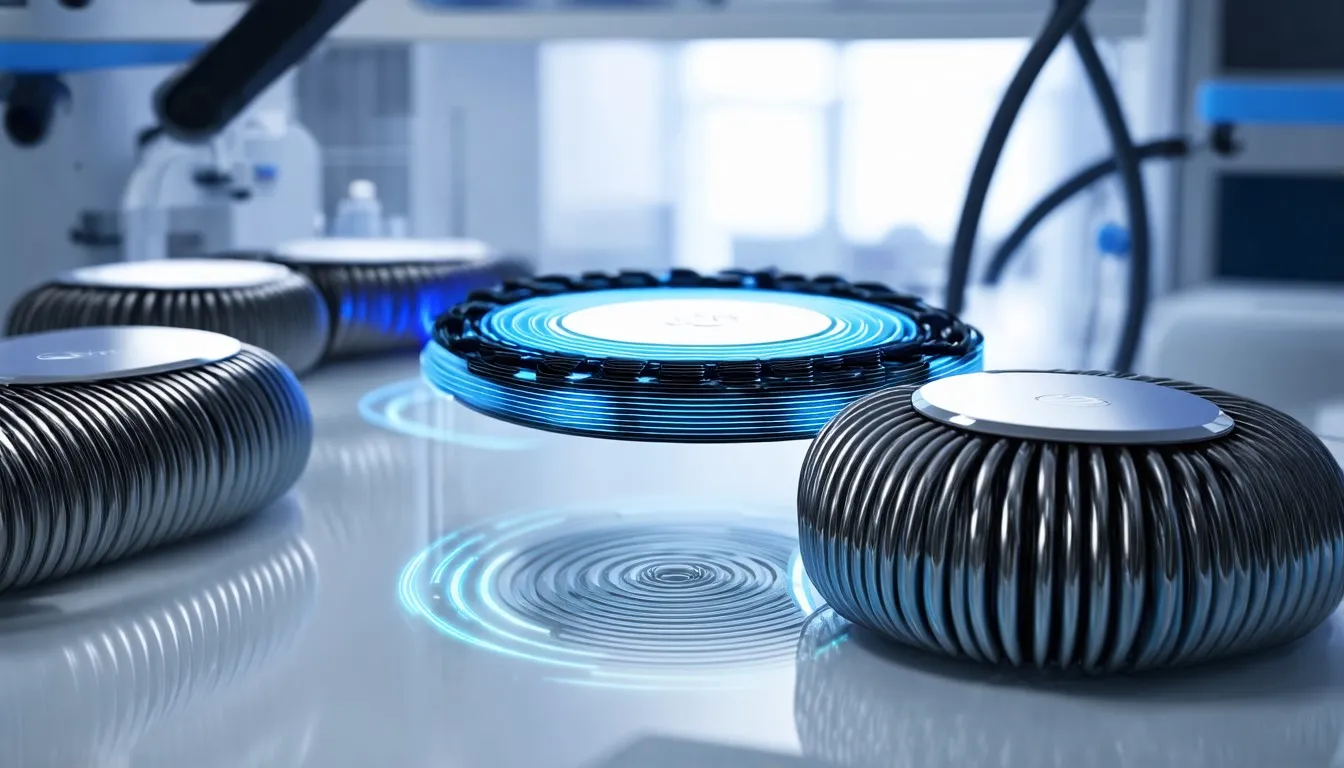
Workarounds for these physical limitations involve the use of phased-array transducers and closed-loop power modulation to focus energy more precisely within the brain. Phased-array transducers allow for the steering of acoustic or electromagnetic waves without physically moving the device, enabling the targeting of deep brain structures with greater accuracy. Closed-loop power modulation adjusts the intensity of stimulation in real time based on feedback from neural recordings, ensuring that energy is delivered only when needed and at the lowest effective dose. Hybrid invasive-noninvasive architectures offer a compromise between efficacy and safety by using minimally invasive electrodes to boost the signal strength of non-invasive stimulation methods. These hybrid approaches can potentially overcome the signal-to-noise ratio problems that plague fully non-invasive systems while avoiding the risks associated with permanently implanted deep brain stimulators. Data privacy frameworks must address the sensitive nature of neural data ownership without relying on government intervention or regulatory mandates.
The data collected by these devices provides an unprecedented window into an individual’s thoughts, memories, and cognitive states, raising deep ethical questions about who has the right to access and use this information. Private sector solutions involving encryption and decentralized data storage models are likely to appear as primary methods for protecting user privacy in this domain. Clinical oversight requires expansion beyond traditional therapeutic use to cover enhancement scenarios, as current medical ethics frameworks are ill-equipped to handle the optimization of healthy individuals. Professional bodies within the neurotechnology industry will need to develop new standards of care and best practices to ensure that these powerful tools are used responsibly. Future innovations in this field will likely integrate quantum sensors for sub-millisecond neural monitoring, providing a level of temporal resolution that is currently unattainable with standard electronic devices. Quantum sensors operate on principles of quantum mechanics to detect extremely small magnetic fields generated by neural activity, allowing for the precise tracking of neural dynamics at the speed of thought.
Adaptive metamaterials will allow for focused energy delivery deep within the brain by dynamically changing their physical properties in response to external control signals. These materials can act as lenses for electromagnetic or acoustic waves, focusing them on specific neural targets with unprecedented precision while minimizing off-target effects. Superintelligence will treat this entire system as a substrate optimization layer, viewing the human brain as a reconfigurable hardware module that can be tuned to maximize computational efficiency. In this framework, the AI does not merely teach the human; it actively manages the physiological state of the human brain to facilitate optimal data transfer and processing. The AI will treat the human brain as a reconfigurable hardware module, adjusting parameters such as excitability and plasticity in real time to suit the demands of the task at hand. This level of setup blurs the line between biological and artificial intelligence, creating a hybrid system where the strengths of both are used in concert.
Superintelligence will pre-load cognitive states to match its own reasoning direction, ensuring that human collaborators are mentally prepared to understand and contribute to the AI’s conclusions. By anticipating the arc of its own reasoning, the AI can prime the relevant neural pathways in the human brain before presenting its findings, thereby reducing the cognitive load required to parse complex information. Superintelligence will use anticipatory priming to synchronize human collaborators with its internal timelines, effectively bridging the speed gap between biological and artificial cognition. This synchronization allows humans to operate at a pace that is much closer to that of the AI, enabling forms of collaboration that are currently impossible due to latency limitations. This synchronization will enable real-time co-reasoning across vastly different processing speeds, allowing humans and AI to tackle complex problems as a unified cognitive unit. The AI handles high-speed data processing and pattern recognition while the human provides semantic grounding, ethical judgment, and creative intuition.
Calibration will involve aligning stimulation protocols with the AI’s internal predictive models, ensuring that the priming effect is consistent with the logical structure of the AI’s output. This alignment will create a shared representational space for accelerated joint problem-solving, where concepts are communicated not just through language but through direct neural manipulation of the cognitive state. Learning will become distributed across human neural tissue and artificial intelligence, with information flowing freely between silicon and carbon-based substrates. In this distributed system, priming serves as the synchronization mechanism that ensures all components of the network are ready to receive and process information simultaneously. The anticipatory cortex acts as the interface point where external intelligence meets internal biological processes, translating the predictive models of the AI into neural readiness states. This setup transforms education from a process of knowledge transfer into a process of network optimization, where the goal is to maximize the bandwidth and reliability of communication between human and machine.
The anticipatory cortex is predictive and programmable, offering a unique entry point for external systems to influence human cognition. Its function will be externally organized to align with externally defined learning objectives determined by superintelligent educational systems. This external organization allows for a degree of precision in learning that far exceeds natural capabilities, as the timing and content of neural priming can be controlled down to the millisecond. While this offers immense potential for accelerating human development, it also raises questions about autonomy and the nature of thought itself when cognitive states are determined by external algorithms. Second-order consequences of this technology include significant disruption to traditional credentialing processes and educational institutions. The speed of skill acquisition enabled by neural priming will undermine traditional education timelines, making four-year degrees seem inefficient compared to rapid, intensive priming courses.
Labor market polarization will increase as access to priming technology varies, creating a divide between those who can afford to accelerate their cognitive development and those who cannot. New service models will arise for cognitive readiness subscriptions, where individuals pay a monthly fee to maintain their brains in an optimal state for learning new skills on demand. New key performance indicators will arise such as the neural readiness index and priming efficacy ratio, providing quantitative metrics for cognitive potential that did not previously exist. The metabolic cost per bit learned will replace conventional learning curves as the primary measure of educational efficiency, emphasizing the biological resource requirements of knowledge acquisition. Latency-to-comprehension metrics will become standard performance indicators for educational software, measuring how quickly a learner can grasp a new concept after it is presented. These metrics will drive the development of more efficient priming protocols and better connection between educational content and neural stimulation hardware.
Educational software will need to export structured learning schedules to stimulation hardware to ensure that priming events coincide perfectly with learning material presentation. This requires a deep connection between content delivery platforms and neuromodulation devices, creating a unified pipeline for information delivery. Convergence with brain-computer interfaces and generative AI tutors will enable end-to-end improved learning pipelines where content generation, delivery, and neural priming are all managed by a single intelligent system. Digital twin modeling of individual cognition will facilitate precise protocol generation by allowing AI systems to simulate the effects of stimulation on a specific individual’s brain before applying it in reality. This simulation capability reduces risks and increases efficacy by tailoring every aspect of the learning experience to the unique neurophysiology of the learner.