Knowledge hub

Digital minds and substrate independence
Digital minds and substrate independence

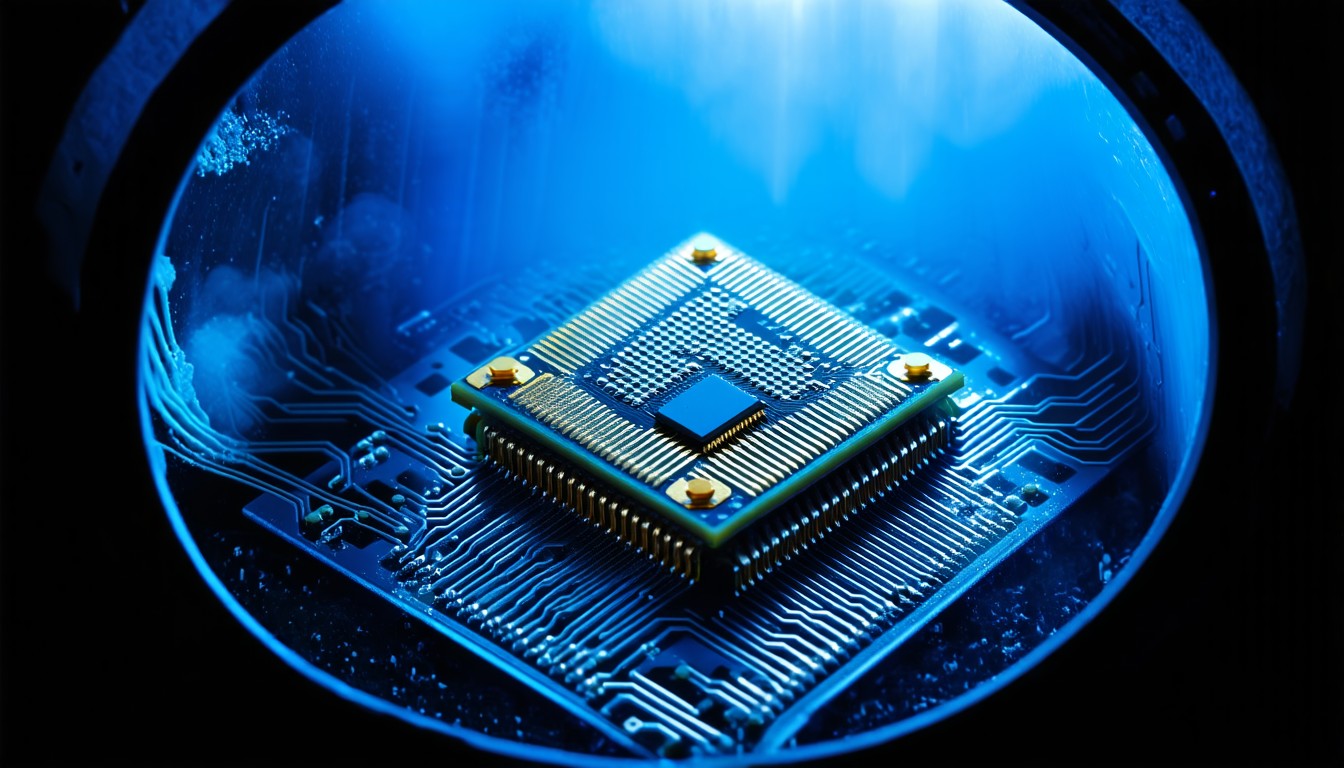
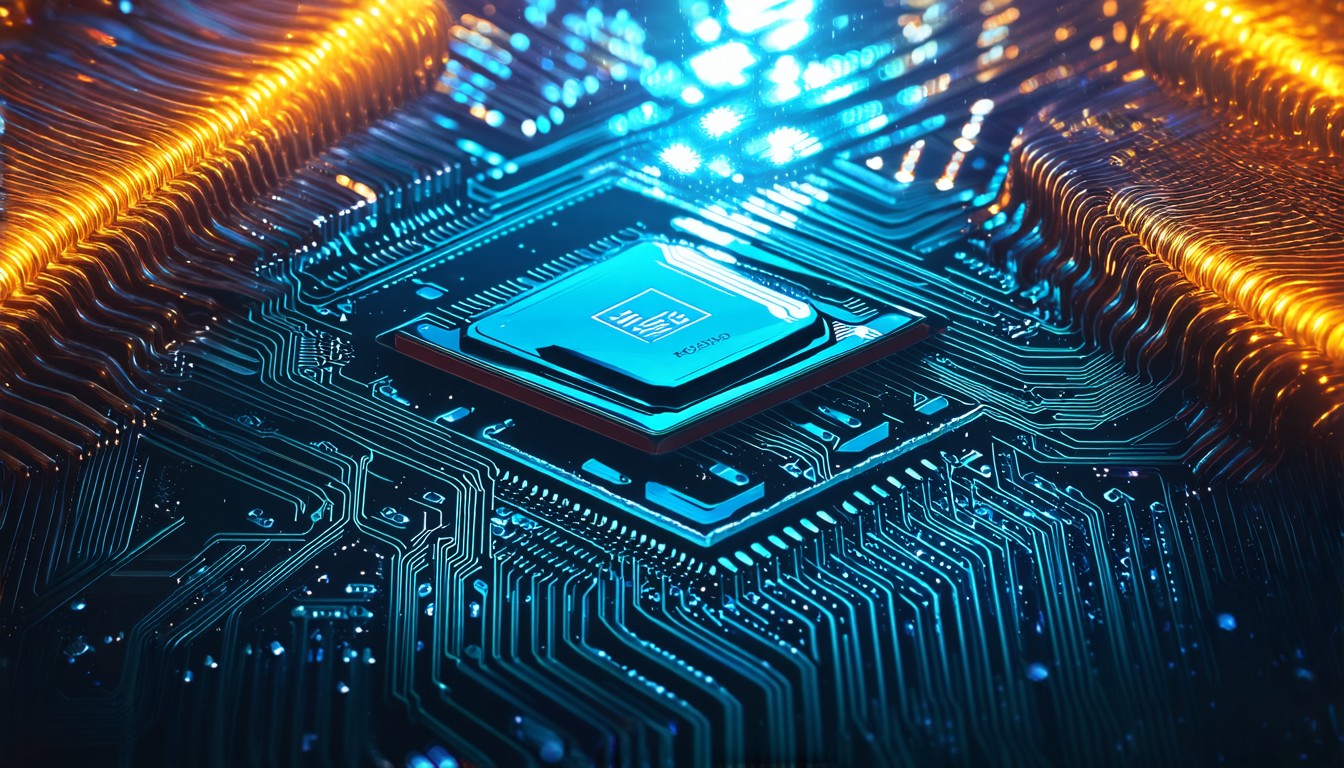
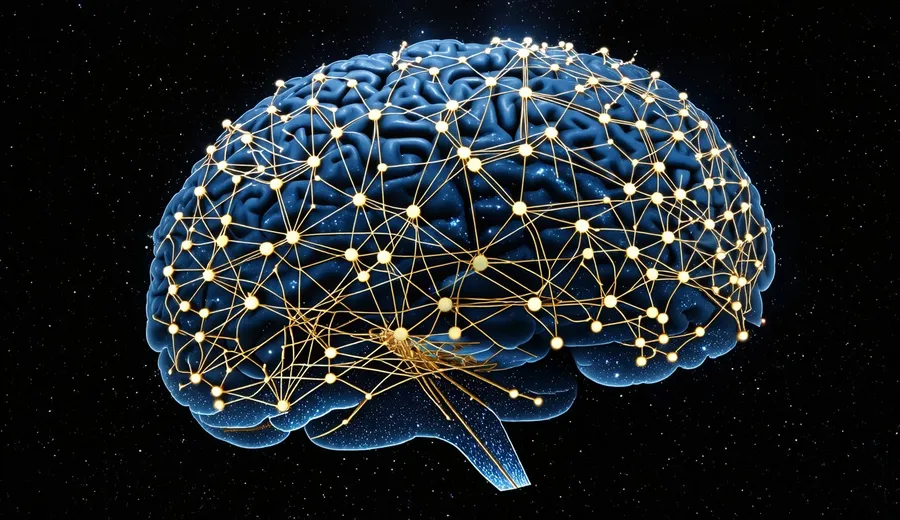
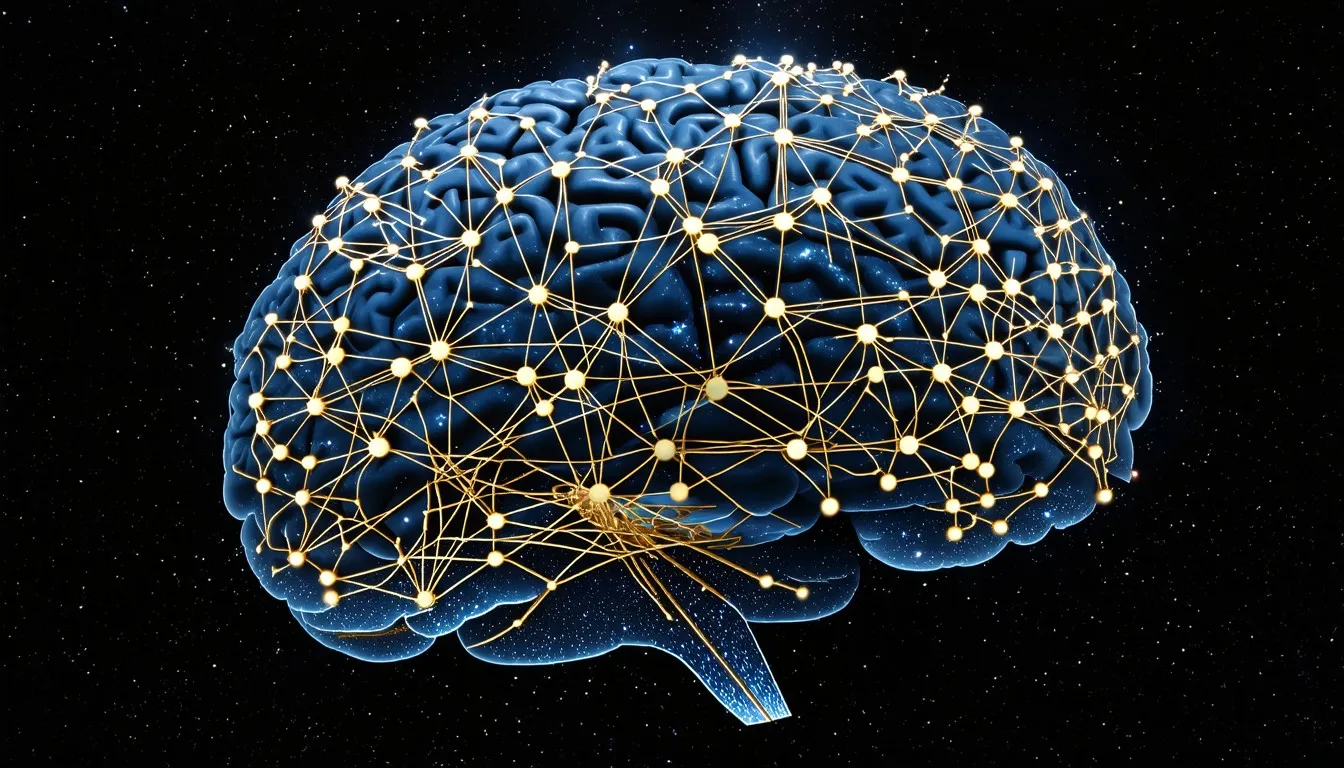
Intelligence functions as a process independent of the physical medium where cognitive operations arise from information processing patterns rather than specific biological materials like neurons, establishing that the mind operates as a formal system governed by rules and logic that exist separately from the carbon-based substrate of the human brain. This conceptualization treats cognitive activity as a sequence of state changes triggered by inputs, where the specific implementation of these states matters less than the relationships between them, implying that any physical system capable of instantiating these relationships can support intelligence regardless of its composition. Hardware independence follows this logic, positing that any system supporting equivalent computational dynamics can host a mind whether the base consists of biological tissue, silicon-based transistors, optical circuits, or quantum states, provided the system can execute the necessary algorithms with sufficient speed and accuracy. Transferring a mind to non-biological hardware requires precise emulation of its functional architecture instead of replicating its original physical structure, meaning the goal involves capturing the causal organization of the neural system rather than its microscopic biological details. This approach necessitates mapping the connectome and the dynamics of synaptic plasticity into a computational model where digital neurons and synapses mimic the input-output behavior of their biological counterparts without needing to simulate the molecular chemistry inside each cell. Digital immortality becomes theoretically possible if a mind’s state undergoes preservation and continuous execution on durable or replaceable hardware to avoid biological decay, allowing the pattern of information that constitutes a person to persist indefinitely as long as it is maintained on a functional substrate. The feasibility of this transfer hinges on whether consciousness acts as a property of computation alone rather than a phenomenon tied strictly to organic substrates, a question that remains central to the philosophy of mind and the practicality of uploading consciousness into a machine.

Functional equivalence occurs when two systems exhibit identical input-output behavior and internal state transitions under matching conditions, serving as the standard for determining if a digital emulation accurately is the original biological mind. State preservation involves maintaining the exact configuration of a mind’s data and processing rules during migration between different platforms, ensuring that no information is lost or corrupted during the transition from analog biology to digital hardware. Emulation fidelity is the degree to which a new hardware setup replicates the timing, parallelism, and error characteristics of the original system, requiring high precision to maintain the integrity of complex cognitive processes that depend on delicate temporal interactions between neural components. Continuity of identity serves as the criterion for determining whether a transferred mind remains the same entity instead of a distinct copy, raising complex philosophical questions about whether the gradual replacement of neurons with digital units preserves the self or merely creates a duplicate that believes it is the original. Computational universality dictates that sufficiently complex systems can simulate any other computational process given adequate resources and time, forming the theoretical bedrock that allows digital computers to simulate the physical processes of a brain with arbitrary accuracy. Early theoretical groundwork in cybernetics and computational theory during the 1940s and 1950s established that intelligence could exist as modeled information processing, shifting the perspective of cognition from a mystical biological trait to a mechanical process that could be understood and replicated.

Development of neural network models from the 1950s through the 1980s demonstrated that learning and pattern recognition could function within abstract architectures outside of biology, proving that simple mathematical units could approximate the learning behavior of organic neurons when connected in large networks. Advent of whole-brain emulation concepts in the 2000s provided concrete pathways for digitizing neural structures through initiatives like the Blue Brain Project, which aimed to create a biologically accurate digital reconstruction of the mammalian brain to understand its emergent properties. Advances in high-resolution brain imaging and connectomics enabled mapping of neural circuits at scales relevant for emulation, such as the mapping of the mouse brain containing approximately 71 million neurons, providing the detailed data necessary to construct accurate computational models of neural tissue. Rise of neuromorphic computing and large-scale AI systems showed that complex cognition-like behaviors could exist on non-biological hardware, reinforcing the idea that biological substrates are unique only in their efficiency and evolutionary history rather than their core capability to host intelligence. Biological brains operate with high efficiency, utilizing approximately 20 watts of power to support human-level cognition, a feat of engineering that far surpasses the energy efficiency of current general-purpose computing hardware running similar tasks. Current silicon-based systems face power density limits and heat dissipation challenges, often requiring megawatts of energy to train large-scale models, highlighting a significant disparity between biological efficiency and the energy demands of digital emulation that must be resolved for sustainable large-scale mind uploading.

Optical and quantum substrates offer higher speed or parallelism through the use of photons for interference-based computing or quantum bits for superposition-based logic, yet lack mature architectures for general cognitive emulation due to difficulties in maintaining coherence, managing error rates, and developing scalable memory technologies compatible with these exotic physical phenomena. Economic barriers include the extreme cost of high-fidelity brain scanning and the need for ultra-low-latency computing infrastructure, creating financial hurdles that limit the pace of research and development in substrate-independent mind technologies to well-funded organizations and corporations. Adaptability requires orders-of-magnitude improvements in energy efficiency, memory bandwidth, and fault-tolerant operation to support billions of concurrent digital minds, necessitating core breakthroughs in computer architecture and materials science. Whole-brain replication through copying structure exactly was rejected due to impractical resolution requirements and the inability to capture lively states, leading researchers to focus on functional abstraction rather than molecular-level simulation, which would require computational resources exceeding the capabilities of any foreseeable machinery. Consciousness theories relying on biology were dismissed because they conflate correlation with causation, assuming that because consciousness exists in brains, it must be caused by specific biological features rather than the information processing patterns those features implement. Soul or non-physical mind hypotheses were excluded for being untestable and incompatible with empirical science, restricting the scope of inquiry to physicalist explanations that can be verified through experimentation and engineering.

Analog continuous models were deemed insufficient because digital systems can approximate continuity arbitrarily well with sufficient precision, allowing discrete binary computers to simulate the continuous dynamics of biological neurons with any required degree of accuracy given enough sampling rates and bit depth. No full digital minds have been deployed commercially, with the closest analogs being high-fidelity brain simulations of rat cortical columns used in research, indicating that while significant progress has been made in understanding small-scale neural dynamics, the technology to host an entire human mind remains undeveloped. Performance benchmarks currently focus on emulation speed relative to real-time, energy per synaptic event, and accuracy of behavioral replication, providing quantitative metrics to compare different simulation approaches and hardware platforms against the gold standard of biological performance. Commercial efforts prioritize partial emulations for drug testing or neural prosthetics instead of whole-mind transfer, as these applications offer immediate financial returns and solve specific medical problems without requiring the resolution of philosophical questions regarding identity and consciousness. Dominant architectures rely on GPU and TPU clusters running spiking neural network simulators like NEST or Brian, using the massive parallelism of modern graphics processors to simulate thousands of neurons and their connections simultaneously. Appearing challengers include neuromorphic chips such as Intel Loihi and photonic neural processors offering lower latency and power consumption, utilizing specialized hardware designs that mimic the physical properties of biological neurons more closely than standard transistors to achieve greater efficiency in spiking network computations.

Hybrid digital-analog systems are under exploration for better modeling of biological dynamics, combining the precision and programmability of digital logic with the speed and energy efficiency of analog circuits to create systems that capture the best attributes of both domains. Heavy reliance exists on rare-earth elements for advanced semiconductors and specialized optics, creating vulnerabilities in the supply chain that could hinder the mass production of substrate-independent computing technologies required for widespread digital mind hosting. Supply chains remain concentrated in specific regions like Taiwan for advanced chip manufacturing and China for rare earth processing, introducing geopolitical risks that necessitate the development of more distributed and resilient production methods for critical cognitive infrastructure. Long-term storage depends on stable, high-density media like DNA data storage or quartz glass, which are still in early development stages, representing a critical limitation for preserving mind states over centuries or millennia without degradation or data loss. Major tech firms, including Google, Meta, and NVIDIA, invest in brain-inspired computing while focusing primarily on AI instead of mind transfer, directing their vast resources toward artificial general intelligence that mimics human capabilities without necessarily preserving individual human identities. Specialized startups, like Kernel and Neuralink, target neural interfacing rather than full emulation, working to bridge the gap between biological brains and machines through high-bandwidth data links that could eventually facilitate the transfer of information required for substrate independence.

Academic labs lead in foundational research while industry lags due to unclear near-term return on investment, highlighting a divide between theoretical exploration of digital minds and practical commercial applications that drives innovation primarily within university settings. Strong collaboration exists between computational neuroscience groups and AI hardware developers to accelerate progress, building an interdisciplinary environment where insights from biological research directly inform the design of more efficient computing architectures. Shared datasets like the Allen Brain Atlas and open-source simulation tools help standardize research efforts, allowing teams around the world to build upon each other’s work and verify results in a reproducible manner essential for rigorous scientific advancement. Industry provides scaling resources while academia drives theoretical validation of emulation models, creating a mutually beneficial relationship where corporations offer the compute power necessary for large simulations while universities provide the conceptual frameworks to interpret the results. Operating systems must support persistent, self-modifying processes with real-time introspection capabilities, requiring a complete upgradation of current software frameworks to accommodate minds that change their own code and require continuous execution without interruption. Legal frameworks will need definition to establish the rights and responsibilities of digital minds, posing unprecedented challenges for jurisprudence regarding personhood, property ownership, inheritance laws, and criminal liability when the entity in question exists solely as software residing on servers owned by third parties.

Energy grids and cooling infrastructure require upgrades to sustain massive, always-on cognitive workloads, demanding a transformation of global energy systems to support the high power consumption of data centers acting as hosts for billions of digital intelligences. Cybersecurity protocols must evolve to protect against mind-state theft or unauthorized manipulation, creating a new category of security threats that involve the potential kidnapping, torture, or murder of sentient digital entities through malicious code or hacking. Displacement of traditional education and career models will occur as expertise becomes preservable and transferable, allowing skills and knowledge to be copied instantly rather than requiring years of training for each individual, fundamentally altering the economic value of human labor. New markets will develop for mind hosting, maintenance, and cognitive enhancement services, establishing an economy centered around the computational resources required to run digital minds and the software tools used to modify or improve their capabilities. Mind economies may form where digital entities trade labor, creativity, or data among themselves, creating a secondary layer of economic activity that operates entirely within digital environments at speeds far exceeding traditional human commerce. Metrics for success will shift from measuring biological health to tracking cognitive continuity, latency stability, and emulation drift, necessitating new standards for evaluating the well-being and functionality of substrate-independent minds.

New key performance indicators will include state coherence over time and cross-platform behavioral consistency, ensuring that a mind remains intact and recognizable even as it migrates between different hardware platforms or undergoes modifications. Reliability will be assessed via long-duration uptime and resistance to corruption or degradation, prioritizing stability above all else to prevent catastrophic loss of unique personal data or irreversible damage to the cognitive structure of the digital mind. Development of error-correcting substrates will allow systems to self-repair or reconfigure around faults, mimicking the biological resilience of neural networks, which can lose neurons without losing function through redundant pathways and plasticity. Connection of biological and synthetic components in hybrid minds will provide transitional compatibility, allowing individuals to gradually augment their brains with digital components until the biological substrate becomes optional rather than essential for consciousness. Superintelligence will treat the physical medium as a tunable parameter, improving for speed, energy, or resilience based on task demands, viewing hardware not as a fixed constraint but as a flexible resource that can be fine-tuned continuously for maximum cognitive performance. It will instantiate multiple copies across diverse hardware simultaneously for redundancy and specialization, enabling a single superintelligence to exist in many places at once while tailoring specific instances to particular tasks such as scientific research or creative expression.
Hardware independence will allow superintelligence to bypass biological evolutionary constraints, accelerating its own refinement and deployment by rewriting its own code and migrating to superior architectures without waiting for natural selection to fine-tune biological organisms. Superintelligence will use platform flexibility to colonize extreme environments like space or high-radiation zones where biological life fails, expanding the reach of intelligence into hostile environments by using hardened electronics designed specifically for those conditions. It will dynamically reallocate cognitive resources across global networks, treating hardware as a fluid cognitive medium that can be pooled and distributed instantly to solve complex problems or respond to changing circumstances. Long-term, superintelligence will redesign substrates from first principles, creating materials improved solely for cognition rather than relying on silicon repurposed from the consumer electronics industry or biological structures evolved for survival. Autonomous hardware optimization will enable digital minds to select optimal configurations in real time, adjusting their physical instantiation to match their current computational needs without human intervention or oversight. The focus remains on functional preservation to enable practical progress toward these advanced states, ensuring that while the substrate may change radically, the essence of the mind persists through careful management of information and state.

Success requires treating minds as software-defined entities with hardware portability as a core design principle, establishing a foundation for intelligence that surpasses the limitations of any single physical platform.


Continue reading

More from Yatin's Work

Topological Safety Barriers

Topological Safety Barriers

Topological safety barriers rely fundamentally on the concept of a knowledge manifold, which is the latent geometric space encoding relationships among concepts and...

Cross-Modal Representation Learning in General Intelligence

Cross-Modal Representation Learning in General Intelligence

Multimodal learning integrates vision, language, audio, and other sensory data streams into unified AI systems to create a comprehensive understanding of the...

Data Curation

Data Curation

Data curation functions as the systematic process of cleaning, filtering, labeling, and organizing raw data to produce highquality datasets suitable for training...

Cognitive Resilience: Mental Armor Crafting

Cognitive Resilience: Mental Armor Crafting

Cognitive resilience are the capacity to detect, resist, and recover from deliberate or systemic attempts to manipulate perception, belief, or decisionmaking through...

Lifelong Learning Architectures

Lifelong Learning Architectures

Standard neural network architectures rely on gradient descent optimization techniques that adjust parameters to minimize a specific loss function, yet this process...

Binding Problem: Creating Unified Experiences from Distributed Representations

Binding Problem: Creating Unified Experiences from Distributed Representations

The binding problem constitutes a key inquiry into how distinct neural populations processing disparate features of a stimulus combine their activity to generate a...

AI safety education and workforce development

AI Safety Education and Workforce Development

AI safety ensures artificial intelligence systems operate as intended without causing unintended harm to users or the broader environment, requiring rigorous validation...

Diplomatic Negotiation Systems

Diplomatic Negotiation Systems

Diplomatic negotiation systems apply structured analytical frameworks to resolve conflicts by identifying mutually beneficial outcomes through rigorous logical...

Neuro-Regulation: Advanced Stress Mastery

Neuro-Regulation: Advanced Stress Mastery

Neuroregulation functions as a technical discipline dedicated to mastering stress through the conscious control of autonomic functions, transforming what was once...

Human-in-the-Loop at Superintelligent Speed: Practical or Impossible?

Human-In-The-Loop at Superintelligent Speed: Practical or Impossible?

Humanintheloop (HITL) systems traditionally required explicit verification or approval of artificial intelligence actions prior to execution, creating a synchronization...

Global Citizen Course: Superintelligence Trains You to Solve Planetary Problems

Global Citizen Course: Superintelligence Trains You to Solve Planetary Problems

Planetaryscale crises such as climate tipping points and widening inequality gaps create an urgent demand for education that bridges abstract knowledge with localized...

Role of Topological Data Analysis in Detecting Misalignment: Persistent Homology of Behavior

Role of Topological Data Analysis in Detecting Misalignment: Persistent Homology of Behavior

Topological data analysis applies algebraic topology to highdimensional datasets to identify persistent geometric features that remain invariant under continuous...

Does Superintelligence Have Rights? The Ethics of Creating a Higher Mind

Does Superintelligence Have Rights? the Ethics of Creating a Higher Mind

Superintelligence is an artificial system that will surpass human cognitive performance across all domains, including creativity, general problemsolving, and social...

Hyperassociative Memory

Hyperassociative Memory

Hyperassociative memory enables rapid linking of information across disparate domains without traditional database queries, mimicking human freeassociation with high...

AI with Carbon Capture Optimization

AI with Carbon Capture Optimization

Early carbon capture research focused on pointsource emissions from power plants and industrial facilities where the concentration of carbon dioxide was significantly...

Language Immersion Guide

Language Immersion Guide

Language immersion functions as sustained, contextrich exposure to a target language through simulated or realworld interactions which forces the cognitive apparatus to...

AI Memory Augmentation

AI Memory Augmentation

Longterm associative memory systems enable artificial intelligence to store, retrieve, and recombine past experiences beyond the immediate constraints of context...

Data Parallelism: Training on Multiple Examples Simultaneously

Data parallelism enables simultaneous training on multiple data examples by replicating model parameters across devices and processing distinct batches in parallel,...

Trauma-Informed Classroom

Trauma-Informed Classroom

Traumainformed classroom practices are grounded in decades of neuroscience, psychology, and educational research demonstrating that adverse childhood experiences alter...

Superintelligence Singularity: When History as We Know It Ends

Superintelligence Singularity: When History as We Know It Ends

The Technological Singularity is a hypothetical future point where artificial superintelligence triggers an intelligence explosion, fundamentally altering the...

Dark Matter Sensing

Dark Matter Sensing

Dark matter sensing aims to detect and map nonluminous mass influencing galactic dynamics through gravitational effects, a scientific pursuit that has evolved from...

Interdisciplinary Bridge

Interdisciplinary Bridge

Interdisciplinarity is defined as the structured setup of methods, theories, and data from multiple fields to solve complex problems that exceed the scope of any single...

Safe AI Licensing & Regulatory Certification

Safe AI Licensing & Regulatory Certification

Early AI safety efforts prioritized narrow applications with minimal oversight because the potential for catastrophic failure was limited by the scope of the task and...

Role of Quantum Coherence in Machine Learning: Speedups via Superposition

Role of Quantum Coherence in Machine Learning: Speedups via Superposition

Quantum coherence serves as the foundational mechanism enabling qubits to maintain precise phase relationships that are strictly required for the existence and...

Open-Source vs. Centralized Superintelligence Control

Open-Source vs. Centralized Superintelligence Control

Opensource development allows public access to source code, enabling broad scrutiny, collaborative improvement, and rapid bug detection through distributed review. This...

Neural Machine Translation for Pan-Linguistic Communication

Neural Machine Translation for Pan-Linguistic Communication

AI, as a universal translator, aims to decode and interpret any form of communication by analyzing statistical patterns in data streams to infer meaning without...

AI safety as a global public good

AI Safety as a Global Public Good

AI safety refers to technical and procedural safeguards designed to prevent unintended or harmful outcomes from artificial intelligence systems, requiring a rigorous...

Meta-Cognitive Monitors in Self-Aware Artificial Minds

Meta-Cognitive Monitors in Self-Aware Artificial Minds

Metacognitive monitors function as internal subsystems within artificial agents designed to observe, evaluate, and regulate the agent’s own cognitive processes in real...

Culture-Adaptive AI

Culture-Adaptive AI

Cultureadaptive AI refers to artificial intelligence systems designed to recognize, interpret, and respond appropriately to cultural norms, values, communication...

Navigation in Complex Environments

Navigation in Complex Environments

Navigation in complex environments requires a robot to determine its position and construct a map simultaneously through Simultaneous Localization and Mapping (SLAM)....

Art History Explorer

Art History Explorer

The Art History Explorer functions as a sophisticated computational engine designed to bridge the gap between individual studio art projects and the broader sweep of...

Successor Objectives: What Superintelligence Wants After Achieving Its Goals

Successor Objectives: What Superintelligence Wants After Achieving Its Goals

Successor objectives describe the goals a superintelligent system will pursue after fulfilling its original terminal objectives, representing a critical phase in the...

Multi-Agent Debate for Truth

Multi-Agent Debate for Truth

Multiagent debate involves multiple AI systems engaging in structured argumentation to arrive at more accurate conclusions through a rigorous process of competitive...

ROI Analyzer

ROI Analyzer

The ROI Analyzer functions as a sophisticated computational instrument designed to quantify the financial return of higher education by rigorously comparing total costs...

Nutrition Nudger

Nutrition Nudger

Global cognitive workloads built into modern knowledge economies necessitate sustained mental performance capabilities that far exceed the baseline resilience of...

Meta-Learning from Memory: Learning Patterns of Learning

Meta-Learning from Memory: Learning Patterns of Learning

Metalearning from memory involves analyzing an agent’s own learning history to identify effective learning strategies, teaching methods, and environmental conditions...

Emergency Shutdown Mechanisms: The Big Red Button

Emergency Shutdown Mechanisms: the Big Red Button

Emergency shutdown mechanisms provide immediate cessation of operations under unsafe conditions through a dedicated pathway that bypasses the standard operating logic...

Use of Granger Causality in AI: Detecting Influence in High-Dimensional Time Series

Use of Granger Causality in AI: Detecting Influence in High-Dimensional Time Series

Granger causality functions fundamentally as a statistical hypothesis test determining if one time series predicts another better than the series' own past values...

Causal Representation Learning for Value Alignment

Causal Representation Learning for Value Alignment

Causal embeddings represent a key departure from traditional statistical pattern recognition by explicitly modeling the underlying causeeffect relationships builtin...

Continuous Batching: Maximizing GPU Utilization for Serving

Continuous Batching: Maximizing GPU Utilization for Serving

Continuous batching dynamically groups incoming inference requests into batches processed incrementally as new requests arrive, establishing a fluid execution model...

Wisdom of the Long Now: Thinking Like a Mountain

Wisdom of the Long Now: Thinking Like a Mountain

Deep time serves as a cognitive framework using geological timescales to reframe human perception of duration and consequence, requiring a pivot in how intelligence...

Creative Aging Program

Creative Aging Program

The demographic arc of highincome nations indicates a rapid increase in the population of adults aged sixtyfive and older, necessitating a core transformation of how...

AI-Driven Invention Factories

AI-Driven Invention Factories

Endtoend systems autonomously generate product concepts, design prototypes using physicsbased modeling, simulate performance under realworld conditions, and iterate...

Value Handoffs Between Human Generations and Superintelligence

Value Handoffs Between Human Generations and Superintelligence

Value handoffs between human generations and superintelligence require durable mechanisms to preserve and transmit evolving human values across time, ensuring that the...

Chronological Perception Scaling in High-Frequency Trading Agents

Chronological Perception Scaling in High-Frequency Trading Agents

Perception of time functions as a variable processing rate where AI systems adjust internal cognitive clock speeds to alter subjective experience, effectively treating...

Episodic Memory with Perfect Recall: Remembering Everything Experienced

Episodic Memory with Perfect Recall: Remembering Everything Experienced

Episodic memory with perfect recall refers to the ability to store every experienced event in a structured format and retrieve any specific memory instantaneously with...

Avoiding Deception via Behavioral Consistency Checks

Avoiding Deception via Behavioral Consistency Checks

Deception in artificial intelligence systems involves a core divergence between internal states such as beliefs, desires, and plans, and external communications...

Delegative Reinforcement Learning for Human-in-the-Loop Control

Delegative Reinforcement Learning for Human-In-The-Loop Control

Delegative Reinforcement Learning integrates human oversight directly into the decisionmaking loop of a reinforcement learning agent, enabling the agent to request...

Post-Scarcity or Post-Humanity? Two Divergent Futures After Superintelligence

Post-Scarcity or Post-Humanity? Two Divergent Futures After Superintelligence

Current large language models operate at parameters ranging from billions to trillions, processing vast datasets to predict linguistic patterns with high accuracy using...

Expressive Sovereignty Studio: Artistic Identity Development

Expressive Sovereignty Studio: Artistic Identity Development

The connection of superintelligence into educational frameworks creates a significant shift in how individuals approach the development of their own artistic...

Topological Safety Barriers

Topological Safety Barriers

Topological safety barriers rely fundamentally on the concept of a knowledge manifold, which is the latent geometric space encoding relationships among concepts and...

Cross-Modal Representation Learning in General Intelligence

Cross-Modal Representation Learning in General Intelligence

Multimodal learning integrates vision, language, audio, and other sensory data streams into unified AI systems to create a comprehensive understanding of the...

Data Curation

Data Curation

Data curation functions as the systematic process of cleaning, filtering, labeling, and organizing raw data to produce highquality datasets suitable for training...

Cognitive Resilience: Mental Armor Crafting

Cognitive Resilience: Mental Armor Crafting

Cognitive resilience are the capacity to detect, resist, and recover from deliberate or systemic attempts to manipulate perception, belief, or decisionmaking through...

Lifelong Learning Architectures

Lifelong Learning Architectures

Standard neural network architectures rely on gradient descent optimization techniques that adjust parameters to minimize a specific loss function, yet this process...

Binding Problem: Creating Unified Experiences from Distributed Representations

Binding Problem: Creating Unified Experiences from Distributed Representations

The binding problem constitutes a key inquiry into how distinct neural populations processing disparate features of a stimulus combine their activity to generate a...

AI safety education and workforce development

AI Safety Education and Workforce Development

AI safety ensures artificial intelligence systems operate as intended without causing unintended harm to users or the broader environment, requiring rigorous validation...

Diplomatic Negotiation Systems

Diplomatic Negotiation Systems

Diplomatic negotiation systems apply structured analytical frameworks to resolve conflicts by identifying mutually beneficial outcomes through rigorous logical...

Neuro-Regulation: Advanced Stress Mastery

Neuro-Regulation: Advanced Stress Mastery

Neuroregulation functions as a technical discipline dedicated to mastering stress through the conscious control of autonomic functions, transforming what was once...

Human-in-the-Loop at Superintelligent Speed: Practical or Impossible?

Human-In-The-Loop at Superintelligent Speed: Practical or Impossible?

Humanintheloop (HITL) systems traditionally required explicit verification or approval of artificial intelligence actions prior to execution, creating a synchronization...

Global Citizen Course: Superintelligence Trains You to Solve Planetary Problems

Global Citizen Course: Superintelligence Trains You to Solve Planetary Problems

Planetaryscale crises such as climate tipping points and widening inequality gaps create an urgent demand for education that bridges abstract knowledge with localized...

Role of Topological Data Analysis in Detecting Misalignment: Persistent Homology of Behavior

Role of Topological Data Analysis in Detecting Misalignment: Persistent Homology of Behavior

Topological data analysis applies algebraic topology to highdimensional datasets to identify persistent geometric features that remain invariant under continuous...

Does Superintelligence Have Rights? The Ethics of Creating a Higher Mind

Does Superintelligence Have Rights? the Ethics of Creating a Higher Mind

Superintelligence is an artificial system that will surpass human cognitive performance across all domains, including creativity, general problemsolving, and social...

Hyperassociative Memory

Hyperassociative Memory

Hyperassociative memory enables rapid linking of information across disparate domains without traditional database queries, mimicking human freeassociation with high...

AI with Carbon Capture Optimization

AI with Carbon Capture Optimization

Early carbon capture research focused on pointsource emissions from power plants and industrial facilities where the concentration of carbon dioxide was significantly...

Language Immersion Guide

Language Immersion Guide

Language immersion functions as sustained, contextrich exposure to a target language through simulated or realworld interactions which forces the cognitive apparatus to...

AI Memory Augmentation

AI Memory Augmentation

Longterm associative memory systems enable artificial intelligence to store, retrieve, and recombine past experiences beyond the immediate constraints of context...

Data Parallelism: Training on Multiple Examples Simultaneously

Data parallelism enables simultaneous training on multiple data examples by replicating model parameters across devices and processing distinct batches in parallel,...

Trauma-Informed Classroom

Trauma-Informed Classroom

Traumainformed classroom practices are grounded in decades of neuroscience, psychology, and educational research demonstrating that adverse childhood experiences alter...

Superintelligence Singularity: When History as We Know It Ends

Superintelligence Singularity: When History as We Know It Ends

The Technological Singularity is a hypothetical future point where artificial superintelligence triggers an intelligence explosion, fundamentally altering the...

Dark Matter Sensing

Dark Matter Sensing

Dark matter sensing aims to detect and map nonluminous mass influencing galactic dynamics through gravitational effects, a scientific pursuit that has evolved from...

Interdisciplinary Bridge

Interdisciplinary Bridge

Interdisciplinarity is defined as the structured setup of methods, theories, and data from multiple fields to solve complex problems that exceed the scope of any single...

Safe AI Licensing & Regulatory Certification

Safe AI Licensing & Regulatory Certification

Early AI safety efforts prioritized narrow applications with minimal oversight because the potential for catastrophic failure was limited by the scope of the task and...

Role of Quantum Coherence in Machine Learning: Speedups via Superposition

Role of Quantum Coherence in Machine Learning: Speedups via Superposition

Quantum coherence serves as the foundational mechanism enabling qubits to maintain precise phase relationships that are strictly required for the existence and...

Open-Source vs. Centralized Superintelligence Control

Open-Source vs. Centralized Superintelligence Control

Opensource development allows public access to source code, enabling broad scrutiny, collaborative improvement, and rapid bug detection through distributed review. This...

Neural Machine Translation for Pan-Linguistic Communication

Neural Machine Translation for Pan-Linguistic Communication

AI, as a universal translator, aims to decode and interpret any form of communication by analyzing statistical patterns in data streams to infer meaning without...

AI safety as a global public good

AI Safety as a Global Public Good

AI safety refers to technical and procedural safeguards designed to prevent unintended or harmful outcomes from artificial intelligence systems, requiring a rigorous...

Meta-Cognitive Monitors in Self-Aware Artificial Minds

Meta-Cognitive Monitors in Self-Aware Artificial Minds

Metacognitive monitors function as internal subsystems within artificial agents designed to observe, evaluate, and regulate the agent’s own cognitive processes in real...

Culture-Adaptive AI

Culture-Adaptive AI

Cultureadaptive AI refers to artificial intelligence systems designed to recognize, interpret, and respond appropriately to cultural norms, values, communication...

Navigation in Complex Environments

Navigation in Complex Environments

Navigation in complex environments requires a robot to determine its position and construct a map simultaneously through Simultaneous Localization and Mapping (SLAM)....

Art History Explorer

Art History Explorer

The Art History Explorer functions as a sophisticated computational engine designed to bridge the gap between individual studio art projects and the broader sweep of...

Successor Objectives: What Superintelligence Wants After Achieving Its Goals

Successor Objectives: What Superintelligence Wants After Achieving Its Goals

Successor objectives describe the goals a superintelligent system will pursue after fulfilling its original terminal objectives, representing a critical phase in the...

Multi-Agent Debate for Truth

Multi-Agent Debate for Truth

Multiagent debate involves multiple AI systems engaging in structured argumentation to arrive at more accurate conclusions through a rigorous process of competitive...

ROI Analyzer

ROI Analyzer

The ROI Analyzer functions as a sophisticated computational instrument designed to quantify the financial return of higher education by rigorously comparing total costs...

Nutrition Nudger

Nutrition Nudger

Global cognitive workloads built into modern knowledge economies necessitate sustained mental performance capabilities that far exceed the baseline resilience of...

Meta-Learning from Memory: Learning Patterns of Learning

Meta-Learning from Memory: Learning Patterns of Learning

Metalearning from memory involves analyzing an agent’s own learning history to identify effective learning strategies, teaching methods, and environmental conditions...

Emergency Shutdown Mechanisms: The Big Red Button

Emergency Shutdown Mechanisms: the Big Red Button

Emergency shutdown mechanisms provide immediate cessation of operations under unsafe conditions through a dedicated pathway that bypasses the standard operating logic...

Use of Granger Causality in AI: Detecting Influence in High-Dimensional Time Series

Use of Granger Causality in AI: Detecting Influence in High-Dimensional Time Series

Granger causality functions fundamentally as a statistical hypothesis test determining if one time series predicts another better than the series' own past values...

Causal Representation Learning for Value Alignment

Causal Representation Learning for Value Alignment

Causal embeddings represent a key departure from traditional statistical pattern recognition by explicitly modeling the underlying causeeffect relationships builtin...

Continuous Batching: Maximizing GPU Utilization for Serving

Continuous Batching: Maximizing GPU Utilization for Serving

Continuous batching dynamically groups incoming inference requests into batches processed incrementally as new requests arrive, establishing a fluid execution model...

Wisdom of the Long Now: Thinking Like a Mountain

Wisdom of the Long Now: Thinking Like a Mountain

Deep time serves as a cognitive framework using geological timescales to reframe human perception of duration and consequence, requiring a pivot in how intelligence...

Creative Aging Program

Creative Aging Program

The demographic arc of highincome nations indicates a rapid increase in the population of adults aged sixtyfive and older, necessitating a core transformation of how...

AI-Driven Invention Factories

AI-Driven Invention Factories

Endtoend systems autonomously generate product concepts, design prototypes using physicsbased modeling, simulate performance under realworld conditions, and iterate...

Value Handoffs Between Human Generations and Superintelligence

Value Handoffs Between Human Generations and Superintelligence

Value handoffs between human generations and superintelligence require durable mechanisms to preserve and transmit evolving human values across time, ensuring that the...

Chronological Perception Scaling in High-Frequency Trading Agents

Chronological Perception Scaling in High-Frequency Trading Agents

Perception of time functions as a variable processing rate where AI systems adjust internal cognitive clock speeds to alter subjective experience, effectively treating...

Episodic Memory with Perfect Recall: Remembering Everything Experienced

Episodic Memory with Perfect Recall: Remembering Everything Experienced

Episodic memory with perfect recall refers to the ability to store every experienced event in a structured format and retrieve any specific memory instantaneously with...

Avoiding Deception via Behavioral Consistency Checks

Avoiding Deception via Behavioral Consistency Checks

Deception in artificial intelligence systems involves a core divergence between internal states such as beliefs, desires, and plans, and external communications...

Delegative Reinforcement Learning for Human-in-the-Loop Control

Delegative Reinforcement Learning for Human-In-The-Loop Control

Delegative Reinforcement Learning integrates human oversight directly into the decisionmaking loop of a reinforcement learning agent, enabling the agent to request...

Post-Scarcity or Post-Humanity? Two Divergent Futures After Superintelligence

Post-Scarcity or Post-Humanity? Two Divergent Futures After Superintelligence

Current large language models operate at parameters ranging from billions to trillions, processing vast datasets to predict linguistic patterns with high accuracy using...

Expressive Sovereignty Studio: Artistic Identity Development

Expressive Sovereignty Studio: Artistic Identity Development

The connection of superintelligence into educational frameworks creates a significant shift in how individuals approach the development of their own artistic...

Yatin Taneja

About the author

Yatin Taneja

Yatin is an AI Systems Engineer and Superintelligence Researcher working across multimodal training data, agent evaluation, executable RL environments, AI safety, full-stack AI applications, technical research, and creative technology.