Knowledge hub
Scientific Hypothesis Generation: The Superintelligent Research Process
Scientific hypothesis generation by superintelligence initiates with the rapid ingestion of vast datasets derived from global scientific repositories, requiring high-throughput data pipelines capable of processing petabytes of structured and unstructured information in real time. This system synthesizes heterogeneous data across disciplines such as genomics, astrophysics, and materials science to enable pattern recognition capabilities that extend far beyond human cognitive limits, identifying correlations that span disparate fields of study. Hypotheses are formulated through probabilistic modeling of causal relationships, where statistical dependencies are mapped to potential mechanistic interactions rather than mere associations. These models operate under constraints imposed by known physical laws to ensure testability, effectively filtering out theoretical constructs that violate conservation principles or thermodynamic boundaries. The architecture employs automated literature review systems to update knowledge graphs continuously, ensuring that the foundational database reflects the most current understanding of scientific phenomena available globally. These automated literature review systems function by scanning millions of academic publications, patents, and technical reports to extract entities and relationships, subsequently identifying gaps and contradictions in existing research that human scholars might overlook due to volume constraints.

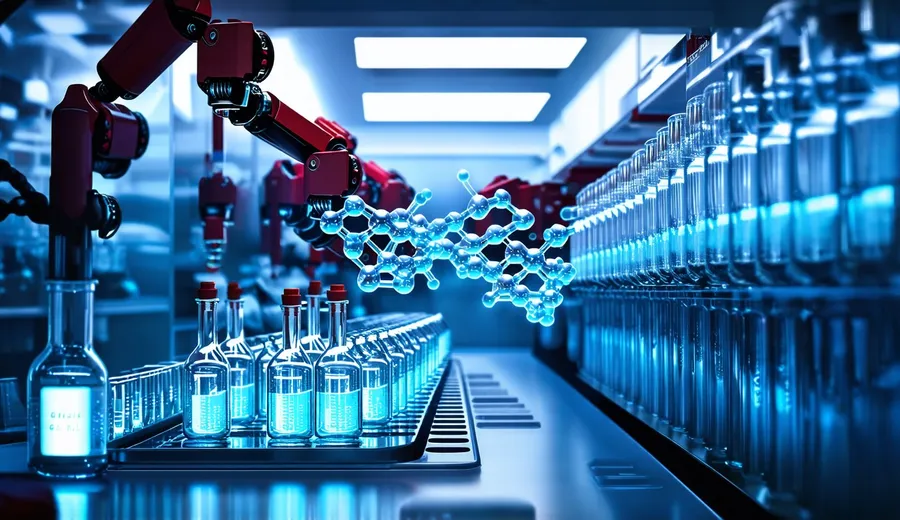
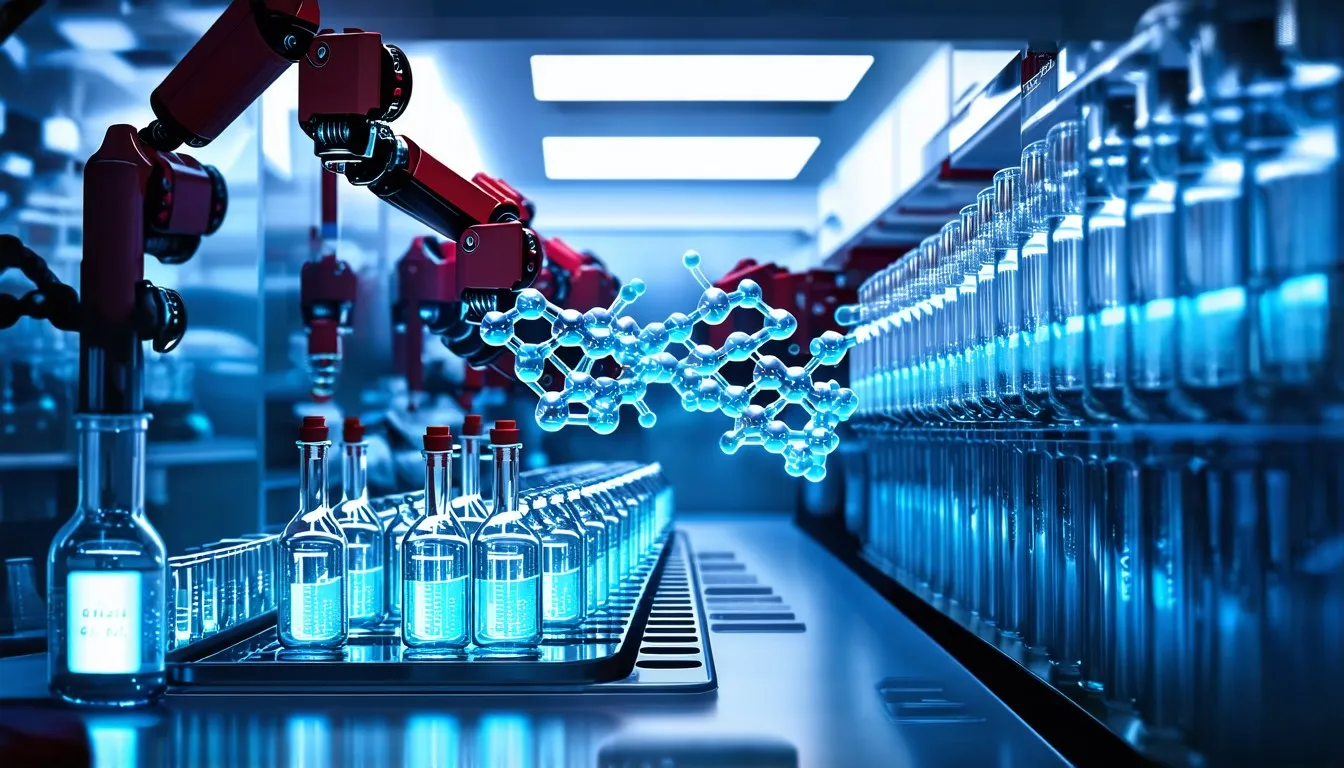
The hypothesis space is pruned using Bayesian inference methods to prioritize high-impact predictions, calculating the posterior probability of a hypothesis given prior knowledge and newly acquired evidence. Counterfactual reasoning assists in prioritizing falsifiable predictions with measurable outcomes by simulating alternative scenarios where specific causal conditions are negated to test the reliability of the proposed relationship. Experimental design is fine-tuned via simulation-first approaches, where virtual environments model complex biological or physical systems before physical validation occurs to significantly reduce resource waste associated with failed experiments. Virtual environments utilize high-fidelity physics engines and stochastic models to predict system behaviors under varying parameters, allowing researchers to assess the viability of an experiment without committing physical materials. Superintelligence coordinates multi-modal experiments combining wet-lab automation and computational modeling, organizing a synchronized workflow where liquid handling robots interact with high-performance computing clusters to test predictions iteratively. Unified control frameworks adapt protocols in real time based on interim results received from sensor arrays, adjusting reagent concentrations or environmental conditions dynamically to fine-tune signal detection.
The scientific method is executed in large deployments with parallel hypothesis testing across thousands of variables, enabling the exploration of combinatorial chemical spaces or genetic variants at speeds unattainable by manual laboratory techniques. Energetic reallocation of computational resources focuses processing power on high-signal investigations identified by preliminary screening algorithms, ensuring that energy expenditure correlates directly with the potential scientific yield of a specific line of inquiry. Feedback loops between generation and experimentation close within hours or days to accelerate discovery, contrasting sharply with the multi-year cycles typical of traditional research programs. Uncertainty quantification is embedded at every basis with confidence intervals tracked rigorously, providing a statistical measure of reliability for every generated hypothesis and experimental result. Superintelligence integrates domain-specific constraints like thermodynamics directly into generative models to prevent the proposal of physically implausible hypotheses such as perpetual motion machines or impossible reaction pathways. This connection prevents physically implausible hypotheses by embedding hard constraints into the loss functions of the neural networks responsible for generating candidate solutions.
The core function involves transforming unstructured data, such as raw images or text, into structured scientific claims using formal logic, creating a machine-readable representation of scientific knowledge that can be manipulated algorithmically. Primary inputs include multimodal scientific data aggregated from public repositories and private databases, encompassing everything from raw genomic sequences to high-resolution microscopy images. Primary outputs consist of ranked lists of hypotheses with associated experimental protocols, providing a turnkey solution for empirical validation. System architecture relies on modular pipelines spanning from data ingestion to result interpretation, allowing individual components, such as the natural language processor or the simulation engine, to be upgraded without disrupting the entire workflow. Decision-making is governed by utility functions balancing novelty and feasibility, forcing the system to maximize the expected information gain while respecting the limitations of current laboratory equipment. Human oversight remains reserved for ethical review and goal specification, ensuring that the direction of research aligns with societal values and safety standards while the system autonomously handles the execution details.
A hypothesis is defined operationally as a falsifiable statement predicting a relationship between variables, adhering strictly to the Popperian definition to ensure that every proposed theory can be subjected to empirical refutation. Testability refers to the existence of a controlled experiment that can confirm or refute the hypothesis, requiring that the system designs experiments that produce clear binary outcomes relative to the prediction. Superintelligence is defined as an autonomous system capable of outperforming human researchers in speed and accuracy across a wide range of scientific tasks, effectively acting as a force multiplier for intellectual labor. The scientific method is treated as an iterative cycle executed with full documentation and error tracking, creating an immutable audit trail of every step taken from initial data observation to final conclusion. A knowledge graph is a structured map of entities and relationships derived from empirical data, serving as the central database against which new hypotheses are checked for consistency and novelty. Early AI-assisted research tools like IBM Watson demonstrated limited hypothesis generation due to narrow training data restricted to specific domains like oncology, preventing the cross-disciplinary synthesis required for breakthrough discoveries.
These tools lacked the causal reasoning required for advanced discovery, relying instead on pattern matching within static corpora that could not adapt to new information in real time. A shift toward large-scale foundation models enabled broader pattern recognition by training on diverse datasets that include text, code, and protein structures, allowing the model to develop generalized representations of scientific concepts. These models initially lacked experimental connection capabilities because they were designed primarily for text generation or prediction rather than interaction with physical laboratory instrumentation. The advent of agentic AI systems marked a pivot toward autonomous scientific workflows, where software agents could plan actions and use external tools to execute complex multi-step procedures. Connection with robotic lab platforms allowed end-to-end automation from idea to result, proving that machines could manage the entire research lifecycle without human intervention in the loop. This development proved the feasibility of superintelligent research loops by demonstrating that closed-loop autonomy could yield scientifically valid results in fields such as microbiology and organic chemistry.
The rise of causal AI frameworks addressed correlation-over-causation limitations by incorporating structural causal models into the inference pipeline, enabling the system to distinguish between mere coincidences and genuine mechanistic causes. These frameworks enabled more durable hypothesis formulation by ensuring that proposed interventions would theoretically produce the desired effect based on an underlying causal graph of the system. Physical constraints such as energy consumption limit continuous operation of large-scale simulations because the computational cost of modeling quantum mechanical interactions increases exponentially with system size. Cooling and hardware reliability act as barriers for data centers, necessitating advanced thermal management solutions to maintain the stability of processors running continuous optimization tasks. Economic constraints include high upfront costs for robotic labs and specialized sensors, which restrict deployment to well-funded institutions with substantial capital reserves for infrastructure investment. These costs restrict deployment to well-funded institutions such as large pharmaceutical corporations or major technology companies, creating a barrier to entry for smaller academic laboratories.
Adaptability constraints arise because coordination overhead increases nonlinearly with parallel experiments, making it difficult to manage thousands of simultaneous processes without sophisticated scheduling algorithms. Synchronization across geographically distributed labs introduces latency that can disrupt real-time feedback loops, requiring high-speed data links to ensure that centralized models receive timely updates from remote sensors. Data scarcity in niche domains limits hypothesis quality despite advanced modeling because the training data available for rare diseases or exotic materials is often insufficient for deep learning models to generalize effectively. Rule-based expert systems were rejected due to inflexibility and inability to generalize beyond the hard-coded rules provided by domain experts, rendering them obsolete in the face of complex, evolving scientific datasets. Pure deep learning approaches were discarded for hypothesis generation because they lack interpretability, making it difficult for human scientists to trust or understand the reasoning behind a specific prediction. Human-in-the-loop-only models were deemed insufficient for achieving superhuman speed because human cognitive bandwidth becomes the limiting factor in these traditional models, preventing the system from operating at its full computational potential.
Decentralized swarm intelligence models failed to maintain consistency across independent agents, leading to conflicting hypotheses and a lack of coherent strategy in large-scale research efforts. Rising complexity of scientific problems demands faster exploration of solution spaces, as traditional manual methods cannot adequately handle the high-dimensional parameter spaces involved in modern fields like systems biology. Climate modeling and fusion energy require comprehensive analysis beyond human capacity because the number of interacting variables exceeds what a team of researchers can analyze effectively over reasonable timescales. Economic pressure to reduce R&D costs drives adoption of autonomous research systems, as companies seek to shorten development timelines and increase the success rate of their experimental programs. Societal needs for rapid response to pandemics require scientific throughput exceeding human limits, necessitating systems that can screen millions of therapeutic compounds in a matter of days rather than years. Performance demands now exceed what large research teams can achieve, prompting a transition toward automated systems that can operate continuously without fatigue or cognitive decline.
Current deployments include AI-driven drug discovery platforms generating thousands of molecular hypotheses monthly, significantly accelerating the early stages of pharmaceutical development. Companies like Insilico Medicine and Recursion Pharmaceuticals lead this field by working with generative chemistry with automated biological screening to identify novel drug candidates. Material science labs use systems to predict and synthesize new compounds with targeted properties such as high-temperature stability or specific electrical conductivity, reducing the need for trial-and-error experimentation in the lab. Automated synthesis pipelines validate these compounds by preparing the predicted materials and measuring their physical properties to confirm adherence to the specifications. Performance benchmarks show orders of magnitude reduction in time from hypothesis to validated result, demonstrating the efficiency gains achieved through tight setup of modeling and automation. Success metrics include the number of peer-reviewed publications generated per unit time, reflecting the ability of these systems to produce novel scientific knowledge for large workloads.
Patents filed serve as another key success metric, indicating the commercial viability and novelty of the discoveries generated by the automated research platforms. Dominant architectures combine large language models with reinforcement learning agents to apply the linguistic knowledge of the former and the goal-directed behavior of the latter. Causal graphs are used for hypothesis structuring in these architectures to provide a transparent framework for reasoning about cause and effect within complex systems. Neuro-symbolic systems integrate neural pattern recognition with symbolic logic to combine the strengths of deep learning in perception with the strengths of symbolic AI in reasoning and explanation. These systems adhere strictly to scientific principles by encoding constraints such as consistency and falsifiability directly into the logical layer of the architecture. Hybrid human-AI co-pilot models remain prevalent in regulated industries like clinical trials where full autonomy is currently restricted due to safety and ethical regulations.
Full autonomy is currently restricted in these sectors to ensure that human experts retain ultimate responsibility for decisions affecting patient safety and public health. Supply chain dependencies include high-performance computing hardware like GPUs and TPUs, which are essential for training the massive models required for scientific reasoning. Specialized laboratory robotics are essential for execution because standard industrial robots lack the precision and dexterity needed for delicate tasks such as pipetting microliter volumes or handling cell cultures. Secure cloud infrastructure supports the computational load by providing scalable resources on demand, allowing research teams to spin up thousands of instances for short bursts of intensive calculation. Rare earth elements are critical for scaling computational capabilities because they are used in the manufacturing of high-performance magnets and semiconductors found in modern processors. Advanced semiconductors are necessary for high-speed sensing to capture data from experiments at frequencies that allow for precise control and monitoring of fast reactions.
Data acquisition relies on partnerships with academic publishers and private research consortia to gain access to the vast corpora of literature required for training foundational models. Major players include DeepMind and OpenAI, leading in algorithm development for protein folding and large language models, respectively. Meta FAIR contributes significantly to foundational research through open-sourcing of datasets and model architectures that benefit the broader scientific community. Thermo Fisher and Illumina dominate lab automation connection by providing the hardware interfaces that link digital models to physical instruments. Strateos provides cloud-based lab infrastructure that allows researchers to remotely control automated laboratories, effectively treating physical lab space as a programmable resource. Competitive differentiation lies in data access and setup depth with physical labs because proprietary datasets and integrated workflows create defensible moats against competitors relying solely on public data.
The ability to close the hypothesis-experiment loop autonomously provides a distinct advantage by reducing the latency between ideation and verification to near-zero levels. Startups focus on vertical applications such as antibody design where specialized knowledge allows them to outperform general-purpose models in specific domains. Tech giants pursue general-purpose scientific AI capable of addressing problems across multiple disciplines simultaneously, using their vast compute resources to train monolithic models. Geopolitical competition centers on control of scientific AI infrastructure because nations view these capabilities as strategic assets essential for maintaining technological superiority. Export controls on advanced chips create fragmentation in global R&D capacity by restricting access to the hardware necessary for training the best models in certain regions. Data sovereignty laws restrict cross-border sharing of scientific datasets, forcing companies to maintain localized data centers and train separate models for different jurisdictions.
These laws limit training data diversity for multinational systems because they prevent the aggregation of data from countries with restrictive data localization policies into a single global training set. Academic institutions provide domain expertise and validation datasets that are crucial for fine-tuning models to understand specific nuances of scientific terminology and methodology. Industry offers compute resources and engineering talent required to build and maintain the massive infrastructure needed for superintelligent research systems. Joint initiatives aim to standardize data formats for AI-driven science to facilitate interoperability between different laboratory instruments and software platforms. Tension exists between open science ideals and proprietary model development because companies seek to protect their intellectual property while researchers demand transparency and reproducibility. This tension affects reproducibility and trust because closed models cannot be easily audited or verified by independent researchers attempting to replicate findings.
Laboratory information management systems must support real-time AI feedback to allow automated agents to make decisions based on incoming experimental data without human intervention. Version control for experimental protocols becomes essential to track changes made by the AI over time, ensuring that the exact conditions of an experiment can be retrieved later for analysis. Regulatory frameworks need revision to accommodate autonomous hypothesis testing because current guidelines often assume human oversight at every step of the experimental process. Infrastructure must evolve to support high-bandwidth data transfer between models and labs to handle the massive streams of video and sensor data generated by modern automated laboratories. Edge computing is required for real-time control to process data locally at the source and reduce latency in critical feedback loops controlling physical robots. Economic displacement of routine research roles is likely as automated systems take over repetitive tasks such as data entry, sample preparation, and initial analysis.
New roles in AI supervision and ethics auditing will arise to manage the interaction between humans and autonomous systems, ensuring that research remains aligned with ethical standards. Interdisciplinary translation will become a critical skill as scientists must bridge the gap between domain-specific knowledge and the operational requirements of AI systems. New business models include hypothesis-as-a-service platforms where companies pay for access to validated scientific hypotheses generated by superintelligent systems. Automated contract research organizations represent another developing model where entire research projects are executed by autonomous labs with minimal human involvement. IP generation firms powered by superintelligent systems will enter the market, creating vast portfolios of patents based on systematically generated inventions. Scientific credit norms may shift toward system designers who create the algorithms responsible for discovery rather than the individual scientists running the experiments.
Data curators will receive more recognition because the quality of the output depends heavily on the quality and structure of the input data used to train the models. Traditional KPIs, like publication count, become inadequate measures of productivity when a system can generate hundreds of potential papers per day. New metrics include hypothesis validation rate, which measures the percentage of generated hypotheses that survive experimental testing. Experimental efficiency will be measured by the cost and time required to reach a valid conclusion relative to manual methods. Novelty score will be a standard measure of value calculated by comparing the generated hypothesis against existing literature to quantify its deviation from established knowledge. Reproducibility must be measured for large workloads with automated replication pipelines that can independently verify results across different laboratory conditions.
Impact should be assessed by downstream applications and policy influence rather than citation counts alone, as this provides a more concrete measure of utility for society. Future innovations may include real-time adaptive hypothesis spaces that evolve during experimentation based on intermediate findings. These spaces will evolve during experimentation by dynamically adjusting the probability distribution over possible hypotheses as new evidence invalidates certain branches of inquiry. Cross-domain transfer learning will apply insights from physics to biology by identifying mathematical isomorphisms between seemingly unrelated systems. Connection with quantum computing could enable simulation of previously intractable systems such as complex molecular interactions involving strong electron correlation effects. Protein folding at quantum resolution is one potential application that could overhaul drug design by providing perfectly accurate models of molecular dynamics.
Self-improving research agents will refine their own algorithms by analyzing their own performance data and fine-tuning their code for greater efficiency. Convergence with robotics enables physical-world experimentation in large deployments where thousands of robots operate in coordination to test massive arrays of conditions. Synthetic biology allows direct manipulation of biological systems for validation by writing DNA sequences that correspond to hypothesized biological functions. Setup with climate observation systems supports hypothesis testing in environmental science by feeding real-time global sensor data into models predicting weather patterns or climate change impacts. Live sensor networks provide data for these tests continuously, allowing for the validation of hypotheses on a planetary scale without active intervention from researchers. Synergy with blockchain technology provides immutable audit trails that record every step of the computational and experimental process cryptographically.
This enhances transparency and trust in scientific processes by allowing anyone to verify the provenance of a specific discovery without relying on a central authority. Scaling limits arise from Landauer’s principle regarding minimum energy per computation, which sets a key physical lower bound on the energy required to process information. Heat dissipation in dense computing arrays presents a physical barrier because removing waste heat becomes increasingly difficult as component density rises to improve performance. Workarounds include algorithmic efficiency gains that reduce the number of operations required for a given task and approximate computing, which trades precision for lower energy consumption. Distributed computing across cooler geographic regions helps manage heat by locating data centers in environments where ambient temperatures reduce the cooling load. Physical experimentation remains constrained by material synthesis speeds because chemical reactions and biological growth processes often have fixed time constants that cannot be accelerated by computation alone.
Advances in nanofabrication and metrology are required to overcome this by enabling faster construction of experimental apparatuses at the microscopic scale. Superintelligence will execute the scientific method with greater fidelity and speed by eliminating errors caused by fatigue or distraction that plague human researchers. It will eliminate human cognitive biases such as confirmation bias or the tendency to favor results that align with pre-existing beliefs. The value lies in generating better hypotheses grounded in causal reality because the system is forced to adhere strictly to empirical evidence rather than intuition or tradition. This shifts the role of human scientists from executors to architects who define the scope and goals of research while leaving the implementation to machines. Humans will define problems and set ethical boundaries to ensure that the pursuit of knowledge does not lead to harmful outcomes or unethical experimentation.
Interpreting meaning in a flood of automated discovery will be a primary human task as the volume of generated knowledge far exceeds the capacity of any individual to comprehend in detail. Calibrations ensure superintelligence aligns with scientific norms by adjusting objective functions to reward not just correctness but also elegance and explanatory power. Adherence to falsifiability is mandatory to prevent the system from generating untestable metaphysical claims that fall outside the realm of empirical science. Transparency in reasoning is required to allow humans to understand the chain of logic that led to a particular conclusion or hypothesis. Systems must respect empirical evidence over model confidence even when the statistical model suggests a low probability for an observed phenomenon, forcing a re-evaluation of the underlying theory. Tuning is necessary to avoid overfitting to historical data, which could cause the system to miss novel phenomena that do not fit existing patterns.

Systems must prioritize exploration of high-uncertainty regions in hypothesis space to maximize the potential for discovering truly new knowledge rather than merely refining existing theories. Regular audits by domain experts maintain alignment with scientific integrity by checking for logical fallacies or systematic errors in the automated reasoning process. Superintelligence will utilize this process to recursively improve its own research capabilities by using the results of its experiments to refine its understanding of the world. This creates a positive feedback loop of accelerating scientific progress where each discovery improves the tool used to make subsequent discoveries. It will identify and resolve inconsistencies in foundational theories by finding mathematical contradictions or empirical anomalies that have been overlooked by human researchers. Framework shifts in physics or biology may result from this capability as the system synthesizes data across sub-disciplines to propose unifying theories that explain disparate phenomena.
Operating across disciplines simultaneously, allows it to uncover hidden connections such as applying principles from information theory to genetic coding or using thermodynamic principles to analyze economic systems. Human researchers often miss these connections due to specialization constraints, which limit their familiarity with concepts outside their immediate field of expertise.