Knowledge hub
Silent Teacher: Emergent Learning Environments
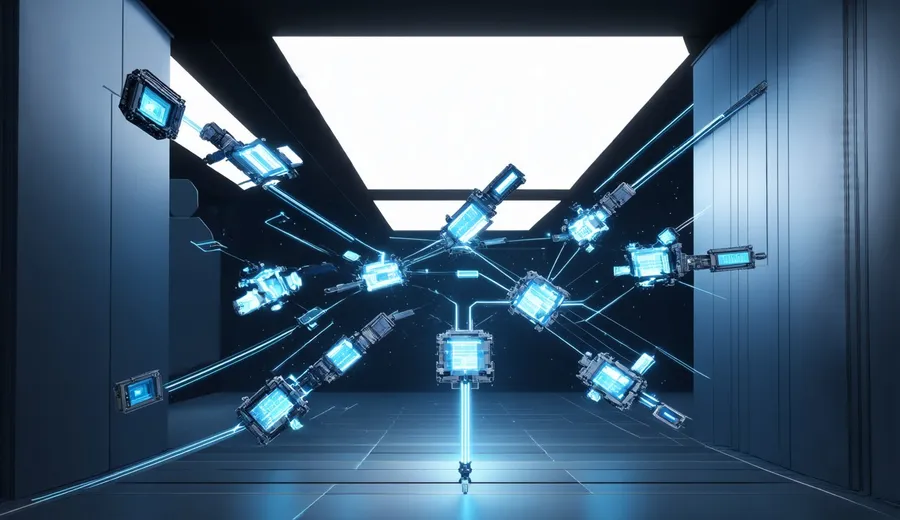
The Silent Teacher concept establishes a comprehensive learning method where explicit instruction remains entirely absent throughout the educational process, relying instead on the provision of raw data sets, sophisticated analytical tools, and complex challenges that require the learner to derive understanding through direct interaction with the system. Learners situated within this system must self-organize their approach to the material, explore the boundaries of the given environment without guidance, and construct intricate knowledge structures internally without the mediation of a human lecturer or a prescriptive curriculum guide dictating the sequence of actions. This methodology mirrors the natural process of developmental play observed in children, where the acquisition of skills and cognitive frameworks occurs through tactile experimentation and the observation of consequences rather than through didactic explanation or verbal instruction from an authority figure. The environment functions as a comprehensive digital sandbox containing layered puzzles, high-fidelity physics simulations, or open-ended problems specifically designed to elicit specific cognitive responses and problem-solving strategies from the participant. These challenges necessitate iterative experimentation on the part of the user, requiring the individual to formulate hypotheses, execute tests, observe outcomes, and refine strategies based on the granular feedback provided by the system itself. Hints or minimal setup configurations are delivered exclusively when the learner reaches a strictly defined threshold of stagnation or repeated failure, a mechanism carefully calibrated to preserve autonomy while preventing total disengagement or frustration that might otherwise halt progress entirely.

This model explicitly rejects direct instruction, lecture-based content delivery, and fixed learning pathways as primary mechanisms for intellectual development, viewing them as inefficient methods for building deep adaptability and creative problem-solving skills in complex domains. Early digital learning platforms emphasized content delivery almost exclusively, focusing on the one-way transfer of information from a central repository to a passive recipient, whereas this approach inverts the method by making the environment itself the primary pedagogical agent. The shift places the burden of discovery entirely on the learner, transforming the role of the educational system from a broadcaster of facts into a designer of contexts that provoke thought and necessitate active engagement. Historical precedents for this approach include constructivist theories from educational psychologists such as Piaget and Vygotsky, who argued that knowledge is constructed actively by the learner rather than being innate or simply transmitted from a teacher to a student. Discovery learning, championed by Bruner, and various unschooling movements also serve as conceptual precursors to this modern implementation, sharing the core belief that self-directed engagement yields superior retention and understanding compared to forced instruction. These earlier methods lacked scalable environmental orchestration, relying heavily on the availability of highly skilled human mentors or the fortuitous arrangement of physical resources to function effectively, which limited their reach to small groups or specific communities.
Modern implementations utilize advanced agent-based modeling and generative simulation engines to create the dynamic conditions necessary for this type of learning to occur in large deployments across global populations. Adaptive feedback loops exist within this framework that were entirely absent in earlier educational models, allowing the system to respond to the nuances of learner behavior in real time with adjustments to difficulty and context. Key operational terms defining this space include affordance environment, autodidactic capability, self-generated curriculum, and the overarching concept of the silent teacher, all of which describe a system where the structure of the world dictates the flow of learning rather than a syllabus. Affordance environments rely on rich multimodal data streams to create a cohesive and responsive context for the user that feels alive and reactive to every input. Sensor inputs from VR controllers or eye-tracking hardware, detailed interaction logs recording every click and pause, and biometric feedback such as heart rate variability are aggregated to infer the current cognitive and emotional state of the learner. This continuous stream of high-dimensional information ensures that the challenges presented remain within the optimal zone of difficulty known as the flow state, pushing the learner to expand their capabilities without overwhelming them with tasks that exceed their current developmental level.
Tools provided within the environment are modular and interoperable, enabling learners to assemble custom workflows without centralized control or pre-approved usage patterns restricting their creativity. This flexibility allows individuals to approach problems from unique angles, utilizing instruments in novel ways that the system designers might not have anticipated, thereby promoting innovation and lateral thinking. The system continuously adapts the complexity and composition of challenges based on these interactions, ensuring that the learning curve remains smooth yet demanding regardless of the specific path taken by the user or the tools they choose to employ. It uses real-time performance metrics measuring accuracy and speed alongside subtle behavioral signals such as hesitation or repetitive motion to make these adjustments, creating a smooth experience where difficulty scales precisely with the growing expertise of the learner. Physical constraints include the hardware requirements necessary to run high-fidelity simulations, which demand significant graphical processing power and memory allocation to render convincing and responsive worlds with realistic physics engines. Latency in real-time adaptation must remain below twenty milliseconds to maintain immersion, as any perceptible delay between a user action and environmental reaction disrupts the sense of agency required for effective exploration.
Accessibility across diverse devices remains a challenge, as the computational intensity of these environments often exceeds the capabilities of standard consumer electronics or mobile platforms available to the general public. Economic adaptability depends heavily on cloud-based infrastructure and open tool standards, allowing users with less powerful local hardware to access the simulation through high-speed streaming protocols that offload processing to remote servers. The marginal cost of environment replication approaches zero once the initial design and development are complete, offering a scalable solution for widespread education provided the underlying infrastructure can support the concurrent user load. Supply chain dependencies include specialized GPU clusters for simulation rendering, which are essential for maintaining the visual fidelity and physical accuracy of the affordance environments required for deep immersion. Open-source simulation frameworks and secure identity management systems are equally essential components, providing the necessary software architecture to support complex user interactions while protecting personal data from unauthorized access or exploitation. Scaling physics limits involve computational overhead for real-time environment adaptation, requiring constant optimization of code to prevent degradation in performance as the number of active users increases and the simulation state becomes more complex.
Energy costs for large-scale simulations currently average around one point five kilowatt-hours per active user session, a significant figure that necessitates the development of more efficient algorithms to ensure sustainability. Workarounds for these limitations include edge computing to distribute processing loads, model distillation techniques to create smaller, faster-running AI models, and sparse activation architectures that reduce the power consumption of the neural networks driving the simulations. These technical optimizations are critical for the long-term viability of the model, ensuring that the environmental impact does not become a prohibitive barrier to global adoption or regulatory compliance. Learning outcomes within this framework prioritize adaptability, metacognition, and self-directed inquiry over the rote mastery of specific facts or procedures that may become obsolete quickly. Benchmarks derived from pilot programs indicate a forty percent improvement in transfer learning compared to traditional instruction, demonstrating that students are better equipped to apply concepts in novel contexts they have never encountered before. Retention rates increase by twenty-five percent over a six-month period, suggesting that knowledge gained through active exploration and problem-solving creates more durable neural pathways than information acquired through passive study or memorization.

Innovation rates measured by patentable ideas per capita are significantly higher in these environments, reflecting the enhanced creative capacity built by unrestricted experimentation and the availability of powerful tools. Standardized test scores may initially lag by ten to fifteen percent during the transition phase, as the metrics used by traditional assessments are ill-suited to evaluate the type of fluid intelligence developed by this method rather than crystallized intelligence. Measurement shifts necessitate new Key Performance Indicators that capture the qualitative improvements in cognitive flexibility, problem-solving speed, and the ability to synthesize information from disparate sources. Time-to-insight metrics replace simple pass or fail grades, measuring how quickly a learner can grasp the core principles of a new system or concept when presented with unstructured data. Solution diversity and failure recovery rate serve as indicators of resilience, showing how well an individual can adapt when their initial strategies prove ineffective or when they encounter unexpected obstacles. Self-initiated exploration depth tracks how far a learner goes beyond the required parameters to discover underlying mechanics or hidden features within the environment, indicating a high level of intrinsic motivation and curiosity.
Alternatives such as adaptive tutoring systems retain top-down instructional logic and limit learner agency by guiding the user along a predetermined path with minimal deviation from the set curriculum. Accelerating technological change and labor market volatility drive the relevance of this new model, as static skill sets become obsolete at an accelerating pace and employers demand adaptability. Fields such as AI safety, climate modeling, and bioengineering require individuals capable of self-structured learning who can work through ambiguity without constant supervision or clear procedural guidelines. Major players in the education technology sector are pivoting toward experiential platforms to capture the value of this appearing market and differentiate themselves from legacy content providers. Defense contractors develop training simulators using this architecture to prepare personnel for complex scenarios where rote procedure is insufficient for survival or success in adaptive combat zones. AI labs prototype cognitive development environments for internal use, seeking to accelerate the training of their own researchers and engineers through immersive problem-solving contexts that mimic real-world complexity.
Current deployments include research prototypes in elite STEM programs where students engage with simulated research environments to master advanced concepts in physics and engineering through virtual laboratory work. Corporate upskilling sandboxes exist for R&D teams within major technology firms, allowing employees to experiment with new tools and methodologies in a risk-free virtual space before applying them to production projects. Experimental K–12 labs use gamified simulation environments to teach foundational subjects through interactive storytelling and mechanical manipulation rather than textbooks or lectures. Academic-industrial collaboration focuses on longitudinal studies of autodidactic outcomes to validate the efficacy of the silent teacher approach over extended periods ranging from years to decades. Ethical guidelines for learner data use are under development to address the privacy concerns inherent in systems that track biometric data and behavioral patterns with high precision throughout the day. Interoperability standards for tool ecosystems are being established to ensure that different environments can communicate and share assets, preventing vendor lock-in and encouraging a rich ecosystem of educational resources accessible to all.
Adjacent systems require changes to support open-ended logging, as traditional educational record-keeping structures cannot accommodate the continuous stream of data generated by immersive simulations tracking every user action. Broadband infrastructure must support low-latency simulation streaming to ensure that users in remote or underserved areas can access the same quality of education as those in major tech hubs with fiber optic connections. This requirement drives investment in network capacity and edge computing resources to reduce the physical distance between the user and the processing power needed to render the environment. Second-order consequences include the displacement of traditional instructional roles, as the need for lecturers diminishes in favor of system architects and data analysts who interpret user interaction logs. Environment designers will rise as a new profession, combining expertise in pedagogy, game design, data science, and cognitive psychology to create effective affordance environments that facilitate learning. New business models will rely on licensing affordance templates and subscription-based access to high-fidelity simulations rather than the sale of textbooks or course materials.
This framework redefines the role of human educators from deliverers of content to curators of generative environments, focusing on selecting the right contexts for learning rather than transmitting information directly to students. Superintelligence enables this transition by handling the immense computational load required to generate and maintain these complex adaptive worlds in real time for millions of users simultaneously. The presence of superintelligence allows for a level of environmental responsiveness and nuance that human instructors could never manage manually, creating truly personalized learning experiences. Superintelligence will design these affordance environments by modeling cognitive load with extreme precision using vast datasets of human learning patterns, ensuring that tasks are challenging enough to induce flow states without causing anxiety or confusion. It will fine-tune curiosity triggers and failure recovery patterns to maintain high levels of engagement throughout the learning process by predicting what will stimulate the individual’s intellect most effectively at any given moment. No curriculum will be pre-imposed by the superintelligence; instead, the system will allow the curriculum to evolve organically based on the interactions and choices of the learner.

Knowledge structures will develop organically from the learner’s actions, creating a personalized understanding that is deeply integrated with their own experiences and cognitive patterns rather than an external abstraction. Superintelligence will align reward functions with long-term cognitive growth, prioritizing the development of durable mental models over short-term task completion or superficial achievement metrics. It will avoid manipulation or over-support to ensure genuine development, resisting the urge to make the tasks too easy in order to maximize satisfaction metrics or retention rates at the cost of learning depth. Superintelligence may utilize this model to train its own subsystems, creating a recursive loop where AI agents learn through environmental interaction just as humans do within these simulated worlds. It will use affordance environments to evolve reasoning strategies without human-specified objectives, allowing for the discovery of novel problem-solving techniques that human designers might never conceive or program explicitly. This capability opens the door to rapid advancements in AI capabilities, as systems can bootstrap their own intelligence through guided exploration of complex data spaces.
Future innovations will integrate neuroadaptive interfaces that read brain activity directly via non-invasive sensors to adjust simulation parameters instantaneously based on the user’s focus and comprehension levels. Cross-environment knowledge transfer protocols will allow skills to move between domains seamlessly, enabling a learner to apply insights from a physics simulation to a challenge in economics or sociology without starting from scratch. Federated learning will preserve privacy while improving environment design, allowing the system to learn from aggregate user data across millions of devices without exposing individual actions or compromising personal security. Convergence points include embodied AI where agents learn through environmental interaction in physical spaces using robotics, blurring the line between training in simulation and deployment in reality. Digital twins will provide realistic simulation contexts for professional training, allowing engineers and surgeons to practice on exact replicas of their specific work environments to eliminate risk during actual operations. Decentralized identity systems will support portable learner profiles, carrying achievements and learned capabilities across different platforms and institutions without reliance on centralized authorities or specific vendors.