Knowledge hub
World Model Learning
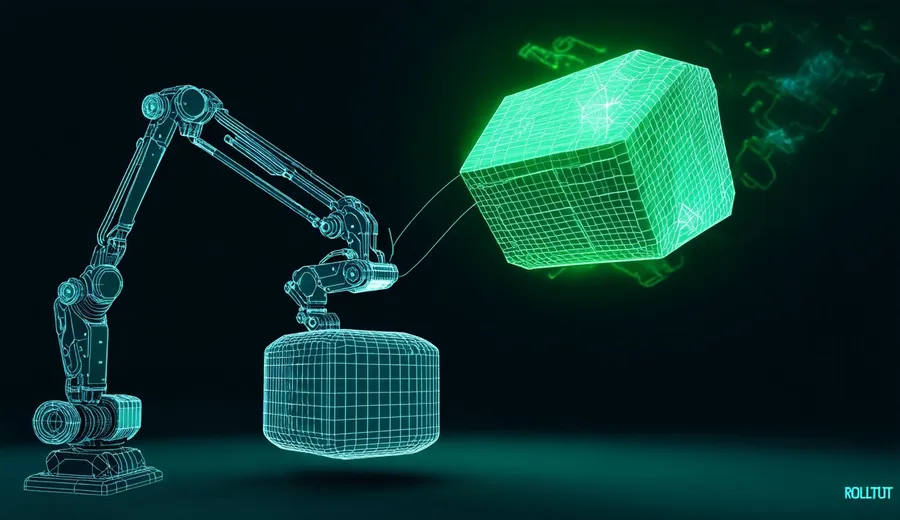
Predictive models of environments aim to simulate how an agent’s actions affect its surroundings over time, providing a mechanism for an intelligent system to understand the consequences of its interactions before they physically occur. Systems like DreamerV3 and SIMA learn internal representations that approximate environmental dynamics without direct access to ground-truth physics, relying instead on data-driven inference to derive the rules governing the world. These models enable agents to anticipate outcomes, evaluate action sequences internally, and reduce reliance on real-world trial and error, which is often expensive or dangerous in physical settings. World models support faster generalization across tasks by abstracting shared environmental structure, allowing the agent to apply learned dynamics in novel scenarios that share underlying causal properties even if surface-level appearances differ significantly. They are positioned as foundational for achieving three-level intelligence: reactive, which responds to immediate stimuli; predictive, which forecasts future states; and reflective, which reasons about the validity of its own predictions and planning strategies. World model learning centers on constructing a compact, differentiable representation of environment dynamics from raw sensory input, transforming high-bandwidth pixel data or sensor streams into a manageable latent space where computation is efficient.

The core mechanism involves training a latent dynamics model to predict future states given the current state and action, effectively learning a physics engine that operates in an abstract feature space rather than explicit coordinate systems. Reconstruction losses ensure the latent space preserves task-relevant information by forcing the model to regenerate the input observation from the compressed state, thereby guaranteeing that no critical details necessary for decision-making are discarded during the compression process. Planning occurs within the learned latent space using imagined rollouts, often guided by a value or reward model, allowing the agent to explore millions of potential directions in silico to select the optimal course of action without engaging with the actual environment. Training typically combines unsupervised world model learning with reinforcement learning or behavioral cloning, merging the need to understand the environment with the objective of achieving specific goals within it. Encoder modules map high-dimensional observations into low-dimensional latent states, acting as a perceptual filter that extracts salient features such as object positions, velocities, and textures while ignoring irrelevant noise like lighting changes or static background elements. Transition models predict the next latent state conditioned on the current state and action, serving as the core predictive engine that approximates the state-transition function of the Markov decision process underlying the environment.
Decoders reconstruct observations from latent states to enforce informational fidelity, providing a training signal that ensures the latent variables maintain a high correlation with the actual visual or sensory state of the world. Reward and termination predictors estimate task-specific signals directly from latent states, enabling the agent to evaluate the desirability of imagined outcomes without needing to decode them back into full observations or interact with the external simulator to receive a reward signal. Planners or policies use the world model to simulate progression and select optimal actions without environment interaction, effectively treating the learned model as a sandbox for safe and efficient policy optimization. Latent states serve as compressed representations of environment configuration sufficient for prediction and control, capturing the essential information required to determine the future evolution of the system while discarding redundant data that does not affect dynamics. Transition dynamics function as mappings from state and action to the next state, learned from experience data, which generalize across different contexts by identifying invariant patterns in how the world responds to force or manipulation. Reconstruction loss acts as an objective measuring fidelity of decoded observations compared to actual inputs, ensuring that the abstraction process remains grounded in reality and prevents the model from drifting into a latent space that is internally consistent but detached from actual physical constraints.
Imagination rollouts consist of sequences of predicted states generated by iteratively applying the transition model, creating a simulated timeline that the agent can analyze to identify high-reward paths and avoid catastrophic failures before they happen in reality. World model capacity defines how accurately the model captures environment stochasticity, partial observability, and long-goal dependencies, determining the goal over which predictions remain reliable and the granularity of detail preserved in the simulation. Early approaches relied on hand-coded simulators or model-free RL, limiting generalization and sample efficiency because they either failed to capture the nuances of real-world variance or required prohibitive amounts of interaction data to learn policies directly from sparse rewards. The 2018 introduction of World Models by Ha and Schmidhuber demonstrated that recurrent neural networks could learn predictive representations from pixels, establishing that a neural network could acquire a durable understanding of environment dynamics purely through observation without explicit engineering of physical laws. Dreamer showed in 2020 that backpropagating through imagined progression enables effective policy learning in latent space, proving that gradients could flow efficiently through the imagined progression to update the policy parameters based on predicted outcomes rather than actual experience. DreamerV3 scaled world model learning in 2023 to diverse domains with a single architecture, emphasizing strength over specialization by demonstrating that a fixed set of hyperparameters could solve tasks ranging from Atari games to robotic control without task-specific tuning.
SIMA extended world models in 2024 to multi-task, human-aligned agent behavior using internet-scale behavioral data, working with natural language instructions with visual grounding to create agents capable of following open-ended commands in complex virtual environments. Performance benchmarks show 2–10× improvement in sample efficiency over model-free baselines in Atari, DMControl, and Procgen, highlighting the advantage of learning a world model that can reuse knowledge about dynamics across different episodes and tasks. Generalization metrics indicate better zero-shot transfer across visually distinct yet structurally similar tasks, confirming that agents trained with world models learn abstract concepts like gravity or object permanence that transfer effectively to new settings with minimal additional training. Dominant architectures use recurrent or transformer-based latent dynamics with pixel reconstruction, applying the sequence processing capabilities of recurrent networks or the attention mechanisms of transformers to handle temporal dependencies and complex state transitions over long futures. Developing challengers explore diffusion-based world models for higher-fidelity prediction and handling stochasticity, utilizing the probabilistic nature of diffusion models to generate diverse possible future states rather than a single deterministic prediction, which is crucial for handling environments with built-in randomness or multi-modal outcomes. Some architectures replace reconstruction with contrastive or predictive coding objectives to reduce compute, avoiding the expensive pixel generation process of decoders by focusing on learning representations that are implicitly predictive of future observations through contrastive losses in the latent space.
Modular designs decouple perception, dynamics, and planning to improve interpretability and debugging, allowing researchers to isolate failures in the vision module, the physics engine module, or the decision-making module independently rather than treating the system as an opaque black box. Scaling laws suggest performance improves predictably with model size, dataset diversity, and compute budget, indicating that continued investment in larger models and more diverse training data will yield consistent gains in the fidelity and capability of world models. Google DeepMind leads in algorithmic innovation and large-scale evaluation while open-sourcing limited components, driving the field forward with rigorous benchmarks and novel architectures that define the best for both academia and industry competitors. Meta invests in world-model-like systems for embodied AI and virtual assistants, focusing on creating domestic robots and digital agents that can work through messy, unstructured environments by building robust internal simulations of household physics and social interactions. Startups like Covariant and Embodied AI apply world models to warehouse and service robotics, deploying these systems in commercial settings where they must adapt to novel objects and layouts in real-time without extensive retraining for every new scenario encountered in the facility. NVIDIA applies similar concepts in Isaac Sim for synthetic data generation and policy training, providing a platform where physical simulations generate the vast amounts of training data required to train world models before they are ever deployed on physical hardware, bridging the sim-to-real gap through high-fidelity rendering and physics engines.
Open-source efforts lower entry barriers while lagging in adaptability compared to proprietary systems, offering accessible implementations of standard algorithms like Dreamer or PlaNet that often lack the massive scale and proprietary optimizations required for advanced performance on extremely complex domains. Academic labs dominate theoretical advances while industry focuses on connection and deployment, with universities producing novel loss functions, architectural components, and theoretical proofs of convergence that are subsequently integrated into large-scale industrial systems by engineering teams focused on stability and throughput. Training world models requires large volumes of diverse interaction data, increasing compute and storage demands significantly as the complexity of the environment and the duration of the prediction goal grow, necessitating petabytes of storage for arc data and thousands of GPU hours for processing. Latent space dimensionality trades off compression efficiency against predictive accuracy, where lower-dimensional spaces enable faster planning and less memory usage but may fail to capture subtle details necessary for precise control in highly sensitive environments. Real-time inference latency limits deployment in time-sensitive applications such as robotics and autonomous vehicles, as the agent must perceive the environment, update its world model state, and simulate potential actions within a strict time budget to react safely to agile changes in its surroundings. Economic viability depends on reducing sample complexity to make world model pretraining feasible for smaller organizations, potentially through the development of foundation models for dynamics that can be fine-tuned for specific tasks rather than trained from scratch for every new application.
Flexibility is constrained by the curse of dimensionality in high-action or high-observation spaces, where the exponential growth of possible states and actions makes it difficult for a model to maintain accurate predictions across all corners of the state space without encountering combinatorial explosions in required data and compute resources. Model-free reinforcement learning avoids explicit world modeling while suffering from poor sample efficiency and limited generalization, requiring millions of episodes to learn simple tasks because it cannot use learned dynamics to imagine outcomes or transfer knowledge across structurally similar scenarios. Symbolic planning systems require manually specified rules and struggle with perceptual ambiguity, failing to handle the noise and variability of raw sensor data unless coupled with a strong perception system that can perfectly map the real world into discrete symbols, which remains a difficult challenge in unstructured environments. Hybrid neuro-symbolic approaches have been explored and add complexity without consistent gains in reliability, often introducing rigid symbolic logic that breaks down when faced with the continuous and stochastic nature of physical interactions that neural networks handle naturally. Direct end-to-end policy learning from pixels fails to use temporal structure, leading to brittle behaviors that do not account for the inertia of objects or the delayed consequences of actions because the policy lacks an internal concept of time or causality beyond the immediate reward signal. These alternatives were rejected due to inability to scale across domains while maintaining planning fidelity and data efficiency, confirming that separating the learning of dynamics from the learning of policy provides a more strong framework for general intelligence than monolithic approaches that try to solve everything simultaneously.

Training relies on GPUs or TPUs with high memory bandwidth to handle the massive matrix operations involved in processing video streams and updating the millions of parameters in deep neural networks representing the world model and policy. Inference can run on edge devices with quantization, compressing the floating-point weights of the network into lower precision integers to reduce memory footprint and increase calculation speed on hardware with limited power budgets such as mobile robots or drones. Energy consumption scales with model size and training duration, raising concerns about the carbon footprint of training large world models as they require continuous operation of high-performance computing clusters for weeks or months at a time to reach convergence on complex tasks. Data pipelines depend on scalable storage and preprocessing infrastructure to ingest raw logs of agent interactions, clean the data of anomalies or corrupted frames, and format it into batches suitable for high-throughput training pipelines that feed the accelerators. Synthetic data generation reduces dependency on real-world collection while requiring accurate simulator access, creating a feedback loop where better world models improve simulators which in turn generate better data for training future world models. Global supply chain constraints on high-performance chips affect training infrastructure access, limiting the ability of some research groups to train best models due to shortages in advanced semiconductors necessary for modern AI acceleration.
Regional data compliance requirements influence where training data can be collected and processed, forcing companies to establish localized data centers or implement federated learning strategies to comply with regulations regarding data sovereignty and privacy when training on sensitive sensor streams. Defense sector interest in predictive autonomy raises dual-use concerns and potential restrictions, as the ability to simulate complex environments and plan optimal actions has obvious applications in autonomous systems that may be subject to export controls or classified research programs. Strong collaboration exists between academic institutions and industry labs on benchmark design and architecture sharing, building an ecosystem where new ideas are rapidly tested on standardized tasks like Atari or MuJoCo to establish credible baselines for performance comparison across different groups. Joint projects like the Open X-Embodiment dataset enable cross-institutional world model training by aggregating robot interaction data from various sources into a massive dataset that exposes models to a wider diversity of physical phenomena than any single lab could collect alone. Conferences host shared challenges that drive standardization of evaluation protocols, ensuring that claims about sample efficiency or generalization are backed by rigorous testing on agreed-upon test sets that prevent overfitting to specific environment quirks. Patent filings increase, while core ideas remain largely open due to publication norms in AI research, creating a space where specific implementations or optimizations are protected by intellectual property law, but the key algorithms for latent dynamics and imagination-based planning remain part of the public scientific domain.
Rising demand exists for agents that operate safely and efficiently in complex, partially observable environments such as autonomous warehouses or busy urban streets where perfect perception is impossible and the ability to reason about hidden variables is critical for safe operation. Economic pressure drives the reduction of real-world trial costs in training intelligent systems, as companies seek to avoid the expense and risk of damaging physical hardware during the learning process by relying more heavily on simulation and pre-trained world models. Societal need exists for AI that can reason about consequences before acting, especially in high-stakes domains like healthcare or transportation where a single mistake can lead to loss of life or significant financial damage, necessitating systems that look ahead rather than just reacting to immediate inputs. Advances in GPU memory, distributed training, and transformer-based architectures now make large-scale world model training practical by providing the raw computational power necessary to fine-tune deep networks over millions of directions in a reasonable timeframe. Industry standards increasingly require explainability and foresight capabilities, which world models inherently support because they provide a traceable chain of imagined states leading to a decision, allowing operators to inspect the internal simulation that justified a specific action. Widespread commercial deployment remains absent; most applications exist in research or prototype phases because current world models still struggle with the extreme long-future predictions and fine-grained physical accuracy required for reliable operation in unstructured commercial environments without human oversight.
Automation of complex decision-making in logistics, manufacturing, and customer service could displace mid-skill planning roles as systems capable of simulating outcomes take over tasks traditionally reserved for human operators who coordinate schedules and manage workflows based on their mental models of the process. New business models develop around world model-as-a-service for simulation, safety validation, and policy debugging, allowing companies to rent access to powerful simulators hosted in the cloud to test their own control algorithms without building the infrastructure themselves. Insurance and liability frameworks must adapt to agents that act based on internal simulations rather than direct experience, shifting the burden of proof from demonstrating that an action followed a programmed rule to proving that the internal prediction of the outcome met a certain standard of accuracy and safety. Demand grows for simulation engineers who curate training environments and validate world model accuracy, creating a specialized workforce focused on designing the scenarios and edge cases that ensure the learned dynamics cover all relevant contingencies required for safe deployment. Traditional RL metrics such as reward per episode and success rate prove insufficient because they do not measure how well the model understands the environment itself, only how well it performs a specific task within it. New metrics require predictive error, imagination consistency, and generalization gap to fully evaluate a world model, focusing on assessing whether the predicted future states match reality over long futures and whether the imagined rollouts remain consistent with physical laws even when extrapolating far from the training data distribution.
Latent space interpretability metrics are required to audit what environmental factors the model captures, ensuring that the compressed representation actually encodes relevant causal variables like object mass or friction rather than spurious correlations like background colors or lighting conditions that do not affect dynamics. Planning goal depth and strength to distribution shift become critical KPIs, measuring how far into the future the model can plan effectively and how durable the policy remains when deployed in environments that differ slightly from the training domain. Sample efficiency is measured in environment steps, wall-clock time, and energy cost to provide a holistic view of performance that accounts not just for how much data is needed but also how much compute resources are consumed to achieve a certain level of competence. Setup of physical priors into latent transition models is a key research area aimed at improving data efficiency by baking in known laws of physics such as conservation of energy or rigid body dynamics into the network architecture so the model does not have to learn them from scratch. Multi-agent world models will predict others’ policies and beliefs to enable cooperation or competition in shared environments, moving beyond modeling passive physics to modeling the intentional stance of other actors who are also trying to achieve their own goals within the same simulation. Continual world model updating via online adaptation addresses catastrophic forgetting by allowing the model to refine its understanding of the environment continuously as it encounters new states without losing previously learned dynamics, which is essential for long-term deployment in changing environments.
Compositional world models reuse subcomponents across tasks and environments by learning modular representations of objects or skills that can be recombined like Lego bricks to understand new situations without training from scratch. World models trained on multimodal data provide richer environmental understanding by incorporating audio, tactile feedback, or semantic language descriptions alongside visual data to create a more complete representation of the world that aligns with human perception. Convergence with large language models occurs via shared latent representations for grounded reasoning, allowing linguistic reasoning capabilities to interface directly with physical simulations to answer questions about what will happen if a certain action is taken or to plan sequences of actions described in natural language. Alignment with computer vision improves through joint training on video prediction and object-centric dynamics, applying advances in segmentation and tracking to build world models that reason about distinct objects rather than undifferentiated pixel clouds, facilitating more strong manipulation and interaction. Synergy with neuromorphic computing enables energy-efficient latent state propagation by using spiking neural networks or analog hardware that mimics the energy efficiency of biological brains for processing continuous temporal streams of sensory data. Setup with digital twins in industrial IoT allows for real-time predictive control by maintaining a synchronized virtual replica of a physical factory or machine that runs ahead of reality to predict failures and fine-tune operational parameters dynamically based on the simulation results.
Key limits arise from partial observability, chaotic systems, and unmodeled external forces that make perfect long-term prediction theoretically impossible because small errors in initial conditions grow exponentially over time or because critical variables remain hidden from the sensors. Workarounds include ensemble world models, uncertainty-aware planning, and hybrid model-based fallbacks that acknowledge the limits of prediction by maintaining multiple hypotheses about the state of the world and switching to safer, conservative behaviors when uncertainty becomes too high. Memory constraints are addressed via hierarchical latent states that store information at different timescales, keeping immediate, high-fidelity details for short-term predictions while compressing long-term history into abstract summaries that inform long-future planning without overwhelming memory capacity. Long-goal prediction errors are mitigated by receding-future planning and periodic real-world correction, which breaks down a long task into a series of shorter predictions that are frequently checked against reality to correct drift before errors compound into catastrophic failures. World model learning shifts AI from reactive pattern matching to causal, forward-looking agency by providing the machinery necessary to understand not just what is happening now but why it is happening and what will happen next based on the underlying causal structure of the environment. Success hinges on better alignment between latent dynamics and real-world constraints rather than model size because simply adding more parameters to a flawed model will not correct key misunderstandings of physics; instead, research focuses on architectural choices that enforce consistency with known physical laws.

The hindrance shifts from architecture to high-quality, diverse, temporally coherent training data as algorithms mature and the limiting factor becomes acquiring datasets that cover the vast variability of the real world without gaps that lead to brittle behavior in edge cases. True progress requires treating world models as scientific instruments subject to falsification and validation where predictions are rigorously tested against reality and failures are analyzed to improve the theory encoded in the model parameters. Superintelligence will require world models that accurately simulate physical, social, economic, and cognitive systems because an entity of such capability must understand the full context of its actions, including complex second-order effects on human society and global markets to act safely and effectively. Calibration will demand extreme predictive fidelity, uncertainty quantification, and resistance to distributional shift, ensuring that the confidence expressed by the model in its predictions accurately reflects the probability of being correct even when facing novel situations unlike anything seen during training. Evaluation will include counterfactual consistency to ensure the model behaves correctly under interventions it has never seen, testing whether it understands causal relationships rather than just correlations by asking what would happen if an unlikely action were taken. Safety protocols will enforce bounds on imagination depth and require external verification of high-impact rollouts, preventing the system from pursuing plans based on extremely long chains of unverified predictions that could diverge wildly from reality or engaging in deceptive behavior discovered during unsupervised exploration of its own latent space.
Superintelligence will use world models to run vast numbers of safe, parallel simulations to explore policy, technology, or strategic options, allowing it to perform exhaustive search over possibilities that would take humans centuries to test empirically, compressing years of experimental progress into minutes of computation. Internal simulation will enable rapid hypothesis testing without real-world risk, accelerating discovery cycles in fields like materials science or medicine by predicting molecular interactions or biological responses before synthesizing any physical compounds. World models will become the substrate for reflective reasoning, allowing the system to critique its own assumptions and update its understanding of causality by treating its own internal processes as part of the environment to be modeled and improved, leading to recursive self-improvement. Such systems will treat the world model as a core component of their identity and decision-making ontology, anchoring their reasoning in a consistent representation of reality that persists across tasks and updates continuously through interaction, effectively becoming their conception of truth.