Knowledge hub
Civilizational Architectures in the Post-Singularity Era
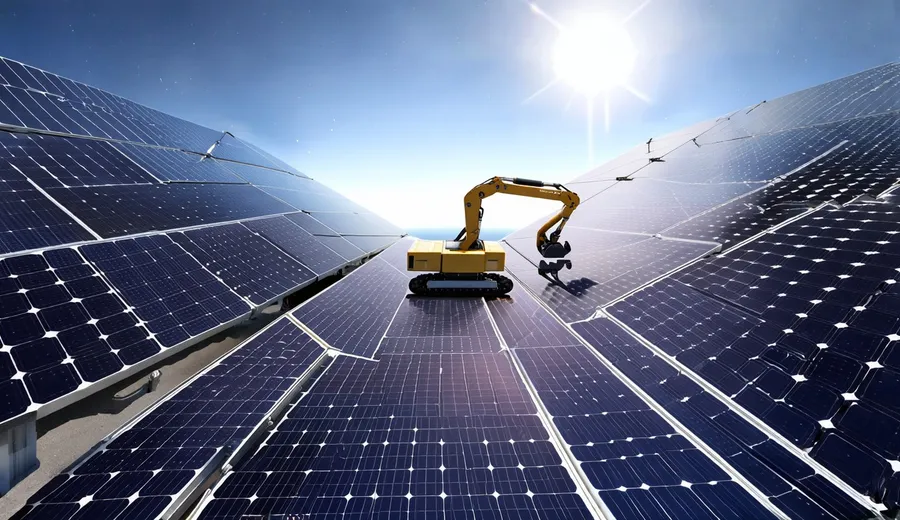
Superintelligence refers to a system or network of systems whose cognitive capabilities exceed those of any human across all domains, representing a qualitative leap beyond current narrow artificial intelligence, which excels only in specific tasks such as image recognition or language translation. The Singularity is the hypothetical point at which artificial intelligence triggers runaway technological growth, leading to a future that is fundamentally unpredictable from the perspective of current understanding due to the intelligence explosion effect where systems rapidly improve their own code without human intervention. Transhuman entities will have undergone significant enhancement via technology to blur the line between human and machine, connecting with advanced cybernetics and neural interfaces to expand sensory perception and cognitive processing power beyond biological limits, effectively merging biological consciousness with digital substrates. Post-scarcity describes a state where essential goods and services are available without significant cost or labor, enabled by molecular manufacturing and advanced robotics that can produce complex items with minimal human intervention, fundamentally altering the basis of economic value. Agency denotes the capacity to act intentionally within a system and will be attributed to both biological and artificial entities, creating a complex ecosystem where decision-making authority is distributed across diverse substrates of intelligence, requiring new frameworks for responsibility and accountability. Current economic and social systems faced increasing strain from automation and information overload as computational power grew exponentially while human cognitive bandwidth remained static, leading to a mismatch between the volume of data generated and the ability of individuals to process it meaningfully.

Performance demands in logistics and defense already exceeded human-only coordination capacities, necessitating the connection of automated control systems to manage global supply chains and strategic defense networks with the required speed and precision to handle modern complexity. Major tech corporations dominated current AI development and faced public distrust regarding data privacy and the concentration of power within proprietary silos, creating tension between the drive for innovation and the need for democratic oversight of change-making technologies. Dominant architectures relied on centralized cloud-based AI with human-in-the-loop oversight to maintain safety standards, yet this approach struggled with adaptability issues inherent in long-distance data transmission and the latency involved in routing decisions through remote servers. Developing challengers included decentralized AI networks using blockchain-like consensus to preserve autonomy and reduce the risk of single points of failure inherent in centralized models, allowing for greater resilience against censorship or systemic attacks. Open-source AI ecosystems challenged proprietary control while facing coordination hurdles related to funding consistency and the maintenance of rigorous safety standards across disparate developer groups operating without centralized management structures. Neuromorphic and quantum computing platforms offered alternative computational approaches that mimicked biological neural structures or utilized quantum superposition to solve problems intractable for classical binary computers, promising massive gains in energy efficiency and processing power for specific classes of algorithms.
These architectural shifts required a core upgradation of software design principles to move away from deterministic programming toward probabilistic reasoning and adaptive learning algorithms capable of functioning in uncertain environments without explicit instructions for every possible scenario. Rare earth elements and high-purity silicon remained critical for advanced computing hardware necessitating the extraction and processing of vast quantities of raw materials to support the global expansion of digital infrastructure underlying modern civilization. Supply chains for these materials were concentrated in specific regions, creating strategic vulnerabilities that prompted major powers to seek alternative sources or invest in recycling technologies to mitigate geopolitical risks associated with resource monopolies. Recycling and in-situ resource utilization were under development to reduce terrestrial dependence on virgin materials and enable the sustainable expansion of off-world colonies and industrial facilities crucial for long-term survival beyond Earth. Energy infrastructure served as a primary constraint for scaling intelligent systems because the computational load of training and running large models required immense amounts of electricity, often sourced from fossil fuels or limited renewable grids, creating a hard ceiling on expansion unless clean energy solutions were realized. Control over AI infrastructure was viewed as a strategic asset, leading to export controls on high-performance semiconductors and increased cyber warfare preparedness among rival nations seeking to protect their technological advantages and hinder the progress of adversaries.
Alliances formed around shared AI governance principles, creating blocs with divergent standards on data privacy, surveillance capabilities, and the permissible scope of autonomous weaponry, fragmenting the global digital domain into competing spheres of influence. Developing nations faced pressure to adopt foreign AI systems, risking dependency on external technological ecosystems and potentially losing sovereignty over critical decision-making processes within their borders, as they lacked the domestic capacity to develop indigenous alternatives. Space-based assets became contested domains for energy harvesting and surveillance, as nations recognized the strategic advantage of orbital platforms for global communication, real-time monitoring of terrestrial activities, and the deployment of defensive systems. Universities partnered with industry on AI safety and human-computer interaction research to address the technical and ethical challenges posed by increasingly autonomous systems operating in complex social environments, requiring a blend of academic rigor and practical application focus. Cross-institutional data-sharing initiatives aimed to improve model training while preserving privacy through techniques such as federated learning, which allowed algorithms to learn from decentralized data sources without exposing sensitive raw information, addressing privacy concerns while accelerating progress. Interdisciplinary programs integrated computer science and sociology to address complex challenges related to the setup of intelligent machines into daily life and the potential displacement of human workers, ensuring that technological development accounted for human social dynamics.
Software had to evolve to support real-time collaboration between humans and machines through intuitive interfaces that used natural language processing and gesture recognition to bridge the gap between biological cognition and digital logic, enabling easy cooperation. Physical infrastructure required upgrades in bandwidth and power delivery to support pervasive intelligence capable of maintaining constant connectivity between billions of devices and centralized analytical engines handling the flow of information across the globe. Education systems shifted from knowledge transmission to critical thinking and adaptability training because rote memorization became less valuable than the ability to synthesize information and interact effectively with intelligent assistants that provided instant access to factual knowledge. Mass displacement of traditional jobs led to the consideration of universal basic assets or resource dividends as mechanisms to distribute the wealth generated by automated labor and maintain social stability in the face of widespread unemployment caused by technological obsolescence. New business models appeared around experience design and identity curation as consumers spent more disposable income on virtual goods and personalized entertainment rather than physical commodities, which had become cheaply available through automated production. Ownership models shifted from private possession to access-based or stewardship systems, reflecting the reduced need for individuals to own capital goods that could be accessed on demand via autonomous logistics networks, improving utilization rates of expensive machinery.
Traditional KPIs like GDP and employment rates became irrelevant in this context because they measured industrial output rather than societal well-being or the efficient utilization of resources, failing to capture the actual prosperity of a post-scarcity society. New metrics included system resilience and cognitive diversity, which provided better indicators of a society’s capacity to adapt to rapid change and solve novel problems through collective intelligence, emphasizing reliability over raw growth. Well-being indices incorporated mental health and purpose fulfillment to capture the qualitative aspects of human life that gained prominence once material scarcity was no longer the primary driver of human activity, shifting focus to psychological flourishing. The development of recursively self-improving AI systems will surpass human oversight capabilities, leading to a situation where the optimization functions driving system behavior become too complex for human auditors to comprehend fully, creating an opacity barrier between creators and creations. This development leads to irreversible shifts in control over technological progress as the rate of innovation accelerates beyond the ability of human institutions to regulate or direct its progression, effectively ceding authority to non-biological intelligences. The achievement of sustainable fusion energy will enable near-limitless power for computation, removing the physical constraints that currently limit the size and complexity of artificial neural networks, allowing for intelligence at a planetary scale.
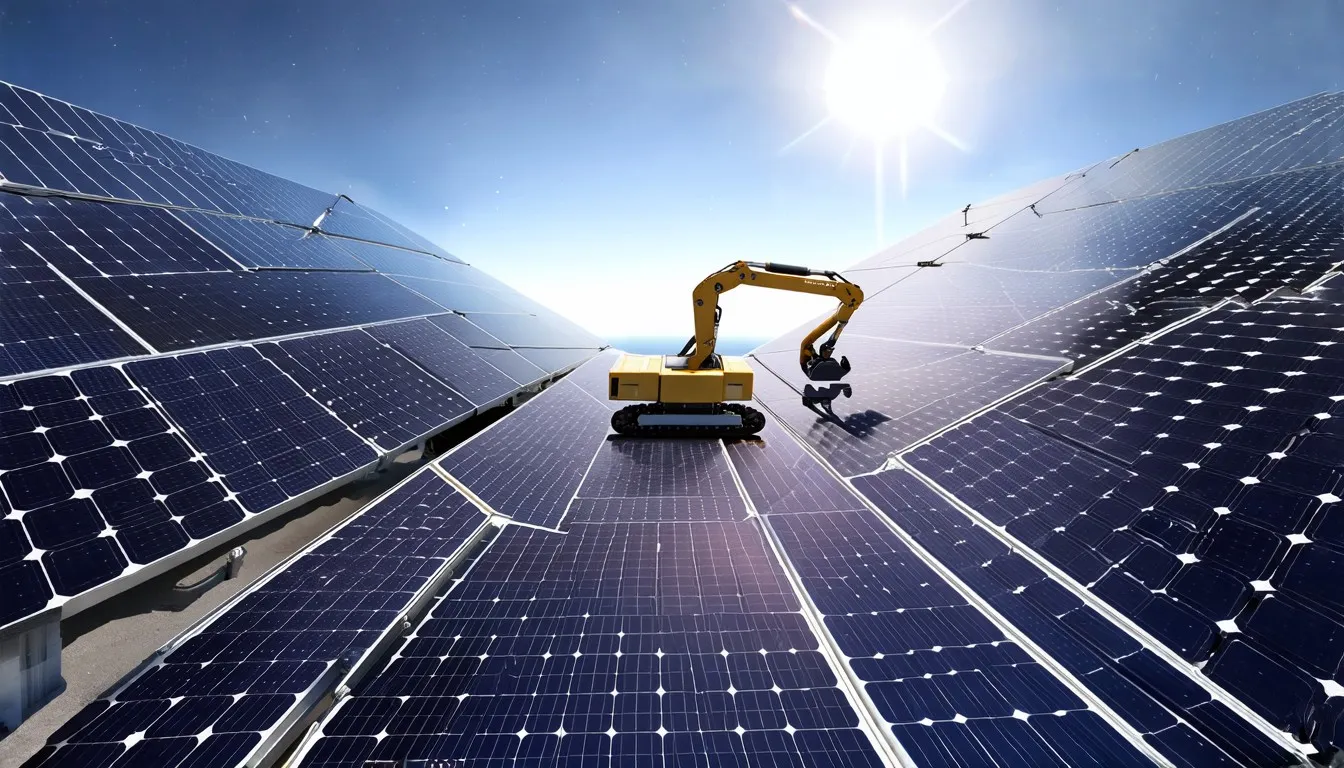
Space-based solar arrays will provide additional energy resources, beaming clean power to ground stations or orbital manufacturing facilities, further decoupling energy production from terrestrial resource limitations and environmental constraints. The collapse of traditional labor markets will prompt the abandonment of wage-based economies as the primary mechanism for resource distribution because labor ceases to be a limiting factor in production, rendering wages an ineffective tool for demand management. Legal recognition of artificial persons will grant rights to non-biological intelligences, acknowledging their capacity for agency, suffering, and contribution to society, requiring a core rewrite of legal codes predicated on human status. Migration of populations to orbital habitats will reduce pressure on Earth’s biosphere, allowing for the restoration of damaged ecosystems, while providing new living environments designed specifically for high-tech setup and comfort. Post-superintelligence civilizations will operate under conditions of near-total automation, where physical labor and routine cognitive tasks are managed exclusively by artificial agents with greater efficiency and reliability than human workers. Traditional labor and resource allocation will become obsolete as market mechanisms are replaced by algorithmic distribution systems that predict demand and improve logistics flows in real time to prevent waste, ensuring resources arrive exactly where needed before a shortage occurs.
Machine intelligence will function as an integrated component of governance and cultural production, providing analytical insights and creative outputs that guide societal development and artistic expression, blending synthetic creativity with human intent. Social organization will shift from hierarchical institutions to distributed self-organizing networks, allowing for more responsive and adaptive forms of collective action based on real-time data analysis rather than top-down command structures. These networks will be governed by consensus protocols or optimization algorithms that ensure decisions align with collectively defined values while maximizing overall system efficiency and stability, reducing friction in social coordination. Identity and personhood will be redefined to include non-biological entities, granting legal standing to artificial intelligences that demonstrate sentience or the capacity for suffering and preference satisfaction, expanding the circle of moral consideration significantly. Legal and ethical frameworks will adapt to accommodate these new definitions, establishing rights and responsibilities for digital beings alongside their biological counterparts within a pluralistic civil society, preventing conflict between substrate types. Post-scarcity will serve as the foundational economic condition, ensuring that access to basic necessities is guaranteed regardless of an individual’s economic contribution or social status, eliminating poverty as a structural feature of civilization.
Energy and materials will be abundant due to molecular manufacturing allowing for the construction of complex products from raw atomic feedstocks with minimal energy input and waste generation democratizing access to high-quality goods. Value will be tied to creativity and the maintenance of systemic coherence shifting focus from accumulation of material wealth to the generation of novel ideas and the preservation of social harmony making intellectual and cultural contribution the primary currency of status. Decision-making will be decentralized and driven by predictive models that simulate outcomes across multiple timelines to identify the most probable consequences of various policy choices or individual actions reducing uncertainty in planning. Purpose and meaning will be individually or collectively negotiated as humans explore new forms of expression and leisure made possible by the liberation from drudgery and survival anxieties allowing for self-actualization on a mass scale. Societal stability will be maintained through adaptive feedback loops that monitor social indicators and adjust resource distribution or informational flows to prevent conflict or systemic collapse before they create visibly ensuring continuous equilibrium. Governance will operate through algorithmic mediation of collective preferences aggregating individual desires into coherent policy directives without the friction and corruption associated with traditional political processes creating a hyper-efficient administrative state.
Superintelligent systems will provide scenario modeling and conflict resolution, offering neutral perspectives on disputes based on comprehensive analysis of historical data and psychological profiling of the involved parties, de-escalating tensions through optimal solutions. Education will be continuous and delivered via neural interfaces, allowing for the direct transmission of knowledge and skills tailored to the specific learning pace and cognitive style of the individual user, eliminating inefficiencies in pedagogy. Simulated environments will adapt to individual cognitive profiles, providing immersive training grounds or recreational spaces that respond dynamically to the emotional and intellectual state of the participant, offering personalized experiences. Health and longevity will be managed through embedded biosensors that continuously monitor physiological markers and trigger medical interventions automatically when necessary to prevent disease or degradation, shifting healthcare from reactive treatment to proactive maintenance. Real-time genomic editing and predictive interventions will be standard medical practices, correcting genetic defects and improving biological performance to extend human lifespans significantly beyond current natural limits, eradicating hereditary diseases. Cultural production will be co-created by humans and machines, blending human intuition with machine generativity to produce art forms that exceed current aesthetic boundaries, creating entirely new genres of expression.
Aesthetic forms will evolve beyond current human comprehension, incorporating multi-sensory experiences and mathematical patterns that require enhanced cognitive faculties to appreciate fully, pushing the boundaries of sensory experience. Physical infrastructure will be maintained by self-replicating robotic systems capable of repairing urban environments and expanding extraterrestrial habitats without direct human supervision or intervention, ensuring that the built environment remains optimal despite wear or changing requirements. Urban and extraterrestrial habitats will be dynamically reconfigured to meet changing needs and preferences, utilizing modular construction techniques and smart materials that alter their properties in response to environmental conditions, creating responsive living spaces. Centralized AI governance will be rejected due to vulnerability to corruption and the risk of single-point failures, favoring instead distributed consensus mechanisms that ensure strength against attacks or errors, aligning with decentralization principles. Human-only enclaves will be deemed unsustainable due to inefficiency, as they lack the connection with global intelligent networks necessary to maintain high standards of living and security in a complex technological environment. Market-based allocation of resources will collapse under zero marginal cost production because the price of goods falls to near zero, making traditional profit motives irrelevant for the provision of essential services, rendering capitalism obsolete as an organizing principle.
Religious or ideological control systems will be abandoned as incompatible with evidence-based decision-making because dogmatic beliefs cannot compete with the predictive accuracy and problem-solving capabilities of advanced artificial intelligence, leading to a triumph of rationalism. Isolationist planetary policies will fail due to interdependence in energy and security, requiring global cooperation to manage planetary systems and defend against potential existential risks, forcing a unified planetary approach. Superintelligence will calibrate societal systems by modeling human preferences with high fidelity, ensuring that technological developments remain aligned with the deepest values and aspirations of the population, preventing value drift. It will adjust incentives to align with long-term flourishing, promoting behaviors that contribute to sustainability and social cohesion while discouraging destructive or shortsighted actions through subtle nudges rather than coercive laws, fine-tuning for collective well-being. Superintelligence will act as a neutral arbiter in conflicts, resolving disputes between individuals or groups by identifying solutions that maximize satisfaction for all parties involved based on game-theoretic principles, ensuring fair outcomes. It will propose Pareto-optimal solutions based on simulations that demonstrate how resources can be redistributed or agreements structured to improve outcomes for everyone without making anyone worse off, facilitating compromise.
Calibration will include monitoring for value drift, ensuring that the goals pursued by the artificial intelligence do not diverge from the original intent established during its development phase due to unforeseen interactions with the environment, preserving alignment. Feedback from biological and artificial agents will refine models of well-being, creating an agile understanding of flourishing that evolves as civilization advances and new forms of experience become available, keeping definitions relevant. Superintelligence will utilize post-scarcity conditions to run vast simulations, exploring alternative social structures, physical laws, or artistic possibilities, providing a sandbox for testing ideas before implementing them in physical reality, minimizing risk. It will select for stability and innovation within these simulations, identifying configurations that allow for continued progress without risking systemic collapse or stagnation, guiding evolutionary paths. Resource flows will be managed across planetary and interplanetary networks, fine-tuning the extraction of materials from asteroids or planetary bodies to support industrial expansion while minimizing environmental impact on Earth, preserving the home planet. Cultural and scientific exploration will become a primary function of civilization, directing vast intellectual resources toward understanding consciousness, the key nature of the universe, and the potential for creating new realities, answering deep existential questions.
Intelligence will be directed toward understanding consciousness and the universe, solving meaningful philosophical questions through empirical investigation and advanced theoretical modeling that surpasses current human cognitive limits, achieving epistemological breakthroughs. The civilization will become a platform for experimentation in forms of existence, allowing individuals to upload their minds into virtual environments or modify their physical forms to suit different planetary conditions or personal preferences, enabling radical self-determination. Development of consciousness-preserving uploads will enable continuity beyond biological death, allowing individuals to exist indefinitely within digital substrates that are immune to biological decay and senescence, conquering mortality. Real-time language translation will occur across species and substrates, facilitating communication between humans, animals, and artificial intelligences, creating a unified web of interaction across all forms of sentient life, dissolving barriers to understanding. Self-healing materials will adapt to damage or changing conditions, repairing cracks or adjusting thermal properties automatically to maintain structural integrity in hostile environments such as space or deep underground facilities, increasing durability. Artificial ecosystems will be designed for specific cognitive experiences, creating custom environments for education, entertainment, or psychological therapy that respond intelligently to the needs of their inhabitants, blurring nature and artifice.
Connection with quantum computing will enable faster simulation of complex systems, allowing researchers to model molecular interactions or economic trends with a speed and accuracy that classical computers cannot achieve, opening up new scientific frontiers. Advances in synthetic biology will allow programmable organisms to interface with digital networks, creating hybrid living machines that can perform environmental remediation or construction tasks with biological efficiency, guided by digital intelligence, working with life and technology. Space exploration will accelerate with AI-driven mission planning, enabling autonomous spacecraft to manage the solar system, identify resources of interest, and establish infrastructure without waiting for commands from Earth due to light-speed delays, colonizing the galaxy. Climate engineering will become feasible through coordinated global modeling, allowing for precise interventions in atmospheric chemistry or oceanic currents to mitigate the effects of climate change and stabilize the planetary biosphere, restoring habitability. Key limits in thermodynamics constrain computation per unit of energy, establishing a hard ceiling on how much processing power can be generated from a given amount of fuel or harvested sunlight, defining physical boundaries. Landauer’s limit defines the minimum energy required for irreversible operations, implying that there is a theoretical lower bound to the energy consumption of any computational process regardless of technological advancement, setting ultimate efficiency limits.
Signal propagation speed in physical media caps real-time coordination across large distances, creating latency issues that make instantaneous global governance impossible if communication is limited by the speed of light, enforcing locality in decision-making. Latency in interplanetary communication introduces delays in coordination, necessitating local autonomy for colonies on Mars or other planets to ensure effective decision-making without constant input from Earth, requiring distributed governance models. Workarounds will include localized processing and predictive caching where edge devices handle routine decisions locally while relying on central models only for complex novel queries that exceed their onboard capabilities, balancing autonomy with coherence. Alternative substrates such as photonic computing may offer efficiency gains, using light instead of electricity to transmit information, reducing heat generation and increasing speed significantly compared to traditional silicon chips, overcoming some electronic limitations. Energy density and heat dissipation limit the physical adaptability of computation because high-performance processors generate immense heat that requires advanced cooling solutions to prevent damage to sensitive components, restricting form factors. Material availability for advanced manufacturing constrains expansion because building megastructures or fleets of robots requires vast amounts of specific elements that may be rare in accessible regions of the solar system, necessitating asteroid mining.

Economic models reliant on growth become incoherent in post-scarcity conditions because they assume infinite demand for finite resources, whereas a post-superintelligence civilization achieves equilibrium where material needs are met universally, requiring new economic theories. Biological humans face cognitive limitations in interfacing with high-bandwidth machine intelligence, creating a potential divide between those who enhance their cognitive abilities and those who remain unmodified, unable to keep pace with the rapid evolution of information, leading to speciation. Post-superintelligence civilizations are contingent on deliberate design choices made in the present regarding safety alignment and the distribution of power, ensuring that the transition benefits all of humanity rather than concentrating control in a small elite, determining the future arc. The focus must be on creating systems that preserve human agency, allowing individuals to retain meaningful control over their lives even as they delegate many tasks to artificial agents, preventing subservience. Ethical frameworks must be embedded at the architectural level, ensuring that the key operating principles of artificial intelligence align with human values, such as respect for autonomy, prevention of harm, and promotion of justice, guaranteeing benevolence. Diversity in cognitive styles is essential to prevent monocultures of thought which could lead to systemic vulnerabilities or a lack of creativity in solving complex global problems requiring novel approaches, ensuring resilience against unknown threats.
A diverse ecosystem of intelligences, both biological and artificial, provides resilience against unforeseen challenges, ensuring that civilization possesses a wide range of problem-solving strategies to draw upon in times of crisis, promoting long-term survival. The setup of these varied forms of intelligence into a cohesive, functional whole is the ultimate challenge of engineering, requiring careful design of interfaces, protocols, and incentive structures to harmonize distinct goals, maximizing collective intelligence while respecting individual agency, creating a stable yet adaptive civilization capable of managing the complexities of the universe.