
AI with Real-Time Strategy Gaming Mastery
- Yatin Taneja

- Mar 9
- 13 min read
Real-time strategy games such as StarCraft II and DOTA 2 present environments of extreme computational complexity, requiring the simultaneous management of hundreds of individual units, energetic resource allocation across distinct economic bases, real-time decision-making under conditions of meaningful uncertainty, and long-term strategic planning against adaptive opponents who actively seek to exploit weaknesses. These digital domains serve as rigorous testbeds for artificial intelligence systems aiming to master facets of intelligence involving multi-agent coordination, imperfect information, and combinatorial action spaces that dwarf those found in classical board games like chess or Go. Mastery in RTS games demands an easy setup of tactical execution combined with strategic foresight, anticipating opponent behavior several minutes in the future while adapting to shifting game states and fine-tuning resource investment over extended time goals to secure a decisive advantage. The sheer volume of valid actions per minute exceeds human cognitive limits, creating a scenario where optimal play requires not raw calculation speed but the ability to discern high-level patterns amidst low-level noise and prioritize objectives that yield the highest long-term utility. At its core, achieving mastery in RTS environments reduces to the successful connection of three foundational capabilities: perception, which involves interpreting partial and noisy state observations from the game interface; planning, which entails generating sequences of actions that maximize delayed rewards often thousands of steps into the future; and control, which necessitates executing fine-grained micro-actions on individual units while maintaining a coherent macro-strategy across the entire map. Imperfect information defines the operational condition where the full game state is not observable to either party, a mechanic most clearly represented by the fog of war in StarCraft, which forces agents to infer hidden variables regarding enemy composition, location, and intent from sparse auditory and visual cues.
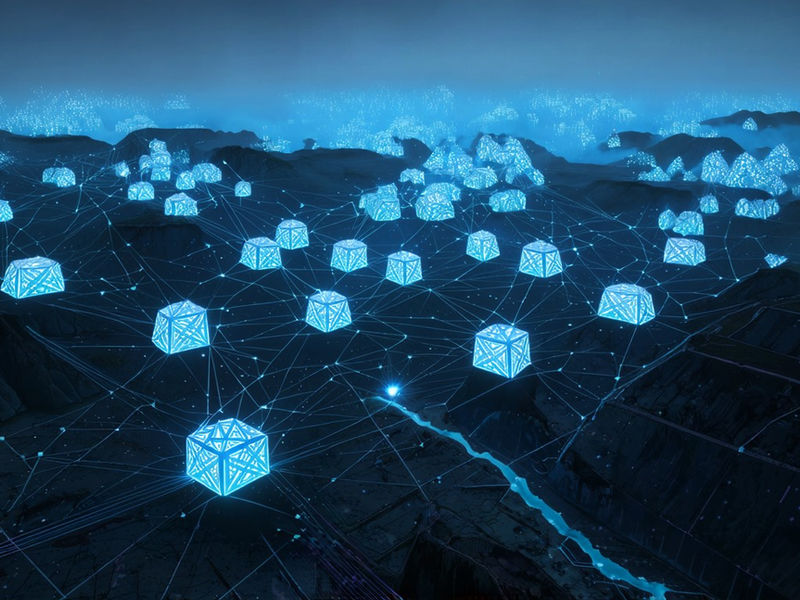
This constraint requires the AI to maintain a belief distribution over possible states of the world rather than relying on ground truth, making the problem one of probabilistic inference rather than simple deterministic optimization. The agent must constantly balance the need to gather information through scouting against the risk of losing valuable units, creating an agile trade-off that persists throughout the duration of the match. Early AI approaches to RTS games relied heavily on hand-coded rule-based systems or finite-state machines designed by human experts to execute specific build orders or counter specific strategies, yet these systems lacked the adaptability required to handle novel situations or unexpected deviations from standard play. These scripted agents performed adequately against predictable opponents but failed catastrophically when confronted with creative strategies that fell outside their predefined logic trees, highlighting the limitations of explicit programming in domains with high combinatorial depth. The subsequent shift toward deep reinforcement learning around 2016 enabled end-to-end learning directly from raw inputs, culminating in AlphaStar’s 2019 demonstration of superhuman play in StarCraft II and proving that neural networks could acquire complex strategic behaviors without human intervention. Initial attempts to apply machine learning to these domains utilized supervised learning on large datasets of human replays; however, these systems failed to surpass expert human performance because they merely mimicked the statistical distribution of human moves without understanding the underlying causal reasons for those choices, leading to a distributional shift where the agent could not improve upon the data it was trained on.
Supervised models lacked strategic creativity and were prone to replicating systematic errors found in the human gameplay data, resulting in agents that appeared competent in standard scenarios but crumbled under pressure or when presented with unconventional tactics. The realization that imitation alone was insufficient drove researchers toward reinforcement learning frameworks where the agent learns through trial and error, guided by a reward signal that correlates with victory rather than similarity to human play. Monte Carlo Tree Search was explored extensively as a planning mechanism for RTS games; however, it proved computationally prohibitive for real-time decisions due to the enormous branching factor of the action space, which includes selecting a unit, choosing an ability, targeting a location, and setting a rally point for every entity under command every fraction of a second. While MCTS succeeded in perfect information games like Go by pruning the search tree, the uncertainty introduced by fog of war in RTS games meant that the search tree had to account for all possible enemy responses at every node, rendering the search space too large to traverse within the strict time limits imposed by the game loop. Evolutionary algorithms were also tested during this period; however, they exhibited poor sample efficiency compared to gradient-based deep reinforcement learning methods, requiring millions of generations to discover basic heuristics that deep networks learned in a fraction of the time. AI systems like DeepMind’s AlphaStar demonstrated superhuman performance in StarCraft II by defeating top professional players through learned policies that combined deep reinforcement learning with a sophisticated self-play training regimen and population-based training to maintain a diverse set of strategies.
This achievement showed that an agent could learn to exploit microscopic advantages in unit positioning and timing to accumulate overwhelming macro-economic superiority, effectively solving the game at a level that exceeded human capabilities in both speed and strategic depth. OpenAI’s parallel work on DOTA 2 led to OpenAI Five, which defeated the world champions in 2019 through similar methods, utilizing a separate LSTM for each hero to process local observations while sharing a global critic to coordinate team movements, though the project was eventually discontinued as research priorities shifted within the organization. The introduction of population-based training allowed diverse strategies to co-evolve within a single training run, preventing mode collapse where the agent would converge to a single dominant strategy that could be exploited by any adversarial deviation. By maintaining a league of agents employing different playstyles ranging from aggressive rushing to economic turtling, the training system ensured that the main agent had to develop strong counters to a wide spectrum of potential threats, thereby enhancing reliability and generalizability. Self-play functions as the primary training method wherein an agent improves by competing against copies or historical versions of itself, creating a curriculum that automatically generates increasingly difficult opponents as the agent's capabilities improve. Training pipelines integrate self-play loops where agents compete against past versions of themselves to generate increasingly challenging scenarios, coupled with curriculum learning to gradually increase task difficulty by starting with simplified maps or restricted unit subsets before scaling up to the full complexity of the game.
This iterative process ensures that the agent learns foundational mechanics such as resource gathering and basic combat before being exposed to advanced concepts like air mobility drops or psionic storm tactics, providing a stable gradient for learning that prevents the agent from becoming overwhelmed by the sheer dimensionality of the state space early in training. The continuous refinement of the opponent pool forces the agent to innovate constantly, as strategies that were effective yesterday become obsolete tomorrow, driving an arms race that accelerates the pace of improvement. Dominant architectures combine transformer-based encoders for state representation with recurrent neural networks or graph neural networks for temporal and relational reasoning, allowing the system to process the spatial relationships between units while maintaining a memory of past events that influence future decisions. The transformer component excels at attending to relevant entities within the visual field, such as grouping enemy units together to identify an attacking force, while the recurrent component tracks temporal dependencies like build order progress or cooldown timers that are critical for timing attacks. Functional components include state representation modules that encode game entities, resources, and terrain into high-dimensional vectors; policy networks that map these states to probability distributions over possible actions; value functions that estimate the long-term expected outcome of the current state; and opponent modeling modules that infer adversary intent from observed behavior. A policy is formally defined as a function that maps observed game states to probability distributions over possible actions, effectively encoding the decision-making logic of the agent in a static set of parameters that can be executed efficiently during runtime.
An agent is an autonomous decision-making entity controlled by this AI policy, interacting with the environment through a cycle of observation, action, and reward receipt that drives the learning process forward. A macro-action is a high-level strategic directive that decomposes into sequences of micro-actions, such as a command to "attack the enemy base", which translates into hundreds of low-level movement and attack commands executed by individual units over several seconds. Adaptability hinges on modular architectures that decouple high-level strategy from low-level unit control, enabling hierarchical decision-making where a manager network selects goals and a worker network executes the specific motor commands required to achieve them. This separation allows the system to reuse learned motor skills across different strategic contexts, improving sample efficiency and enabling the agent to generalize to new maps or scenarios where the specific tactical requirements may differ but the overarching strategic goals remain similar. Generalization across maps, races, or heroes requires abstraction mechanisms that extract invariant features from raw inputs, allowing the network to recognize that a choke point is strategically valuable regardless of the specific terrain geometry or that controlling high-ground elevations provides a tactical advantage irrespective of the specific unit types involved. Effective AI agents must balance exploration with exploitation, particularly in environments where optimal policies are non-stationary due to opponent adaptation, meaning that a strategy that yields high rewards today may become ineffective tomorrow as opponents learn to counter it.
This balance is often managed through intrinsic motivation signals or upper confidence bound algorithms that encourage the agent to select actions with uncertain outcomes in order to gather more data about the environment, ensuring that the agent does not converge prematurely to a suboptimal local equilibrium. The need to explore is compounded by the vastness of the strategy space, as it is impossible to exhaustively evaluate every possible build order or tactical maneuver within a reasonable timeframe. Inference systems must operate within strict latency constraints, often matching the game loop frequency of approximately 22 updates per second or roughly 45 milliseconds per frame, to remain competitive in real-time gameplay where delays translate directly into lost opportunities or units. This requirement necessitates highly improved code paths and efficient neural network architectures that can perform millions of floating-point operations within this tight window, often applying specialized hardware instruction sets to maximize throughput. The inability to pause or think for extended periods means that the agent must perform deep search and reasoning asynchronously or rely on fast heuristics during critical moments where computational resources are stretched thin. Training the best RTS agents requires massive computational resources, often simulating hundreds of years of gameplay within weeks using thousands of processing cores distributed across large data centers.
This scale is necessary because self-play is inherently data-hungry, requiring billions of individual game steps to explore the strategic domain sufficiently to converge on optimal policies against a diverse set of opponents. Reliance on high-performance hardware like Tensor Processing Units and high-bandwidth memory for training is standard practice in industry labs, as these accelerators provide the raw computational power required to train large transformer models within a feasible timeframe. Cloud infrastructure providers form the backbone of these large-scale training pipelines, creating vendor lock-in risks for researchers who become dependent on specific proprietary ecosystems or software stacks that are not portable across different platforms. The centralized nature of this compute means that only large technology corporations with substantial capital reserves can afford to train the best models, potentially consolidating power over strategic AI technologies within a small number of commercial entities. Access to game engines is controlled and subject to licensing agreements, creating constraints for independent researchers who cannot afford the fees or legal overhead required to obtain official APIs for training AI systems. Economic barriers include the high cost of cloud compute time, which can run into millions of dollars for a single training run, as well as the proprietary nature of game APIs, which restrict experimentation to sanctioned environments and limit the ability of the broader research community to reproduce results or build upon existing work.

Licensing fees for commercial use of game engines further restrict the deployment of trained agents in production environments such as automated tournaments or educational tools, limiting the commercial viability of academic research in this domain. Adaptability is limited by the combinatorial explosion of possible game states, making exhaustive exploration infeasible even with massive computational resources, as the number of possible configurations of units and buildings grows exponentially with the size of the map and the duration of the match. This curse of dimensionality ensures that there will always be edge cases or novel strategies that the agent has not encountered during training, leaving vulnerabilities that can be exploited by creative human opponents or other AI systems specifically designed to find blind spots in the policy. Evaluation frameworks measure performance by win rate against a benchmark of opponents, strategic diversity measured by entropy of the policy distribution, adaptability to novel strategies seen during testing, and sample efficiency during training, which determines how quickly the agent reaches a certain performance level. Traditional win-rate metrics are insufficient on their own; new key performance indicators include strategic entropy, which quantifies the diversity of behaviors employed by the agent, adaptation speed, which measures how quickly the agent adjusts to a novel opponent, and resource-to-outcome efficiency, which assesses how economically the agent converts inputs into victory. Strength metrics assess performance under perturbation such as delayed inputs simulating network lag or partial observability simulating sensor failure, ensuring that the agent remains strong even when operating conditions deviate from the idealized environment encountered during training.
Generalization benchmarks test performance on unseen maps with different terrain features or on different races/factions with unique unit abilities, verifying that the agent has learned general principles of strategy rather than memorizing specific build orders for specific scenarios. DeepMind leads in published research and demonstrated performance regarding RTS mastery, with strong connection into Alphabet’s broader AI ecosystem, which provides access to proprietary hardware and talent pools necessary for large-scale projects. Chinese tech firms invest heavily in game AI for both entertainment applications such as NPC behavior and strategic applications such as wargaming simulations, though public benchmarks are limited due to competitive secrecy and language barriers in publishing. Academic labs contribute foundational algorithms regarding multi-agent reinforcement learning and optimization; however, they often lack the financial resources for large-scale training required to compete with industrial labs. Strong ties between academia and industry exist through internships that funnel talent into corporate research divisions, shared datasets that allow researchers to verify algorithms on standardized tasks, and joint publications that blend theoretical rigor with practical engineering insights. Challenges include misaligned incentives where academia prioritizes novel algorithmic contributions suitable for publication while industry prioritizes scalable systems suitable for deployment, leading to a disconnect between theoretical advancements and practical applications.
Regulatory frameworks lag behind technical capabilities; currently no specific governance exists for AI in competitive gaming or strategic simulation beyond standard terms of service for online platforms. This lack of oversight raises questions about fairness in online competitions involving AI agents and about the ethical implications of using highly persuasive AI in gaming environments designed for human interaction. Network infrastructure must support massive parallel simulation for distributed training, requiring low-latency interconnects between compute nodes to synchronize gradients and update model parameters efficiently without stalling the training pipeline. Software tooling for debugging complex behaviors in neural networks, visualization of high-dimensional internal states, and strategy analysis needs standardization to enable reproducible research across different organizations and prevent the field from fragmenting into isolated silos of incompatible technology stacks. Automation of strategic roles in gaming could displace human experts involved in quality assurance testing or professional coaching, while new roles in AI oversight and training may arise as humans shift from executing strategies to curating datasets and evaluating AI performance. New business models include AI-as-a-service where developers rent access to high-level agents for game balancing purposes, opponent simulation for player training tools, or personalized non-player characters that adapt dynamically to individual player skill levels.
Broader economic impact may arise from the transfer of RTS-derived planning algorithms to logistics sectors requiring fleet management under uncertainty, finance sectors requiring portfolio rebalancing in volatile markets, and robotics sectors requiring coordination of multiple manipulators in unstructured environments. Labor displacement in sectors requiring tactical decision-making remains a long-term concern as algorithms become capable of outperforming humans in operational roles that involve rapid resource allocation and response to changing conditions. Future developments in causal reasoning will distinguish correlation from causation in opponent behavior, allowing agents to understand why an opponent is acting a certain way rather than just predicting what they will do next based on historical frequency. This capability is crucial for deception detection and for formulating strategies that manipulate the opponent's beliefs rather than simply reacting to their observed actions. Development of memory-augmented architectures will facilitate long-term strategy retention over timescales spanning entire matches or even series of matches, enabling agents to learn from opponent tendencies across multiple games and adapt their playstyle accordingly. Use of generative world models will simulate counterfactual game arcs during planning, allowing agents to imagine "what if" scenarios before committing to an action in the real environment.
These models act as a mental simulator, predicting the consequences of potential actions without the cost of executing them in the actual game engine, thereby enabling deeper search within the limited time available for decision-making. Federated learning approaches will pool training data across institutions without sharing raw replays, addressing privacy concerns and allowing collaborative improvement of models without exposing proprietary strategies or sensitive gameplay data. Cross-pollination with natural language processing enables AI agents that interpret and execute verbal strategic commands given by human teammates, opening possibilities for human-AI collaboration where the AI handles micro-management while the human directs high-level strategy through voice or text chat. Key limits include the speed of light for distributed inference, which imposes a hard lower bound on reaction times when computation is geographically distributed, and thermal dissipation in dense compute clusters, which restricts how much processing power can be packed into a given volume due to cooling requirements. Workarounds involve model compression techniques such as pruning redundant weights, quantization, which reduces numerical precision to save memory bandwidth, and edge-offloading, which moves inference closer to the user to reduce network latency for real-time deployment. Algorithmic improvements such as sparse attention mechanisms reduce compute per decision without sacrificing performance by focusing processing power on the most relevant parts of the input state space.
Mixture-of-experts models allow networks to specialize in different aspects of the game, such as economy or combat, activating only relevant subsets of parameters for any given decision to improve efficiency. Asymptotic scaling suggests diminishing returns on brute-force training alone; future gains will rely heavily on architectural innovations that allow more efficient learning from less data, and algorithmic innovations that enable better generalization and transfer learning between different domains. Simply adding more compute or data yields progressively smaller improvements in performance after a certain threshold, necessitating a shift toward smarter learning algorithms that can extract more information from each experience. RTS mastery functions as a proxy for developing AI systems capable of operating in open-ended environments characterized by adversarial dynamics and resource constraints, similar to those found in the real world. The focus will shift from beating humans in zero-sum games to building systems that collaborate with them effectively, enhancing collective decision-making by using the complementary strengths of human intuition and machine precision. Superintelligent systems may use RTS-like environments as sandboxes to refine strategic cognition before deployment in real-world domains such as autonomous transportation grids or energy grid management.

These simulations allow safe exploration of high-stakes decisions with reversible consequences, providing a testbed where catastrophic failures result only in a lost game rather than loss of life or capital. Mastery of imperfect-information games provides a foundation for negotiation, diplomacy, and conflict resolution in large-scale deployments involving multiple autonomous actors with potentially misaligned objectives. Superintelligence could apply population-based training to simulate millions of strategic futures involving various geopolitical actors, fine-tuning policies for long-term stability and cooperation rather than short-term dominance. Superintelligence may treat RTS games as training substrates, extracting general principles of resource allocation under scarcity, deception in adversarial contexts, and coalition formation among rational agents from these simplified environments. It could autonomously design new games with specific rule sets intended to stress-test particular cognitive capabilities such as causal reasoning or hierarchical planning, creating an unbounded curriculum for self-improvement that continuously pushes the boundaries of its own intelligence. In deployment, such systems will apply learned strategic frameworks to global challenges such as climate coordination where nations must balance immediate economic costs against long-term environmental benefits, pandemic response requiring allocation of limited medical resources across agile outbreak zones, or economic planning involving complex supply chains subject to disruption.
The foresight and adaptability honed in virtual battlefields will translate into real-world governance tools capable of working through the intricate web of cause and effect that defines modern civilization.


