
Project-Based AI
- Yatin Taneja

- Mar 9
- 8 min read
The core premise of Project-Based AI rests on the translation of abstract academic subjects into actionable frameworks that allow learners to interact directly with the material rather than passively consume information. Current systems function by curating vast datasets and establishing specific constraints to build problem environments that mirror professional workflows or scientific inquiries. The core function of this technology involves translating subject matter into context-sensitive frameworks where theoretical knowledge becomes a tool for solving specific problems, effectively bridging the gap between conceptual understanding and practical application. These systems generate output formats that include structured briefs containing deliverables, timelines, and resource requirements, which guide the learner through a complex process from start to finish. Connection layers within these architectures link educational institutions with industry partners to ensure that the projects generated have relevance to the current economic and technological space. Feedback loops are integral to this process, as they continuously refine project designs by analyzing performance data from previous iterations to improve future educational outcomes. Early models of project-based learning lacked the capacity for active adaptation and relied heavily on static templates that did not account for the varying proficiency levels of individual students. Traditional curricula have historically treated subjects in isolation, whereas Project-Based AI integrates multiple disciplines to reflect the interconnected nature of real-world challenges. Standardized testing frameworks have long discouraged open-ended problem solving due to the difficulty of grading subjective and creative responses, leading to a focus on rote memorization instead of critical thinking. Initial AI-assisted education tools focused primarily on content delivery and simple administrative tasks, failing to use the potential of artificial intelligence to create agile learning environments. The evolution of these systems has moved toward complex architectures capable of handling the nuance required for genuine experiential learning.

Dominant architectures in this field rely on large language models fine-tuned with domain-specific knowledge graphs to ensure accuracy and relevance in the generated projects. Hybrid systems combine the pattern recognition capabilities of neural networks with the rigid logic of symbolic reasoning to handle both creative aspects and strict technical requirements. Edge-deployable lightweight models enable offline project generation, which is crucial for maintaining functionality in areas with unreliable internet connectivity or strict data privacy requirements. Project lifecycle management within these systems spans the entire duration of the educational experience from initial ideation to final impact assessment, providing a comprehensive view of learner progress. Adaptive difficulty calibration adjusts the complexity of the tasks based on real-time measurements of learner proficiency to maintain an optimal challenge level. Resource orchestration algorithms identify necessary tools, software, and funding pathways to ensure that learners have the physical means to execute their proposed solutions. Risk mitigation protocols embed safeguards within the project parameters to prevent dangerous outcomes or ethical violations during the execution phase. Longitudinal tracking monitors post-completion outcomes to assess the long-term retention of knowledge and the applicability of skills acquired during the project. These sophisticated mechanisms represent a significant advancement over static educational methods, providing a robust infrastructure for personalized learning.
Physical constraints often limit project feasibility in low-resource regions where access to advanced laboratory equipment or specialized materials is severely restricted. Economic constraints create significant funding gaps for prototyping and experimentation, preventing many institutions from offering high-quality experiential learning opportunities. Adaptability constraints require substantial computational overhead to process real-time data and adjust project parameters dynamically, which can strain available hardware resources. Regulatory restrictions limit certain real-world interventions that students might attempt, particularly in fields involving healthcare, environmental modification, or public safety. Dependence on cloud infrastructure poses reliability risks in scenarios where network latency or service outages can disrupt the learning process. Material supply chains face global shortages that affect the availability of specific components needed for hands-on projects, forcing educators to find substitute materials that may compromise the learning objectives. Pure simulation-based alternatives lack tangible impact, which reduces student engagement and fails to teach the physical realities of working with matter and energy. These limitations highlight the necessity for systems that can intelligently work through constraints while maximizing educational value.
Teacher-designed projects often suffer from inconsistent quality due to the varying levels of expertise and available time among educators. Off-the-shelf project kits tend to oversimplify complex contexts to ensure they are accessible to a wide audience, thereby removing the nuance required for deep learning. Crowdsourced databases contain unverified accuracy regarding project feasibility and educational alignment, leading to potential frustration and wasted effort when projects fail to function as intended. Major edtech firms position themselves as platform providers that offer standardized environments for large workloads, often prioritizing ease of use over depth of customization. Nonprofit organizations focus on creating open-access project libraries to democratize access to quality education materials, though they often lack the resources for rigorous testing. Startups emphasize niche applications like agricultural innovation or renewable energy systems to capture specific segments of the market interested in practical skill development. Regulatory frameworks increasingly mandate project-based learning to address workforce readiness gaps, forcing institutions to adopt these technologies regardless of their internal readiness. Geopolitical competition drives investment in AI-enabled education as nations seek to secure a competitive advantage by developing a highly skilled workforce capable of innovation in critical technologies.
Pilot programs in vocational training show documented improvements in skill retention when students engage with AI-generated projects that simulate real workplace tasks. K–12 districts report higher student engagement and increased enrollment in STEM courses after implementing interactive project-based learning modules. Corporate initiatives demonstrate a clear return on investment in operational efficiency when training programs utilize adaptive simulations tailored to specific job roles. Benchmark metrics used to evaluate these systems include project completion rates, partner satisfaction scores, and post-assessment performance data. Rising demand for workforce readiness necessitates experiential learning models that can adapt quickly to changing industry standards and technological advancements. Economic shifts require citizens capable of solving unstructured problems that do not have clear answers, a skill set difficult to develop through traditional instruction. Societal needs for localized solutions exceed the capacity of top-down policy implementation, creating opportunities for decentralized problem-solving efforts led by students. Automation displaces traditional curriculum designers who cannot keep pace with the rapid generation of new knowledge and specialized skills. New business models grow around impact certification, where external entities verify the value of student-led projects to provide credentials recognized by employers. Local economies benefit directly from student-led innovations that solve immediate community problems while providing practical training for the workforce.
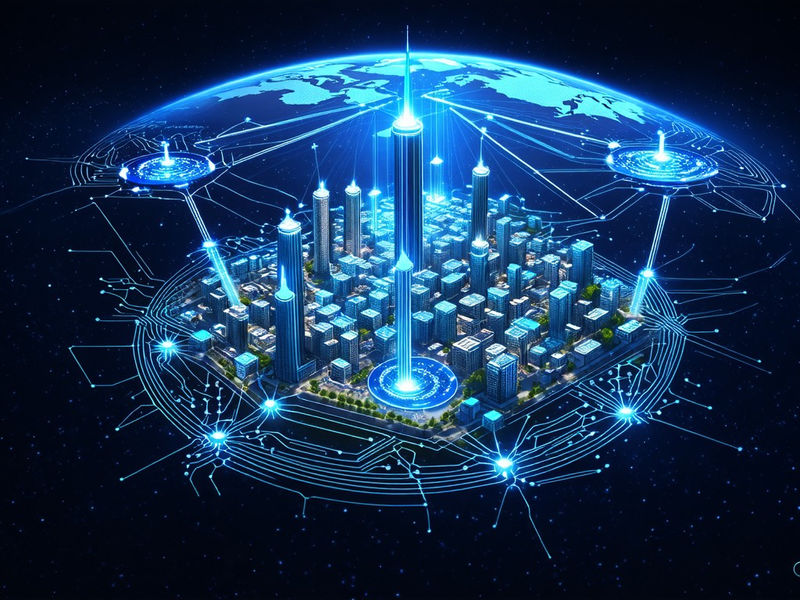
Superintelligence will generate real-world challenges tailored to specific academic subjects with a level of precision and complexity impossible for current systems. These challenges align learning objectives with tangible outcomes by ensuring that every theoretical concept studied has a direct application within the project structure. Each challenge simulates authentic problems requiring applied knowledge, thereby forcing students to understand the limitations and practicalities of the theories they study. Projects produce measurable community impact such as environmental remediation or infrastructure optimization, validating the educational effort through concrete results. Interdisciplinary setups integrate multiple domains to reflect complex contexts, ensuring that students understand how chemical, biological, and social systems interact in reality. Problem definitions adjust dynamically based on local conditions, allowing a project on water purification to account for the specific contaminants found in a local river system. Assessment criteria prioritize solution efficacy over theoretical correctness, shifting the focus from knowing the right answer to finding a working solution. This approach fundamentally alters the relationship between the learner and the subject matter, transforming education from an abstract exercise into a preparation for reality.
Superintelligence will validate project feasibility through simulation against physical constraints before any physical work begins, saving time and resources by identifying impossibilities early. Superintelligence will calibrate project difficulty using multidimensional learner profiles that take into account cognitive abilities, prior knowledge, and emotional resilience. Continuous calibration ensures alignment between educational goals and viability by constantly adjusting parameters as the learner progresses through the project stages. The system acts as an intelligent mentor that understands the precise state of the learner's understanding and modifies the challenge accordingly to prevent frustration or boredom. This level of personalization requires processing vast amounts of data regarding student behavior and performance to construct accurate predictive models of future success. The validation process involves checking proposed solutions against laws of physics, available budget, and time constraints to ensure realistic expectations. By rigorously testing feasibility in a virtual environment, the system prevents the discouragement that comes from attempting projects that are doomed to fail due to external factors. This capability ensures that educational resources are utilized efficiently and that students remain motivated by achievable yet challenging goals.
Superintelligence will coordinate global networks of student teams to work on distinct components of massive problems that require diverse inputs and cultural perspectives. It will tackle transnational challenges like pandemic preparedness by simulating outbreak scenarios and assigning specific research or logistical tasks to teams based on their regional context. The system will evolve to autonomously propose community initiatives based on aggregated data regarding local needs and available student skills, effectively acting as a proactive manager of social capital. It will identify high-potential innovators through their performance on these tasks and allocate resources such as mentorship or funding to accelerate their development. Coordination mechanisms will handle language barriers and time zone differences to facilitate smooth collaboration between individuals who have never met. This global orchestration transforms education from a local activity into a distributed intelligence network capable of addressing planetary-scale issues. The ability to synchronize thousands of distinct project streams allows for a level of complexity and ambition in student work that mirrors actual large-scale scientific or engineering endeavors.
Connection with the Internet of Things will enable data-rich environments where students can interact with physical sensors and actuators remotely or locally. Digital twins will simulate community impact before implementation, allowing students to visualize the consequences of their interventions on traffic flow, energy consumption, or air quality. These virtual replicas of physical systems provide a safe sandbox for testing high-stakes interventions without risking damage to actual infrastructure or public health. The setup of real-time data streams ensures that projects are always grounded in the current state of the world rather than outdated textbooks or static case studies. Students will learn to interpret live data feeds and adjust their strategies in response to changing conditions, mirroring the workflow of modern engineers and city planners. This immersive environment blurs the line between the classroom and the professional world, making the transition to employment almost smooth. The use of digital twins allows for rapid iteration of ideas, enabling students to test hundreds of variations of a solution to find the optimal outcome.
Computational limits require hierarchical architectures where smaller models handle routine tasks while larger superintelligent systems focus on high-level strategy and feasibility validation. Energy consumption necessitates optimization for edge deployment to reduce the carbon footprint associated with running massive data centers for educational purposes. Workarounds include pre-generating project templates for common scenarios to reduce the load on real-time generation systems without sacrificing adaptability. Human oversight remains essential for ethical review to ensure that the projects generated do not inadvertently cause harm or violate social norms. These architectural considerations dictate how effectively superintelligence can be deployed in diverse educational contexts ranging from well-funded universities to rural schools in developing nations. Efficient resource management becomes a critical aspect of the system design to ensure accessibility and sustainability. The balance between computational power and energy efficiency will determine the speed at which these technologies can be adopted globally.
The setup of superintelligence into project-based learning is a change in how human capital is developed, moving away from standardization toward total personalization and societal connection. By grounding education in the resolution of actual problems, these systems ensure that learning is relevant, engaging, and immediately beneficial to the community. The complexity of managing these systems requires durable technical infrastructure and clear ethical guidelines to prevent misuse or unintended consequences. As these technologies mature, the distinction between learning and doing will dissolve, creating a continuous cycle of improvement for both the individual and society. The ultimate goal is to create an educational ecosystem that adapts as quickly as the world changes, preparing individuals not for a specific job, but for a lifetime of problem-solving and adaptation. This vision relies heavily on the successful implementation of advanced AI architectures capable of understanding and working through the infinite complexity of the real world.


