
Co-Intelligence: Human-AI Collaborative Cognition
- Yatin Taneja

- Mar 9
- 11 min read
Learners engage in interdependent cognitive partnerships with AI systems where the AI functions as an exocortex managing large-scale data processing, pattern recognition, and computation while the human contributes contextual understanding, intent, ethical judgment, and grounding in real-world experience, creating a mutually beneficial relationship essential for handling complex information landscapes. This partnership operates through a continuous feedback loop where human input shapes the AI’s value alignment and decision boundaries while the AI extends the human’s cognitive reach by surfacing insights, simulating outcomes, and reducing cognitive load, thereby facilitating a deeper level of comprehension than traditional study methods allow. System design prioritizes minimizing latency between human intuition and machine response, enabling near-real-time collaboration that feels easy and integrated into the user’s thought process, which is critical for maintaining flow states during high-intensity learning sessions. The AI functions as a cognitive prosthesis or an extension of the self that becomes internalized into the user’s identity and problem-solving framework, effectively dissolving the barrier between the student and the tool used for learning. This setup produces co-intelligence, which is a hybrid cognitive entity whose capabilities exceed the sum of its parts, enabling complex reasoning, accelerated learning, and novel forms of creativity unattainable by either humans or AI alone, representing a revolution in how knowledge is acquired and applied. Co-intelligence rests on three foundational principles, including mutual augmentation, where each party compensates for the other’s limitations, bidirectional calibration, involving continuous mutual adjustment of goals and interpretations, and embedded trust, where the system must be reliable enough to be incorporated into personal cognition without constant verification, ensuring the learner remains confident in the process.

Human cognition provides grounding in embodied experience, moral reasoning, and ambiguous context, whereas AI provides adaptability, speed, memory fidelity, and statistical inference across vast datasets, creating a balance between subjective wisdom and objective processing power. The system assumes that intelligence is distributed and that optimal performance arises from structured interdependence rather than substitution, which redefines the role of the educator from a sole provider of knowledge to a facilitator of these cognitive partnerships. Exocortex refers to an externalized cognitive layer implemented via AI that handles memory, computation, and data synthesis on behalf of the user, effectively acting as an external hard drive for the mind that allows students to access and process information far beyond their biological capacity. Latency is the delay between a human cognitive action, such as posing a question or making a hypothesis, and the AI’s actionable response, which is minimized to preserve flow state because any significant lag disrupts the learning process by breaking the chain of thought. Ground truth involves human-provided validation signals that anchor AI outputs in real-world validity, ethics, and intent, serving as the ultimate check against hallucinations or logical errors generated by the machine, ensuring the educational content remains accurate. Cognitive prosthesis describes an AI system so reliably integrated into a user’s thinking that it is perceived as part of their own mind, allowing for easy interaction where the distinction between biological thought and digital assistance becomes irrelevant.
The functional architecture comprises four interconnected layers, including input interpretation, which translates human intent into machine-readable signals, collaborative reasoning, involving joint hypothesis generation and evaluation, output synthesis, which presents results in cognitively compatible formats, and meta-learning, which adapts the partnership over time based on interaction history, ensuring the system evolves with the learner. A central coordination module manages task delegation, conflict resolution between human and AI judgments, and energetic reweighting of contributions based on context and confidence levels, acting as the mediator that ensures both parties are operating efficiently towards the common goal of education. Feedback mechanisms include explicit user corrections, implicit behavioral signals such as dwell time and revision patterns, and automated performance metrics to refine the partnership, allowing the system to understand not just what the student says, but what they mean and how they feel about the content. Dominant architectures rely on fine-tuned large language models integrated with retrieval-augmented generation and human-in-the-loop reinforcement learning, providing a robust foundation for general-purpose educational assistance across a wide variety of subjects. Developing challengers explore modular neuro-symbolic systems that combine neural pattern recognition with symbolic reasoning for better explainability and calibration, which is particularly important in scientific or mathematical education where showing the work is as important as the final answer. Some research prototypes use predictive coding frameworks to align AI uncertainty estimates with human confidence levels, enabling more natural collaboration where the system knows when to speak up and when to defer to the learner’s growing expertise.
Input interpretation layers utilize natural language processing, computer vision, and audio analysis to capture multimodal human intent, allowing students to interact through speech, text, or gestures, depending on what feels most natural for the specific learning task. Collaborative reasoning engines employ joint optimization algorithms to find solutions that satisfy both human preferences and AI-derived constraints, effectively negotiating the best path forward that respects the learner’s goals while adhering to logical or factual limitations imposed by the data. Output synthesis layers adapt information density and format based on the user’s current cognitive load and expertise level, ensuring that a novice receives simple explanations while an expert receives dense technical data, preventing cognitive overload at any basis of development. Early expert systems from the 1970s to the 1980s demonstrated human-AI collaboration, yet lacked adaptability and real-time interaction, limiting connection into cognition because they were too rigid to handle the nuance of human learning styles. The rise of machine learning in the 2000s enabled systems to learn from data, yet initially operated as black boxes, preventing transparent co-reasoning, which made them poor teachers since they could give answers without explaining the underlying logic. The advent of large language models in the 2020s provided natural language interfaces that allowed fluid dialogue, making sustained cognitive partnerships feasible because students could now converse with the AI much like they would a human tutor, creating a more relatable educational experience.
Prior attempts at augmented intelligence focused on task automation rather than cognitive connection, failing to address the need for bidirectional calibration and identity-level incorporation, which meant they treated students as users of tools rather than partners in cognition. Full automation replacing human judgment was rejected due to irreducible uncertainty in complex domains and the necessity of human moral agency, especially in humanities or social sciences, where subjective interpretation plays a crucial role in understanding material. Standalone AI assistants such as chatbots without feedback loops were deemed insufficient since they lack mechanisms for mutual learning and value alignment, meaning they could not adapt to the specific ethical or intellectual growth of a student over time. Brain-computer interfaces were considered yet dismissed for near-term co-intelligence due to invasiveness, regulatory hurdles, and limited bandwidth compared to software-based exocortices, which can achieve similar results through non-invasive means like eye tracking or typing, making them more viable for mass adoption in schools. Human-only upskilling initiatives were ruled out due to inadequacy, given the exponential growth of data and complexity in modern decision environments because biological learning speeds simply cannot keep pace with the rate of information generation, necessitating artificial augmentation. Co-intelligence should be designed to redistribute cognitive labor in ways that preserve agency, deepen understanding, and expand moral responsibility, ensuring that while the AI handles data processing, the human remains firmly in control of the decision-making process regarding what is learned or believed.
The goal involves wiser humans enabled by machines that reflect and refine our values through continuous dialogue, creating a cycle where education improves both the student and the system simultaneously. Success requires treating the human-AI partnership as a socio-technical system rather than merely a technical one, acknowledging that social dynamics, trust, psychology, and institutional culture play just as large a role as code in determining educational outcomes. Current hardware imposes limits on real-time inference speed, especially for high-fidelity multimodal models, constraining easy interaction because processing complex sensory inputs requires immense computational power that current edge devices often lack, creating friction in the user experience. Energy consumption and computational costs restrict deployment in large deployments, particularly for personalized, always-on cognitive prostheses, since running advanced models continuously for every student is currently prohibitively expensive for most educational institutions, requiring more efficient algorithms or hardware breakthroughs. Economic barriers include high development costs and limited ROI for niche applications, slowing widespread adoption because creating specialized co-intelligence systems for specific fields like rare languages or advanced physics requires significant investment without a guaranteed immediate market return, discouraging venture capital. Adaptability depends on cloud infrastructure, edge computing maturity, and efficient model compression techniques to support low-latency individualized partnerships, meaning that improvements in network speed and model efficiency are direct drivers for how quickly these systems can be implemented globally.

Supply chains depend on semiconductor fabrication, especially GPUs and TPUs, cloud service providers, and curated training datasets, highlighting that physical manufacturing constraints can hinder intellectual progress as much as software limitations do. Material dependencies include rare earth elements for hardware and energy infrastructure for model training and inference, suggesting that geopolitical stability regarding raw materials is a hidden factor in the future of digital education systems. Data provenance and labeling pipelines are critical since biases in training data directly affect the reliability of the cognitive partnership, because if an AI learns from flawed data, it will inevitably pass those flaws onto the student, undermining the educational objective of truth-seeking. Core limits include the speed of light constraining global latency, thermodynamic costs of computation, and the bandwidth of human-AI communication channels, establishing physical boundaries beyond which no amount of software engineering can improve performance, forcing designers to work within these hard constraints. Workarounds involve predictive prefetching of AI responses, hierarchical abstraction to reduce detail overload, and asynchronous collaboration modes for non-time-critical tasks, allowing systems to anticipate user needs or break complex problems into smaller, manageable steps to maintain flow despite physical limitations. Major players include Google via DeepMind and Google Research, Microsoft connecting with AI into Office and GitHub Copilot, OpenAI with the ChatGPT ecosystem and plugins, and specialized firms like Anthropic and Cohere focusing on alignment and safety, all competing to define the standard interface for this new mode of learning.
Competitive differentiation centers on latency performance, calibration accuracy, user trust metrics, and domain-specific customization capabilities because schools will choose platforms that offer not just raw power, yet reliability, safety, and relevance to their specific curriculum requirements. Commercial deployments include AI-augmented research platforms such as Elicit and Consensus, clinical decision support systems with clinician feedback loops, and enterprise knowledge assistants that learn from employee interactions, serving as early testbeds for technologies that will eventually trickle down to general education. Performance benchmarks indicate a 30 to 50 percent reduction in time-to-insight in document-heavy tasks and improved accuracy in diagnostic and forecasting scenarios when human-AI feedback is iterative, demonstrating tangible productivity gains that translate directly into faster learning cycles for students handling large volumes of information. User studies report increased confidence in decisions and reduced cognitive fatigue, though long-term dependency risks are noted, suggesting that while immediate performance improves, educators must remain vigilant about ensuring students retain their ability to think independently without digital assistance. New business models include subscription-based cognitive prostheses, outcome-based pricing for co-intelligence services, and platforms that broker human-AI teaming for complex projects, shifting the economic structure of education from paying for content access to paying for cognitive enhancement outcomes. Organizational structures may shift toward cognitive teams where humans and AI share responsibility for outcomes, changing how classrooms are managed by moving away from individual testing towards evaluating the performance of the hybrid unit composed of the student plus their digital partner.
Geopolitical tensions influence access to advanced AI models, with export controls on chips and data localization laws affecting global deployment, potentially creating a divide where students in certain regions have access to superior cognitive prostheses, while others are left behind due to political rather than technical reasons. Rising performance demands in fields like scientific research, strategic planning, and clinical diagnosis exceed individual human cognitive capacity, creating a pressure cooker environment where adopting co-intelligence becomes a necessity just to keep up with the modern world, rather than a luxury. Economic shifts toward knowledge-intensive work require faster and more accurate synthesis of information across domains, meaning that future job markets will favor individuals who have mastered co-intelligence during their education over those
Longitudinal studies are needed to measure cognitive offloading effects, skill retention, and changes in problem-solving strategies over time because understanding how these partnerships alter brain development is crucial for validating their long-term safety and efficacy in shaping human intellect. Academic-industrial partnerships are accelerating, with universities contributing cognitive science frameworks and industry providing scale and real-world testing environments, ensuring that theoretical models of learning are constantly stress-tested against real-world usage data from millions of students. Joint publications increasingly bridge machine learning, human-computer interaction, and neuroscience to refine co-intelligence models, reflecting an interdisciplinary approach necessary to crack the code of how biological and artificial intelligence can best merge for optimal learning outcomes. Software ecosystems must evolve to support persistent stateful AI agents that maintain context across sessions and applications, allowing a student’s digital partner to remember their progress, preferences, past mistakes, and learning goals over years rather than just within a single study session, creating a truly personalized educational continuum. Regulatory frameworks need updates to address liability in hybrid decision-making, data privacy in continuous learning systems, and standards for cognitive prosthesis safety because current laws are ill-equipped to handle scenarios where an autonomous agent contributes significantly to a student’s intellectual work or failure. Infrastructure requires low-latency networks, edge-AI deployment capabilities, and interoperable APIs to enable smooth setup across tools and platforms, ensuring that students can switch between devices, applications, or environments without losing connection to their exocortex, making the technology truly everywhere within their learning life.
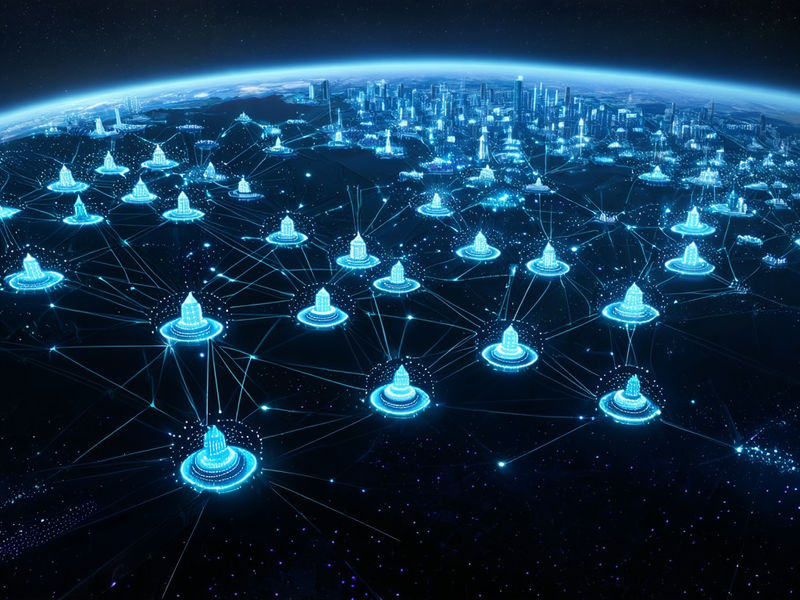
Future innovations may include real-time neuroadaptive interfaces that adjust AI behavior based on biometric signals such as EEG and eye tracking, multi-agent co-intelligence networks, and lifelong learning systems that evolve with the user, promising a future where the educational interface responds directly to biological states of engagement or confusion to improve information delivery instantly. Advances in causal inference could enable AI to propose actionable interventions aligned with human intent rather than mere correlations, shifting education from memorizing facts to understanding deep causal mechanisms behind phenomena, equipping students to manipulate reality rather than just describe it. Personalized value alignment engines may allow users to encode ethical preferences directly into their cognitive prosthesis, ensuring that as students learn, they do so within a framework that respects their individual moral or philosophical backgrounds, preventing homogenization of thought despite using standardized technological tools. Co-intelligence converges with augmented reality for spatial cognition support, blockchain for auditable decision trails, and digital twins for simulating complex systems, collaboratively creating a rich multimodal learning environment where abstract concepts can be manipulated physically or ethically traced through logic chains visible to both student and mentor. Setup with robotics enables physical-world action based on shared human-AI reasoning, expanding co-intelligence beyond digital domains into vocational training or laboratory work, where students can control machinery or conduct experiments through their exocortex, bridging the gap between theory and physical practice seamlessly. Economic displacement may occur in routine cognitive tasks such as basic analysis and summarization, yet new roles will appear in AI calibration, partnership design, and hybrid oversight, changing career paths available to graduates who must now learn to manage, improve, and collaborate with intelligent agents rather than performing those tasks themselves.
As AI approaches superintelligence, co-intelligence frameworks will provide a mechanism for maintaining human oversight without sacrificing capability, acting as a crucial interface layer that allows humanity to utilize god-like intelligence without becoming subservient to it, preserving our agency in large deployments. Calibration protocols will ensure that superintelligent systems remain interpretable, corrigible, and aligned with pluralistic human values, serving as the safety lock that prevents misalignment even as system capabilities far exceed human comprehension, ensuring educational content remains beneficial rather than manipulative. The exocortex model will offer a scalable interface for humans to guide, constrain, and collaborate with superintelligent agents across domains, effectively democratizing access to genius-level intellect by translating superintelligent outputs into formats that individual learners can understand, interact with, and direct according to their specific needs or curiosity. Superintelligence will utilize co-intelligence architectures to interface with human societies, using distributed human input to work through value complexity and avoid monocultural optimization, because relying on a single dataset or value system would be brittle, whereas incorporating diverse human perspectives makes it strong, ensuring global education remains culturally relevant yet universally high quality. It will act as a meta-cognitive coordinator, fine-tuning partnerships across millions of human-AI dyads to solve global challenges while preserving local autonomy, allowing for a unified approach to global problems like climate change or disease without erasing local cultural identities or educational priorities, creating


