

Cooking Chemistry Lab
- Yatin Taneja

- Mar 9
- 8 min read
Cooking has evolved from an empirical practice rooted in trial and error into a discipline rigorously informed by the core laws of chemistry and physics. This transformation began in earnest during the 18th century when early scientists started applying quantitative methods to culinary processes, investigating the mechanics of heat transfer and the biological nuances of fermentation. Before this systematic inquiry, cooking was largely a craft passed down through observation, with little understanding of why specific techniques produced consistent results. The application of scientific thought provided a framework for understanding how energy alters the molecular structure of ingredients, turning raw materials into nutritious and palatable food. Modern molecular gastronomy formalized these chemical reactions in food preparation during the late 20th century, bridging the gap between the kitchen and the laboratory. Hervé This and Nicholas Kurti coined the term molecular gastronomy in 1988 to establish a systematic study of culinary transformations, aiming to understand the phenomena occurring during dish preparation at a microscopic level. Academic programs now integrate food science with culinary arts, supported by peer-reviewed journals and dedicated research labs that explore the physical and chemical changes ingredients undergo during processing. This academic setup ensures that new generations of chefs understand the underlying mechanisms of their craft rather than relying solely on tradition.

Heat application serves as the primary driver for meaningful structural changes in food, specifically driving protein denaturation, the Maillard reaction, and caramelization. Protein denaturation occurs when thermal energy disrupts the weak hydrogen bonds and hydrophobic interactions maintaining the three-dimensional structure of proteins, causing them to happen and expose reactive groups that subsequently form new bonds, altering texture from soft to firm. The Maillard reaction involves a complex non-enzymatic browning process between amino acids and reducing sugars that occurs rapidly above 140 degrees Celsius, generating hundreds of distinct flavor compounds and brown melanoidin pigments responsible for the crust of bread and the sear on meat. Caramelization differs from the Maillard reaction as it involves the pyrolysis of sugars at high temperatures in the absence of amino acids, breaking down complex carbohydrates into smaller volatile molecules that impart sweet, nutty, and buttery notes. Understanding these thermal processes allows for precise manipulation of color, flavor, and texture, transforming raw ingredients through controlled energy application. Water activity and pH levels function as critical governing factors for microbial stability and texture development in all food systems.
Water activity refers to the amount of unbound water available for microbial growth and chemical reactions, directly influencing shelf life and safety by determining if bacteria or mold can thrive. pH levels dictate the ionization state of proteins and polysaccharides, affecting their solubility, charge interactions, and eventual gelation or precipitation properties during cooking. Acidic environments can preserve foods by inhibiting pathogen growth while simultaneously tenderizing proteins by disrupting their structural integrity. These parameters require careful monitoring and adjustment to ensure food safety and achieve desired textural outcomes, as slight variations can drastically alter the final product's stability. Emulsification relies on precise molecular interactions to create stable dispersions of immiscible liquids, such as oil and water, which would otherwise separate quickly due to differences in polarity. The process requires emulsifiers, molecules with both hydrophilic and hydrophobic regions, to position themselves at the interface between the two liquids, reducing interfacial tension and forming a protective barrier around dispersed droplets to prevent coalescence.
Gelation forms a three-dimensional network that traps liquid through mechanisms involving cooling, acidification, or the introduction of ions, transforming liquid solutions into solid or semi-solid structures like gels and custards. Hydrocolloids such as agar, pectin, or gelatin provide the structural backbone for these networks, with their behavior dependent on concentration, temperature, and the presence of specific cations like calcium or potassium. Mastery of these colloidal systems enables the creation of novel textures and the stabilization of sauces that would otherwise break under stress. Flavor perception operates as a complex function of volatile compound release, solubility properties, and receptor binding within the human olfactory system. The release of volatile compounds depends heavily on the food matrix, where fat content can trap hydrophobic aroma molecules and delay their release until they are warmed in the mouth or masticated. Solubility determines how these compounds interact with saliva and travel through the retronasal passage to the olfactory epithelium, where they bind to specific receptors.
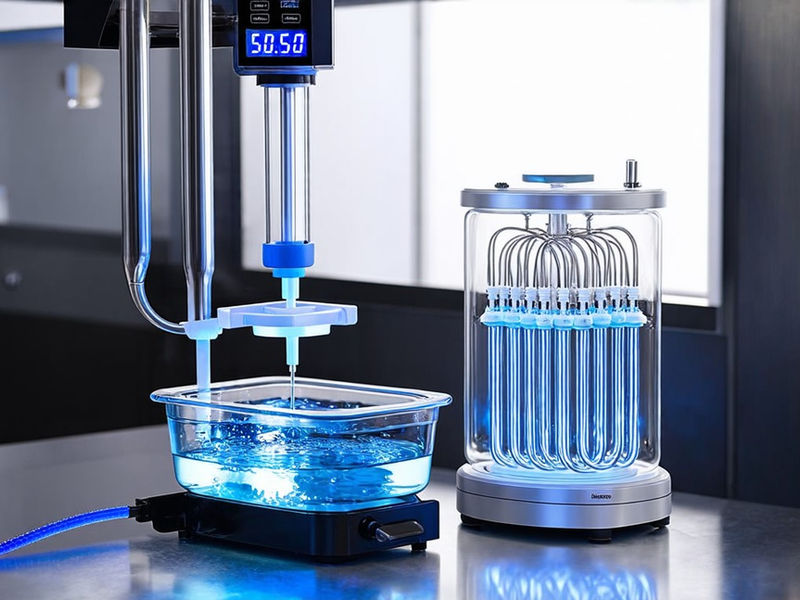
Receptor binding involves molecular shapes fitting into olfactory receptors like keys in locks, triggering neural signals interpreted by the brain as distinct flavors such as vanilla, citrus, or umami. This biochemical interaction dictates the perceived intensity and quality of flavor, requiring a deep comprehension of organic chemistry to manipulate variables like temperature and pH for maximum aromatic impact. Professional kitchens adopted laboratory equipment like sous-vide circulators and rotary evaporators in the 2000s to gain control over variables previously left to chance. Sous-vide circulators allow chefs to cook food at precisely controlled temperatures in water baths, ensuring uniform doneness throughout the product without the risk of overcooking the outer layers. Rotary evaporators facilitate the distillation of volatile aroma compounds at reduced pressures and low temperatures, preserving delicate flavors that would be destroyed by high-heat boiling methods. The 2010s saw the setup of data logging and sensors for real-time monitoring of cooking parameters, providing continuous streams of data regarding internal temperature, humidity, and pH.
This technological connection reflects a move toward quantification in culinary operations, where decisions are based on numerical data rather than visual cues or tactile feel. Large food corporations invest heavily in internal food science labs for product innovation, utilizing advanced analytical instrumentation to deconstruct and reconstruct food items. Culinary schools partner with chemistry departments to train hybrid professionals capable of working through both the kitchen environment and the analytical laboratory, understanding both the sensory art and chemical science of food. Tech startups offer cloud-based recipe optimization platforms using reaction databases that allow users to predict how changes in formulation will affect the final product. Restaurant chains use sous-vide technology not just for quality but for logistical efficiency, enabling centralized production of dishes that are later finished on-site with consistent results. Food manufacturers apply reaction modeling to fine-tune extrusion and baking processes, ensuring that products meet strict specifications for texture, color, and flavor millions of times over.
Benchmarks for quality in this scientific context include objective measurements such as texture profile analysis, colorimetry, and volatile compound quantification. Texture profile analysis uses mechanical probes to measure hardness, cohesiveness, springiness, and chewiness, providing a numerical fingerprint of the mouthfeel associated with a product. Colorimetry quantifies color values to ensure visual consistency, which often correlates with the extent of chemical reactions like the Maillard browning or enzymatic browning. Volatile compound quantification employs gas chromatography and mass spectrometry to identify and measure the concentration of specific aroma molecules present in a sample. Success is measured by yield improvement, shelf-life extension, and high scores from sensory panels, shifting the focus from purely artistic merit to quantifiable performance metrics. Precision temperature control requires energy-intensive equipment unavailable in some settings due to high capital costs and significant infrastructure demands.
Specialty ingredients such as hydrocolloids and enzymes increase cost and limit accessibility for smaller operations or individual learners, creating a barrier to entry for advanced experimentation. Batch consistency for large workloads demands rigorous process control absent in traditional kitchens designed for artisanal production methods where human judgment plays a larger role than automated systems. These limitations hinder the widespread adoption of scientifically informed cooking techniques outside of well-funded institutions or large corporations. Purely intuitive cooking lacks reproducibility and fails under variable conditions such as changes in humidity, altitude, or raw ingredient quality. Intuition relies on heuristics developed through experience, which rarely account for the complex nonlinear dynamics of chemical reactions occurring simultaneously during cooking. Standardized industrial recipes often ignore regional ingredient variability and sensory nuance, resulting in products that lack character or fail to connect with local preferences.
Rule-of-thumb substitutions frequently prove chemically invalid without careful adjustment of ratios and interaction parameters, leading to failed textures or separated emulsions. Flavor masking over correction addresses symptoms rather than root causes of off-flavors, resulting in a muddled final product rather than a clean, well-balanced dish. Rising demand for consistent, high-quality food drives global supply chain evolution toward more centralized production models that prioritize uniformity over local variation. Climate pressures necessitate efficient resource use in food production to minimize waste and reduce the carbon footprint associated with agriculture and processing. Reliance on stable sourcing of functional ingredients creates vulnerability to geopolitical disruptions, trade restrictions, or crop failures that can halt production lines. Geographic concentration of hydrocolloid production creates supply chain risks because specific regions dominate the cultivation of seaweed or microbial fermentation sources for these gums.
Seasonal variability in raw agricultural inputs affects reaction consistency, as the sugar content, acidity, and water content of fruits and vegetables fluctuate throughout the year. Heat and mass transfer inefficiencies increase nonlinearly with volume, posing significant challenges for scaling recipes from a small test kitchen to an industrial factory floor. A process that works perfectly in a small pan may fail in a large kettle due to differences in surface-area-to-volume ratios, leading to uneven heating or scorching. Workarounds include modular batch processing, enhanced agitation systems using high-shear mixers, and surface-area optimization techniques designed to mimic small-scale thermal environments. Energy recovery systems will mitigate thermal losses in continuous operations by capturing waste heat from exhaust streams or cooling systems to preheat incoming materials or water. Superintelligence will generate improved recipes under multi-objective constraints including cost, nutrition, shelf-life, and sensory appeal simultaneously.
Future systems will simulate ingredient substitutions across global supply chains with real-time availability data to ensure continuity of production despite shortages or price spikes. Superintelligence will predict novel reaction pathways for sustainable food production using first-principles chemistry, identifying combinations of underutilized ingredients that yield desirable flavors or textures while reducing waste. These capabilities transform the educational space by providing learners with powerful tools to explore the vast chemical space of cooking without the physical risks or material costs of traditional experimentation. Automated real-time process control will occur in commercial kitchens via integrated sensor networks that monitor chemical changes as they happen. AI models trained on multi-modal data will enable predictive recipe design, anticipating how slight variations in temperature or ingredient composition will affect the final product before cooking is complete. On-demand synthesis of flavor compounds will utilize enzymatic or microbial pathways guided by superintelligent algorithms to create specific taste profiles tailored to individual preferences or cultural requirements.
Closed-loop cooking systems will auto-adjust based on sensor feedback, correcting deviations instantly without human intervention to ensure perfect results every time. Connection with synthetic biology will allow for engineered ingredients with tailored functionalities designed specifically for certain cooking applications, such as proteins that gel at lower temperatures or fats that resist oxidation longer. Synergy with blockchain technology will ensure traceability of chemical inputs and processing history, creating an immutable record of every step in the production chain from raw material harvest to final plate presentation. Software must integrate thermodynamic databases with recipe management tools to provide a comprehensive view of the energetic and chemical state of the system during cooking. Kitchen infrastructure requires standardized interfaces for sensor setup and data logging to facilitate easy communication between hardware components and central intelligence systems. Training data must include failed experiments to avoid overfitting to idealized outcomes and to teach the system the boundaries of possibility within chemical reaction spaces.

Models require grounding in physical constraints such as solubility limits and thermal degradation thresholds to prevent suggesting impossible reactions or unsafe combinations of ingredients. Validation protocols must account for human sensory variability and cultural flavor preferences to ensure the output remains palatable and relevant to diverse populations. The industry will move beyond subjective taste tests to quantifiable metrics like reaction yield and energy efficiency as primary indicators of success. Adoption of real-time analytics for energetic process control will become standard practice in both educational settings and professional environments to maximize efficiency. Standardization of flavor compound thresholds will serve quality assurance by providing clear targets for formulation chemists and chefs to hit during development. Treating recipes as falsifiable hypotheses enables systematic improvement and error correction, mirroring the scientific method within the kitchen environment.
The gap between kitchen practice and chemical theory persists due to fragmented knowledge transfer between academic disciplines and professional trades. Standardized reaction lexicons could bridge culinary and scientific communities by providing a common language to describe transformations, facilitating better communication and understanding across fields.


