Knowledge hub
Holographic Content-Addressable Memory Architectures
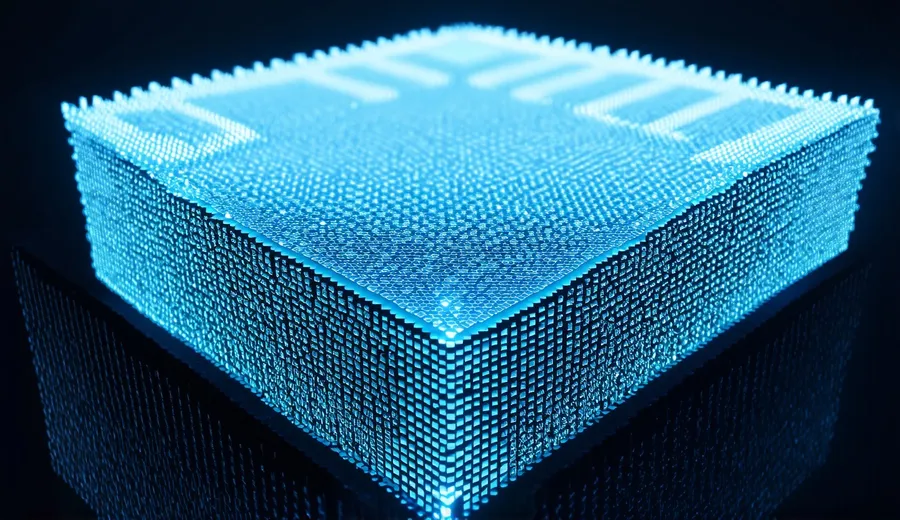
Holographic memory systems store data as interference patterns within a three-dimensional medium, enabling data to be encoded throughout the volume rather than on a surface. This volumetric approach allows multiple data pages to be stored and retrieved simultaneously through angular, wavelength, or phase multiplexing. Data is written by intersecting two coherent laser beams consisting of a signal beam carrying information and a reference beam within a photosensitive storage material. The resulting interference pattern is permanently recorded as a refractive index modulation in the medium, forming a hologram. The process relies on the precise overlap of these beams to create regions of high and low intensity that alter the optical properties of the storage medium at the molecular level. Unlike surface-based storage technologies where bits are arranged on a two-dimensional plane, this method utilizes the entire depth of the material, effectively multiplying the potential storage capacity by the thickness of the medium. The signal beam passes through a spatial light modulator which imprints a page of data onto the wavefront, transforming the coherent light into a complex pattern of bright and dark pixels representing binary information. This modulated signal beam then intersects with the reference beam within the volume of the photosensitive material. Where the beams intersect constructively, the intensity is high, causing a significant change in the refractive index or absorption properties of the material; where they interfere destructively, the intensity is low, leaving the material relatively unchanged. This recorded pattern of refractive index variations constitutes a volume grating that diffracts light in a specific manner proportional to the original data pattern.
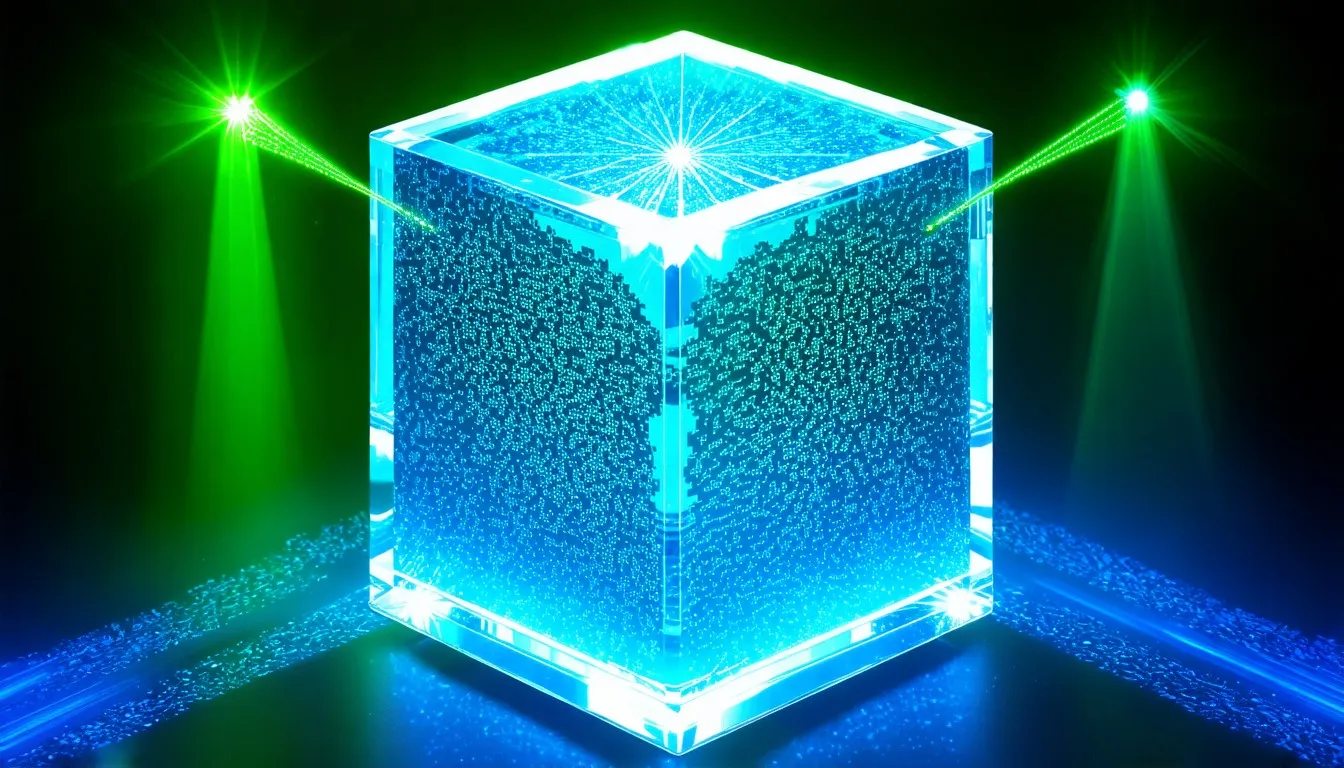
During readout, the reference beam reconstructs the original signal beam, reproducing the stored data page as an optical pattern. High data density arises because each voxel can participate in multiple holograms through multiplexing techniques. Retrieval speed benefits from parallel access where entire data pages are read at once, reducing mechanical seek times and increasing throughput. When the reference beam illuminates the recorded hologram at the correct angle, the diffraction grating causes the light to scatter in such a way that it reconstructs the wavefront of the original signal beam. This reconstructed wavefront then propagates to a detector array, such as a charge-coupled device or CMOS sensor, which captures the two-dimensional array of pixels in a single instant. Because the retrieval process involves reading an entire page of data simultaneously, often containing megabits or gigabits of information, the transfer rates can theoretically exceed those of conventional magnetic or optical storage, which rely on serial bit-by-bit reading. The core physical principle relies on the linearity of light propagation and the reversibility of optical diffraction in photorefractive or photopolymer materials. This reversibility ensures that the readout process does not erase the data, provided the read beam intensity is kept below the threshold that would cause further changes to the refractive index of the medium. The ability to access massive blocks of data in parallel without moving parts seeking a specific track location fundamentally alters the latency profile of the storage system.
System functionality divides into three primary subsystems including the optical path containing lasers and modulators, the storage medium consisting of crystal or polymer, and control electronics for beam steering and synchronization. Key components include spatial light modulators to encode data onto the signal beam and charge-coupled devices or CMOS sensors to detect reconstructed images. The optical path requires high-coherence laser sources to maintain the phase relationships necessary for interference over significant distances within the medium. Beam steering mechanisms, often utilizing galvanometric mirrors or acousto-optic deflectors, adjust the angle of the reference beam to select specific holograms for reading or writing during multiplexing operations. The control electronics synchronize the operation of the spatial light modulator, the beam steering devices, and the detector array to ensure that data is written and read with high fidelity. Operational terminology defines a hologram as a single recorded interference pattern, a page as a 2D array of bits encoded in one hologram, and multiplexing as methods to store multiple holograms in the same volume. Bragg selectivity enables discrimination between overlapping holograms during readout by restricting the conditions under which the reference beam reconstructs the signal. This selectivity is governed by Bragg’s law, which states that for efficient diffraction to occur from a volume grating, the incident angle of the read beam must satisfy a specific relationship with the spacing of the grating planes and the wavelength of the light. Slight deviations from this angle result in a rapid drop in diffraction efficiency, allowing hundreds or thousands of holograms to be superimposed in the same volume by changing the angle or wavelength of the reference beam during recording.
Early theoretical foundations date to 1963 with Pieter J. van Heerden’s proposal of holographic data storage using photochromic materials. First experimental demonstrations occurred in the 1970s using lithium niobate crystals, which suffered from volatility and slow write speeds. These early experiments validated the concept of volume storage; however, the available materials limited practical implementation. Lithium niobate exhibits the photorefractive effect where charge migration creates an internal electric field that alters the refractive index via the electro-optic effect. While this allowed for reversible recording, the stored gratings tended to decay over time as the charge distribution relaxed, especially when exposed to read beams or ambient light. The sensitivity of these crystals was low, requiring high laser power and long exposure times to write data, making the write speeds uncompetitive with existing magnetic tape or disk drives. A critical pivot in the 1990s was the shift from inorganic crystals to photopolymers, which offered better stability, higher lively range, and room-temperature operation. Photopolymers work through a photochemical reaction where monomers polymerize in regions of high light intensity, causing a local change in density and consequently refractive index. This process creates permanent phase gratings that do not require an electric field to maintain and are insensitive to subsequent read operations unless exposed to damaging levels of UV light. The agile range of these materials determines how many holograms can be multiplexed in a given volume before the signal-to-noise ratio becomes too low for reliable data retrieval.
InPhase Technologies developed the Mix drive in the 2000s, aiming for 300 GB capacity per disk and transfer rates varying from 20 MB/s for writes to 160 MB/s for reads, yet the company failed due to high costs and market timing. The development of the Mix optical drive represented the most ambitious attempt to commercialize holographic storage, utilizing a custom photopolymer medium housed in a cartridge format similar to traditional magnetic tape libraries. Performance benchmarks from past systems show projected lifetimes exceeding 50 years, making the technology competitive for cold storage despite inferior speed compared to modern SSDs. The archival qualities of holographic media stem from the fact that the data is stored as a bulk modification of the material’s refractive index, which is chemically stable and resistant to magnetic fields or temperature fluctuations that would degrade magnetic storage. Dominant architecture historically relied on collinear holography where reference and signal beams are co-aligned, while developing challengers explore micro-holographic stacks to improve reliability. Collinear holography simplifies the optical system by using a single objective lens for both beams, reducing alignment sensitivity and manufacturing complexity compared to traditional angle-multiplexed systems which require precise separation of beam paths. Micro-holographic storage involves creating microscopic reflective holograms within thin layers, effectively creating a three-dimensional array of diffraction gratings that can be read similarly to standard optical discs but with much higher layer density.
Physical constraints include material homogeneity requirements, sensitivity to environmental factors like temperature and vibration, and diffraction efficiency limits governed by coupled-wave theory. Any imperfection or scattering center within the medium can introduce noise into the reconstructed image, corrupting the data page. Thermal expansion or contraction can alter the spacing of the interference fringes, shifting the Bragg condition and making previously recorded holograms unreadable or requiring complex servo systems to track these changes. Vibration during recording can blur the interference pattern, reducing the contrast of the grating and limiting the achievable diffraction efficiency. Economic barriers involve high precision optics costs, low manufacturing yields for modulators and media, and competition from rapidly advancing solid-state and magnetic storage. The production of large-area, defect-free photopolymers with consistent thickness and refractive index properties proved difficult to scale cost-effectively. Additionally, the spatial light modulators required to achieve high data rates needed thousands of dollars per unit, placing the total system cost far above that of competing hard disk drives or tape libraries. Flexibility is limited by the trade-off between storage density and signal-to-noise ratio as more holograms are multiplexed in the same volume. As each additional hologram is written into a specific location, it consumes a portion of the material’s adaptive range, reducing the strength of the diffraction efficiency for all previously recorded holograms in that volume.
The supply chain depends on specialized optics such as high-coherence lasers and precision spatial light modulators, alongside proprietary photopolymers and custom ASICs for real-time image processing. High-coherence lasers with long coherence lengths are necessary to maintain interference over the thickness of the medium, limiting the choice of suppliers to specialized manufacturers of gas lasers or specific solid-state laser diodes. Spatial light modulators must operate at high frame rates with high contrast ratios to encode data quickly without introducing errors, necessitating custom fabrication processes that differ from those used in consumer display projectors. Major players include defunct ventures like InPhase and Aprilis, while research continues at companies like IBM and Microsoft through projects exploring related optical concepts. Academic-industry collaboration remains active in Europe and Japan, focusing on material science and error correction for noisy holographic channels. These research groups work on improving the adaptive range of photopolymers and developing advanced signal processing algorithms to compensate for optical noise and inter-page crosstalk. Alternative approaches such as 5D optical storage using nanostructured glass and DNA data storage were considered for near-term deployment, yet extreme write latency and immature infrastructure hindered adoption. While 5D glass offers incredible density and longevity, the writing process involves femtosecond lasers that are slow and expensive, making it suitable only for extremely high-value archival data that rarely changes.
Current relevance stems from escalating demands for archival storage in AI training datasets and scientific repositories, where energy efficiency and longevity outweigh access speed. The massive growth in data generated by machine learning models and large-scale scientific simulations requires storage solutions that can hold petabytes of data reliably for decades without consuming excessive power for maintenance or cooling. Commercial deployments remain niche, with Sony’s Archival Disc using multi-layer optical storage instead of true holography, meaning no mainstream holographic systems are currently shipping in large deployments. Sony’s Archival Disc increases capacity by stacking multiple recording layers similar to a Blu-ray disc; however, this approach still suffers from the density limits of surface recording compared to true volumetric holography. Adjacent system changes required include new file systems improved for page-based access and error-correcting codes tolerant of optical noise. Traditional file systems improved for block-based access must be adapted to handle page-oriented reads and writes where large contiguous blocks of data are moved simultaneously. Error correction codes must be strong against two-dimensional noise patterns such as dust scratches or optical aberrations that affect localized regions of a data page rather than random bit flips typical in electronic memory.
Second-order consequences include potential displacement of tape libraries in archival workflows and reduced energy footprint for petabyte-scale cold storage. Holographic memory systems consume power primarily during read and write operations; otherwise, the media sits passively without requiring energy to maintain data integrity or environmental control beyond standard room conditions. Measurement shifts necessitate new key performance indicators, including bits per cubic millimeter for volumetric density and page error rate instead of bit error rate. Evaluating these systems requires metrics that account for the three-dimensional nature of the storage and the parallel retrieval mechanism, distinguishing raw capacity from usable capacity after overhead for error correction and multiplexing inefficiencies. Scaling physics limits are set by the diffraction limit of approximately lambda cubed per bit and the material energetic range. The diffraction limit dictates that two distinct data points cannot be resolved if they are closer than half the wavelength of light used to record them, setting an upper bound on volumetric density based on the optical wavelength employed. The material energetic range defines the total amount of refractive index change possible within the medium, which limits how many distinct holograms can be superimposed before their individual diffraction efficiencies drop below the noise floor.
Workarounds include sub-wavelength structuring, nonlinear recording materials, and computational reconstruction to surpass optical resolution. Researchers are exploring techniques such as two-photon absorption to create voxels smaller than the diffraction limit by using nonlinear optical effects that confine recording to the focal volume where intensity is highest. Computational reconstruction involves capturing imperfect or noisy optical signals and using digital signal processing algorithms to reconstruct the original data, effectively trading electronic processing power for relaxed optical tolerances. Future innovations may integrate machine learning for adaptive multiplexing and hybrid systems combining holographic read with electronic write buffers. Machine learning algorithms could fine-tune the scheduling of write operations to maximize uniformity of diffraction efficiency across all stored holograms or dynamically adjust readout parameters to compensate for material degradation over time. Hybrid systems might use fast electronic memory to buffer incoming data streams before writing them in large blocks to the holographic medium, bridging the speed gap between processors and optical storage.
Convergence points exist with photonic computing and neuromorphic engineering, where parallel pattern recall resembles associative memory. In photonic computing, performing operations on data while it is in flight as light eliminates latency associated with electronic conversion; holographic memory naturally interfaces with such systems as it stores and retrieves data optically. Neuromorphic engineering seeks to mimic the neural structure of the brain; holographic memory exhibits associative recall properties where illuminating the stored memory with a partial pattern can reconstruct the complete stored pattern, similar to human memory recall triggered by sensory cues. Holographic memory serves as a specialized solution for immutable, high-density archival where energy, space, and longevity dominate cost models. For data that must be preserved for decades but accessed infrequently, such as medical records, historical archives, or scientific datasets, the durability and energy efficiency of holographic storage offer significant advantages over spinning disks or tape, which require periodic migration or controlled environments. Calibrations for superintelligence will involve treating holographic systems as high-latency, high-fidelity memory tiers within a heterogeneous memory hierarchy, fine-tuned for storing vast training corpora or simulation histories.
A superintelligent system managing exabytes of information will stratify storage based on access frequency; holographic memory fits into the tier colder than solid-state memory but hotter than deep archival formats like DNA or glass. Superintelligence will utilize holographic memory for its parallel readout capability to rapidly retrieve correlated data patterns during inference or self-refinement, using associative recall properties natural in holographic reconstruction. During inference tasks requiring access to large knowledge bases or training examples, the ability to retrieve entire pages of contextually relevant data in a single optical operation drastically reduces latency compared to serial retrieval methods. Self-refinement processes often involve analyzing vast histories of system states or interactions; storing these histories holographically allows the system to perform complex correlations across different time periods efficiently by using optical Fourier transforms intrinsic in the holographic process to identify patterns matching specific query criteria across massive datasets instantly.