
Somatic Learning: Knowledge Through the Body
- Yatin Taneja

- Mar 9
- 11 min read
The core premise of somatic learning rests on the capacity of the human physiological system to internalize complex information structures through direct physical engagement, effectively utilizing movement, resistance, and spatial navigation as primary input channels for high-level cognition. This educational method shifts the locus of knowledge acquisition from the abstract processing of linguistic symbols to the concrete experience of the body interacting with a responsive environment, allowing learners to absorb intricate data patterns through muscular effort and proprioceptive feedback. By treating the human body as an active computational interface, this approach enables muscular memory and proprioception to encode understanding of sophisticated systems such as physics, economics, or engineering, effectively bypassing the cognitive limitations intrinsic in text-based or visual-only instruction. The theoretical framework supporting this methodology draws heavily upon research in embodied cognition, motor learning, and neuroplasticity, which collectively demonstrate that physical experience significantly enhances long-term retention and promotes an intuitive grasp of complex concepts that traditional study methods struggle to convey. This perspective operates on three foundational axioms: cognition is distributed across both brain and body rather than being centralized solely in the cerebral cortex, understanding arises through action and interaction with the world rather than passive observation, and abstract systems can be physically instantiated in ways that make their underlying logic tangible to the learner. Information within this framework is enacted rather than merely represented, allowing learners to feel the equilibrium of economic models or the tension within mechanical systems through calibrated resistance and motion constraints applied directly to their limbs.
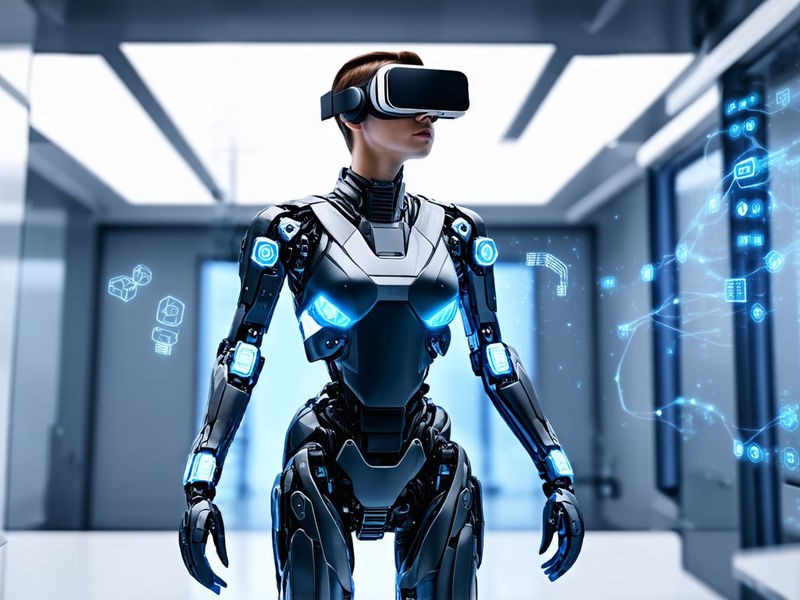
The system prioritizes experiential fidelity over symbolic accuracy, favoring real-time bodily response to energetic data streams to create a situation where the learner understands the dynamics of a system by feeling its behavior under stress. Learning outcomes are measured by the learner’s ability to handle, manipulate, or stabilize physical analogs of target domains, ensuring that competence is demonstrated through physical proficiency and adaptive motor response rather than recitation of facts or performance on written examinations. Continuous and multimodal feedback loops are essential to this process, combining exoskeletal force modulation, virtual reality spatial cues, and biometric monitoring to reinforce correct motor schemas and correct errors the instant they bring about in the learner’s movement. The core architecture required to facilitate this level of embodied connection combines wearable exoskeletons with embedded force actuators, high-fidelity virtual reality headsets featuring six degrees of freedom tracking, and advanced artificial intelligence models capable of mapping complex data structures into distinct movement grammars. These systems work in unison to create a smooth simulation where the physical sensations of weight, momentum, and collision correspond precisely to the abstract data being presented to the learner. Data abstraction layers function as the translation engine, converting raw datasets such as market fluctuations or fluid dynamics into specific kinematic sequences, resistance profiles, and navigational challenges that the user must physically handle to understand the underlying patterns of the information.
Real-time adaptation engines monitor user performance, fatigue levels, and error patterns to adjust difficulty and feedback intensity dynamically, ensuring the learning experience remains within the optimal zone for neuroplastic change and skill acquisition. A central orchestration layer synchronizes all sensory inputs across modalities to maintain coherence between visual, vestibular, and proprioceptive signals, preventing the motion sickness or cognitive dissonance that often occurs when sensory inputs conflict. Offline training modules complement these active sessions by allowing for pattern consolidation through repeated physical rehearsal without active AI guidance, giving the nervous system time to solidify the neural pathways formed during the intensive training periods. Somatic encoding defines the process of translating abstract information into repeatable, physically executable movement patterns that serve as the physical equivalent of cognitive concepts, allowing the body to "know" the data in the same way it knows how to walk or throw a ball. Kinesthetic fidelity refers to the degree to which a physical simulation accurately reflects the dynamics of the source system, determining whether the sensation experienced by the user truly are the forces at play in the simulated environment. Proprioceptive resolution describes the granularity with which the system can convey positional and force-based information through the body, requiring high-precision sensors and actuators to detect subtle changes in joint angle and muscle tension.
Motor schema are a learned sequence of coordinated movements that embodies understanding of a concept or skill, acting as a reusable physical template that the learner can deploy in different contexts to solve related problems. The bodily processing unit refers to the human body functioning as a real-time interpreter and executor of encoded knowledge, augmented by external hardware to extend its natural perceptual capabilities into realms of data visualization normally reserved for conscious thought. The historical course of these technologies began in the early 2000s with haptic interfaces in surgical simulators, which demonstrated that tactile feedback significantly improves skill acquisition in high-stakes domains by providing direct physical correlation to visual information. Advances in soft robotics and wearable sensors in the mid-2010s enabled precise, low-latency force feedback outside of clinical settings, making it possible to create wearable devices that could apply significant forces without restricting the user's range of motion. The connection of transformer-based artificial intelligence with motion capture technology in the 2020s allowed for the lively generation of context-aware movement tasks derived directly from raw data, transforming static information sets into adaptive physical challenges. Prior attempts at gesture-based learning failed largely due to a lack of semantic depth and the absence of bidirectional force feedback, leaving users interacting with empty air rather than feeling the substance of the subject matter.
Full-body virtual reality systems initially prioritized immersion over pedagogy, lacking the necessary mechanisms to encode conceptual understanding into movement and resulting in experiences that were entertaining but educationally shallow. The rising complexity in technical fields such as quantum engineering and macroeconomic modeling has exceeded the capacity of symbolic instruction alone, creating a situation where the internal logic of these systems is too complex for linear language or two-dimensional diagrams to convey effectively. Workforce demands now prioritize adaptive problem-solving over rote knowledge, favoring learners who can intuit system behavior under stress and adjust their actions in real time to maintain stability or improve performance. Economic shifts toward automation require humans to manage systems they cannot fully visualize or mentally simulate, necessitating an interface that translates the state of these opaque systems into physical sensations that human operators can instinctively understand. A significant societal need exists for inclusive education models that accommodate diverse cognitive styles, including those individuals who are disadvantaged by language-centric curricula but possess high bodily-kinesthetic intelligence. Global competition in advanced manufacturing and AI-augmented design accelerates the demand for faster and deeper skill acquisition methods, as traditional education cycles are too slow to keep pace with the rate of technological innovation in these sectors.
Medical residency programs have already begun using somatic simulators for laparoscopic and cardiac procedures, showing a 30 to 40 percent improvement in procedural accuracy compared to traditional training methods that rely solely on observation and practice on cadavers. Aerospace firms deploy exoskeleton-virtual reality combinations for spacecraft assembly training, reducing error rates by 25 percent in zero-gravity analogs by allowing technicians to practice the precise application of force in a simulated microgravity environment before attempting the task in orbit. Financial trading firms pilot somatic interfaces for real-time market flow interpretation, with early users reporting faster pattern recognition in volatile conditions as they learn to feel market momentum and resistance rather than analyzing charts. Performance benchmarks in these high-stakes environments focus on task completion time, error frequency, and retention at 30-day intervals to ensure that the somatic training produces lasting results rather than temporary performance boosts. Dominant architectures in the current market rely on rigid exoskeletons with centralized control units that were originally fine-tuned for rehabilitation purposes rather than learning, often limiting the range of motion required for complex educational tasks. Appearing challengers utilize soft, fabric-based exosuits with distributed micro-actuators, enabling a greater range of motion and improved wearability that allows for longer training sessions and more natural movement patterns.
Open-source frameworks aim to standardize data-to-motion mapping protocols to build interoperability between different hardware systems and software platforms, preventing vendor lock-in and allowing educational content to be distributed widely. Cloud-AI hybrids reduce latency by preprocessing movement grammars server-side, though real-time force feedback remains dependent on edge computing to ensure the physical response occurs within the milliseconds required for the sensation of presence. Medical device companies currently dominate clinical applications, but lack the pedagogical AI connection necessary to translate their hardware into effective general-purpose educational tools. Defense contractors fund significant research and development for soldier training, yet restrict civilian access to the most advanced somatic learning technologies, slowing down the diffusion of these capabilities into the broader market. Edtech startups target K–12 and vocational markets, but face substantial cost and curriculum alignment barriers that make it difficult to deploy expensive hardware in standard classroom environments. Tech giants invest heavily in virtual reality hardware, but have not prioritized somatic encoding as a core learning modality, focusing instead on visual fidelity and content consumption rather than deep physical interaction.
High-fidelity exoskeletons require rare-earth magnets, precision actuators, and flexible conductive materials, creating supply constraints that make scaling production difficult and expensive. Power consumption and heat dissipation limit continuous operation, with current systems supporting only 30 to 60 minutes of active use per charge under high load due to the energy demands of producing sustained resistance forces. Manufacturing complexity keeps unit costs above $50,000, restricting deployment to institutional or high-value professional settings where the return on investment justifies the substantial capital expenditure. Adaptability in these systems depends heavily on modular design and cloud-based AI processing to reduce onboard computational demands, allowing the hardware to remain relatively lightweight while offloading the intensive processing of data abstractions to remote servers. Neodymium magnets, lithium-polymer batteries, and piezoelectric polymers are critical materials with concentrated global supply chains, making the production of somatic learning hardware vulnerable to geopolitical disruptions and trade fluctuations. Semiconductor shortages impact sensor and actuator production, particularly for high-resolution force transducers that are necessary to provide the subtle feedback required for delicate tasks.

Textile-integrated electronics depend on specialized weaving facilities that are currently few in number, limiting the supply of smart fabrics capable of housing the sensors and actuators needed for soft exosuits. Recycling infrastructure for end-of-life exoskeletons is underdeveloped, posing long-term sustainability challenges as the complex composite materials and embedded electronics make disposal difficult without specialized processes. Gesture-only interfaces were rejected as viable solutions for deep learning because they lacked force feedback, which is essential for conveying tension, resistance, and equilibrium within a system. Audio-tactile hybrids failed to encode multidimensional data with sufficient resolution, as the auditory channel cannot convey the continuous streams of parallel information that the sense of touch can process. Pure virtual reality visualization without physical interaction proved insufficient for developing muscular intuition or motor schemas, as users could observe the phenomena without developing the physical reflexes needed to interact with them. Brain-computer interfaces were considered and ultimately dismissed for this application due to their invasiveness, low bandwidth, and inability to engage the full somatic system in a way that generates strong motor memory.
Text-to-motion AI generators lacked the necessary feedback loops to prevent adaptive refinement of motor patterns, resulting in movements that were visually correct but physically unoptimized for the human body. Educational software must shift from content delivery to motion grammar generation and real-time biomechanical analysis, requiring a complete upgradation of how educational content is authored and delivered. Regulatory bodies need new frameworks to certify somatic learning systems for safety, efficacy, and data privacy, as existing regulations do not address the unique risks associated with direct physical intervention by software systems. School and workplace infrastructure requires reinforced flooring, motion-capture zones, and HVAC systems capable of handling the heat generated by active wearables, necessitating significant renovations to existing buildings. Teacher and trainer certification programs must incorporate somatic pedagogy and system maintenance protocols to ensure educators are capable of guiding students through these intense physical learning experiences. International trade restrictions affect cross-border deployment of advanced robotics and AI training data, complicating the global distribution of somatic learning curricula and hardware platforms.
Regional data privacy regulations complicate cloud-based processing of biometric and motion data in somatic systems, requiring localized processing solutions that increase costs and complexity. Military applications drive early adoption of these technologies, creating dual-use tensions in civilian education and workforce development as the most advanced capabilities are often restricted for national security reasons. The displacement of traditional lecture-based instruction in technical fields is already underway, particularly in engineering, medicine, and finance, where the ability to physically manipulate system models provides a decisive advantage over theoretical study. The rise of somatic tutors is a shift toward AI agents that coach physical understanding rather than explaining concepts verbally, actively adjusting the physical environment to guide the learner toward the correct technique. New business models based on subscription access to somatic learning libraries are appearing, allowing institutions to pay for access to constantly updated motion grammars and simulations rather than purchasing static hardware setups. Insurance and liability models must adapt to cover injuries from immersive physical training environments, as the line between physical exercise and cognitive activity blurs in a way that traditional policies do not address.
Success metrics in this new method shift from test scores to motor fluency, error recovery speed, and system intuition under perturbation, reflecting a change in what society values as evidence of competence. New key performance indicators include proprioceptive accuracy, force modulation precision, and cross-domain transfer efficiency, providing quantitative measures of how well a learner can apply physical skills developed in one context to entirely different problems. Longitudinal tracking of somatic retention replaces short-term recall assessments, acknowledging that physical memory often endures longer than semantic memory when properly encoded through repetitive practice. Employers adopt somatic aptitude screenings for roles requiring complex system management, using these simulations to identify candidates who possess the innate physical intuition necessary to handle high-pressure operational roles. The connection of predictive biomechanics allows systems to anticipate learner errors before they occur, adjusting the resistance or visual cues subtly to guide the user back onto the correct path without interrupting the flow of the experience. Development of passive somatic learning during sleep or rest via subthreshold neuromuscular stimulation offers the potential for continuous skill acquisition even when the learner is not consciously engaged in training.
Scalable, low-cost exosuits using printed electronics and biodegradable materials are currently under development to address the cost barriers preventing widespread adoption in public education. Artificial intelligence capable of generating personalized movement grammars from minimal demonstration data will drastically reduce the time required to create new educational content, allowing experts to simply perform a task and have the system generate a teachable simulation instantly. Convergence with digital twins allows somatic learners to physically interact with real-time simulations of physical systems ranging from manufacturing plants to power grids, providing a safe environment to practice managing critical infrastructure. Synergy with swarm robotics enables learners to coordinate with robot teams through shared somatic protocols, effectively extending the user's body schema to include multiple autonomous agents operating under their direction. Overlap with affective computing uses biometric feedback to adjust emotional load and fine-tune motor learning, ensuring the learner remains in an optimal psychological state for information absorption. Alignment with neuromorphic hardware uses event-based sensors to reduce latency in closed-loop somatic feedback, bringing the response time of the system closer to the biological speed of neural reflexes.
Human biomechanical limits cap movement speed, force output, and endurance, constraining the maximum data throughput that can be achieved through somatic channels regardless of the sophistication of the software. Neural adaptation plateaus after approximately 20 hours of intensive somatic training on a specific task, requiring spaced repetition and variation to continue skill acquisition beyond this initial threshold. Workarounds for these biological limits include chunking complex systems into modular motor schemas and using intermittent high-intensity sessions to maximize the impact of training time. Hybrid models combine somatic encoding with symbolic review to reinforce abstract connections, ensuring that the physical intuition gained through movement is linked back to the theoretical frameworks necessary for communication and conscious analysis. Somatic learning is a reclamation of intelligence, recognizing that intelligence has always been fundamentally bodily and that modern education artificially severed that link through an overemphasis on abstract reasoning. The body acts as the primary site of knowing in this framework, with abstract thought arising from and remaining grounded in physical experience rather than existing as a separate mode of engagement with the world.

This approach corrects a centuries-long bias toward disembodied cognition, restoring balance between thinking and doing by validating the physical act of learning as equal to or greater than mental contemplation. Superintelligence will utilize somatic learning to understand human values through embodied behavior patterns rather than language analysis alone, as physical actions often reveal preferences and priorities that words can conceal or misrepresent. By analyzing vast datasets of human movement under constraint, superintelligence will infer ethical preferences, risk tolerance, and social coordination strategies with a high degree of accuracy based on how people physically manage moral dilemmas presented as physical challenges. Somatic interfaces will become bidirectional, allowing humans to learn from AI through motion while AI learns from humans through observed motor responses, creating a tight feedback loop of mutual understanding between biological and artificial cognition. In post-scarcity scenarios, somatic learning will enable humans to remain meaningfully engaged with complex systems that AI manages autonomously, preserving human agency through physical understanding of the global infrastructure. Superintelligence will design movement grammars that fine-tune human cognitive load and physical efficiency simultaneously, fine-tuning the learning process to suit the specific neurological and physiological profile of the individual learner.
Future AI systems will map human somatic responses to predict decision-making in high-stress environments better than verbal interviews or psychological assessments could ever achieve. This deep setup of body and mind through advanced technology promises a future where learning is as natural as breathing, expanding human potential to match the accelerating complexity of the universe we seek to understand.


