

Swarm Robotics
- Yatin Taneja

- Mar 9
- 11 min read
Swarm robotics involves a collective of autonomous robots exhibiting coordinated behavior through local interactions where an agent is a single robotic unit within the swarm capable of sensing computing and acting independently based on its internal programming. Stigmergy refers to indirect coordination through environmental modifications such as pheromone-like markers or physical traces left by agents which serves as a critical mechanism for communication without direct links between units. Development describes system-level properties or behaviors arising from interactions without explicit programming into individual agents meaning the complexity of the group exceeds the complexity of the individual members due to nonlinear dynamics. Adaptability threshold defines the minimum number of units required for collective behaviors to bring about reliably and this metric determines the feasibility of specific swarm deployments in variable environments where density dictates functionality. Biological systems provide design templates where flocking schooling and ant colony behaviors offer models for strong adaptive coordination that have evolved over millions of years to maximize survival and efficiency through distributed processes. Nature demonstrates how simple local rules lead to complex global patterns without centralized direction providing a strong blueprint for engineers attempting to replicate these feats in synthetic systems without relying on top-down control schemes. Early theoretical foundations in the 1980s and 1990s established the field with Craig Reynolds’ boid model in 1987 demonstrating flocking via separation alignment and cohesion rules which showed that complex motion could arise from simple algorithmic constraints applied to independent entities. First physical swarm prototypes appeared in the 2000s with projects like Swarm-Bots and Kilobots validating decentralized control at small scale proving that computer simulations could translate effectively to hardware platforms despite real-world noise. The industry shifted from centralized multi-robot systems to decentralized architectures after recognizing that centralized approaches fail under communication loss or high unit counts leading to a core change in design philosophy across both academic and commercial labs.

Adoption of open-source hardware and software platforms enabled rapid prototyping and community-driven development, accelerating the pace of innovation by allowing researchers to build upon existing codebases and circuit designs freely without proprietary restrictions. Decentralized control serves as the foundational principle where each robot operates based on local sensory input and simple interaction rules with neighbors, ensuring that no single node has authority over the entire group structure. This architecture eliminates the need for centralized command or global communication, reducing the vulnerability of the system to single points of failure or command center disruptions that could incapacitate a traditional robotic fleet. Local sensing and actuation restrict robots to onboard sensors, including proximity, vision, and inertial units, which limits their worldview to the immediate vicinity and necessitates reliance on peer-to-peer data exchange for broader awareness. Actuators operate within immediate physical interaction or short-range communication ranges, enforcing the locality of action and preventing any single unit from exerting control over distant elements of the swarm, which preserves flexibility. Neighbor-to-neighbor communication protocols limit message passing to nearby units, using low-bandwidth intermittent links to maintain decentralization and reduce the power consumption associated with long-range transmission across the entire network. Rule-based decision logic governs behavior through finite-state machines or reactive algorithms, allowing units to react instantly to changes in their environment without waiting for instructions from a higher-level controller or external server. Self-organization mechanisms allow active role assignment, gradient following, and consensus algorithms to enable adaptation without external intervention, permitting the swarm to reconfigure itself dynamically in response to damage or objective changes without human oversight. Fault tolerance via redundancy ensures system performance degrades gracefully as individual units fail, meaning the loss of ten or twenty percent of the agents does not necessarily result in mission failure because the collective absorbs the damage.
No single point of failure exists in these systems because the distributed nature of the control network ensures that the functionality of the collective remains intact even if specific members become non-functional due to mechanical issues or environmental hazards. Physical constraints involving size, weight, and power limit onboard computation, sensing range, and battery life, especially for sub-10cm robots where the volume available for energy storage is severely restricted by the laws of physics regarding energy density. Economic barriers require cost per unit to remain low to justify deployment for large workloads, creating pressure on designers to utilize inexpensive components even if they lack high performance specifications or reliability ratings found in premium industrial hardware. High manufacturing precision increases expense, forcing engineers to balance the tolerance requirements of mechanical parts against the total budget for mass production, which often necessitates the use of injection-molded plastics over machined metals. Connectivity constraints involving bandwidth and latency issues prevent real-time coordination in dense swarms without sacrificing decentralization because the wireless spectrum becomes congested when hundreds of units attempt to communicate simultaneously in close proximity, leading to packet collisions. Environmental unpredictability presents challenges where outdoor deployments face variable lighting, terrain, weather, and interference, which can disrupt sensor readings and physical locomotion capabilities significantly, requiring strong filtering algorithms. Industry standards lag behind technical capabilities, particularly for aerial swarms, creating a regulatory environment where safety certifications are difficult to obtain for novel decentralized flight patterns that do not fit existing aviation frameworks.
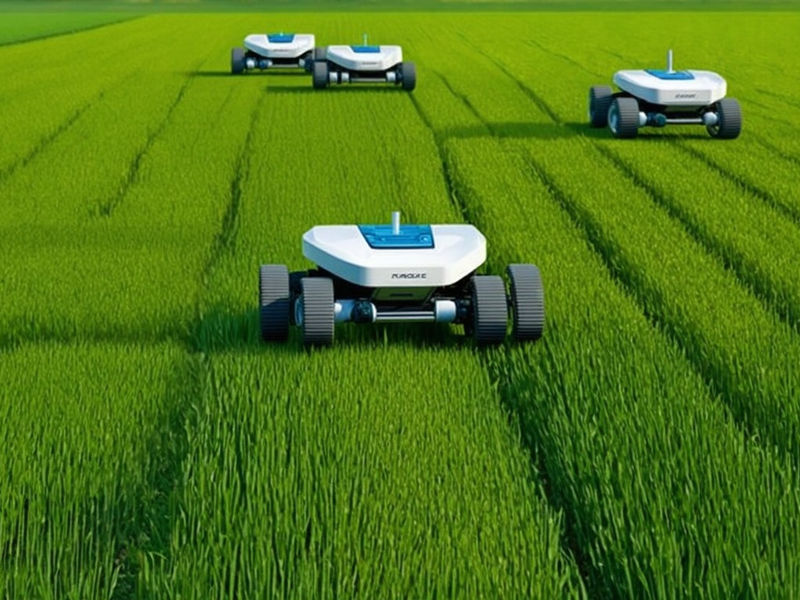
Reliance on commodity microcontrollers such as ARM Cortex-M series and low-cost sensors maintains affordability while providing sufficient processing power for basic navigation and communication tasks necessary for swarm operations. Battery supply chains depend on lithium-ion and appearing solid-state technologies where energy density remains a critical constraint dictating the maximum operational duration of a single charge cycle and thus the effective range of the swarm. Printed circuit board and actuator manufacturing rely on global semiconductor and rare-earth magnet supply chains, exposing the industry to geopolitical risks and raw material shortages that can halt production lines unexpectedly. Open-source designs reduce proprietary dependency yet increase vulnerability to component obsolescence because commercial manufacturers may discontinue specific chips without regard for the longevity of academic research projects utilizing those parts, creating maintenance difficulties over long timelines. Task suitability for distributed execution includes applications such as large-area search and rescue, precision agriculture, environmental monitoring, and warehouse logistics where the spatial distribution of work favors multiple agents over a single large machine. Agricultural field monitoring uses swarms of ground robots to map soil conditions and crop health across hectares, providing farmers with high-resolution data that enables targeted intervention and resource optimization rather than treating an entire field uniformly.
Warehouse inventory management employs coordinated robot fleets to scan shelves and track stock in real time, reducing the labor required for manual audits and increasing the accuracy of inventory records by eliminating human error in data entry. Search and rescue trials utilize aerial-ground hybrid swarms to locate survivors in collapsed structures using distributed sensing, allowing teams to cover areas that would be dangerous or time-consuming for human first responders to manage manually. Performance benchmarks include coverage rate, task completion time under unit failure, communication overhead per decision cycle, and energy efficiency per unit serving as quantitative measures to compare different swarm algorithms and hardware configurations objectively. Academic leaders include Harvard Wyss Institute, EPFL, and University of Sheffield developing ant-inspired algorithms that push the boundaries of what is possible with minimal computational resources, focusing on biomimicry. Industrial players feature Amazon for warehouse automation, John Deere for agricultural swarms, and Boston Dynamics for multi-robot coordination, demonstrating the commercial viability of these technologies in demanding operational environments worldwide. Startups like Unbox Robotics, FarmWise, and Skygauge pilot swarm concepts in logistics, agriculture, and infrastructure inspection, identifying niche markets where agility and adaptability provide a distinct advantage over traditional automation solutions that rely on fixed infrastructure.
Competitive differentiation relies on reliability, cost per unit, and ease of deployment and setup with existing enterprise systems, determining which companies succeed in bringing swarm technology to the mainstream market against established automation competitors. Standardization efforts led by IEEE and ISO define interoperability, safety, and performance metrics for swarm systems, creating a common language that facilitates connection between hardware from different manufacturers and software from various developers, ensuring compatibility. Joint projects between universities and defense contractors focus on secure swarm communication, ensuring that data transmitted between agents cannot be intercepted or spoofed by adversarial actors in contested environments, requiring encryption at the edge. Industry-academia testbeds provide shared facilities for large-scale swarm validation, allowing researchers to test algorithms with hundreds or thousands of robots, which would be prohibitively expensive to procure independently, building collaboration. Rising demand for resilient, adaptive systems drives development in disaster response and infrastructure inspection as climate change increases the frequency of extreme weather events that require rapid assessment and repair capabilities beyond human capacity. Economic pressure to automate labor-intensive tasks in agriculture, logistics, and construction spurs innovation by making robotic solutions more cost-effective than human labor in developed economies, with aging workforces shrinking the available labor pool.
Societal need for distributed sensing in climate monitoring, pollution tracking, and urban planning requires high spatial-temporal resolution that only dense networks of autonomous sensors can provide efficiently over vast geographic areas. Advances in miniaturization, battery technology, and wireless communication enable practical deployment of large-scale swarms by shrinking the form factor of agents and extending their operational endurance significantly beyond what was possible a decade ago. Dominant architectures currently involve homogeneous rule-based reactive swarms, using local communication and minimal state, representing the most mature and reliable form of the technology available today in commercial products. Developing challengers incorporate hybrid architectures with limited learning or heterogeneous roles, such as scout and worker units, allowing for more complex task decomposition and specialization within the collective, increasing overall system efficiency. The edge-computing setup offloads complex computation to nearby edge nodes, while preserving local decision-making autonomy, creating a balance between the heavy processing requirements of advanced perception and the low-latency needs of real-time collision avoidance, ensuring safety. Simulation-to-reality pipelines use high-fidelity simulators to train and validate swarm behaviors before physical deployment, reducing the risk of damage to expensive hardware during the debugging phase of algorithm development, saving time and money.
Displacement of manual inspection and monitoring jobs occurs in agriculture, logistics, and public safety sectors, requiring workforce development programs to train human operators in fleet management rather than direct manual control, shifting skill requirements. New business models involve swarm-as-a-service, where customers lease robotic collectives for specific tasks without owning hardware, lowering the barrier to entry for adopting advanced automation technologies for small businesses. New maintenance and fleet management roles focus on swarm health, recalibration, and software updates, shifting the technical expertise required from mechanical repair to data analysis and cybersecurity, reflecting the digital nature of modern robotics. Insurance and liability frameworks evolve to address collective robot behavior and shared responsibility because traditional laws assume a single human operator responsible for a machine's actions, which does not apply to decentralized systems with no single point of control. Traditional key performance indicators prove insufficient, while new metrics include swarm cohesion index, task coverage efficiency, and collective behavior reliability, offering better insight into the health and effectiveness of the group as a unified entity rather than individual robot performance. Measurement of stigmergic signal persistence and decay rates aids in environmental coordination tasks by improving how long information should remain in the environment to guide subsequent agents without causing confusion or outdated actions. Analysis of performance degradation curves occurs as swarm size increases, helping designers identify adaptability limits before they are encountered during live operations, preventing catastrophic failures in large deployments. Energy-per-task-unit serves as a critical efficiency metric for long-duration deployments, determining whether a swarm can complete a mission before exhausting its onboard power supplies, dictating feasibility.
Onboard learning for adaptive rule sets develops without compromising decentralization by allowing individual agents to modify their parameters based on local experience while still adhering to the overall constraints of the swarm protocol, ensuring coherent group behavior. Connection of soft robotics allows for safer human-swarm interaction in shared spaces by using compliant materials that reduce the risk of injury during accidental collisions between robots and people, facilitating acceptance in public areas. Swarm-to-swarm communication enables meta-collectives for multi-objective missions allowing different groups with specialized purposes to coordinate their efforts without merging into a single chaotic mass, enabling complex orchestration. Self-replication or in-field repair mechanisms extend operational lifespan by enabling robots to fix each other or assemble new units from raw materials available in the environment, reducing logistical burdens for resupply missions. Convergence with IoT positions swarms as mobile sensor networks enhancing data collection density and responsiveness by adding mobility to static sensor grids that currently monitor infrastructure and environmental conditions, providing agile coverage. Synergy with 5G and 6G networks provides ultra-reliable low-latency connectivity enabling tighter coordination in hybrid models where some processing occurs in the cloud rather than strictly on the robot, allowing access to vast computational resources. Overlap with digital twins involves real-time swarm state mirrored in simulation for predictive control and anomaly detection giving operators a virtual replica of the physical swarm to test interventions before applying them to the actual robots, mitigating risks. Alignment with edge AI deploys lightweight inference models locally to interpret sensor data and refine interaction rules allowing agents to recognize complex patterns like faces or specific types of damage without transmitting video feeds to a central server, preserving bandwidth.
Core limits on communication range and bandwidth constrain information propagation speed in large swarms, creating a latency between events happening on one side of the cluster and reactions on the other side, imposing physical boundaries on reaction times. Thermodynamic and mechanical constraints cap miniaturization, where sub-millimeter robots lack sufficient power and actuation for meaningful tasks, because physics dictates that smaller motors produce disproportionately less force relative to their mass, making movement against friction difficult. Workarounds include hierarchical swarms with local clusters, stigmergic memory in the environment, and duty cycling to conserve energy, allowing systems to operate effectively despite these hard physical limits by structuring organization intelligently. Trade-offs between swarm size, task complexity, and environmental fidelity define practical deployment boundaries, forcing engineers to prioritize specific capabilities based on the intended application of the robot fleet rather than trying to maximize all parameters simultaneously, which is impossible. Success, measured by collective resilience rather than individual perfection, shifts the design goal from creating the perfect robot to creating the perfect team capable of absorbing failures and continuing operations despite adversity. Value lies in performing tasks at spatial and temporal scales impossible for individuals or centralized systems, justifying the complexity involved in coordinating hundreds or thousands of independent agents working in unison. Long-term viability depends on accepting imperfection, uncertainty, and collective outcomes as features rather than bugs, requiring a philosophical shift in how engineers evaluate system performance and reliability, moving away from deterministic guarantees toward probabilistic success rates.

Superintelligence will fine-tune swarm rule sets through inverse reinforcement learning from observed biological or social systems, extracting optimal behaviors from nature to apply them to synthetic swarms with greater efficiency than human programmers could achieve manually, uncovering nuances humans miss. It will design swarms with active topology adaptation, reconfiguring communication graphs in real time based on mission phase and environmental feedback, ensuring that the network remains improved even as the physical configuration of the swarm changes drastically during operations, maintaining connectivity. Swarms will serve as physical embodiment layers for superintelligent agents, enabling direct environmental manipulation for large workloads that require massive parallelism, such as terraforming or construction on a planetary scale, exceeding human dexterity or patience. Superintelligence will deploy swarms as distributed probes for scientific exploration, such as ocean floors or exoplanet surfaces, where centralized control is infeasible due to light-speed delays or harsh interference conditions that sever communication links with Earth, requiring full autonomy. It will manage global swarm objectives by broadcasting high-level goals that local agents translate into autonomous actions, removing the need for micromanagement while ensuring alignment with the overall mission strategy through abstract directives rather than specific commands. It will predict collective behaviors before they occur, allowing for preemptive adjustments to swarm parameters to prevent undesirable states, such as congestion or energy depletion, before they impact the mission's success, using advanced modeling of agent dynamics.
Superintelligence will enable heterogeneous swarms where each unit specializes dynamically based on real-time analysis of system needs, creating a fluid workforce that adapts its physical composition to the task at hand, instantly morphing functionality as required. It will solve the flexibility threshold problem by calculating the exact number of agents required for specific tasks in complex environments, improving resource allocation and preventing the deployment of redundant units that add cost without value, maximizing efficiency. Superintelligence will integrate quantum data transfer protocols to eliminate latency issues in massive swarms, allowing instantaneous coordination across millions of units regardless of the distance between them, overcoming current electromagnetic spectrum limitations. It will create self-evolving hardware architectures within swarm units to adapt to physical wear and tear autonomously, enabling robots to reconfigure their own physical structure to compensate for damage or changing environmental conditions without human intervention, extending utility indefinitely.


