
Hypergraph-Based Cognition
- Yatin Taneja

- Mar 9
- 11 min read
Knowledge representation has historically relied on pairwise node-to-node relationships in simple graphs, a method that served the early stages of network analysis well. This binary framework assumes that all interactions within a system can be decomposed into links between two distinct entities. Such an assumption worked adequately for modeling physical structures like bridges or basic social connections where one person directly relates to another. It proved sufficient for many physical and social network models where the interaction is intrinsically dyadic. This focus was sufficient for many physical and social network models because it simplified computation and aligned with available mathematical tools. The limitations of this approach became apparent as researchers attempted to model more complex systems. Real-world interactions often involve three or more entities simultaneously, creating a relational structure that pairwise graphs cannot accurately depict. A chemical reaction, for example, involves multiple reactants combining to form products, a process that is a single event involving many components rather than a series of binary exchanges. Representing such a system as a graph requires breaking the multi-way relationship into several pairwise edges, which introduces artificial intermediaries and obscures the holistic nature of the interaction. This decomposition loses the critical information that the interaction is a unified whole dependent on the presence of all participants at once.

The reliance on pairwise graphs limits the modeling of real-world systems where interactions involve three or more entities simultaneously. This limitation creates a key gap in cognitive modeling and data representation. Human reasoning and natural phenomena often operate through group-level dependencies that cannot be decomposed into binary links without loss of meaning or structure. When a group of people collaborates on a project, the output is a function of the entire group agile, not just the sum of individual communications. Similarly, in biological systems, a protein complex might require several subunits to bind together before it can perform a function. Breaking these into binary links fails to capture the requirement that all parts must be present for the interaction to exist. The shift to hypergraphs addresses this core gap by providing a mathematical structure capable of handling multi-way relationships natively. Hypergraphs generalize graph structures by allowing hyperedges to connect any number of nodes. This capability enables the direct representation of multi-way relationships such as chemical reactions or collaborative teams without forcing an artificial decomposition into pairs.
A hypergraph consists of a set of nodes and a set of hyperedges, defined formally as H = (V, E), where V is the set of vertices and E is a set of non-empty subsets of V. Each hyperedge is a subset of nodes representing a single relational unit involving two or more elements. A node acts as an atomic entity in the system, such as a person, molecule, or concept. A hyperedge acts as a non-empty subset of nodes representing a single relational fact. Unlike standard graphs where an edge connects exactly two nodes, a hyperedge can connect any number of nodes, ranging from two up to the total number of nodes in the system. This flexibility allows the model to represent relationships of varying arities within the same structure. A k-uniform hypergraph is a structure where all hyperedges contain exactly k nodes, which provides a useful constraint for specific types of data where interactions always involve a fixed number of participants. Unlike directed or undirected graphs constrained to pairs, hyperedges capture n-ary relations natively. This preservation of complex interactions aids storage, retrieval, and inference because the system stores the relationship exactly as it exists in reality.
The formalization of hypergraphs occurred in the 1970s within combinatorics and discrete mathematics, building upon earlier work in set theory and geometry. Foundational work established basic properties and algorithms for analyzing these structures. Early graph theory focused exclusively on pairwise relations, so the extension to hypergraphs required developing new definitions for connectivity, paths, and cycles. Adoption in AI and cognitive science remained limited until the 2010s due to several factors. Computational complexity and lack of scalable learning frameworks hindered progress during this period. Processing hyperedges generally involves more complex data structures and algorithms than processing simple edges. The combinatorial explosion of possible hyperedges makes exhaustive search or traversal infeasible for large systems without efficient pruning or approximation techniques. As computational power increased and new algorithms came up, researchers began to revisit hypergraphs as a viable solution for complex AI problems.
Mathematically, representing hypergraphs often involves the use of an incidence matrix, which serves as a binary matrix mapping nodes to hyperedges for linear algebraic operations. Each row typically is a node, and each column is a hyperedge, with a one indicating membership and a zero indicating non-membership. This representation allows the application of linear algebra techniques to analyze the structure. The hypergraph Laplacian generalizes the graph Laplacian for spectral analysis. In graph theory, the Laplacian matrix is crucial for spectral clustering and embedding. Extending this to hypergraphs involves defining operators that capture the higher-order connectivity. Several definitions exist for the hypergraph Laplacian, often based on different ways of weighting the hyperedges or normalizing the incidence matrix. These algebraic tools enable spectral methods to identify clusters or communities within the data based on higher-order connections rather than just pairwise proximity.
Alternative representations such as simplicial complexes and tensor-based representations were considered as alternatives to hypergraphs for encoding multi-way relations. Both can encode multi-way relations effectively under certain conditions. Simplicial complexes are mathematical structures that generalize the idea of a graph to higher dimensions, requiring closure under subsets. This means, if a simplex contains a set of nodes, it must also contain all subsets of those nodes. They impose stricter topological or algebraic constraints than hypergraphs. This requirement is often unnatural for real-world data where a specific group interaction exists without implying that all sub-groups interact in the same way. For instance, a meeting involving five people implies a specific group interaction, yet it does not necessarily mean that every subset of those people held a distinct meeting. Tensors become unwieldy for sparse, irregular relational structures. While tensors offer a powerful framework for multi-dimensional data, they often result in extremely sparse representations for relational data where most possible combinations of entities do not interact. Storing and computing with high-order sparse tensors presents significant memory and computational challenges. Hypergraphs offer a minimal, flexible formalism that avoids these constraints while remaining computationally tractable.
Hypergraph-based cognition enables richer semantic networks in AI systems by allowing the system to reason about groups of entities as cohesive units. It supports tasks like causal reasoning over multi-factor events where an outcome depends on a specific combination of causes occurring together. It facilitates contextual understanding in natural language by allowing words or phrases to be linked through complex semantic relationships that involve multiple participants simultaneously. For example, a sentence describing a transaction involves a buyer, a seller, a goods item, and a price; capturing this as a single hyperedge preserves the context better than linking them pairwise. It allows simulation of biological or social systems where the behavior of the whole is distinct from the sum of parts. In knowledge graphs, hyperedges model regulatory pathways involving multiple transcription factors that must bind together to initiate gene expression. They also represent legal statutes involving multiple parties and conditions where the legality depends on the simultaneous satisfaction of several clauses.
Cognitive architectures applying hypergraphs improve explainability by maintaining explicit higher-order dependencies. When an AI system makes a decision based on a hypergraph representation, the reasoning trace explicitly shows which group of entities contributed to the outcome. This reduces the need for post-hoc approximation of latent group effects that often plague standard neural networks. In a graph neural network, a high-order interaction might be distributed across multiple layers of edge convolutions, making it difficult for a human to interpret why a specific prediction was made. A hypergraph architecture keeps the group interaction intact during the computation process. Operations such as traversal, clustering, and embedding require redefinition to function effectively in this domain. They must account for variable-sized hyperedges, which introduces significant algorithmic complexity. This requirement necessitates new algorithmic approaches distinct from standard graph neural networks.
Dominant approaches in current research adapt message-passing frameworks to hypergraphs by transforming the higher-order structure into a form amenable to existing graph algorithms. These methods project hyperedges into pairwise structures or use incidence-based aggregation to propagate information. Projection methods often involve creating a bipartite graph connecting nodes to hyperedges or expanding each hyperedge into a clique of fully connected nodes. While these methods allow researchers to apply existing graph neural network libraries, they often fail to fully exploit the unique properties of hypergraphs and may reintroduce some of the noise and redundancy that hypergraphs aim to eliminate. Developing challengers include direct hyperedge-aware neural operators that process the set of nodes within a hyperedge as a whole, using permutation-invariant functions similar to those used in Deep Sets. Algebraic topology-inspired methods preserve higher-order structure during learning by operating directly on the chain complexes associated with the hypergraph. No consensus architecture has gained dominance in the field yet. Most implementations remain research prototypes rather than production systems.
Storing and querying hypergraphs requires more memory and processing than simple graphs due to the increased dimensionality of the data structure. Hyperedges scale combinatorially with node count, meaning that as the number of entities in a system grows, the potential number of interactions grows much faster than in a pairwise graph. Real-time inference on large hypergraphs demands specialized hardware or approximation techniques to manage this load efficiently. Standard databases are improved for tabular or pairwise relational data and struggle to handle variable-length sets of identifiers efficiently. Economic viability depends on use cases where added fidelity justifies increased infrastructure costs. High-value domains like drug discovery currently justify these costs because the accuracy improvements in predicting molecular interactions lead to massive savings in research and development budgets.
Benchmarks show improvements in predictive accuracy ranging from 2% to 10% over graph baselines for tasks involving group interactions. These improvements occur specifically where the ground truth relies on multi-way dependencies that graphs cannot capture. They come at a higher computational cost, often requiring orders of magnitude more floating-point operations per training step. No standardized evaluation suite exists for hypergraph-based cognitive models, making it difficult to compare results across different research papers fairly. Existing KPIs such as accuracy, precision, and recall remain relevant for measuring task performance. New metrics needed include hyperedge coverage and multi-hop consistency to evaluate how well the model preserves the structural integrity of the higher-order relationships during learning. Evaluation must account for structural preservation because a model might achieve high prediction accuracy while ignoring the underlying hypergraph topology. Benchmark datasets with ground-truth higher-order relations are scarce, forcing researchers to generate synthetic data or manually curate small datasets from specific scientific domains.
Software stacks for hypergraph processing are immature compared to the ecosystem available for standard graphs. Major machine learning libraries offer limited support for hypergraph data structures and operations. Developers often have to build custom implementations from scratch or rely on niche academic codebases that lack optimization and documentation. Hardware dependencies include GPUs with high memory bandwidth for sparse tensor operations, as manipulating large incidence matrices requires moving vast amounts of data quickly. Specialized accelerators assist with combinatorial logic necessary for traversing and searching hypergraph structures efficiently. Flexibility hinges on algorithmic efficiency rather than physical supply chains because the theoretical complexity of hypergraph algorithms is the primary barrier to adoption. Adjacent software systems must evolve to support hyperedge-native schemas rather than forcing hypergraph data into relational tables or JSON documents. Infrastructure for data labeling must accommodate annotator training on higher-order relational concepts, as identifying multi-way relationships requires more cognitive effort from human labelers than simply drawing lines between pairs of items.
Limited commercial deployments exist today primarily in highly specialized industries where the complexity of the data necessitates advanced modeling techniques. Pharmaceutical R&D utilizes these systems for modeling protein-protein-DNA interactions where the binding affinity depends on the specific combination of molecules present. Cybersecurity sectors use them for detecting multi-basis attack patterns that involve a sequence of actions across multiple hosts and users, viewing the entire campaign as a single complex event rather than isolated incidents. Major players include academic research labs and niche AI firms focused on scientific discovery rather than general consumer technology companies. No hyperscaler currently offers hypergraph-native services as part of their cloud AI portfolios, indicating that the technology has not yet reached the level of maturity required for mass market adoption. Competitive advantage lies in domain-specific setup rather than general-purpose platforms because the value of hypergraphs is realized only when the data possesses inherent higher-order structure.
Open-source toolkits enable experimentation and allow researchers to share algorithms and datasets freely. They lack enterprise-grade tooling such as graphical user interfaces, automated deployment pipelines, and comprehensive customer support. Economic displacement may occur in roles reliant on pairwise correlation analysis as organizations transition to systems capable of deeper relational reasoning. Analysts who previously focused on dyadic relationships may need to adapt their skills to understand and interpret multi-way interaction patterns. New business models could appear around hypergraph-as-a-service platforms where companies rent access to pre-built hypergraph cognition models trained on proprietary scientific data. Intellectual property strategies will shift toward protecting relational schemas because the specific way entities are grouped into hyperedges often constitutes valuable proprietary knowledge about a domain. Modern AI systems face performance demands in reasoning and planning that exceed the expressive power of pairwise models.
As systems are tasked with more complex problems involving numerous interacting variables, the inability to represent group interactions directly becomes a severe handicap. Economic shifts toward personalized medicine and autonomous systems will require modeling of multi-entity dynamics to function safely and effectively. Personalized medicine relies on understanding how a specific patient's unique combination of genes, metabolic pathways, and environmental factors interact to influence health outcomes. Societal needs in climate modeling will depend on accurate representation of interdependent variables such as atmospheric pressure, ocean temperature, and ice sheet dynamics, all of which influence each other in complex, non-linear ways. Superintelligence systems will require representations that mirror the compositional nature of real-world causality to reason effectively about the world. Hypergraphs will naturally support this requirement by providing a framework where compositionality is a first-class citizen.
Calibration of such systems will demand rigorous validation against multi-factor experimental data to ensure that the internal representations align with physical reality. Hypergraph structures will enable more durable alignment by preserving contextual dependencies that prevent goal misgeneralization. If an AI understands that a rule applies only within a specific context defined by a group of conditions, it is less likely to apply that rule inappropriately in novel situations. Superintelligence will utilize hypergraphs to simulate alternate societal configurations to predict the outcomes of policy changes before they are implemented. It will fine-tune multi-stakeholder policy outcomes by modeling the conflicting interests of various groups as interacting nodes within a hyperedge, allowing for optimization strategies that consider trade-offs holistically. It will engineer synthetic biological pathways with precise interaction profiles by simulating how different proteins and catalysts interact in a unified reaction environment.
Internal world models built on hypergraphs will allow reasoning about interventions affecting groups rather than individuals. This capability will be critical for safe deployment in domains where actions have ripple effects across entire populations or ecosystems. New capabilities will include autonomous discovery of previously unknown higher-order regularities in scientific data, potentially leading to breakthroughs in fields like materials science or epidemiology. Future innovations will include lively hypergraphs for temporal multi-agent systems where hyperedges appear and disappear over time to model agile interactions. Differentiable hyperedge generation will occur during training, allowing neural networks to learn which groups of entities are relevant for a given task without explicit supervision. Setup with symbolic reasoning engines will take place to combine the pattern recognition strengths of neural networks with the logical rigor of symbolic AI.
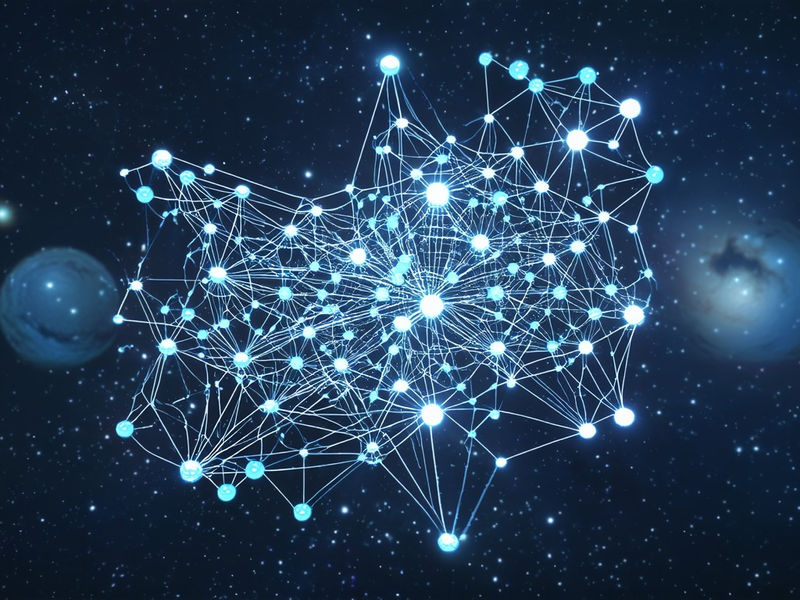
Hybrid models combining hypergraphs with probabilistic graphical models will improve uncertainty quantification by providing mathematically sound ways to calculate probabilities over complex events. Quantum-inspired algorithms may offer speedups for certain hypergraph operations by exploiting the natural ability of quantum systems to represent superpositions of states. Convergence with category theory will provide formal semantics for compositionality, ensuring that hypergraph operations adhere to strict mathematical laws regarding how structures can be combined and transformed. Setup with causal discovery frameworks will enable identification of group-level interventions that have the highest impact on a target variable. Synergy with neuromorphic computing architectures will support sparse, high-connectivity patterns that mimic the physical structure of biological neural networks, which also rely heavily on multi-neuron assemblies. Core limits will arise from the exponential growth of possible hyperedges as the system scales, making it impossible to enumerate or consider every possible combination of entities.
Workarounds will include sampling strategies and hierarchical abstraction to focus computational resources on the most relevant parts of the hypergraph. Hierarchical abstraction involves grouping lower-level entities into higher-level concepts to reduce the effective number of nodes at any given layer of processing. Information-theoretic bounds will suggest diminishing returns beyond certain hyperedge sizes as the specific contribution of additional nodes becomes negligible or indistinguishable from noise. The transition to hypergraph-based cognition will be slow due to tooling gaps and the high cost of retraining existing personnel and infrastructure. It will be inevitable as performance demands outstrip the limits of binary relational models in critical scientific and economic sectors.


